Tag: Mormon beliefs

  • Why Are Mormons Called Mormons?

    Why Are Mormons Called Mormons?

    Few religious nicknames are as widely recognized as the word “Mormon.” For many people around the world, the term immediately brings to mind missionaries, family-centered values, or a distinct American-born faith. Yet the nickname also raises questions. Where did it come from? Why did it become so common? And if members of the Church emphasize Jesus Christ, why are they associated with a name that does not explicitly reference Him?

    Latter-day Saints are often called “Mormons” because of their belief in the Book of Mormon, a volume of scripture they regard as another testament of Jesus Christ. The nickname did not originate from within the Church itself, but emerged in the early nineteenth century as a label used by outsiders trying to identify a new and unfamiliar religious movement.

    Over time, “Mormon” became deeply embedded in public language, media, and culture. Even as the Church continued to use its full and formal name, the nickname persisted as a convenient shorthand. Today, understanding why Latter-day Saints are called “Mormons” requires examining history, language, identity, and the Church’s ongoing effort to clarify what it believes and how it wishes to be understood.

    Origin of the Term “Mormon”

    The word “Mormon” comes directly from the Book of Mormon, a book of scripture that Latter-day Saints believe is an ancient record of God’s dealings with people in the Americas. According to Church belief, the book was translated by Joseph Smith in the 1820s and published in 1830.

    Early observers and critics of the new church quickly associated its members with this additional scripture. Because belief in the Book of Mormon set them apart from other Christian groups, outsiders began referring to Church members as “Mormons.”

    The term was not originally chosen by Church leaders as an official designation. Instead, it emerged organically as a way for others to label a growing and unfamiliar religious community.

    A Name Given by Outsiders

    In its earliest usage, “Mormon” functioned as an external label rather than a self-chosen identity. Newspapers, critics, and neighbors used the term to distinguish members of the Church from other Christian groups.

    In many cases, the nickname carried negative or mocking connotations, especially during periods of persecution and social tension in the nineteenth century. Being called “Mormon” often signaled suspicion, misunderstanding, or hostility.

    Despite its origins, the term endured because it was short, memorable, and easy to use.

    Linked to Scripture

    The nickname directly reflects belief in the Book of Mormon. Outsiders saw the book as the most distinctive feature of the new faith and used it as the basis for naming its followers.

    Importantly, Latter-day Saints believe the Book of Mormon testifies of Jesus Christ and complements the Bible. However, early critics often overlooked this Christ-centered focus and reduced the faith to its most unusual element in their eyes.

    This simplification played a major role in how the nickname took hold.

    Historical Use of the Nickname

    Throughout the nineteenth and twentieth centuries, the word “Mormon” became increasingly common in public discourse. It appeared in newspapers, court documents, government records, academic writing, and everyday conversation.

    As the Church grew and spread geographically, the nickname traveled with it. Even as persecution declined and public perception shifted, the term remained a familiar identifier.

    Over time, many Church members began using the word themselves, especially in informal contexts.

    Cultural Recognition

    By the late nineteenth century, “Mormon” was widely recognized as a cultural and religious identifier. It became shorthand for describing a distinct community with recognizable beliefs, practices, and social patterns.

    This widespread recognition meant that the term was often used without malicious intent. For many people, “Mormon” simply became the easiest way to refer to Church members.

    As a result, the nickname lost some of its original hostility and took on a more neutral or descriptive tone in many contexts.

    Informal Identity

    Many Latter-day Saints used the term “Mormon” casually, especially when speaking with people unfamiliar with the Church’s full name. It functioned as a convenient label rather than a replacement for official identity.

    Importantly, this informal usage did not mean the Church abandoned its official name. The formal name continued to be used in worship, legal documents, and official communication.

    The coexistence of an official name and a popular nickname became a defining feature of the Church’s public identity.

    The Official Name of the Church

    The official name of the Church is The Church of Jesus Christ of Latter-day Saints. This name was given by revelation, according to Church belief, and is considered doctrinally significant.

    Church leaders emphasize this name because it explicitly centers Jesus Christ. The name communicates core beliefs: that the Church is Christian, that it follows Jesus Christ, and that it sees itself as a restoration of His original church in the latter days.

    Using the full name helps clarify identity and belief in ways that the nickname “Mormon” does not.

    Christ-Centered Identity

    For Latter-day Saints, Jesus Christ is the foundation of doctrine, worship, and daily religious life. Prayers are offered in His name, scriptures testify of Him, and ordinances are performed through His authority.

    Church leaders have expressed concern that the nickname “Mormon,” while historically familiar, does not clearly communicate this Christ-centered focus.

    Emphasizing the full name helps correct misunderstandings and reinforces what members consider the heart of their faith.

    Recent Emphasis on Proper Naming

    In recent years, Church leaders have placed renewed emphasis on using the full name of the Church rather than nicknames. This effort reflects a desire for greater accuracy, clarity, and reverence.

    The change is not about rewriting history or condemning past usage. Rather, it represents an intentional shift in how the Church presents itself to the world.

    Leaders have explained that names matter because they shape understanding.

    Emphasis on Accuracy

    Using the full name reduces confusion about beliefs. It helps distinguish the Church from other movements and clarifies that its teachings center on Jesus Christ.

    Accuracy in naming also respects the Church’s self-identified religious identity rather than relying on labels created by outsiders.

    This emphasis reflects a broader effort to communicate beliefs more clearly in a global and digital age.

    Respect for Belief

    For many Latter-day Saints, being called by the Church’s full name feels more respectful and representative of their faith.

    Using accurate names acknowledges the importance of religious self-definition. It signals willingness to understand a community on its own terms rather than through inherited labels.

    This does not mean that individuals react negatively to the word “Mormon,” but that many appreciate greater precision.

    Is “Mormon” Offensive?

    Most Latter-day Saints do not consider the word “Mormon” offensive. For generations, it was commonly used by members themselves, and many still feel culturally comfortable with it.

    However, preferences vary. Some members strongly prefer being called “Latter-day Saints” or referred to by the Church’s full name, while others are less concerned.

    Context, tone, and intent often matter more than the word itself.

    Individual Preference

    Cultural background, age, and personal experience influence how individuals feel about the nickname. In some regions, “Mormon” is still widely used and understood without negative intent.

    In other contexts, members may prefer language that more clearly reflects their Christ-centered beliefs.

    Respectful communication involves listening to how individuals and communities describe themselves.

    Common Misunderstandings

    One common misunderstanding is that “Mormon” refers to a person named Mormon. While Mormon is indeed a prophet in the Book of Mormon, the Church is not named after him, nor do members worship him.

    Another misunderstanding is that belief in the Book of Mormon replaces belief in the Bible or in Jesus Christ. Latter-day Saints emphasize that the Book of Mormon complements the Bible and testifies of Christ.

    Some also assume that rejecting the nickname means rejecting history. In reality, the Church acknowledges its past while choosing language it feels best represents its beliefs today.

    Why This Matters

    Understanding why Latter-day Saints are called “Mormons” helps clarify issues of identity, history, and belief. Names influence how religions are perceived, discussed, and understood by outsiders.

    For Latter-day Saints, accurate naming reflects devotion to Jesus Christ and respect for their religious self-understanding. It also helps correct misconceptions that have persisted for generations.

    Ultimately, the discussion is not about enforcing language, but about fostering understanding. When people understand where the nickname came from and why the Church emphasizes its full name, conversations about belief become more informed, respectful, and meaningful.

    Sources

    The Church of Jesus Christ of Latter-day Saints – Name of the Church
    https://www.churchofjesuschrist.org

    Church News – Understanding the Church’s Name
    https://www.thechurchnews.com

    Scripture Central – Book of Mormon Background
    https://scripturecentral.org

  • Why Does the Mormon Church Have Money?

    Why Does the Mormon Church Have Money?

    In discussions about religion and finances, few topics generate as much curiosity as the question of why a church would have significant financial resources. For many observers, the idea of a religious organization holding money seems, at first glance, contradictory to ideals of faith, humility, and charity. This question frequently arises in conversations about The Church of Jesus Christ of Latter-day Saints, often framed with suspicion or misunderstanding.

    From a Latter-day Saint perspective, however, the existence of financial resources within the Church is not about wealth for its own sake. It is about responsibility, continuity, and stewardship. Members believe the Church has money because it operates on a global scale and is responsible for carrying out religious, humanitarian, educational, and spiritual work across diverse cultures and economic conditions.

    Rather than viewing finances as profit, Latter-day Saints see Church funds as tools entrusted by God to fulfill sacred purposes. These resources support worship, service, self-reliance programs, education, humanitarian relief, and long-term stability. Understanding why the Mormon Church has money requires moving beyond assumptions and examining how faith, stewardship, global responsibility, and preparation intersect.

    Church Funds Come From Voluntary Donations

    A key point often overlooked in discussions about Church finances is the source of those funds. The Church of Jesus Christ of Latter-day Saints does not operate like a corporation seeking profit. Its primary source of income comes from voluntary donations given by members, most notably tithing.

    Members choose to contribute as an act of faith and devotion, not because of legal obligation or coercion. Giving is framed as a personal spiritual decision, guided by conscience and belief rather than pressure.

    These donations represent collective sacrifice. Millions of members around the world contribute small and large amounts according to their circumstances, creating a shared financial foundation that supports the Church’s mission.

    No Paid Clergy

    One distinctive feature of the Church is the absence of a paid local clergy. Bishops, counselors, and other local leaders serve voluntarily while maintaining their regular employment.

    Because local leadership positions are unpaid, donated funds are not consumed by salaries. Instead, resources are directed toward maintaining worship spaces, supporting programs, and funding global initiatives.

    This structure reinforces the idea that Church finances exist to support the mission rather than individual compensation.

    Shared Responsibility

    Church finances reflect shared responsibility. Members worldwide participate in sustaining the Church according to the same principles, regardless of nationality or economic status.

    This collective approach fosters unity. Members see themselves not as customers funding an institution, but as participants sustaining a shared religious mission.

    Supporting a Global Church

    The Church operates in nearly every country, encompassing diverse languages, cultures, and economic realities. Supporting a global church requires financial resources that allow consistency, accessibility, and long-term planning.

    Meetinghouses, temples, administrative offices, and communication systems must be built, maintained, and adapted to local needs. These operations require funds to ensure safe, functional, and dignified spaces for worship and service.

    Without financial resources, global coordination and equitable access to religious services would be impossible.

    Worldwide Operations

    A worldwide church faces logistical challenges that local congregations do not. Training materials must be translated, leaders must be supported, and infrastructure must be adapted to regional conditions.

    Financial stability allows the Church to operate responsibly rather than reactively. Long-term planning ensures that growth can be sustained without crisis-driven decision-making.

    Consistency Across Nations

    Resources help ensure that members in different countries have similar access to worship facilities, educational materials, and church programs. While local adaptations exist, financial support helps reduce disparities caused by economic inequality.

    This consistency reinforces the belief that all members are equally valued, regardless of where they live.

    Temples, Education, and Humanitarian Aid

    One of the most visible uses of Church funds is the construction and maintenance of temples. For Latter-day Saints, temples are sacred spaces central to their religious life. Building and maintaining them requires careful planning, skilled labor, and long-term investment.

    Beyond temples, Church funds support educational institutions, disaster relief, refugee assistance, and humanitarian projects worldwide. These efforts are not peripheral but central to the Church’s mission.

    Education is seen as a spiritual and practical investment. Humanitarian aid is viewed as an expression of Christlike service.

    Helping Beyond Membership

    A defining feature of the Church’s humanitarian work is that assistance is provided regardless of religious affiliation. Disaster relief, medical aid, clean water projects, and food assistance often benefit communities with few or no Church members.

    This outward focus reflects the belief that resources should be used to bless humanity broadly, not only those within the faith.

    Humanitarian efforts demonstrate that Church finances are directed toward service rather than accumulation.

    Financial Stewardship and Preparation

    Latter-day Saints place strong emphasis on preparedness, self-reliance, and wise planning. These principles apply not only to individuals and families but also to the Church as an institution.

    Financial reserves allow the Church to remain stable during economic downturns, global crises, or unexpected emergencies. This stability prevents sudden disruption of religious services and humanitarian efforts.

    From a Latter-day Saint perspective, preparation is a form of faith rather than fear.

    Preparedness

    Savings allow the Church to respond quickly to disasters, humanitarian crises, and sudden needs. Rather than waiting for emergency fundraising, existing resources can be mobilized immediately.

    Preparedness ensures continuity. Worship services, welfare programs, and educational initiatives can continue even during periods of global instability.

    This approach reflects the belief that responsible planning honors God by enabling effective service.

    Transparency and Accountability

    Latter-day Saints believe donated funds are sacred and must be handled with care. Church leaders consistently teach that money given to God should be managed with integrity, accountability, and ethical oversight.

    Financial management involves budgeting, auditing, and internal controls designed to prevent misuse. While specific financial reporting practices vary by country due to legal requirements, the emphasis on integrity remains consistent.

    Members are taught that stewardship over funds is a moral responsibility.

    Sacred Trust

    Church funds are considered consecrated to God. Leaders responsible for financial decisions are accountable not only to legal standards but also to spiritual expectations.

    This sense of sacred trust influences how funds are allocated, emphasizing long-term benefit, fairness, and mission alignment.

    Accountability is seen as essential to maintaining trust between members and leadership.

    Separation Between Wealth and Personal Gain

    Another frequent misunderstanding is the assumption that Church leaders personally profit from Church funds. In Latter-day Saint belief and practice, there is a clear separation between institutional resources and personal gain.

    Leaders are called to serve and are accountable for financial decisions. Wealth is not viewed as a measure of spiritual authority or success.

    Money is treated as a tool, not a reward.

    Service Over Profit

    The guiding principle behind Church finances is service rather than profit. Resources exist to bless lives, support worship, and enable humanitarian work.

    Personal enrichment is not the purpose of Church funds. Leadership is framed as stewardship, sacrifice, and accountability rather than status or financial advantage.

    This perspective helps explain why financial resources and personal humility are not seen as contradictory.

    Common Misunderstandings

    One common misunderstanding is that having money contradicts Christian humility. Latter-day Saints believe humility is measured by intent and use of resources, not by the absence of resources.

    Another misunderstanding is that money replaces faith. In reality, members believe faith motivates responsible stewardship. Financial planning is seen as a way to magnify service, not diminish reliance on God.

    Some also assume that wealth indicates greed or secrecy. From a Latter-day Saint viewpoint, resources reflect collective sacrifice and long-term planning rather than accumulation for its own sake.

    Why This Belief Matters

    Understanding why the Mormon Church has money helps clarify its mission, priorities, and values. Financial resources allow consistent worship, global service, education, and humanitarian aid across generations.

    For believers, Church finances represent collective faith in action. They reflect shared sacrifice, preparation, and commitment to serving God and humanity responsibly.

    Rather than contradicting religious values, financial stewardship is seen as a way to magnify service, ensure stability, and sustain a global religious mission over time.

    Sources

    The Church of Jesus Christ of Latter-day Saints – Tithing and Church Finances
    https://www.churchofjesuschrist.org

    Church News – Church Welfare and Humanitarian Efforts
    https://www.thechurchnews.com

    Scripture Central – Stewardship and Resources
    https://scripturecentral.org

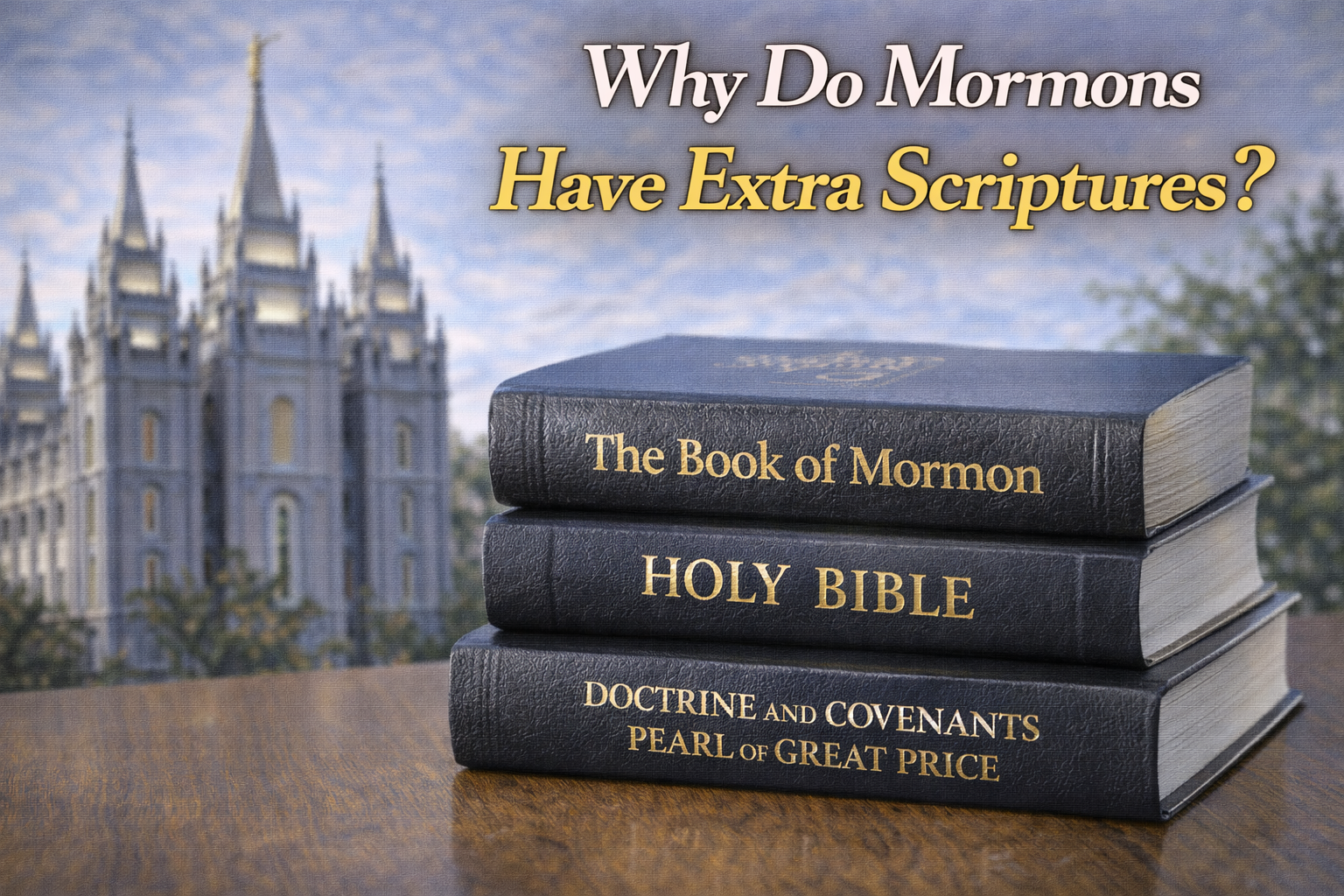
  • Why Do Mormons Have Extra Scriptures?

    Why Do Mormons Have Extra Scriptures?

    For many Christians, the Bible is not only sacred scripture but also the final and complete record of God’s word. Because of this, discovering that Latter-day Saints use additional books of scripture often raises questions. Why would any Christian group need more scripture? Does having extra books mean the Bible is incomplete, or even rejected?

    For Latter-day Saints, the existence of additional scripture is not a rejection of the Bible, but a natural consequence of believing in a living God who continues to speak. They believe God’s communication with humanity did not end in the ancient world and that divine revelation is not confined to one time, place, or people.

    Additional scriptures are understood as companions to the Bible, standing alongside it as witnesses of Jesus Christ. Rather than competing with biblical authority, they are believed to reinforce, clarify, and expand understanding of God’s plan.

    For Latter-day Saints, having extra scripture reflects confidence that God remains involved in human history and continues to guide His children in every age.

    The Bible Is Central, Not Rejected

    One of the most important clarifications Latter-day Saints make is that they deeply value the Bible. They consider it the word of God and a foundational source of doctrine, moral teaching, and testimony of Jesus Christ.

    The Bible is read, quoted, studied, and revered in Latter-day Saint worship and personal devotion. It forms the backbone of Christian belief within the Church.

    Additional scriptures are not meant to replace the Bible or diminish its authority. Instead, members believe all scripture works together to teach the same gospel.

    One Gospel, Multiple Witnesses

    Latter-day Saints often describe their scriptures as multiple witnesses of one gospel. Just as the Bible itself contains several accounts of Christ’s life in the four Gospels, additional scripture is seen as reinforcing truth through multiple testimonies.

    In this view, more witnesses strengthen faith rather than weaken it. When different records testify of the same divine truths, confidence in those truths increases.

    Multiple witnesses are considered a biblical principle rather than a departure from it.

    Harmony, Not Replacement

    Additional scripture is believed to harmonize with biblical doctrine, not contradict it. When questions arise, Latter-day Saints often look at how teachings align across all scripture.

    Rather than discarding the Bible, extra scripture is seen as supporting biblical teachings about Christ, salvation, repentance, and covenant relationships.

    This harmony is central to how Latter-day Saints understand their scriptural canon.

    Why Additional Scripture Makes Sense to Latter-day Saints

    At the heart of belief in additional scripture is a particular understanding of God’s nature. Latter-day Saints believe God is not silent, distant, or limited to one historical era.

    If God loves all His children, they reason, it makes sense that He would communicate with people in many places and times. The Bible itself records God speaking to prophets across centuries and cultures.

    From this perspective, it would be surprising if God stopped revealing His word entirely after the biblical period.

    God Speaks to All Nations

    Latter-day Saints believe revelation is not limited to the ancient Near East. They believe God has spoken to people throughout the world according to His purposes.

    Additional scripture reflects this universal concern. It suggests that God’s relationship with humanity extends beyond one geographic region or cultural tradition.

    This belief broadens the understanding of God’s work and emphasizes His involvement with all His children.

    A Broader Record of God’s Work

    Additional scripture is seen as expanding the record of God’s dealings with humanity. The Bible tells one part of the story; other scriptures tell additional parts.

    Rather than diminishing the Bible, this broader record is believed to enhance appreciation for God’s consistent purposes and methods.

    Scripture, in this sense, is not limited by human boundaries.

    The Book of Mormon

    The most well-known additional scripture used by Latter-day Saints is the Book of Mormon. They believe it is an ancient record translated by Joseph Smith and that it stands as another testament of Jesus Christ.

    The Book of Mormon is believed to record God’s dealings with ancient peoples in the Americas and includes prophetic teachings, historical narratives, and direct testimony of Christ.

    Its primary purpose is not to introduce a different gospel, but to affirm biblical teachings and invite readers to believe in Jesus Christ.

    Focus on Christ

    Central to Latter-day Saint belief is the idea that the Book of Mormon testifies of Jesus Christ’s divinity, mission, death, and resurrection. Christ is the central figure of the book, not a peripheral character.

    Teachings in the Book of Mormon emphasize faith in Christ, repentance, baptism, covenant living, and discipleship—core Christian principles also found in the Bible.

    Because of this Christ-centered focus, Latter-day Saints view the Book of Mormon as strengthening, rather than weakening, Christian faith.

    Doctrine and Covenants

    Another key book of scripture is the Doctrine and Covenants. Unlike the Book of Mormon, which is ancient in origin, the Doctrine and Covenants contains modern revelations.

    These revelations are believed to have been given to guide the Church in organization, doctrine, and practical challenges faced by believers in the modern world.

    The Doctrine and Covenants reflects the belief that revelation did not end with ancient prophets, but continues today.

    Modern Guidance

    Latter-day Saints believe God continues to instruct His Church as circumstances change. The Doctrine and Covenants addresses issues such as church governance, priesthood authority, missionary work, and spiritual principles relevant to modern life.

    This scripture illustrates how eternal truths are applied in contemporary settings.

    For believers, it confirms that God’s guidance is ongoing rather than frozen in history.

    Pearl of Great Price

    The Pearl of Great Price is a collection of writings that expand understanding of biblical events, prophetic calling, and God’s plan for humanity.

    It includes teachings about creation, the nature of God, premortal life, and the mission of prophets. These writings provide doctrinal context that Latter-day Saints believe clarifies and enriches biblical narratives.

    Expanded Perspective

    Rather than rewriting the Bible, the Pearl of Great Price is believed to deepen understanding of biblical themes. It adds perspective on events such as creation and prophetic authority.

    This expanded view helps Latter-day Saints connect scripture into a more unified theological framework.

    Consistency With Biblical Pattern

    Latter-day Saints often point out that the Bible itself is a collection of many books written over centuries. It was not revealed all at once, nor was it immediately compiled into its current form.

    Revelation occurred gradually, line upon line, through different prophets in different eras. From this perspective, adding scripture follows the biblical pattern rather than contradicting it.

    The idea that God’s word grows over time is seen as consistent with how scripture developed historically.

    Revelation Is Ongoing

    The belief that revelation is ongoing does not diminish past scripture. Instead, it affirms that God continues to build upon what has already been revealed.

    Latter-day Saints believe God teaches according to humanity’s readiness, adding knowledge as people are prepared to receive it.

    This gradual process reflects patience and divine wisdom.

    Testing Scripture Through Christ

    Latter-day Saints believe all scripture—ancient or modern—should be evaluated by its testimony of Jesus Christ. Christ is the ultimate standard.

    Additional scripture is valued because it points people toward faith in Christ, moral living, repentance, and covenant discipleship.

    Scripture that draws people closer to Christ is considered good and inspired.

    Fruits of Scripture

    Rather than focusing only on origin or tradition, Latter-day Saints often emphasize the fruits of scripture. Does it inspire faith? Does it encourage love, humility, and commitment to God?

    They believe additional scripture produces positive spiritual fruits, which they see as evidence of divine origin.

    This experiential approach complements historical and theological reasoning.

    Common Misunderstandings

    A common misunderstanding is that having extra scripture means denying the Bible’s authority. Latter-day Saints strongly reject this idea and affirm their belief in the Bible as the word of God.

    Another misunderstanding is that additional scripture creates confusion or contradiction. Members believe it brings clarity, context, and deeper understanding.

    Some also assume extra scripture replaces Jesus Christ. Latter-day Saints emphasize that Christ remains the center of all scripture.

    Why This Belief Matters

    Belief in additional scripture reinforces faith in continuing revelation and a living God. It affirms that God is not silent and that His relationship with humanity is ongoing.

    Extra scripture broadens understanding of God’s plan, strengthens testimony of Jesus Christ, and invites believers to seek personal revelation.

    For Latter-day Saints, additional scripture is not about adding complexity for its own sake. It is about trusting that God still speaks and continues to guide His children toward Christ.

    Sources

    The Church of Jesus Christ of Latter-day Saints – Gospel Topics: Scriptures
    https://www.churchofjesuschrist.org

    Scripture Central – Book of Mormon and Restoration Scripture
    https://scripturecentral.org

    Pearl of Great Price Central
    https://www.pearlofgreatpricecentral.org

    Doctrine and Covenants Central
    https://doctrineandcovenantscentral.org

  • Why Do Mormons Baptize People Who Are Already Dead?

    Why Do Mormons Baptize People Who Are Already Dead?

    Among the teachings of The Church of Jesus Christ of Latter-day Saints, few practices generate as much curiosity—or confusion—as baptism for the dead. For many people encountering this belief for the first time, the idea can sound strange, unnecessary, or even unsettling. Why would a church baptize people who have already died? Does this mean forcing beliefs on the deceased? Does it imply that faith during mortal life does not matter?

    For Latter-day Saints, baptism for the dead is rooted in a deeply held belief about the nature of God. They believe God is perfectly just, perfectly loving, and perfectly fair. A God with these qualities, they reason, would not permanently deny salvation to people who never had a meaningful opportunity to hear or accept the gospel of Jesus Christ during their lifetime.

    This practice, known as baptism for the dead or proxy baptism, reflects beliefs in agency, mercy, and eternal opportunity. It is not about rewriting a person’s beliefs or imposing religion after death. Instead, it is about offering the same choice to all of God’s children, regardless of when or where they lived.

    For Latter-day Saints, proxy baptism does not save anyone automatically. It simply extends an invitation beyond mortality—an invitation that can be freely accepted or rejected.

    Understanding why Mormons baptize the dead requires exploring their beliefs about baptism, justice, agency, the afterlife, and God’s eternal plan for humanity.

    Baptism as a Requirement

    Latter-day Saints believe Jesus Christ taught that baptism is required for salvation. In the New Testament, Christ emphasized the necessity of being “born of water and of the Spirit” to enter the kingdom of God. Because this requirement is presented as universal, Latter-day Saints believe it must apply to all people, not just those fortunate enough to live in certain places or eras.

    This belief raises an important question: what about the billions of people who lived and died without ever hearing about Jesus Christ or Christian baptism?

    Rather than concluding that such people are excluded from salvation, Latter-day Saints believe God provides a way for everyone to receive essential ordinances.

    This belief forms the theological foundation for baptism for the dead.

    Christ’s Teaching on Baptism

    Jesus Christ’s teachings on baptism are central to this doctrine. Latter-day Saints interpret Christ’s words as indicating that baptism is not merely symbolic, but a required covenant ordinance.

    Because Christ’s teachings are understood as expressions of God’s will, Latter-day Saints believe God must ensure they can be fulfilled fairly. If baptism is required, then access to baptism must be universal.

    This conviction drives the search for a just solution to unequal opportunity.

    Universal Opportunity

    Latter-day Saints believe God’s plan must offer equal opportunity to all His children. Circumstances of birth—such as time period, geography, or family background—should not determine eternal destiny.

    Proxy baptism is understood as the mechanism through which God ensures fairness. It extends opportunity beyond mortal life without diminishing the importance of choices made during life.

    What Is Baptism for the Dead?

    Baptism for the dead is a practice in which a living person is baptized on behalf of someone who has died. The living individual serves as a proxy, symbolically standing in place of the deceased person.

    The ordinance is performed in the same manner as baptism for the living, but with one crucial difference: the ordinance has no effect unless the deceased person freely accepts it in the spirit world.

    Nothing is forced. Nothing is automatic.

    Voluntary Acceptance

    A key principle underlying baptism for the dead is voluntary acceptance. Latter-day Saints believe individuals retain agency after death—the ability to choose, learn, and decide.

    If a deceased person chooses not to accept the ordinance, it has no spiritual effect. The baptism does not override personal belief, identity, or choice.

    This emphasis on agency is central to the practice.

    Respect for Agency

    Agency is a core principle in Latter-day Saint theology. God does not compel belief, obedience, or salvation.

    Baptism for the dead reflects this respect. The ordinance offers opportunity, not coercion. It is an invitation, not a verdict.

    From this perspective, proxy baptism is an act of service rather than control.

    Biblical Foundations

    Latter-day Saints believe baptism for the dead is not a modern invention, but a restored practice with biblical roots. They point especially to a passage in the New Testament where the apostle Paul references the practice.

    In 1 Corinthians 15:29, Paul asks why people are baptized for the dead if the dead do not rise. While Paul does not explain the practice in detail, Latter-day Saints interpret this reference as evidence that early Christians were familiar with proxy ordinances.

    Rather than condemning the practice, Paul appears to reference it as part of an existing belief system.

    Early Christian Practice

    Latter-day Saints believe this passage suggests baptism for the dead existed among early Christians, even if it later fell out of practice.

    They argue that the lack of detailed explanation in scripture does not invalidate the practice, just as many early Christian practices are referenced without full description.

    From this perspective, baptism for the dead fits within the broader pattern of restored doctrines.

    Belief in Life After Death

    Another essential belief supporting baptism for the dead is the belief that life continues after death. Latter-day Saints believe that death is not the end of consciousness or opportunity.

    They teach that after death, individuals enter a spirit world where learning, reflection, and choice continue. This spirit world is not viewed as static or final, but as a continuation of God’s plan.

    This belief creates space for growth and decision-making beyond mortality.

    Ongoing Opportunity

    In the Latter-day Saint view, the spirit world is a place of continued opportunity. Individuals who did not fully understand or accept the gospel in life may encounter it there.

    Baptism for the dead ensures that when individuals are taught in the spirit world, they have the opportunity to accept required ordinances.

    This belief aligns with the idea that God’s plan extends beyond the limits of mortal experience.

    Justice and Mercy

    Baptism for the dead reflects two core attributes of God: justice and mercy. Justice requires fairness and accountability. Mercy provides compassion and opportunity.

    Without proxy ordinances, salvation would depend heavily on circumstance rather than choice. With them, opportunity becomes universal.

    This balance is central to Latter-day Saint theology.

    Perfect Fairness

    Latter-day Saints believe God judges individuals based on what they knew, how they lived, and the opportunities they had. No one is condemned for ignorance or lack of access.

    Baptism for the dead ensures that judgment is based on informed choice rather than historical accident.

    This belief portrays God as both just and understanding.

    Temple Worship and Sacred Space

    Baptism for the dead is performed only in temples. Latter-day Saints consider temples the most sacred spaces on earth, set apart specifically for holy ordinances.

    Performing proxy baptisms in temples emphasizes the seriousness and reverence of the practice. These ordinances are not casual or experimental, but deeply sacred.

    Everything associated with temple worship is designed to foster respect and spiritual focus.

    Sacred Ordinance

    Temple baptisms are conducted prayerfully, quietly, and with solemn respect. Participants prepare spiritually before participating.

    This reverent setting underscores the belief that the ordinance is not symbolic theater, but a sacred act with eternal implications.

    Family History and Connection

    One of the most visible effects of baptism for the dead is the emphasis on family history. Latter-day Saints are encouraged to identify their ancestors and perform ordinances on their behalf.

    This practice fosters a sense of connection across generations. Remembering the dead becomes an act of love, gratitude, and service.

    Family history work is seen as both spiritual and relational.

    Connecting Generations

    Baptism for the dead reinforces the belief that families can be united eternally. Learning about ancestors helps members see themselves as part of a larger story.

    This connection strengthens identity, responsibility, and compassion. The past is not forgotten; it is honored.

    Common Misunderstandings

    A common misunderstanding is that Latter-day Saints believe they can convert the dead against their will. This is not the case. Acceptance is entirely voluntary.

    Another misunderstanding is that proxy baptism diminishes the importance of faith in mortal life. Latter-day Saints believe mortal choices still matter deeply.

    Some also assume the practice disrespects other religions. Latter-day Saints view it as an offering of opportunity, not a judgment on anyone’s beliefs.

    Why This Belief Matters

    Baptism for the dead reflects a vision of God as patient, fair, and deeply loving. It testifies that no one is forgotten, overlooked, or excluded from God’s plan because of circumstance.

    For believers, this doctrine emphasizes agency, compassion, and eternal hope. It affirms that salvation is based on choice, not chance.

    Ultimately, baptism for the dead expresses confidence that God’s plan includes all His children and that His mercy extends beyond the boundaries of mortal life.

    Sources

    The Church of Jesus Christ of Latter-day Saints – Gospel Topics: Baptism for the Dead
    https://www.churchofjesuschrist.org

    Doctrine and Covenants Central – Salvation for the Dead
    https://doctrineandcovenantscentral.org

    Scripture Central – Baptism for the Dead
    https://scripturecentral.org

  • Why Do Mormons Dress Conservatively?

    Why Do Mormons Dress Conservatively?

    In many societies today, clothing is often used as a form of self-expression, rebellion, identity construction, or social signaling. Fashion trends change quickly, and what people wear is frequently tied to popularity, status, or personal branding. Against this backdrop, Latter-day Saints often stand out for dressing more conservatively than those around them. This difference can spark curiosity, admiration, confusion, or even criticism.

    Why do Mormons dress conservatively? Is it about rules, control, or fear of modern culture? Or does it reflect something deeper?

    For Latter-day Saints, conservative dress is not primarily about restriction or conformity. It flows from deeply held beliefs about the body, identity, dignity, and discipleship. Clothing is understood as more than fabric and fashion—it is a form of communication that reflects values, priorities, and how one understands their relationship with God.

    Modesty, in Latter-day Saint belief, is not simply about covering certain parts of the body. It is an outward expression of inner convictions about self-respect, reverence, and the sacred nature of human life. The way one dresses is connected to how one sees themselves, others, and God.

    Understanding why Mormons dress conservatively requires looking beyond appearances and exploring how theology, identity, culture, agency, and faith intersect in everyday life.

    Respect for the Body

    One of the most fundamental reasons Latter-day Saints dress conservatively is their belief that the human body is sacred. They believe the body is not an accident of biology, but a divine gift with eternal significance.

    In Latter-day Saint theology, the body plays a central role in God’s plan. It allows individuals to experience life, form relationships, serve others, and progress spiritually. Because of this, the body is treated with reverence rather than treated as a commodity or object.

    Clothing becomes one way to express this respect.

    The Body as Sacred

    Latter-day Saints believe that God created the human body intentionally and lovingly. The body is essential for personal identity and eternal progression.

    Rather than seeing the body as something to exploit, display, or manipulate for attention, members are encouraged to see it as something to care for, protect, and honor.

    This belief naturally influences how individuals choose to dress.

    Reverence Through Appearance

    Clothing is viewed as a form of nonverbal communication. What someone wears can signal how they see themselves and how they wish to be treated.

    Dressing modestly is understood as a way of expressing gratitude for the body rather than drawing undue attention to it. The goal is not invisibility, but reverence.

    Conservative dress becomes an outward sign of inward respect.

    Modesty as an Inner Principle

    A common misconception is that modesty is merely a list of clothing rules. Latter-day Saints teach modesty as an internal principle before it is an external practice.

    At its core, modesty is about humility, self-respect, and intentional living. Clothing is only one expression of that principle.

    This perspective shifts modesty away from restriction and toward purpose.

    More Than Clothing

    Modesty includes how individuals speak, behave, and interact with others. Language, attitude, and treatment of others are considered just as important as dress.

    A person can dress modestly and still lack humility, kindness, or respect. For this reason, modesty is framed as a character trait rather than a fashion guideline.

    Clothing becomes meaningful when it reflects inner values.

    Confidence Without Exhibition

    Latter-day Saints emphasize that confidence does not need to come from exhibition or attention-seeking. Self-worth is believed to come from divine identity, not from physical display.

    Modest dress is seen as a way to express confidence rooted in character rather than appearance. It sends the message that value is intrinsic, not earned through attractiveness or trendiness.

    This approach can be empowering rather than limiting.

    Cultural and Religious Standards

    Over time, shared beliefs naturally create shared cultural norms. In Latter-day Saint communities, modest dress becomes part of the culture—not because it is strictly enforced, but because it reflects collective values.

    These standards are learned through family, community interaction, and religious teaching rather than through constant correction or punishment.

    Shared Values

    When people believe similar things about dignity, respect, and discipleship, they tend to make similar choices. This creates cultural patterns that are recognizable.

    Standards of modest dress vary across cultures, climates, and generations. What remains consistent is the underlying principle of respect.

    Culture reflects belief lived repeatedly.

    Focus on Identity Over Appearance

    A central reason Latter-day Saints dress conservatively is their emphasis on identity. They believe identity comes from being children of God, not from physical appearance, fashion trends, or external validation.

    When identity is grounded in something eternal, appearance takes on a secondary role.

    Worth Beyond Looks

    Latter-day Saints teach that personal worth is inherent and unchanging. It is not increased by beauty, popularity, or attention, nor diminished by age or imperfection.

    Dressing modestly reinforces this belief by shifting focus away from the body as a primary source of value.

    This message can be especially meaningful in cultures that place heavy pressure on appearance.

    Reducing Objectification

    Another important aspect of modest dress is the desire to reduce objectification. Latter-day Saints believe people should be valued for who they are, not for how their bodies are perceived.

    Objectification can distort relationships, create unrealistic expectations, and reduce individuals to physical traits.

    Modest dress is intended to foster environments of mutual respect.

    Mutual Respect

    This principle applies to both men and women. Modesty is not framed as a burden placed on one gender, but as a shared responsibility to promote dignity and respect.

    By dressing in ways that emphasize personhood rather than sexuality, members seek to interact with others as whole individuals.

    The goal is healthier, more respectful relationships.

    Temple and Sacred Clothing

    In sacred settings such as temples, conservative and formal dress takes on additional meaning. Clothing in these contexts symbolizes reverence, commitment, and respect for holy spaces.

    Just as people dress differently for weddings, funerals, or formal ceremonies, temple clothing reflects awareness of sacred purpose.

    Sacred Contexts

    Temples are considered the most sacred spaces in Latter-day Saint worship. Dressing modestly and respectfully in these settings is seen as an act of worship itself.

    Clothing becomes symbolic, reinforcing the connection between outward action and inner devotion.

    This reinforces the idea that dress can be spiritually meaningful.

    Personal Agency and Choice

    Although modesty is taught, Latter-day Saints strongly emphasize personal agency. Individuals are responsible for applying principles according to their understanding, circumstances, and growth.

    Modesty is considered meaningful only when it is freely chosen.

    Voluntary Expression

    There is no spiritual value in forced conformity. Latter-day Saints believe God values sincere intent over external compliance.

    Members are encouraged to develop personal conviction rather than dress a certain way out of fear or pressure.

    Agency ensures authenticity.

    Common Misunderstandings

    A common misunderstanding is that conservative dress is meant to control or shame individuals, especially women. Latter-day Saints emphasize dignity, choice, and respect rather than coercion.

    Another misunderstanding is that modesty eliminates individuality. In reality, many members express creativity, personality, and style within modest standards.

    Modesty does not mean uniformity.

    Why This Belief Matters

    Dressing conservatively reflects a desire to live intentionally and align outward behavior with inner faith. It encourages dignity, self-respect, and thoughtful interaction with others.

    For Latter-day Saints, modest dress is not about being old-fashioned or judgmental. It is about honoring God, respecting the body, and reinforcing identity rooted in faith rather than appearance.

    In a world often focused on image and performance, conservative dress becomes a quiet statement of purpose, values, and discipleship lived day by day.

    Sources

    The Church of Jesus Christ of Latter-day Saints – Gospel Topics: Modesty
    https://www.churchofjesuschrist.org

    Church News – Modesty and Self-Respect
    https://www.thechurchnews.com

    Scripture Central – Body and Discipleship
    https://scripturecentral.org

  • Why Do Mormons Encourage Early Marriage?

    Why Do Mormons Encourage Early Marriage?

    For many young adults in Western societies, marriage is often viewed as something to postpone until every personal, financial, and professional goal has been achieved. Against this backdrop, the idea that Latter-day Saints encourage early marriage can seem surprising or even countercultural. Some assume it reflects pressure, outdated expectations, or a disregard for personal development. In reality, the encouragement of early marriage within The Church of Jesus Christ of Latter-day Saints is rooted in a very different set of priorities.

    Rather than seeing marriage as a reward at the end of adulthood, Latter-day Saints often view it as a foundational commitment that helps shape adulthood itself. Marriage is understood as a sacred covenant that provides spiritual stability, moral grounding, and structured opportunities for growth. When entered into thoughtfully and prayerfully, marriage is believed to strengthen faith, clarify purpose, and support a Christ-centered life.

    Encouraging early marriage does not mean rushing into marriage without preparation or discernment. Instead, it reflects a belief in commitment, responsibility, and intentional relationships. Early marriage is valued not as an obligation, but as a meaningful choice that can help individuals grow together rather than separately during formative years.

    Understanding why Latter-day Saints encourage early marriage requires exploring how marriage functions as a spiritual foundation, a source of stability, an eternal covenant, and a framework for purposeful living.

    Marriage as a Spiritual Foundation

    Latter-day Saints believe marriage provides one of the strongest foundations for spiritual growth. A committed partnership creates a daily environment where faith is practiced, tested, and strengthened in real and practical ways.

    Marriage encourages shared spiritual habits such as prayer, scripture study, worship, and service. When two people commit to building their lives together around shared beliefs, faith becomes woven into everyday routines rather than treated as a separate or occasional activity.

    Marriage is also viewed as a setting where individuals learn Christlike attributes through lived experience. Love, patience, forgiveness, humility, and sacrifice are not merely taught in theory but practiced consistently within the relationship.

    Growth Through Commitment

    Commitment plays a crucial role in emotional and spiritual maturity. Latter-day Saints believe that committing to another person encourages individuals to move beyond self-centered decision-making and develop greater responsibility and empathy.

    Through commitment, individuals learn to navigate differences, resolve conflict, and persevere through challenges. These experiences promote emotional resilience and spiritual depth.

    Early marriage allows this process of growth to begin earlier, helping individuals mature alongside their spouse rather than waiting until later stages of life.

    Shared Discipleship

    Marriage is seen as a form of shared discipleship. Spouses are believed to support one another in following Jesus Christ, encouraging faithfulness, integrity, and service.

    Rather than walking the path of discipleship alone, married couples are taught to strengthen one another spiritually. This shared journey can provide accountability, encouragement, and motivation during times of doubt or difficulty.

    Shared discipleship is a key reason marriage is viewed as spiritually beneficial, particularly when entered into with intention and preparation.

    Moral and Emotional Stability

    Young adulthood is often a time of significant transition, uncertainty, and vulnerability. Latter-day Saints frequently encourage early marriage as a way to establish moral and emotional stability during this formative period.

    A committed marital relationship can provide consistent emotional support, companionship, and structure. Marriage offers a context where individuals feel accountable to shared values and long-term goals.

    This stability is believed to help individuals avoid destructive behaviors, impulsive decisions, and aimlessness. Instead, marriage encourages focus, discipline, and purpose.

    Purposeful Living

    Marriage encourages purposeful living by shifting priorities from short-term gratification to long-term responsibility. Married couples are more likely to plan intentionally, consider future consequences, and align daily choices with shared goals.

    This sense of purpose influences decisions related to education, employment, finances, and service. Life becomes oriented around building something enduring rather than navigating life alone.

    For many Latter-day Saints, early marriage provides clarity and direction during years that might otherwise feel uncertain or fragmented.

    Mutual Accountability

    Marriage creates mutual accountability. Spouses help one another stay aligned with shared values, commitments, and moral standards.

    This accountability is not meant to be controlling or restrictive, but supportive. Having someone who cares deeply about one’s well-being and spiritual direction can be a powerful influence for good.

    Mutual accountability helps couples grow together, reinforcing positive habits and encouraging resilience.

    Eternal Perspective on Marriage

    One of the most distinctive reasons Latter-day Saints encourage early marriage is their belief that marriage can be eternal. Marriage is not viewed as ending at death, but as a covenant that can extend beyond mortal life.

    Because of this eternal perspective, marriage is seen as one of the most significant decisions a person can make. Entering into marriage earlier allows couples to build their lives around this covenant from the beginning of adulthood.

    Rather than fitting marriage into an already established life, early marriage allows life decisions to be shaped around the marriage covenant.

    Building Eternally

    Marriage is viewed as an eternal investment rather than a temporary arrangement. Decisions about education, work, finances, and family are made with eternal goals in mind.

    Early marriage allows couples to grow, learn, and progress together over a longer period of shared life. Experiences, sacrifices, and successes are shared rather than accumulated separately.

    This long-term perspective reinforces the value placed on early commitment when entered into thoughtfully and prayerfully.

    Education, Preparation, and Balance

    Although early marriage is encouraged, The Church of Jesus Christ of Latter-day Saints places strong emphasis on preparation, education, and personal readiness. Marriage is not promoted as something to enter casually or impulsively.

    Members are encouraged to develop spiritually, emotionally, and intellectually before marriage. Education, skill development, and personal growth are seen as important components of responsible adulthood.

    Early marriage is presented as an ideal balanced with wisdom rather than a rigid rule.

    Preparation Matters

    Marriage decisions are expected to be prayerful, informed, and intentional. Individuals are encouraged to seek personal revelation, counsel, and self-reflection before committing to marriage.

    Preparation includes understanding oneself, developing communication skills, learning emotional regulation, and building spiritual habits.

    This emphasis on preparation helps ensure that early marriage is approached with seriousness and maturity rather than haste.

    No Universal Timeline

    There is no required age or timeline for marriage within the Church. Early marriage is encouraged, but not mandated. Individuals are taught that God’s timing varies based on circumstances, readiness, and personal paths.

    Some may marry early, others later, and some may not marry during mortal life. All paths are respected when pursued faithfully.

    This flexibility reflects the Church’s emphasis on agency and individual revelation.

    Respect for Individual Circumstances

    Latter-day Saints recognize that life paths vary widely. Health, education, finances, personal development, and opportunities differ from person to person.

    Many faithful members marry later in life or never marry during mortality. Their faithfulness, worth, and spiritual success are not diminished by marital timing.

    The Church consistently teaches that marriage timing does not determine a person’s value or standing before God.

    Agency and Personal Revelation

    Agency is a central principle in Latter-day Saint belief. Individuals are encouraged to seek God’s guidance regarding when and whom to marry.

    Personal revelation allows individuals to make decisions that align with their circumstances and spiritual readiness. This approach respects individuality while maintaining shared values.

    Encouragement of early marriage does not replace personal inspiration but works alongside it.

    Common Misunderstandings

    A common misunderstanding is that early marriage is required or expected of all Latter-day Saints. In reality, it is encouraged but never mandated.

    Another misunderstanding is that early marriage discourages education or career development. Many Latter-day Saints pursue higher education, professional training, and career growth alongside marriage.

    Marriage is often viewed as complementary to personal development rather than an obstacle to it.

    These misunderstandings often arise from observing cultural patterns without understanding the underlying beliefs.

    Why This Belief Matters

    Encouraging early marriage reflects confidence in commitment, faith, and shared responsibility. It promotes intentional living, emotional maturity, and spiritual focus during formative years.

    For believers, marriage entered prayerfully and responsibly provides a foundation for faith, family life, and discipleship centered on Jesus Christ. It offers structure, purpose, and companionship in navigating adulthood.

    Ultimately, encouraging early marriage reflects a worldview in which commitment is valued, relationships are purposeful, and spiritual growth is best pursued together rather than alone.

    Sources

    The Church of Jesus Christ of Latter-day Saints – Gospel Topics: Marriage
    https://www.churchofjesuschrist.org

    Doctrine and Covenants Central – Eternal Marriage
    https://doctrineandcovenantscentral.org

    Church News – Marriage and Young Adults
    https://www.thechurchnews.com

    Scripture Central
    https://scripturecentral.org

  • Why do Mormons value church history so much?

    Why do Mormons value church history so much?

    Latter-day Saints value church history deeply because they believe God acts in real human history through real people, real places, and real events. Church history is not viewed as an optional background subject or merely a record of past leadership decisions. Instead, it is seen as an essential part of understanding how God works, how revelation unfolds, and how faith is lived over time.

    For Latter-day Saints, church history matters because their faith makes specific historical claims. Events such as the First Vision, the translation of the Book of Mormon, the restoration of priesthood authority, the organization of the Church, persecution, migration, and modern prophetic leadership are all rooted in identifiable moments in history. To understand the faith fully, members believe they must understand the story in which that faith emerged.

    Church history is therefore not just about remembering the past. It is about seeing God’s hand across generations, learning how divine guidance interacts with human weakness, and discovering how faith survives and grows amid uncertainty, opposition, and change.

    History as a Record of God’s Actions

    Latter-day Saints believe scripture itself is sacred history. The Bible is a record of God working through prophets, families, nations, and communities across centuries. Similarly, modern church history is viewed as a continuation of that same pattern rather than a separate or lesser category of information.

    Church history records how God called individuals, revealed doctrine, restored authority, and guided His people through complex circumstances. These records are not meant to replace scripture, but to demonstrate that God continues to interact with humanity in tangible ways.

    God Works in Time

    A core Latter-day Saint belief is that God works within time rather than outside of it. Revelation does not occur in a vacuum. It comes in response to questions, struggles, conflicts, and needs that arise in specific historical settings.

    Understanding history helps believers see why revelations were given when they were and how they addressed real situations faced by real people.

    Line Upon Line

    Latter-day Saints believe revelation comes “line upon line” and “precept upon precept.” Church history documents this gradual process. Doctrines, policies, and practices did not appear fully formed all at once. They developed as God revealed truth according to the readiness and circumstances of His people.

    Studying history helps members recognize patience, progression, and divine timing in God’s dealings.

    Learning From Successes and Mistakes

    One reason Latter-day Saints value church history is that it presents faith in a realistic, human context. Church leaders and members are not portrayed as flawless. Instead, history reveals growth, struggle, correction, and refinement.

    This approach encourages humility and maturity rather than idealized or simplistic faith.

    Faith With Honesty

    Modern Latter-day Saint scholarship increasingly emphasizes honesty and transparency. Members are encouraged to study original documents, journals, letters, and firsthand accounts rather than relying only on simplified narratives.

    This honesty reflects confidence that faith can withstand complexity. Latter-day Saints believe that acknowledging human imperfection does not undermine divine guidance—it highlights it.

    Growth Through Experience

    Church history shows that learning often comes through trial and error. Mistakes, misunderstandings, and even conflict are seen as part of spiritual development.

    For believers, this reinforces the idea that God works patiently with His people rather than abandoning them when they struggle.

    Strengthening Testimony Through Context

    Historical context helps explain why certain teachings, practices, or decisions emerged when they did. Without context, modern readers may misinterpret past actions or assume motives that did not exist.

    By studying history, Latter-day Saints seek clarity rather than confusion.

    Context Brings Clarity

    Understanding social, political, and cultural conditions of the past helps members distinguish eternal principles from temporary practices. This distinction is important for applying faith appropriately in the present.

    History helps believers see continuity without rigidity.

    Connection to the Restoration

    Church history is especially important because the Restoration itself is a historical claim. Latter-day Saints do not believe their faith emerged symbolically or metaphorically. They believe it began through literal events that occurred at specific times and places.

    Events such as the First Vision, angelic visitations, translation of scripture, and restoration of priesthood authority are all rooted in history.

    Faith Anchored in Events

    Because belief is tied to historical claims, studying history allows members to engage their faith intellectually as well as spiritually. They are encouraged to learn, ask questions, and seek understanding rather than relying on assumptions.

    This approach reflects confidence that truth can withstand examination.

    Preserving Memory and Identity

    History shapes collective identity. For Latter-day Saints, stories of early persecution, migration, temple building, missionary sacrifice, and global growth form a shared memory that connects members across cultures and generations.

    Church history helps answer the question: “Who are we, and why do we believe what we believe?”

    Shared Identity

    Members in different countries may have different cultures, languages, and experiences, but church history provides a unifying narrative. It connects converts in Africa, Asia, Latin America, and Europe to pioneers in nineteenth-century America.

    This shared memory strengthens global unity.

    Church History and Personal Faith

    Studying history often leads members to reflect on their own faith journeys. Seeing how others wrestled with doubt, opposition, or uncertainty helps individuals feel less alone in their own struggles.

    History humanizes faith.

    Encouraging Personal Revelation

    Latter-day Saints believe learning about past revelation encourages present revelation. Reading how others sought and received divine guidance motivates individuals to pray, study, and seek confirmation for themselves.

    History becomes a bridge between past testimony and present discipleship.

    Inspiration From Predecessors

    Stories of sacrifice, endurance, and faith provide motivation during difficult moments. Pioneers, early missionaries, and modern leaders are remembered not as heroes without flaws, but as people who trusted God despite uncertainty.

    History as a Safeguard Against Simplification

    Valuing history helps prevent oversimplified narratives that can weaken faith when confronted with complexity. When members expect perfection or linear progress, unexpected information can feel destabilizing.

    Historical study prepares believers for nuance.

    Resilient Faith

    A faith that understands history is better equipped to face questions. Latter-day Saints increasingly emphasize that strong faith includes patience, curiosity, and willingness to learn.

    History teaches that God’s work is steady, not simplistic.

    Church History and Scholarship

    The Church has invested heavily in preserving, publishing, and studying historical documents. Projects such as the Joseph Smith Papers demonstrate a commitment to academic rigor and transparency.

    This openness reflects trust that faith and scholarship can coexist.

    Original Documents

    Access to original journals, letters, and manuscripts allows members and scholars to engage history directly. This approach encourages informed belief rather than secondhand interpretation.

    Faith and Reason Together

    Latter-day Saints generally reject the idea that faith requires ignorance of history. Instead, they see knowledge as strengthening discipleship when paired with humility and spiritual seeking.

    Addressing Difficult Topics

    Some aspects of church history are challenging, including persecution, internal conflict, changing policies, and controversial practices. Valuing history means confronting these topics rather than avoiding them.

    Latter-day Saints increasingly approach difficult history with empathy, context, and spiritual perspective.

    Complexity Does Not Equal Falsehood

    Members are taught that complexity is not evidence of deception. Human history is complex because people are complex.

    God’s involvement does not remove human agency or eliminate struggle.

    Church History and Jesus Christ

    For Latter-day Saints, the ultimate reason church history matters is because it points to Jesus Christ. They believe Christ is the head of the Church and that history records His ongoing guidance.

    Church history is Christ-centered rather than personality-centered.

    Christ at the Center

    Prophets, leaders, and members come and go, but Christ remains constant. History shows how His teachings, ordinances, and authority are preserved and restored.

    This focus helps members avoid placing ultimate trust in individuals rather than in Christ.

    Avoiding Faith Built on Myth

    Latter-day Saints increasingly emphasize that faith should be built on truth rather than myth. Idealized or incomplete stories may feel comforting initially, but they can create fragility.

    Honest history builds durable faith.

    Truth as a Foundation

    Members are encouraged to trust that God does not require deception to accomplish His work. Truth, even when complex, is seen as spiritually strengthening.

    Why Church History Is Studied So Actively Today

    Modern access to information makes historical literacy essential. Latter-day Saints recognize that members will encounter church history through many sources, not all of them accurate or fair.

    By valuing history, the Church encourages members to learn from reliable, contextualized sources.

    Informed Discipleship

    Studying history equips believers to engage conversations thoughtfully, answer questions respectfully, and navigate doubt with confidence.

    Common Misunderstandings

    A common misunderstanding is that studying church history threatens faith. Latter-day Saints increasingly teach the opposite: that faith grows when paired with honesty and learning.

    Another misunderstanding is that church history replaces scripture. Members see history as complementary, providing context and lived examples of scriptural principles.

    Some assume valuing history means focusing on the past instead of the present. In reality, history is valued because it informs present faith and future direction.

    Why This Belief Matters

    Valuing church history promotes informed faith, humility, resilience, and honesty. It helps believers see God’s patience, consistency, and mercy over time.

    For Latter-day Saints, church history testifies that God works through imperfect people to accomplish divine purposes. It reassures believers that uncertainty, struggle, and growth are not signs of failure, but part of a living, ongoing relationship with God.

    Church history matters because it shows that faith is not abstract—it is lived, tested, refined, and sustained across generations.

    Sources

    The Church of Jesus Christ of Latter-day Saints – Gospel Topics: Church History
    https://www.churchofjesuschrist.org

    Joseph Smith Papers – Historical Documents
    https://www.josephsmithpapers.org

    BYU Studies – Latter-day Saint History
    https://byustudies.byu.edu

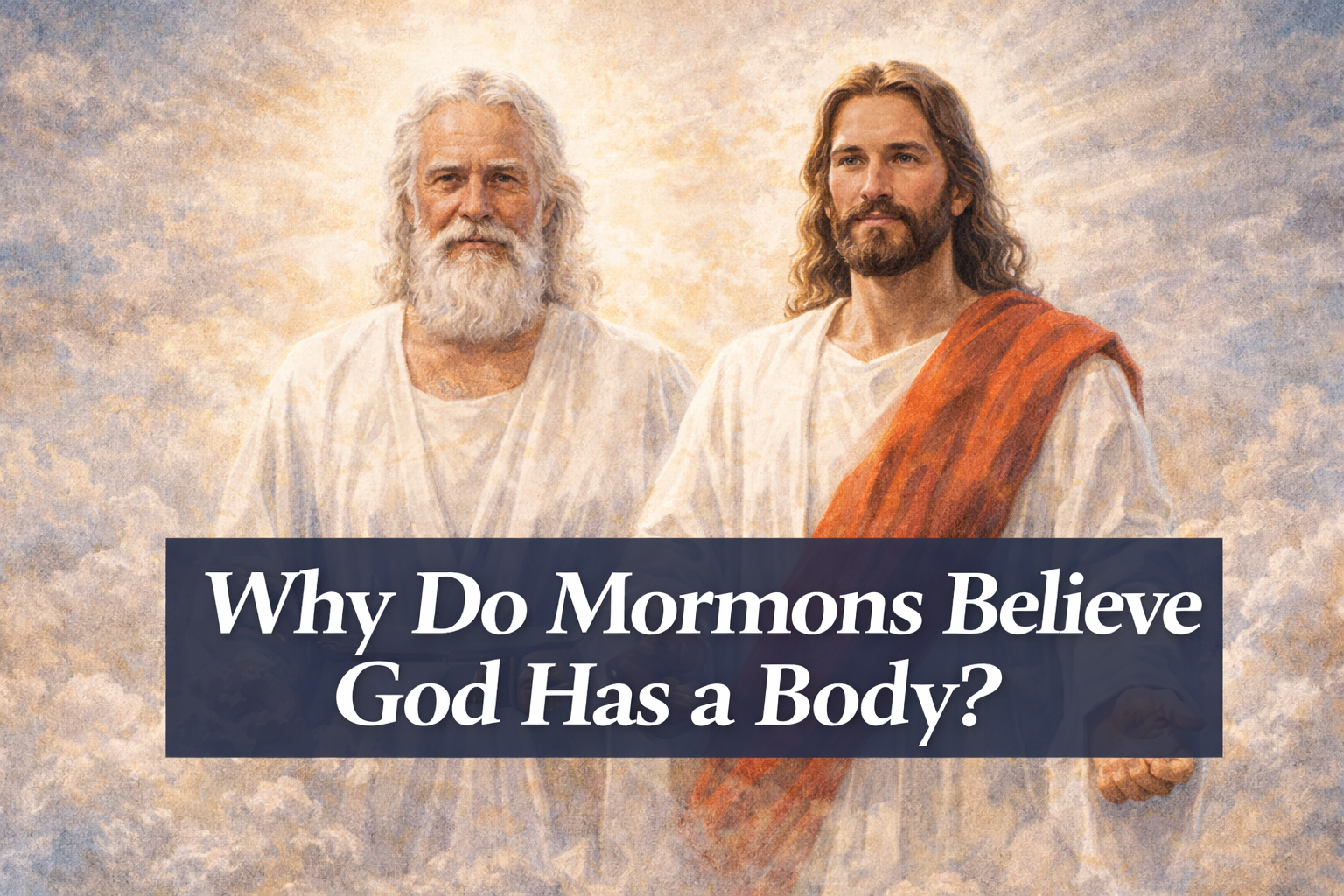
  • Why Do Mormons Believe God Has a Body?

    Why Do Mormons Believe God Has a Body?

    Many people wonder why members of The Church of Jesus Christ of Latter-day Saints believe that God the Father has a body. While many Christian traditions teach that God is purely spiritual, Latter-day Saints believe that God is a glorified, perfected being with a real body of flesh and bones.

    This belief is rooted in scripture, modern revelation, and the life and teachings of Jesus Christ. For Latter-day Saints, believing in an embodied God does not make Him less divine. Instead, it helps us feel closer to Him and better understand His loving, personal relationship with humanity.

    God’s Nature in Latter-day Saint Belief

    Latter-day Saints believe that God the Father is an exalted and perfected being with a tangible body. His Son, Jesus Christ, also has a resurrected, glorified body. The Holy Ghost, however, is a personage of spirit, which allows Him to dwell within hearts and minds and guide individuals.

    We believe that having a body is not a limitation, but part of God’s eternal plan. Physical bodies allow growth, joy, and deeper experience. Because God has a body, we believe our own bodies are sacred gifts with eternal purpose.

    Biblical Foundations for Belief in a Corporeal God

    Latter-day Saints find support for this belief in the Bible. In the book of Genesis, we read that humanity was created in God’s image and likeness. We understand this as a literal statement—that God has a form and that we resemble Him in meaningful ways.

    Throughout the scriptures, God is described as seeing, speaking, walking, and interacting personally with His children. These accounts help us understand God as a real, living being who is actively involved in human lives.

    God Appearing to Prophets

    The Bible contains many accounts of prophets who saw God. Moses spoke with God face to face, and Stephen testified that he saw God the Father and Jesus Christ standing together. For Latter-day Saints, these experiences show that God can be seen and that He has a form.

    They also reinforce the belief that God desires to reveal Himself to His children.

    Jesus Christ as the Perfect Example

    Jesus Christ is the clearest revelation of God’s nature. After His resurrection, Jesus taught that He had flesh and bones and invited His disciples to touch Him. We believe that the resurrected Christ reflects the nature of His Father.

    If Jesus Christ has a glorified body, we believe God the Father does as well.

    The First Vision and Modern Revelation

    Another important reason Latter-day Saints believe God has a body comes from Joseph Smith’s First Vision. He testified that he saw God the Father and Jesus Christ as two distinct, embodied beings.

    This vision affirmed for us that God is not an abstract force, but a real, personal Father who knows His children and can appear to them.

    The Father, Son, and Holy Ghost

    Latter-day Saints believe that the Father, Son, and Holy Ghost are three distinct beings, united in purpose, love, and will. This understanding differs from traditional creeds but is based on scripture and modern revelation.

    United in Purpose

    Although they are separate beings, the members of the Godhead are perfectly united. Their unity comes from complete harmony in truth, love, and divine mission, not from being physically the same being.

    Why This Belief Matters

    Belief that God has a body shapes how Latter-day Saints see themselves and their potential. We believe we are literally children of a Heavenly Father and that our physical bodies are part of His eternal plan.

    This belief also emphasizes God’s empathy. A God who has a body understands human experience, including pain, joy, growth, and struggle.

    A Personal Relationship With God

    Because God has a body, prayer becomes deeply personal. We pray to a real, loving Father who hears us, knows us, and cares about our lives.

    God as a Loving Parent

    Seeing God as an embodied Father strengthens the belief that He is truly our Parent. It reinforces the idea of a close, loving, and eternal family relationship between God and His children.

    Common Misunderstandings

    Some people believe that Latter-day Saints worship many gods. In reality, we worship one Godhead, perfectly united in purpose and authority.

    Others assume that believing God has a body makes Him less divine. Latter-day Saints believe the opposite—that embodiment is a sign of divine perfection and completeness.

    Why This Belief Matters Today

    Believing that God has a body helps many Latter-day Saints feel closer to Him. It reassures us that God understands our lives and is personally involved in our struggles, hopes, and prayers.

    Ultimately, this doctrine invites all people to see themselves as beloved children of God with eternal potential.

    An Invitation

    We invite everyone to learn more about God, study the life of Jesus Christ, and pray sincerely. We believe God will help each person come to know Him in a personal and meaningful way.

    Sources

    The Church of Jesus Christ of Latter-day Saints – Gospel Topics: God the Father
    https://www.churchofjesuschrist.org

    Joseph Smith Papers – First Vision Accounts
    https://www.josephsmithpapers.org

    Pearl of Great Price Central
    https://www.pearlofgreatpricecentral.org

    Scripture Central
    https://scripturecentral.org

  • Why did the church change its name usage?

    Why did the church change its name usage?

    The idea of a church claiming to be “the true Church.” often makes people uncomfortable. In a world shaped by religious diversity, interfaith dialogue, and personal spirituality, such a claim can sound arrogant, dismissive, or even divisive. When Latter-day Saints say they believe they belong to the true Church of Jesus Christ, many assume this means they see themselves as morally superior or believe everyone else is wrong.

    For members of The Church of Jesus Christ of Latter-day Saints, however, the meaning of “true Church” is far more specific and theological than personal or cultural. It is not a statement about who is good, sincere, or loved by God. Instead, it is a belief about authority, divine organization, restored ordinances, and God’s active involvement in guiding His church on earth.

    Latter-day Saints believe they belong to the true Church of Jesus Christ because they believe that Jesus Christ Himself restored His original church through divine revelation, priesthood authority, and living prophets. This belief centers on continuity with the New Testament church, not superiority over other Christians.

    In this context, “true” refers to divine authorization and completeness of doctrine, not to the value or sincerity of individuals in other faith traditions. Understanding this belief requires unpacking what Latter-day Saints mean by “true,” why they emphasize restoration rather than reformation, and how this doctrine coexists with respect, humility, and compassion toward others.

    What Does “True Church” Mean to Latter-day Saints?

    In Latter-day Saint belief, the true Church is defined by its origin and authority, not by the moral perfection of its members. A true church is one that Jesus Christ personally established, authorized, and continues to guide.

    This definition includes several essential elements. First, the church must possess priesthood authority—the divine right to act in God’s name. Second, it must administer ordinances that are valid and binding in God’s eyes. Third, it must receive ongoing revelation so that God can guide His people in changing circumstances.

    Truth, therefore, is institutional and doctrinal rather than personal. Latter-day Saints do not believe that membership automatically makes someone righteous, nor do they believe that people outside their church lack faith or goodness.

    Authority and Ordinances

    A central feature of what makes a church “true” in Latter-day Saint belief is authority. Authority is understood as power delegated by God, not assumed by individuals or institutions.

    This authority is required to perform ordinances such as baptism, confirmation, and other sacred rites believed to be necessary for salvation. Without proper authority, ordinances may be sincere and meaningful, but they are not believed to be divinely binding.

    For Latter-day Saints, authority connects modern religious practice directly to Jesus Christ and His apostles.

    Completeness of Doctrine

    Another defining feature of the true Church is doctrinal completeness. Latter-day Saints believe all essential teachings and ordinances must be present, not partially recovered or symbolically preserved.

    This includes teachings about God, Jesus Christ, salvation, covenants, priesthood, and eternal family relationships. Completeness does not mean that every truth is fully understood, but that the core framework God intends for His church is in place.

    From this perspective, truth is cumulative and revealed progressively through divine guidance.

    Restoration Rather Than Reformation

    One of the most distinctive beliefs of Latter-day Saints is that the true Church did not simply evolve or reform over time, but was restored by God after a period of apostasy. Apostasy refers to the loss of divine authority and doctrinal clarity following the deaths of Christ’s original apostles.

    Rather than believing the true Church continued uninterrupted through history, Latter-day Saints believe it was lost and later restored through revelation.

    This belief sets the Restoration apart from movements that sought to reform existing Christian institutions.

    Divine Initiative

    According to Latter-day Saint belief, the Restoration began with God reaching out to humanity, not humans rediscovering truth on their own. God initiated the process by calling a prophet and restoring authority, doctrine, and ordinances.

    This emphasis on divine initiative reinforces the belief that the Church exists because of revelation rather than historical development.

    The Restoration is understood as an act of divine mercy rather than human correction.

    Not a Human Movement

    Because the Church is believed to have been restored by God, not created by reformers, its authority does not rest on tradition, scholarship, or popular support.

    Latter-day Saints believe this explains why new scripture, modern prophets, and continuing revelation are necessary. A restored church must be guided the same way the original church was guided—by God speaking to chosen servants.

    Role of Priesthood Authority

    Priesthood authority is one of the strongest reasons Latter-day Saints believe their church is the true Church of Jesus Christ. They believe this authority was originally given by Christ to His apostles and later restored through heavenly messengers.

    Authority is transmitted through ordination, not assumed through position or education.

    Without this authority, ordinances are believed to lack eternal binding power.

    Authority Passed by Ordination

    Latter-day Saints believe priesthood authority is passed from one person to another through ordination, following a chain that traces back to Jesus Christ.

    This belief mirrors New Testament patterns in which apostles conferred authority through the laying on of hands.

    Authority is therefore something received, not claimed. This transmission ensures continuity between Christ’s original church and the restored Church today.

    Living Prophets and Ongoing Revelation

    Another defining belief is that a true church must have living prophets. Latter-day Saints believe God continues to speak and guide His church in modern times.

    Revelation did not end with the Bible. Instead, it continues according to God’s will and humanity’s needs.

    This belief allows the Church to remain responsive to contemporary issues while remaining anchored in eternal principles.

    God Still Speaks

    Latter-day Saints believe a silent God would contradict the idea of a living church. If God is actively involved in human history, He must be able to guide His people today.

    Living prophets provide direction, correction, and reassurance. They do not replace scripture but help apply eternal truths to modern contexts.

    Guidance for a Living Church

    A living church faces challenges unknown to ancient societies. Ongoing revelation allows God to address new circumstances without abandoning core doctrine.

    This balance between continuity and adaptation is seen as evidence of divine guidance rather than institutional rigidity.

    Respect for Other Christian Churches

    Despite believing they belong to the true Church, Latter-day Saints emphasize respect for other Christian churches. They believe truth, goodness, and inspiration exist throughout Christianity.

    Other churches are seen as sincere, faithful communities that teach moral truth and devotion to Jesus Christ.

    Claiming institutional truth does not mean denying spiritual value elsewhere.

    Truth Exists Elsewhere

    Latter-day Saints believe God works through many people and institutions. Inspiration, moral goodness, and spiritual insight are not limited to one church.

    This belief encourages humility and cooperation rather than hostility or isolation.

    Members are taught to honor faith wherever it is found.

    Individual Salvation and God’s Mercy

    Latter-day Saints strongly reject the idea that salvation is limited only to members of their church. They believe God judges individuals based on their hearts, actions, and opportunities—not solely on church affiliation.

    They also believe God provides opportunities for all people to accept truth, either in this life or the next.

    This belief balances claims of institutional truth with divine compassion.

    God Is Just and Merciful

    God’s justice ensures fairness, while His mercy ensures opportunity. Latter-day Saints believe no one is condemned for circumstances beyond their control.

    This view prevents the doctrine of the true Church from becoming a tool of condemnation.

    Personal Confirmation Through Revelation

    Latter-day Saints are not asked to accept the Church’s truthfulness blindly. Members are encouraged to seek personal confirmation through prayer and spiritual experience.

    Faith is meant to be grounded in individual revelation, not only institutional claims.

    Ask and Receive

    Individuals are encouraged to ask God directly whether the Church is true. This personal confirmation is considered essential to genuine conviction.

    Truth, in this sense, is both revealed and experienced.

    Common Misunderstandings

    A common misunderstanding is that claiming to be the true Church means rejecting all others. Latter-day Saints explicitly reject this interpretation.

    Another misunderstanding is that this belief promotes arrogance or exclusivity. Church teachings emphasize humility, service, and respect.

    The doctrine is about God’s actions, not human superiority.

    Why This Belief Matters

    Believing the Church is the true Church gives meaning to ordinances, authority, and revelation. It explains why Latter-day Saints emphasize covenants, priesthood, and prophetic guidance.

    For believers, this doctrine affirms that God has not abandoned humanity. He continues to speak, guide, and organize His church through Jesus Christ.

    Ultimately, the belief is not about winning arguments, but about trusting that God is still involved in human history and invites all people to come unto Christ.

    Sources

    The Church of Jesus Christ of Latter-day Saints – Gospel Topics: The Church of Jesus Christ
    https://www.churchofjesuschrist.org

    Joseph Smith Papers – Restoration and Authority
    https://www.josephsmithpapers.org

    Doctrine and Covenants Central – Restoration Doctrine
    https://doctrineandcovenantscentral.org

    Scripture Central
    https://scripturecentral.org

  • Why Do Mormons Emphasize Obedience to Church Leaders?

    Why Do Mormons Emphasize Obedience to Church Leaders?

    In cultures that highly value individual autonomy, skepticism toward authority is common. Many people are cautious—sometimes rightly so—about institutions or leaders claiming influence over belief or behavior. Because of this, outsiders often notice that Latter-day Saints speak frequently about sustaining and following Church leaders and wonder what that obedience really means. Is it blind loyalty? Is questioning discouraged? Are leaders placed above personal conscience?

    Latter-day Saints generally understand obedience to Church leaders very differently from these assumptions. For them, obedience is not about surrendering thought, conscience, or personal responsibility. It is rooted in a belief that God actively guides His Church through inspired servants and that following that guidance—when confirmed personally—leads to unity, protection, and spiritual growth.

    Importantly, obedience to leaders is not viewed as replacing obedience to God. In fact, Latter-day Saints believe obedience to leadership is meaningful only insofar as it reflects trust in God’s direction. Leaders are seen as instruments, not objects of devotion. Christ, not any human leader, is believed to be the head of the Church.

    Understanding why Mormons emphasize obedience to Church leaders requires examining how they understand divine calling, agency, imperfection, unity, accountability, and personal revelation within a faith community.

    Belief in Divine Calling

    A foundational reason Latter-day Saints emphasize obedience to Church leaders is their belief that leaders are divinely called. Leadership is not viewed as a career path, political victory, or result of ambition. Instead, leaders are believed to be chosen through revelation.

    Church leaders are selected through a process that includes prayer, spiritual confirmation, and sustaining by the membership. This process reinforces the belief that leadership is a sacred responsibility rather than a position of power.

    Called, Not Chosen by Ambition

    In Latter-day Saint culture, leadership is understood primarily as service. Leaders are expected to sacrifice time, energy, and personal comfort to care for others. Most leaders serve voluntarily, without pay, alongside full-time jobs and family responsibilities.

    This understanding helps frame obedience not as submission to authority figures seeking power, but as cooperation with servants called to minister.

    Leadership is associated with accountability, not privilege.

    Sustaining as Support

    Members “sustain” leaders through a public expression of support. Sustaining is not merely symbolic; it represents willingness to cooperate, pray for leaders, and work alongside them.

    Sustaining does not mean believing leaders are perfect or agreeing with every decision instinctively. It means supporting their calling and trusting God’s process.

    Obedience Rooted in Agency

    A key distinction in Latter-day Saint belief is that obedience is voluntary. Members are not expected to follow leaders mechanically or unthinkingly. Instead, they are encouraged to seek personal spiritual confirmation.

    Personal revelation is viewed as an essential safeguard that balances leadership authority.

    Personal Confirmation

    Latter-day Saints are taught to pray about counsel they receive from leaders. If guidance aligns with God’s will, they believe individuals can receive confirmation through personal revelation.

    This expectation preserves moral agency and individual accountability. Members are responsible for their own choices, even when those choices involve following counsel.

    Obedience without personal conviction is considered spiritually hollow.

    Faith and Choice

    Faith-based obedience requires choice. Latter-day Saints believe God honors agency so deeply that He does not compel obedience.

    When members choose to follow leadership counsel, they do so as an act of faith, not compulsion. This preserves dignity and moral responsibility.

    Obedience is meaningful precisely because it is chosen.

    Leaders as Imperfect Servants

    Another essential aspect of Latter-day Saint belief is the acknowledgment that leaders are human and imperfect. Obedience does not imply belief in infallibility.

    Leaders are expected to rely on God because they lack personal perfection.

    Humility in Leadership

    Church leaders regularly acknowledge their limitations. They emphasize prayer, counsel, and reliance on revelation rather than personal expertise.

    This humility is built into Church culture. Leaders are encouraged to listen, seek guidance, and correct mistakes when necessary.

    Members are taught to respect leaders while recognizing human weakness.

    Unity and Order

    One of the practical reasons obedience to leadership is emphasized is unity. With millions of members worldwide, shared direction allows the Church to function cohesively.

    Unity is not seen as organizational convenience alone, but as a spiritual principle.

    One Church Worldwide

    Shared guidance helps ensure that members across cultures worship with common purpose. While local customs differ, core practices and teachings remain unified.

    This unity reduces fragmentation and doctrinal confusion. It allows a global faith community to act together rather than splinter.

    Unity is viewed as a strength that magnifies individual efforts.

    Leadership and Accountability

    Contrary to assumptions about centralized power, Church leadership operates within councils and systems of accountability. Decisions are rarely made by one individual alone.

    Leadership is collaborative.

    Counsel Together

    Leaders at every level are encouraged to counsel together, listen to multiple perspectives, and seek consensus. This process reduces personal bias and increases humility.

    Councils are designed to ensure that no single voice dominates decision-making.

    Structure limits authoritarianism rather than enabling it.

    Obedience and Personal Growth

    Latter-day Saints also believe obedience contributes to personal growth. Acting on inspired counsel can develop trust, patience, and humility.

    Growth often comes through practice rather than understanding alone.

    Learning Through Action

    Some spiritual lessons are learned only by acting in faith. Following guidance can stretch comfort zones and refine character.

    Members believe that as they act on counsel, understanding often follows.

    Obedience becomes a learning process rather than blind submission.

    Compassion and Flexibility

    While obedience is emphasized, compassion is central. Leaders are taught to apply policies with sensitivity and awareness of individual circumstances.

    Rules are not meant to override human needs.

    Christlike Leadership

    Leaders are instructed to lead as Christ would—through love, patience, and understanding. Mercy is considered essential to righteous leadership.

    Obedience does not replace empathy. Structure does not eliminate compassion.

    People are always prioritized over policies.

    Common Misunderstandings

    A common misunderstanding is that obedience suppresses critical thinking. In reality, Latter-day Saints emphasize personal revelation, conscience, and moral responsibility.

    Another misunderstanding is that Church leaders replace Christ. Members believe Jesus Christ remains the head of the Church and the ultimate source of authority.

    Leaders point to Christ, not themselves.

    Why This Belief Matters

    Emphasizing obedience to Church leaders fosters unity, trust, and spiritual growth. It helps align personal faith with collective discipleship.

    For Latter-day Saints, obedience to leaders reflects confidence that God continues to guide His Church through inspired servants.

    This belief is not about surrendering thought or conscience. It is about choosing trust, unity, and growth within a community striving to follow Jesus Christ together.

    Sources

    The Church of Jesus Christ of Latter-day Saints – Gospel Topics: Sustaining Leaders
    https://www.churchofjesuschrist.org

    Doctrine and Covenants Central – Leadership and Revelation
    https://doctrineandcovenantscentral.org

    Scripture Central – Authority and Discipleship
    https://scripturecentral.org