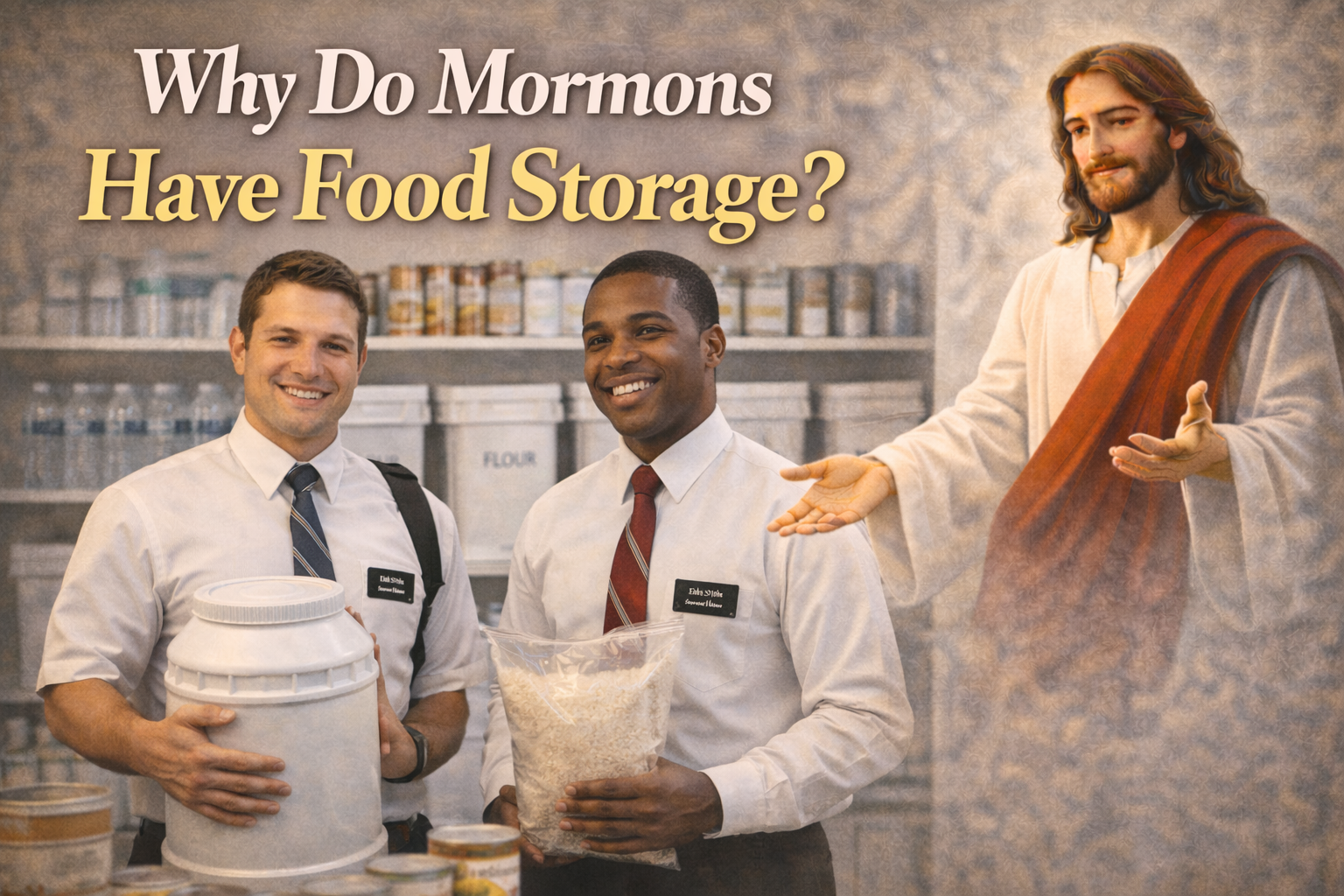
One of the practices often associated with members of The Church of Jesus Christ of Latter-day Saints is food storage. Many people have heard that “Mormons store food,” and this idea sometimes leads to misunderstandings. Some assume it is driven by fear, extreme survivalism, or expectations of imminent catastrophe. Others imagine basements filled with years of supplies stored in isolation from the rest of society.
For Latter-day Saints, food storage is none of those things. It is not about panic, doomsday predictions, or withdrawing from the world. Instead, it is a practical expression of deeply held spiritual values: personal responsibility, self-reliance, stewardship, compassion, and trust in God.
Food storage reflects the belief that God expects His children to prepare wisely for the future while also caring for others. It is a principle rooted in scripture, reinforced by modern prophetic counsel, and applied in balanced, reasonable ways according to individual circumstances.
Understanding why Mormons have food storage requires looking beyond stereotypes and exploring how they understand preparation, faith, family responsibility, and service to others—all within the broader framework of Christian discipleship centered on Jesus Christ.
Preparedness as a Principle of Faith
Latter-day Saints believe faith and preparation go together. Trusting God does not mean ignoring reality or avoiding responsibility. Instead, faith motivates wise action.
In their belief, God works through both spiritual guidance and practical effort. Preparing for the future is seen as a form of obedience and gratitude rather than fear. Food storage is one way members act on the belief that God expects them to use wisdom, foresight, and effort to care for themselves and their families.
This approach reflects a balance between reliance on God and personal responsibility. Latter-day Saints believe God provides resources and guidance, but individuals are accountable for how they use those blessings.
Biblical Foundations for Food Storage
One of the most frequently cited biblical examples supporting food storage is the story of Joseph in Egypt. According to the Bible, Joseph interpreted Pharaoh’s dream as a warning that seven years of abundance would be followed by seven years of famine. Acting on divine inspiration, Joseph organized the storage of grain during times of plenty so the people could survive years of scarcity.
Latter-day Saints view this story as a clear example of inspired preparation. Joseph did not act out of fear but out of wisdom. He did not hoard resources selfishly but organized storage to bless entire nations.
This narrative reinforces the idea that preparation is not a lack of faith, but an expression of it.
Wisdom and Stewardship
Scripture often emphasizes stewardship—the responsibility to manage resources wisely. Latter-day Saints believe everything they have ultimately comes from God, including food, income, time, and abilities.
Food storage is seen as part of responsible stewardship. Preparing for the future shows respect for God’s gifts and acknowledges that blessings should not be wasted or taken for granted.
Learning From Scripture
Beyond Joseph’s story, the Bible repeatedly teaches prudence, foresight, and care for one’s household. Proverbs praises the wise who prepare for the future, while cautioning against recklessness and complacency.
Latter-day Saints believe these teachings apply not only spiritually but also practically.
Modern Prophetic Counsel
In addition to biblical foundations, food storage has been encouraged by modern leaders of The Church of Jesus Christ of Latter-day Saints. Over many decades, Church leaders have taught principles of self-reliance, preparedness, and emergency planning.
This counsel has evolved with time. In earlier periods, members were encouraged to store larger quantities of food due to economic uncertainty and limited access to resources. In more recent years, leaders have emphasized balance, adaptability, and personal circumstances.
The focus today is not on storing excessive amounts of food, but on being reasonably prepared for short-term disruptions and emergencies.
Adapting to Modern Realities
Church leaders recognize that not everyone has the same financial means, living space, or family size. Food storage is not presented as a rigid requirement but as a flexible guideline.
Members are encouraged to do what they reasonably can, according to their situation. This might mean storing a few weeks or months of food, building supplies gradually, or focusing on water and basic necessities.
Personal Responsibility
Preparedness is framed as a personal responsibility rather than a comparison with others. There is no competition or judgment regarding how much food someone stores.
The emphasis is on thoughtful planning rather than perfection.
Self-Reliance and Independence
A central reason Latter-day Saints value food storage is their belief in self-reliance. Self-reliance does not mean isolation or rejection of community support. Instead, it means being capable of caring for oneself and one’s family during temporary hardship.
Food storage helps families remain stable during challenges such as job loss, illness, natural disasters, or supply disruptions. Having basic necessities on hand reduces stress and allows families to focus on problem-solving rather than panic.
Self-reliance is viewed as empowering rather than fearful. It fosters confidence, resilience, and peace of mind.
Strengthening Families
Food storage is closely connected to family responsibility. Latter-day Saints believe parents have a duty to provide for and protect their families.
Preparing food and basic supplies helps ensure that families can meet essential needs even when circumstances change suddenly. This preparation contributes to emotional security as well as physical well-being.
Families who feel prepared often experience less anxiety during crises. Children learn valuable lessons about planning, responsibility, and gratitude.
Food Storage and Emotional Peace
One often overlooked benefit of food storage is emotional peace. Knowing that basic needs can be met during unexpected situations provides reassurance.
Latter-day Saints believe preparedness helps replace fear with calm. Instead of worrying about what might happen, families can face uncertainty with greater confidence.
This emotional stability is considered a blessing in itself.
Helping Others in Times of Need
Food storage is not only about self-preservation. One of its most important purposes is enabling service to others.
Latter-day Saints believe preparation allows them to help neighbors, friends, and community members during emergencies rather than becoming a burden. When disasters occur, those who are prepared are better able to share resources, time, and support.
This reflects the Christian commandment to love one’s neighbor.
Community and Compassion
Many members have stories of sharing food with others during crises—whether after natural disasters, economic downturns, or personal hardships.
Food storage turns compassion into action. It allows members to respond quickly and generously when others are in need.
This outward focus is a core reason food storage is encouraged.
Church Welfare and Preparedness
The Church of Jesus Christ of Latter-day Saints also operates extensive welfare and humanitarian programs. These efforts are supported by principles of self-reliance and preparedness at both individual and organizational levels.
Food storage at the family level complements broader Church efforts to care for the poor and needy.
Prepared individuals strengthen the entire community.
What Food Storage Typically Includes
Food storage does not mean storing unusual or unfamiliar foods. Latter-day Saints are encouraged to store items they already use regularly.
This often includes staples such as grains, canned goods, dried foods, water, and basic household supplies. The goal is practicality, not novelty.
Storing familiar foods ensures that supplies can be rotated and used without waste.
Gradual Preparation
A key principle emphasized by Church leaders is gradual preparation. Food storage is meant to be built over time, not through sudden or overwhelming purchases.
Members are encouraged to start small and add items gradually as resources allow. This approach prevents financial strain and makes preparedness manageable.
Avoiding Waste
Wise food storage includes proper rotation and use. Latter-day Saints are taught to avoid waste by regularly consuming stored food and replacing it.
This reinforces the principle of stewardship and respect for resources.
Not Fear-Based or Apocalyptic
One of the most common misunderstandings about food storage is that it reflects fear of the end of the world. Latter-day Saints strongly reject this idea.
Food storage is not motivated by predictions of apocalypse. It is motivated by everyday realities such as storms, power outages, economic instability, and personal emergencies.
Most emergencies are temporary and local. Food storage helps families weather these situations with dignity and stability.
Balance and Reasonableness
Church leaders consistently emphasize balance. Food storage should not become an obsession or source of anxiety.
Preparedness is meant to simplify life, not complicate it. Members are encouraged to remain calm, flexible, and focused on spiritual priorities.
Trust in God and Human Effort
Food storage illustrates how Latter-day Saints combine trust in God with practical effort. They believe God expects His children to act wisely while trusting Him for ultimate outcomes.
Preparation does not replace faith; it expresses faith.
This balance reflects the belief that God often works through human planning and action.
Teaching Children About Preparedness
Food storage is often a teaching opportunity within families. Children learn lessons about planning, gratitude, and helping others.
Parents may involve children in simple preparedness activities, such as organizing supplies or learning how to use stored food.
These experiences teach responsibility without fear.
Preparedness in a Modern World
In an interconnected global economy, disruptions can happen quickly. Supply chains, natural disasters, and economic shifts can affect access to basic goods.
Latter-day Saints believe reasonable preparedness is increasingly relevant in modern society. Food storage helps families adapt to temporary disruptions without panic.
Preparedness and Dignity
Being prepared allows families to maintain dignity during hardship. Rather than relying immediately on external assistance, they can draw on their own resources.
This does not eliminate the need for community support, but it strengthens personal confidence and resilience.
Common Misunderstandings
Some believe food storage is mandatory or strictly enforced. In reality, it is encouraged, not policed.
Others believe it requires large financial investment. Church teachings emphasize modest, gradual preparation.
Some assume it leads to isolation. In practice, it often leads to greater community engagement and service.
Why This Belief Matters
Food storage matters because it reflects how Latter-day Saints view life: as something requiring both faith and responsibility.
It reinforces principles of self-reliance, compassion, foresight, and trust in God. It prepares individuals not only to survive difficulties, but to serve others during them.
For believers, food storage is a quiet expression of discipleship—lived out in practical, everyday choices.
A Broader Christian Perspective
Many Christian traditions value preparation, charity, and care for family. Latter-day Saints see food storage as consistent with these broader Christian values.
They believe preparing for the future allows them to focus more fully on loving God and serving others.
An Invitation
Latter-day Saints invite others to understand food storage not as fear-driven behavior, but as thoughtful, faith-based preparation.
They believe wise preparation brings peace rather than anxiety and enables people to face uncertainty with confidence and generosity.
Sources
The Church of Jesus Christ of Latter-day Saints – Gospel Topics: Self-Reliance
https://www.churchofjesuschrist.org
Church News – Preparedness and Self-Reliance
https://www.thechurchnews.com
Doctrine and Covenants Central
https://doctrineandcovenantscentral.org
Scripture Central
https://scripturecentral.org