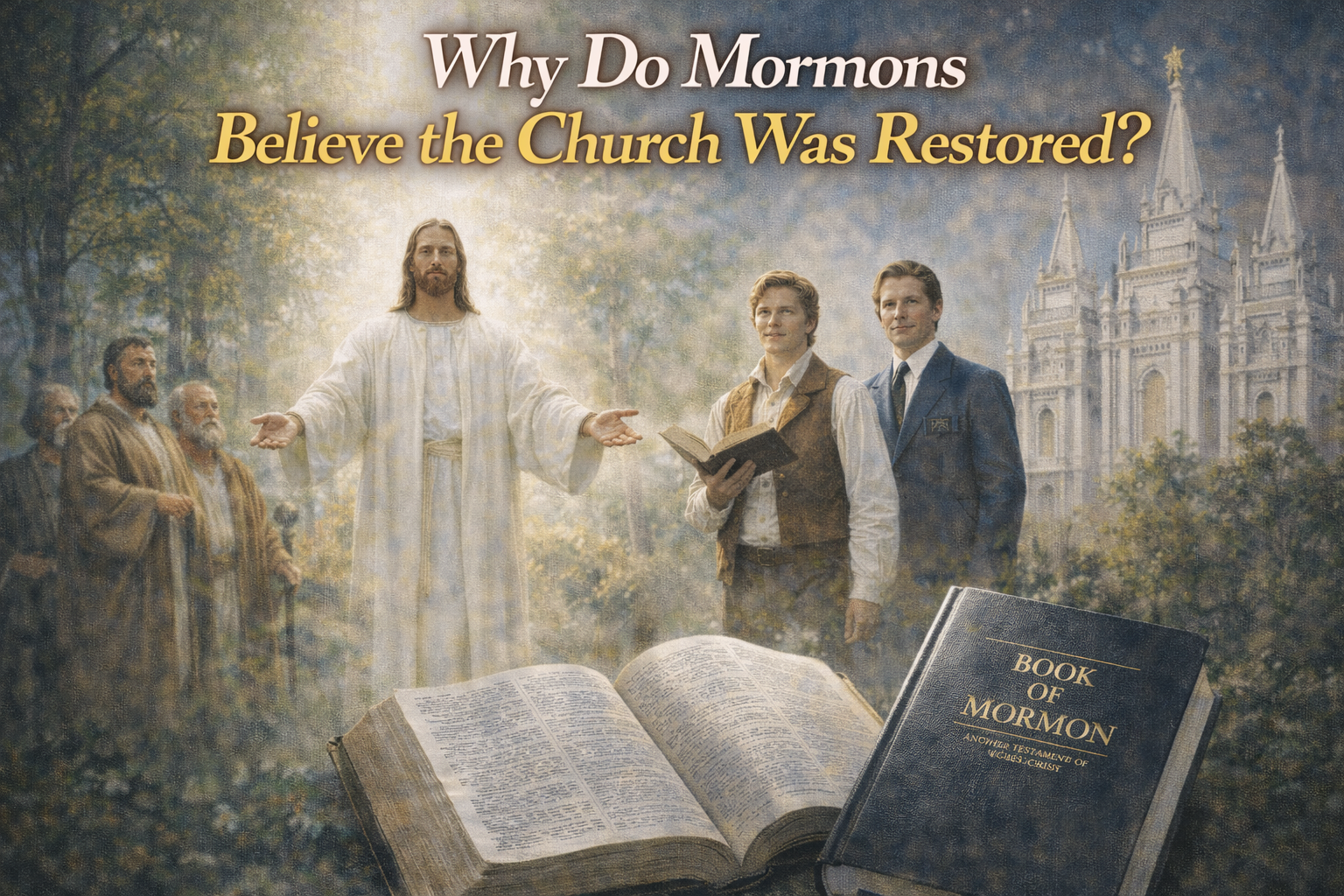
One of the most distinctive beliefs of The Church of Jesus Christ of Latter-day Saints is the conviction that Christ’s original church was restored rather than merely reformed. This belief shapes how Latter-day Saints understand Christianity, history, scripture, authority, and God’s relationship with humanity. To them, the idea of restoration explains why modern prophets exist, why priesthood authority matters, and why additional scripture is accepted alongside the Bible.
Latter-day Saints do not believe Christianity disappeared after the time of Jesus Christ. They fully acknowledge the faith, devotion, sacrifice, and sincerity of countless Christians throughout history. Instead, they believe that something essential was gradually lost: divine authority and the fullness of doctrine Christ originally established. Restoration, therefore, does not mean replacing Christianity but completing and renewing it through divine action.
For believers, the Restoration affirms that God is not distant or silent. It teaches that Jesus Christ continues to lead His church and actively guide humanity according to His eternal plan.
What Is Meant by “Restoration”?
In Latter-day Saint belief, restoration means bringing back what once existed but was lost or diminished over time. Specifically, it refers to the return of priesthood authority, true doctrine, divine ordinances, and direct revelation that were present in the early Christian church.
Restoration is fundamentally different from reform. Reform attempts to correct or improve an existing system through human effort. Restoration, by contrast, requires divine intervention. Latter-day Saints believe only God could restore what had been lost.
Restoring What Was Lost
According to this belief, Jesus Christ originally organized His church with apostles, prophets, authority, and ordinances. Restoration means reestablishing that same pattern in modern times.
Christ at the Center
Restoration is not about Joseph Smith or church structure alone. Jesus Christ remains the foundation, head, and purpose of the restored church. All restored doctrine and authority point back to Him.
The Early Church Jesus Christ Established
Latter-day Saints believe Jesus Christ established a clearly organized church during His earthly ministry. He called apostles, gave them authority, taught doctrine, administered ordinances, and promised continued guidance through the Holy Spirit.
After His resurrection, Christ continued to direct His church through revelation. Apostles taught, baptized, ordained leaders, and resolved doctrinal issues through councils.
This early church, according to Latter-day Saint belief, was unified by revelation and divine authority rather than written creeds.
The Apostasy After the Apostles
Central to the belief in restoration is the idea of a Great Apostasy. Latter-day Saints believe that after the deaths of Christ’s apostles, several factors contributed to the gradual loss of Christ’s original church.
These factors included persecution, internal disagreements, loss of revelation, and unauthorized changes to doctrine and church governance.
Loss of Authority
Without apostles to pass on priesthood authority, Latter-day Saints believe the authority to act in God’s name was no longer present in its original form. While sincere believers remained, the divine authorization Christ established did not continue uninterrupted.
Sincere Believers Remained
Importantly, Latter-day Saints do not believe God abandoned humanity during this period. Many faithful Christians loved Christ, lived moral lives, and preserved scripture. The loss was institutional and authoritative, not spiritual sincerity.
Changes in Doctrine and Practice
Over centuries, Christian doctrine developed through councils and creeds. Latter-day Saints believe some of these developments represented honest attempts to understand God but were influenced by philosophy, culture, and human reasoning rather than revelation.
This led to differing interpretations of God’s nature, salvation, and authority.
Latter-day Saints believe these changes demonstrate the need for divine restoration rather than human reinterpretation.
Biblical Support for Apostasy
Latter-day Saints point to several biblical passages they believe predict a falling away from original truth. These passages speak of a departure from doctrine, loss of authority, and spiritual darkness before a future restoration.
They interpret these scriptures not as condemnation of believers, but as prophecy of historical conditions.
Warnings From the Apostles
The New Testament contains warnings from apostles about false teachers, doctrinal corruption, and the loss of truth. Latter-day Saints see these warnings as evidence that apostasy was anticipated.
Biblical Support for Restoration
Just as scripture speaks of apostasy, Latter-day Saints believe it also speaks of restoration. They point to prophecies that describe truth being restored, knowledge increasing, and God speaking again in the latter days.
These passages are interpreted as promises that God would act to restore His church when the time was right.
Prophecies of Restoration
Scriptures describing the “restitution of all things” are central to this belief. Restoration is seen as fulfillment, not contradiction, of biblical prophecy.
Why Restoration Required Divine Action
Latter-day Saints believe that priesthood authority cannot be claimed, voted on, or inherited. It must be given by God through authorized means.
Because that authority was lost, only God could restore it. Human reform, no matter how sincere, could not replace divine commission.
This belief explains why Latter-day Saints emphasize revelation, angels, and divine instruction in the Restoration narrative.
The Role of Joseph Smith
Joseph Smith’s role is understood within this framework. Latter-day Saints believe God called him not because of education, power, or ambition, but because of humility and willingness.
Through visions, revelations, and angelic visitations, they believe Joseph Smith received authority, scripture, and instruction to begin the Restoration.
Divine Commission
Joseph Smith did not claim to reform existing churches. He claimed God instructed him to restore Christ’s original church. This distinction is central to understanding Latter-day Saint belief.
Restoration of Priesthood Authority
A key element of the Restoration was the return of priesthood authority. Latter-day Saints believe heavenly messengers restored the same authority held by John the Baptist and the apostles of Jesus Christ.
This authority allows ordinances such as baptism, confirmation, and temple covenants to be performed with divine approval.
Continuity With Ancient Christianity
Latter-day Saints believe the restored priesthood is identical in authority to that held in the early Christian church, creating continuity rather than division.
Restoration of Doctrine
Along with authority, doctrine was restored. Latter-day Saints believe God revealed truths about His nature, humanity’s divine potential, the plan of salvation, and the role of Jesus Christ.
They believe these doctrines clarify, rather than contradict, biblical teachings.
Additional Scripture as Part of Restoration
The Book of Mormon is viewed as evidence of restoration. Latter-day Saints believe it is another witness of Jesus Christ that confirms the Bible and restores plain and precious truths.
They believe God has spoken through scripture in many times and places, not just one historical period.
Organization of the Restored Church
The Church of Jesus Christ of Latter-day Saints was organized gradually as revelation continued. Leadership offices, councils, quorums, and auxiliaries developed according to divine instruction.
This structure reflects belief in order, accountability, and shared leadership.
Continuing Revelation
Restoration is not viewed as a single historical moment. Latter-day Saints believe God continues to reveal truth through living prophets.
This allows the Church to remain rooted in eternal doctrine while addressing modern challenges.
A Living Church
Revelation is believed to guide doctrine, organization, and practice. This belief distinguishes restoration from a closed historical event.
Why Restoration Matters for Worship
Because of restoration, Latter-day Saints believe ordinances performed today are valid and recognized by God. Worship is not symbolic alone, but covenantal and authoritative.
This gives confidence in baptism, temple worship, and priesthood blessings.
Why Restoration Matters for Salvation
Restoration explains why Latter-day Saints emphasize ordinances, authority, and covenants. Salvation, in their belief, involves both faith in Christ and participation in divinely authorized ordinances.
These ordinances are made available to all people, living and deceased.
Restoration and God’s Character
Belief in restoration reflects belief in a God who is loving, patient, and involved. Rather than abandoning humanity after apostasy, God prepared a time for renewal.
Restoration is seen as evidence of divine compassion and foresight.
Respect for Other Christians
A common misunderstanding is that restoration means rejecting all other churches. Latter-day Saints believe many churches teach truth, inspire goodness, and bring people closer to Christ.
Restoration is about fullness, not exclusivity.
Restoration and Unity
Latter-day Saints believe restoration ultimately points toward unity in Christ. Rather than fragmenting Christianity further, restoration is seen as God’s effort to reunite His children under Christ’s leadership.
Modern Implications of Restoration
Today, restoration shapes everything from missionary work to family life. It motivates service, outreach, and global growth.
Believers feel responsibility to share what they believe God has restored.
Restoration and Personal Faith
Latter-day Saints emphasize that belief in restoration should be personally confirmed. Individuals are encouraged to study, pray, and seek spiritual confirmation.
Faith is meant to be personal, not inherited.
Common Misunderstandings
One misunderstanding is that restoration claims superiority over others. Latter-day Saints believe restoration is about responsibility, not privilege.
Another misunderstanding is that restoration dismisses history. Believers see it as fulfillment of history.
Why This Belief Matters
Belief in restoration explains the existence of modern prophets, additional scripture, priesthood authority, and temples. It shapes how Latter-day Saints understand God’s ongoing work.
For believers, restoration offers hope that God continues to speak, guide, and love His children.
Conclusion
Latter-day Saints believe the Church was restored because they believe Jesus Christ intended His church to continue with authority, revelation, and ordinances. When those elements were lost, God prepared a time to restore them.
Restoration is not about rejecting Christianity, but renewing it through divine action. It reflects belief in a living God who continues to guide His church through Jesus Christ.
For believers, restoration affirms continuity, purpose, and confidence that Christ still leads His church today.
Sources
The Church of Jesus Christ of Latter-day Saints – Gospel Topics: Restoration
https://www.churchofjesuschrist.org
Joseph Smith Papers – Restoration Documents
https://www.josephsmithpapers.org
Doctrine and Covenants Central
https://doctrineandcovenantscentral.org
Scripture Central
https://scripturecentral.org