
Author: Milagre Muchocho

  • Why Do Mormons Do Endowments?

    Why Do Mormons Do Endowments?

    Among the teachings and practices of The Church of Jesus Christ of Latter-day Saints, the temple endowment is often one of the least understood. For many outside the Church—and even for some members before attending—it can raise questions. What is an endowment? Why is it performed in temples? And what role does it play in the life of a Latter-day Saint?

    For Latter-day Saints, the temple endowment is not a mysterious ritual meant to impress or exclude. It is a sacred ordinance focused on worship, instruction, and covenant making. The word “endowment” itself means a gift. Members believe this ordinance represents a divine gift from God—one that includes spiritual knowledge, promised blessings, and strength to follow Jesus Christ throughout life.

    Rather than being an isolated ceremony, the endowment is understood as part of a lifelong journey of discipleship. It helps individuals understand who they are in relation to God, why they are on earth, and how Jesus Christ makes salvation possible. For Latter-day Saints, the endowment is deeply personal, Christ-centered, and focused on eternal purpose.

    To understand why Mormons do endowments, it is important to explore how they understand covenants, temples, symbolism, agency, salvation, and the central role of Jesus Christ in God’s plan.

    What Is the Temple Endowment?

    The temple endowment is a sacred ordinance performed in Latter-day Saint temples. Through symbolic instruction, participants learn about God’s plan of salvation, the purpose of mortal life, and the role of Jesus Christ as Savior and Redeemer.

    The endowment is not designed to entertain or impress. It is designed to teach eternal truths in a reverent setting. Participants are invited to reflect, listen, learn, and make covenants with God.

    These covenants include commitments to live according to gospel principles such as obedience, sacrifice, moral integrity, devotion to Jesus Christ, and faithfulness to God. In return, God promises spiritual guidance, strength, and eternal blessings.

    The endowment is not about gaining secret knowledge. It is about gaining spiritual understanding—an understanding that deepens over time as individuals continue to live the covenants they make.

    A Gift of Spiritual Understanding

    Latter-day Saints believe the endowment helps them better understand God’s purposes and their place in His plan. This understanding is not instant or complete after a single experience. Instead, it unfolds gradually through study, prayer, reflection, and faithful living.

    Many members describe the endowment as something that becomes more meaningful as they mature spiritually. As life experiences accumulate, the teachings of the endowment provide insight, perspective, and reassurance.

    Covenants, Not Secrets

    A common misconception is that the endowment focuses on hidden knowledge. Latter-day Saints emphasize that the heart of the endowment is covenants—sacred promises made with God.

    These covenants are personal and sacred, which is why they are not discussed casually. This sacredness is not secrecy meant to exclude, but reverence meant to protect what is holy.

    The Meaning of Covenants in Latter-day Saint Belief

    To understand the endowment, one must understand the role of covenants in Latter-day Saint theology.

    A covenant is a solemn agreement between God and an individual. It involves promises, responsibilities, and divine blessings. Covenants are not merely symbolic; they are intended to shape daily life and spiritual identity.

    Latter-day Saints believe covenants help individuals align their lives with God’s will. They provide structure, purpose, and spiritual direction. The endowment includes covenants that invite participants to live intentionally as disciples of Jesus Christ.

    Importantly, covenants are entered voluntarily. No one is forced to receive the endowment. Participation is a matter of personal faith and choice.

    Biblical and Scriptural Foundations

    Latter-day Saints believe the concept of endowment is rooted in scripture. The Bible speaks of God endowing His people with power from on high and providing sacred instruction in holy places.

    Jesus Christ told His disciples to wait until they were endowed with power before beginning their ministry. Latter-day Saints understand this as evidence that God provides spiritual preparation and strength through sacred experiences.

    Ancient temple worship also included instruction, symbolism, and covenant making. While the details of ancient temple ceremonies are not fully preserved in the Bible, Latter-day Saints believe modern temple ordinances restore principles that existed in earlier times.

    Instruction Through Symbolism

    Symbolism has always played a central role in religious teaching. Jesus taught through parables, metaphors, and symbolic actions. Scripture itself is filled with imagery that conveys deep spiritual truths.

    Latter-day Saints believe symbolism invites deeper reflection. Rather than providing all meaning at once, symbolic teaching encourages personal discovery through prayer and contemplation.

    The endowment uses symbolism to teach about creation, choice, obedience, and redemption through Jesus Christ. These symbols are not meant to confuse, but to invite learning at different levels of spiritual understanding.

    God’s Plan of Salvation

    One of the primary purposes of the endowment is to teach about God’s plan of salvation. Latter-day Saints believe this plan explains where humanity came from, why life exists, and what happens after death.

    The endowment presents this plan in a way that emphasizes individual identity as a child of God and personal responsibility to choose good over evil.

    Central to this plan is Jesus Christ. His atonement makes repentance, forgiveness, and eternal life possible. The endowment teaches reliance on Christ rather than self-sufficiency.

    Role of Jesus Christ in the Endowment

    Jesus Christ is central to every aspect of the temple endowment. Latter-day Saints believe the ordinance points participants toward Christ as the source of salvation, strength, and hope.

    The covenants made in the endowment are meaningful only because of Christ’s atonement. Human effort alone is insufficient. Redemption comes through Jesus Christ.

    The endowment teaches that Christ’s grace empowers individuals to keep covenants, overcome weakness, and grow spiritually.

    Strength Through Christ

    Many Latter-day Saints describe the endowment as a source of spiritual strength. Life inevitably includes hardship, temptation, and uncertainty. The endowment reminds participants that they are not alone.

    They believe God provides divine help through covenants, the Holy Spirit, and continued reliance on Christ.

    Divine Help and Guidance

    Members often describe returning to the temple as a way to regain spiritual clarity. The endowment serves as a spiritual anchor—reminding individuals of eternal truths when life becomes overwhelming.

    Endowments for the Living

    When living individuals receive the endowment, it marks a significant moment in their spiritual journey. It often occurs before major life transitions such as missionary service or marriage.

    Receiving the endowment does not mean spiritual growth is complete. Rather, it represents a beginning—a deeper commitment to discipleship.

    The endowment encourages individuals to live with greater purpose, awareness, and devotion to God.

    Endowments for the Dead

    Like other temple ordinances, endowments can be performed by proxy for deceased individuals. Latter-day Saints believe God’s plan includes opportunities for all people, regardless of when or where they lived.

    Proxy endowments extend the same opportunities to those who died without receiving them in mortality. As with all proxy ordinances, acceptance remains a personal choice in the spirit world.

    This practice reflects belief in a God who is just, merciful, and respectful of agency.

    The Spirit World and Continued Learning

    Latter-day Saints believe that learning does not end at death. In the spirit world, individuals continue to grow, learn, and make choices.

    Proxy ordinances ensure that those who accept the gospel after death have access to the same ordinances required for salvation.

    This belief reinforces the idea that God’s work is ongoing and inclusive.

    Agency and Accountability

    Agency is fundamental to the endowment. No one is compelled to make covenants or keep them.

    The endowment emphasizes personal responsibility. Covenants invite commitment, but they do not remove freedom of choice. Individuals remain accountable for how they live.

    This balance between commitment and agency is central to Latter-day Saint belief.

    Endowments and Grace

    Some assume the endowment implies salvation is earned through rituals. Latter-day Saints strongly reject this idea.

    They believe salvation comes only through Jesus Christ. Ordinances like the endowment provide a way to accept and live in harmony with Christ’s grace.

    Grace does not eliminate effort, but effort does not replace grace. The endowment teaches reliance on Christ rather than perfectionism.

    Common Misunderstandings

    A frequent misunderstanding is that endowments are secret or strange rituals. Latter-day Saints explain they are sacred acts of worship focused on teaching and covenant making.

    Another misunderstanding is that the endowment replaces personal faith. In reality, faith in Jesus Christ is foundational. The endowment builds upon faith; it does not replace it.

    Some believe the endowment creates spiritual elitism. Latter-day Saints believe it invites humility, service, and accountability.

    Why This Belief Matters

    The temple endowment matters because it shapes how Latter-day Saints understand life, purpose, and identity. It encourages consistency between belief and behavior.

    The endowment provides a framework for lifelong discipleship. It reminds individuals of who they are, what they value, and why Jesus Christ matters.

    For many, it is a source of peace, direction, and spiritual resilience.

    The Endowment and Daily Life

    Although received in the temple, the endowment is meant to influence daily living. It encourages ethical behavior, compassion, and devotion to God in ordinary moments.

    Latter-day Saints believe discipleship is not confined to sacred spaces. The endowment helps carry sacred commitments into everyday life.

    A Broader Vision of Eternal Life

    The endowment reflects a broad vision of eternal life—one that includes learning, growth, relationships, and service.

    It teaches that salvation is not merely escape from punishment, but transformation through Jesus Christ.

    An Invitation

    Latter-day Saints invite others to learn about the temple endowment with openness and respect. They believe sincere questions lead to understanding and that God reveals truth to those who seek Him.

    They invite all people to study the teachings of Jesus Christ and consider God’s plan for their lives.

    Sources

    The Church of Jesus Christ of Latter-day Saints – Gospel Topics: Endowment
    https://www.churchofjesuschrist.org

    Gospel Topics Essays – Temple Worship
    https://www.churchofjesuschrist.org/study/manual/gospel-topics-essays

    Doctrine and Covenants Central
    https://doctrineandcovenantscentral.org

    Scripture Central
    https://scripturecentral.org

  • Why Do Mormons Marry in Temples?

    Why Do Mormons Marry in Temples?

    For many people, marriage is one of life’s most meaningful milestones. It represents love, commitment, companionship, and shared purpose. In most cultures and religious traditions, marriage is understood as a lifelong bond—yet one that ultimately ends at death. Latter-day Saints, however, believe marriage can be far more than a temporary arrangement. They believe it can be eternal.
    This belief explains why members of The Church of Jesus Christ of Latter-day Saints choose to marry in temples. For them, a temple marriage is not simply a wedding location or a religious custom. It is a sacred covenant with God, entered with the belief that marriage can continue beyond death and into eternity.

    Understanding why Mormons marry in temples requires understanding how they view God, Jesus Christ, covenants, authority, family, salvation, and eternal life. Temple marriage reflects a deeply hopeful view of human relationships—one in which love, growth, and commitment are not meant to end at the grave.

    Marriage in Latter-day Saint Belief

    Latter-day Saints believe marriage is divinely ordained. From their perspective, marriage is not merely a social institution created by human society, but part of God’s plan for His children.

    Marriage is seen as a partnership designed to help individuals grow spiritually, emotionally, and morally. It provides a setting where love, sacrifice, patience, forgiveness, and service can be learned and practiced daily.

    Unlike some religious traditions that emphasize individual salvation apart from family relationships, Latter-day Saints believe family relationships are central to God’s plan. Marriage is not incidental—it is foundational.

    Difference Between Civil Marriage and Temple Marriage

    Civil marriage is legally recognized and meaningful. Latter-day Saints respect civil marriage and believe it plays an important role in society. However, they also believe civil marriages are temporary by nature, lasting only until death.

    Temple marriages, by contrast, are believed to be eternal. They are performed by priesthood authority in a temple and are often referred to as sealings. Through this ordinance, husband and wife are sealed together not only “until death,” but for eternity.

    This distinction is not meant to diminish civil marriage, but to explain why Latter-day Saints seek something more enduring—something they believe requires divine authority.

    Eternal Perspective on Marriage

    Temple marriage emphasizes an eternal perspective. Couples who marry in a temple are encouraged to view their relationship through the lens of eternity rather than convenience or temporary happiness.

    This perspective shapes how couples approach challenges. Difficulties are not seen as reasons to abandon the relationship, but as opportunities for growth, repentance, forgiveness, and Christlike love.

    Marriage is understood as a long-term spiritual partnership rather than a short-term contract.

    Covenants Rather Than Contracts

    A key difference between civil and temple marriage is the concept of covenant. A contract is an agreement between two parties, often based on mutual benefit and enforceable only under certain conditions.

    A covenant, in Latter-day Saint belief, is a sacred promise made with God. Temple marriage is not just a promise between two people—it is a covenant between husband, wife, and God.

    Latter-day Saints believe covenants invite God’s guidance, strength, and grace into the marriage. They also bring accountability, reminding couples that their relationship has eternal significance.

    Authority and Eternal Marriage

    Central to temple marriage is the belief in priesthood authority. Latter-day Saints believe Jesus Christ gave authority to His apostles to perform ordinances that would be binding both on earth and in heaven.

    Jesus taught that what is bound on earth can be bound in heaven. Latter-day Saints interpret this as evidence that God can authorize eternal ordinances performed by those holding His authority.

    They believe this authority was lost after the deaths of the apostles and later restored through modern revelation. Temple marriages are performed under this restored authority.

    Without this authority, Latter-day Saints believe marriage remains a beautiful and meaningful relationship—but one that does not extend beyond death.

    Biblical Foundations for Eternal Marriage

    Latter-day Saints believe the Bible supports the idea of eternal marriage, even if the doctrine is not fully explained in traditional Christian theology.

    The Bible emphasizes covenant relationships and God’s power over death. Jesus Christ’s resurrection demonstrates that death does not have ultimate authority.

    Marriage is presented in scripture as divinely instituted. God joined Adam and Eve and commanded them to become one. Latter-day Saints see this as evidence that marriage was intended to be more than a temporary arrangement.

    They also point to teachings about sealing authority and eternal covenants, which they believe lay the foundation for eternal marriage.

    The Role of the Temple

    Temples play a unique role in Latter-day Saint worship. Unlike chapels, which are used for weekly services, temples are reserved for sacred ordinances believed to have eternal effect.

    Temple marriages are performed in a reverent setting designed to focus attention on God rather than spectacle. There are no elaborate decorations, music, or social displays during the ceremony itself. The emphasis is on humility, commitment, and covenant.

    This setting reflects the belief that eternal marriage begins with God, not with performance or public recognition.

    Focus on Jesus Christ

    Temple marriage ceremonies are centered on Jesus Christ. The purpose is not to celebrate romance alone, but to begin a marriage grounded in faith, obedience, and reliance on Christ.

    Latter-day Saints believe that only through Jesus Christ can marriage become eternal. His atonement makes forgiveness possible, His teachings guide family life, and His resurrection makes eternal relationships achievable.

    Preparation and Worthiness

    Before marrying in a temple, couples prepare spiritually. This preparation includes learning gospel principles, committing to live according to Christ’s teachings, and reflecting on the seriousness of the covenant they are about to make.

    This preparation is not about perfection. It is about sincerity, humility, and willingness to grow.

    Marriage, Family, and Eternal Growth

    Latter-day Saints believe temple marriage is foundational to eternal families. They believe children born to parents sealed in the temple are automatically part of that eternal family unit.

    This belief influences how parents approach family life. Parenting is seen not only as a responsibility for this life, but as part of an eternal stewardship.

    Families are viewed as central to spiritual growth. Home life becomes a place where faith is practiced daily, where children learn values, and where discipleship is lived in ordinary moments.

    Marriage as a School of Discipleship

    In Latter-day Saint belief, marriage is one of the primary settings in which individuals learn to follow Jesus Christ.

    Marriage requires patience, humility, sacrifice, forgiveness, and service—qualities that are central to Christian discipleship. Temple marriage frames these challenges as spiritually meaningful rather than merely emotional or practical.

    Couples are encouraged to see their relationship as a joint effort to become more Christlike together.

    Eternal Marriage and Agency

    Although temple marriage is believed to be eternal, it is not automatic or unconditional. Latter-day Saints believe agency remains central.

    Eternal marriage depends on faithfulness to covenants. Individuals must choose to follow Jesus Christ, repent when they fall short, and continue striving to live according to God’s will.

    This emphasis on agency preserves moral responsibility and avoids the idea that eternal blessings are guaranteed regardless of personal choice.

    Temple Marriage and Grace

    Temple marriage does not eliminate the need for grace. Latter-day Saints believe no marriage is perfect and no individual is without weakness.

    They believe God’s grace makes growth, healing, and reconciliation possible. Eternal marriage is not based on flawless performance, but on repentance, forgiveness, and reliance on Jesus Christ.

    Grace does not remove accountability, but it makes enduring commitment possible despite human imperfection.

    Common Misunderstandings

    One common misunderstanding is that temple marriage diminishes romance or emotional connection. Latter-day Saints believe the opposite. They believe temple marriage deepens love by grounding it in shared faith, purpose, and eternal commitment.

    Another misunderstanding is that those who marry outside the temple are excluded or lesser. Latter-day Saints believe everyone has opportunities to receive temple blessings, either in this life or in the next.

    Some also assume temple marriage is about social pressure. In reality, Latter-day Saints view it as a personal choice rooted in belief and faith.

    Temple Marriage and Loss

    For Latter-day Saints, temple marriage provides profound comfort in times of loss. The belief that marriage can continue beyond death offers hope that separation is not final.

    This belief does not eliminate grief, but it provides a framework of hope, reunion, and trust in God’s plan.

    Why This Belief Matters

    Temple marriage matters because it offers a vision of marriage rooted in eternity rather than convenience. It encourages commitment, patience, and long-term devotion.

    For Latter-day Saints, marrying in a temple is an expression of hope—hope that love can endure, that families can remain united, and that God’s plan is bigger than mortality.

    It also provides motivation to work through challenges rather than abandon relationships when difficulties arise.

    A Broader View of Love and Commitment

    Temple marriage reflects a broader view of love. Love is not only a feeling, but a covenant-based commitment that grows through effort, sacrifice, and faith.

    This view challenges cultural ideas of marriage as disposable or temporary. It invites couples to think long-term and eternally.

    An Invitation

    Latter-day Saints invite others to learn about temple marriage, study the teachings of Jesus Christ, and seek understanding through prayer.

    They believe God’s plan for families is rooted in love, growth, and eternal connection—and that sincere seekers can come to understand His purposes.

    Sources

    The Church of Jesus Christ of Latter-day Saints – Gospel Topics: Marriage
    https://www.churchofjesuschrist.org

    Gospel Topics Essays – Marriage and Family
    https://www.churchofjesuschrist.org/study/manual/gospel-topics-essays

    Doctrine and Covenants Central
    https://doctrineandcovenantscentral.org

    Scripture Central
    https://scripturecentral.org

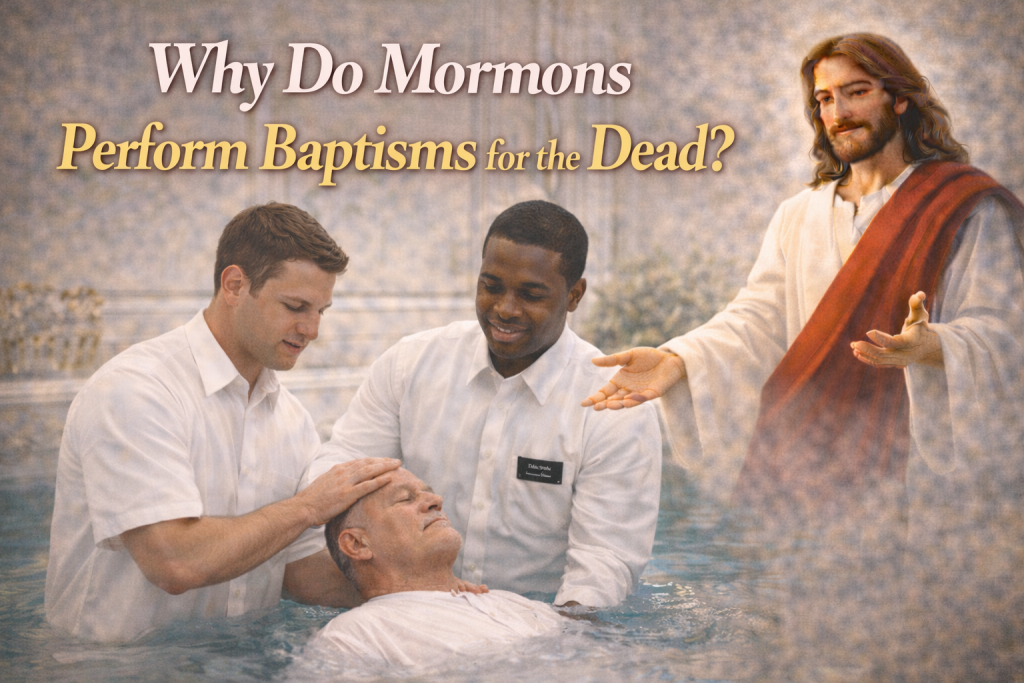
  • Why Do Mormons Perform Baptisms for the Dead?

    Why Do Mormons Perform Baptisms for the Dead?

    One of the most frequently asked questions about The Church of Jesus Christ of Latter-day Saints concerns a practice that many people find unusual or unfamiliar: baptisms for the dead. For those encountering this belief for the first time, it often raises sincere questions. Why would living people be baptized on behalf of those who have died? Where does this idea come from? And how does it fit within Christian belief?

    For Latter-day Saints, baptisms for the dead are rooted in a deep conviction that God is perfectly just, perfectly loving, and perfectly fair. This doctrine addresses a fundamental question that has challenged Christians for centuries: What happens to the countless people who lived and died without ever hearing about Jesus Christ or receiving baptism through no fault of their own?

    Rather than believing that God condemns people because of circumstances they could not control, Latter-day Saints believe God has provided a way for everyone to receive the same opportunities for salvation. Baptisms for the dead reflect a God who values agency, honors individual choice, and extends mercy universally—without lowering the standards He Himself has established.

    Understanding this practice requires looking at how Latter-day Saints understand baptism, salvation, justice, mercy, agency, and the central role of Jesus Christ in God’s plan.

    Baptism as a Required Ordinance

    Latter-day Saints believe baptism is not optional. This belief comes directly from the teachings of Jesus Christ in the New Testament. Jesus taught that individuals must be born of water and of the Spirit to enter the kingdom of God. He Himself was baptized and commanded His followers to be baptized.

    Because Jesus taught baptism as a requirement for salvation, Latter-day Saints believe it applies to all people in all times and places. God does not change His commandments based on geography, culture, or historical period.

    This raises an important question. If baptism is required for salvation, what happens to those who never had the opportunity to be baptized? Millions of people lived before Jesus Christ, lived in places where Christianity never reached, or died before hearing the gospel.

    Latter-day Saints believe a loving and just God would not deny salvation to these individuals simply because of circumstances beyond their control.

    God’s Justice Applied Equally

    Justice means fairness. Latter-day Saints believe God’s laws apply equally to everyone. If baptism is required, then everyone must have a genuine opportunity to receive it.

    God does not show favoritism toward those born in Christian societies or privileged circumstances. His justice demands that all His children be treated with equal fairness.

    God’s Mercy Extended Universally

    At the same time, God is merciful. Mercy ensures that people are not punished for things they could not control. Baptisms for the dead reflect the belief that God’s mercy works in harmony with His justice.

    God does not remove the commandment of baptism, but He mercifully provides a way for all people to receive it.

    The Problem of Unequal Opportunity

    Throughout history, access to Christian ordinances has been deeply unequal. Entire civilizations lived and died without exposure to the Bible or the name of Jesus Christ. Even after Christ’s ministry, centuries passed before Christianity spread to many regions of the world.

    Latter-day Saints believe God foresaw this inequality and prepared a solution that honors both human agency and divine justice. Baptisms for the dead are not a correction of God’s plan, but an essential part of it.

    This belief emphasizes that salvation is not a matter of luck or birth circumstances, but of informed choice.

    Baptism for the Dead in the Bible

    Although baptisms for the dead are most clearly taught in modern revelation, Latter-day Saints believe the Bible contains important evidence that this practice existed among early Christians.

    The Apostle Paul wrote to the Corinthians and asked a striking question: why are people baptized for the dead if the dead do not rise? Paul does not criticize the practice or explain it away. Instead, he refers to it as something his audience already understands.

    Latter-day Saints believe this passage indicates that proxy baptism was practiced in the early Church and accepted as meaningful within the Christian community of Paul’s time.

    While the Bible does not provide extensive details, this brief reference supports the principle that ordinances can be performed on behalf of others.

    Early Christian Context

    Latter-day Saints believe many plain and precious truths were lost over time due to persecution, apostasy, and the loss of priesthood authority. They believe baptisms for the dead were among the practices that disappeared and were later restored through modern revelation.

    Rather than inventing a new doctrine, Latter-day Saints believe they are participating in a restored Christian practice with ancient roots.

    Modern Revelation and Restoration

    Latter-day Saints believe Jesus Christ restored His Church in the modern era through the prophet Joseph Smith. As part of this restoration, doctrines concerning salvation for the dead were revealed again.

    These revelations clarified that the gospel is preached in the spirit world and that individuals who have died without receiving ordinances in mortality can still choose to accept or reject them.

    This belief expands the scope of salvation and reflects a God who continues to work actively for the benefit of His children.

    How Baptisms for the Dead Are Performed

    Baptisms for the dead are performed in Latter-day Saint temples. Temples are considered sacred houses of the Lord, reserved for ordinances with eternal significance.

    In these baptisms, a living person is immersed in water while acting as a proxy for a deceased individual. The baptism is performed using the same words and form as baptism for the living.

    Importantly, the proxy does not replace the deceased person’s agency. Latter-day Saints believe the ordinance is simply offered. Acceptance or rejection occurs in the spirit world.

    Role of the Temple

    Temples are central to this practice because they represent eternal worship rather than mortal congregation. Baptisms for the dead are not performed casually or publicly, but reverently and thoughtfully.

    The temple setting reflects the belief that salvation is an eternal matter, not limited by mortal boundaries.

    Service and Love for Ancestors

    Many Latter-day Saints view participation in baptisms for the dead as an act of love. It is often performed for ancestors, connecting generations through service and remembrance.

    This practice encourages gratitude, humility, and a sense of responsibility toward family history.

    Agency Preserved After Death

    One of the most important aspects of this doctrine is agency. Latter-day Saints believe agency does not end at death.

    Even though an ordinance is performed on earth, the deceased individual remains free to choose whether or not to accept it. No one is forced into belief, membership, or salvation.

    This preserves moral responsibility and respects individual choice, which Latter-day Saints believe is central to God’s plan.

    The Spirit World and Learning After Death

    Latter-day Saints believe that after death, individuals enter the spirit world, where they continue to learn, grow, and make choices. The gospel of Jesus Christ is taught there to those who did not have the opportunity in mortality.

    Baptisms for the dead provide the necessary ordinance so that individuals can fully act on the knowledge they receive.

    This belief reinforces the idea that God’s work does not stop at death.

    Role of Jesus Christ

    Jesus Christ is the foundation of baptisms for the dead. Without His atonement and resurrection, no ordinance would have saving power—whether for the living or the dead.

    Through Christ, death is overcome, justice is satisfied, and mercy is made possible. Baptisms for the dead do not bypass Christ; they rely entirely on Him.

    Latter-day Saints believe this doctrine magnifies Christ’s role as Savior of all humanity, not just those who lived in Christian societies.

    Baptisms for the Dead and Grace

    Some assume that performing ordinances for the dead diminishes grace. Latter-day Saints believe the opposite. Grace makes salvation possible; ordinances provide the means by which individuals accept that grace.

    Salvation is always a gift of Jesus Christ. Baptisms for the dead simply ensure that everyone has the opportunity to receive that gift knowingly and willingly.

    Common Misunderstandings

    One common misunderstanding is that Latter-day Saints believe they can force deceased individuals into their religion. This is not true. Agency is fully preserved.

    Another misunderstanding is that this practice diminishes the importance of mortal life. Latter-day Saints believe choices made in mortality are extremely important and shape eternal outcomes.

    Some also believe baptisms for the dead are disrespectful to other faiths. Latter-day Saints believe they are offering opportunity, not imposing belief.

    Why This Belief Matters

    Baptisms for the dead reveal a God who is deeply concerned with fairness, love, and individual worth. This doctrine reassures believers that no life is forgotten and no soul is beyond God’s reach.

    It encourages compassion, patience, and humility. It also strengthens family bonds by connecting generations through service and remembrance.

    A Broader View of Salvation

    This doctrine expands the traditional view of salvation beyond mortal boundaries. It emphasizes that God’s plan is vast, inclusive, and thoughtful.

    For Latter-day Saints, baptisms for the dead are not strange rituals, but expressions of hope, justice, and Christlike love.

    An Invitation

    Latter-day Saints invite all people to learn more about Jesus Christ and God’s plan of salvation. They believe sincere seekers can find peace in knowing that God’s love extends beyond death and beyond human limitations.

    They invite others to study, ask questions, and seek understanding through prayer.

    Sources

    The Church of Jesus Christ of Latter-day Saints – Gospel Topics: Baptism for the Dead
    https://www.churchofjesuschrist.org

    Gospel Topics Essays – Salvation for the Dead
    https://www.churchofjesuschrist.org/study/manual/gospel-topics-essays

    Doctrine and Covenants Central
    https://doctrineandcovenantscentral.org

    Scripture Central
    https://scripturecentral.org

  • Why Do Mormons Talk About Zion?

    Why Do Mormons Talk About Zion?

    Few words appear as frequently in Latter-day Saint conversations, scriptures, and teachings as the word Zion. To outsiders, this repeated emphasis can sound mysterious, abstract, or even political. Some wonder whether Zion refers to a secret location, a future kingdom, or a kind of religious separatism. Others assume it represents unrealistic idealism disconnected from real life.

    For Latter-day Saints, however, Zion is one of the most meaningful and hopeful concepts in their faith. It represents a vision of what individuals and communities can become when they live the gospel of Jesus Christ fully and intentionally. Zion is not simply a place on a map, nor is it a distant fantasy reserved for the end of time. It is a living ideal that shapes how believers think about society, relationships, justice, compassion, and discipleship.

    Talking about Zion expresses a longing for a world defined by unity rather than division, generosity rather than inequality, and love rather than exploitation. It reflects confidence that God’s ideals for humanity are not only aspirational, but attainable through faith, effort, and grace.

    Understanding why Mormons talk about Zion requires exploring what Zion means, where the idea comes from, and how it shapes daily life, long-term hope, and spiritual identity.

    What Is Zion?

    In Latter-day Saint belief, Zion is a layered concept with multiple, interconnected meanings. It can refer to a physical place, a spiritual condition, and a future society prepared to receive Jesus Christ.

    Rather than limiting Zion to one definition, Latter-day Saints understand it as a comprehensive vision of righteous living and communal harmony.

    At its core, Zion describes a people who live in alignment with God’s will.

    A People, Not Just a Place

    Although Zion is sometimes associated with specific locations in scripture, Latter-day Saints emphasize that Zion is fundamentally about people, not geography. A society becomes Zion when its members live with integrity, compassion, and unity.

    Scripture describes Zion as a community where individuals are spiritually committed, morally grounded, and deeply connected to one another.

    This understanding shifts the focus from physical gathering to personal and collective transformation.

    One Heart and One Mind

    Unity is central to the idea of Zion. Latter-day Saints often quote scripture describing Zion as a people who are “of one heart and one mind.”

    This does not mean uniformity of personality, culture, or opinion. Instead, it refers to shared commitment to love God and care for one another.

    Unity in Zion grows from charity, humility, and shared purpose rather than forced agreement.

    Zion in Scripture

    The concept of Zion appears throughout the Bible and is expanded in modern revelation. In scripture, Zion is associated with holiness, peace, safety, and God’s presence.

    Ancient prophets spoke of Zion as a refuge, a place of righteousness, and a society aligned with God’s law.

    Modern revelation builds on these themes and applies them to contemporary believers.

    Ancient and Modern Teachings

    Latter-day Saints see Zion as a recurring theme across different periods of God’s dealings with humanity. From ancient Israel to early Christianity and modern revelation, Zion represents God’s ideal for human relationships.

    Scripture consistently associates Zion with justice, compassion, and faithfulness.

    Rather than being abandoned or replaced, the idea of Zion is believed to be restored and clarified in modern times.

    God’s Ideal Society

    Zion represents God’s vision for how people should live together. It contrasts sharply with societies built on greed, exploitation, or inequality.

    In Zion, relationships are guided by love rather than power. Resources are used responsibly rather than hoarded. People are valued for who they are rather than what they possess.

    This vision gives moral direction to daily choices.

    Zion as a Way of Living

    For Latter-day Saints, talking about Zion is not merely theoretical. It is meant to inspire practical living now. Zion is built gradually through everyday decisions, habits, and attitudes.

    Rather than waiting for a future moment, believers are encouraged to begin living Zion principles immediately.

    Zion starts small and grows outward.

    Daily Discipleship

    Living Zion means practicing honesty, kindness, patience, and generosity in ordinary life. It means resisting pride, selfishness, and division.

    Zion is built in families when parents teach love and responsibility. It is built in neighborhoods when people care for one another. It is built in workplaces when integrity and fairness guide actions.

    Everyday discipleship becomes the foundation of a Zion society.

    Economic and Social Care

    A defining feature of Zion is concern for the poor and vulnerable. Latter-day Saints believe a Zion community does not ignore inequality or suffering.

    Scripture often describes Zion as a society where “there were no poor among them.”

    This ideal motivates strong emphasis on welfare, humanitarian aid, and service.

    No Poor Among Them

    Latter-day Saints believe caring for the poor is not optional charity, but a core responsibility. Zion requires that individuals look beyond personal comfort and consider communal well-being.

    Church welfare programs, humanitarian efforts, and local service are practical expressions of this belief.

    Economic care in Zion is not about enforced equality, but about ensuring dignity and opportunity for all.

    Zion and Agency

    Despite its emphasis on unity, Zion cannot be created through force. Latter-day Saints believe agency is essential to God’s plan and must be preserved even in the pursuit of an ideal society.

    True Zion grows through willing hearts, not coercion.

    This belief distinguishes Zion from political or authoritarian utopias.

    Willing Unity

    Unity without agency is superficial and unstable. Zion requires individuals to choose righteousness freely.

    Love, generosity, and honesty lose meaning when imposed. Zion’s strength comes from voluntary commitment rather than external pressure.

    This principle safeguards individuality within unity.

    Zion and the Second Coming

    Zion is closely connected to Latter-day Saint beliefs about the return of Jesus Christ. Scripture teaches that Christ will return to a prepared people.

    Zion represents that preparation.

    Rather than focusing on fear or speculation, talking about Zion emphasizes readiness through righteousness.

    Preparation Through Righteousness

    Preparing for Christ’s return is not about predicting dates or withdrawing from society. It is about becoming the kind of people Christ would recognize as His own.

    Zion is prepared as individuals become more loving, humble, and united.

    Preparation is moral and spiritual rather than dramatic or sensational.

    Global Perspective on Zion

    Early Latter-day Saint teachings included references to specific geographic locations associated with Zion. Over time, understanding expanded.

    Today, Latter-day Saints view Zion as a global reality. Wherever people live Christlike principles, Zion can exist.

    This perspective allows Zion to grow worldwide.

    Zion Everywhere

    Zion does not require physical relocation. It can exist in cities, villages, and communities across the globe.

    Members in different cultures express Zion through local customs while sharing core values.

    Zion becomes a global network of faithful communities rather than a single destination.

    Common Misunderstandings

    A common misunderstanding is that Zion represents a political movement or separatist agenda. Latter-day Saints emphasize that Zion is spiritual, not political.

    Another misunderstanding is that Zion requires perfection. Members believe Zion grows gradually through effort, repentance, and grace.

    Zion is aspirational, not elitist.

    Why This Belief Matters

    Talking about Zion shapes how Latter-day Saints see the world and their role within it. It provides a hopeful vision that counters cynicism and despair.

    Zion encourages unity over division, compassion over indifference, and purpose over aimlessness.

    For believers, Zion represents God’s promise that peace, justice, and joy are possible—not through force or ideology, but through transformed hearts centered on Jesus Christ.

    Zion is not an escape from the world. It is a commitment to make the world better by living faith intentionally, one relationship and one choice at a time.

    Sources

    The Church of Jesus Christ of Latter-day Saints – Gospel Topics: Zion
    https://www.churchofjesuschrist.org

    Doctrine and Covenants Central – Zion and New Jerusalem
    https://doctrineandcovenantscentral.org

    Scripture Central – Zion in Scripture
    https://scripturecentral.org

  • Why Do Mormons Have Temples?

    Why Do Mormons Have Temples?

    Latter-day Saints believe temples are sacred buildings set apart for purposes different from regular church meetinghouses. While weekly worship services take place in local chapels, temples are reserved for ordinances and covenants believed to have eternal significance.

    For Latter-day Saints, temples represent a place where heaven and earth symbolically meet. They are considered houses of the Lord—spaces dedicated to helping individuals draw closer to Jesus Christ, make sacred commitments, and prepare for eternal life. Temples are not meant for routine worship but for deeply personal and covenant-centered spiritual experiences.

    Difference Between Temples and Chapels

    Latter-day Saints worship weekly in local meetinghouses, commonly called chapels. These buildings are open to the public and used for preaching, teaching, singing, prayer, and community worship centered on Jesus Christ.

    Temples serve a distinct role. They are used specifically for sacred ordinances such as eternal marriage (sealings), baptisms for the dead, and other covenants that Latter-day Saints believe connect individuals and families to God eternally. Because of this purpose, temples function differently from chapels and are not used for weekly services.

    Sacred Space

    Because of the sacred nature of temple ordinances, temples are treated with special reverence. Latter-day Saints believe certain covenants require a holy setting where individuals can focus fully on spiritual commitments without distraction.

    This reverence is not meant to create distance or secrecy, but to reflect the seriousness of the promises made and the sacred relationship being formed with God.

    Preparation and Worthiness

    Before entering a temple, members prepare spiritually and commit to living core gospel principles such as faith in Jesus Christ, repentance, honesty, and moral integrity. This preparation underscores the belief that temple worship is intentional and covenant-focused, not casual or routine.

    Biblical Foundations for Temples

    Latter-day Saints believe temples follow a pattern established by God throughout history. In the Old Testament, God commanded the construction of the tabernacle and later the temple in Jerusalem as places where His presence could dwell among His people.

    These ancient temples were central to worship, covenant making, and instruction. Latter-day Saints see modern temples as a continuation—not a replacement—of this biblical pattern adapted to modern times.

    Jesus and the Temple

    Jesus Christ taught in the temple and referred to it as His Father’s house. He demonstrated reverence for the temple and emphasized its role as a sacred space dedicated to God.

    Latter-day Saints believe Christ’s respect for the temple reinforces its importance in God’s plan and supports the idea that sacred spaces continue to matter.

    Ordinances and Covenants

    In biblical times, temples were places where covenants were made and sacred ordinances performed. Latter-day Saints believe modern temples restore this covenant-centered worship, focusing on eternal promises rather than animal sacrifice.

    What Happens Inside a Temple

    Inside temples, Latter-day Saints participate in ordinances such as baptisms for the dead, endowments, and sealings. These ordinances are believed to teach about God’s plan of salvation, the role of Jesus Christ, and the eternal nature of families.

    Temple worship emphasizes instruction, symbolism, reflection, and personal commitment rather than public preaching. The atmosphere is quiet and reverent, designed to encourage spiritual focus.

    Focus on Jesus Christ

    Every temple ordinance centers on Jesus Christ. Latter-day Saints believe temples help individuals better understand His atonement, resurrection, and role as Savior and Redeemer.

    Rather than replacing Christ, temples are viewed as places that point believers more fully toward Him.

    Personal Growth and Reflection

    Many Latter-day Saints describe temples as places of peace and clarity. They see temple worship as an opportunity for personal spiritual renewal, guidance, and deeper reflection on life’s purpose.

    Why Temples Matter Today

    Temples remind Latter-day Saints that life has eternal meaning beyond immediate concerns. They encourage long-term thinking, covenant keeping, and faithfulness to Jesus Christ.

    Belief in temples also reinforces family-centered worship. Latter-day Saints believe families can be united beyond death and that individuals can serve ancestors who did not have opportunities to make certain covenants during their lifetime.

    Common Misunderstandings

    A common misunderstanding is that temples are secret. Latter-day Saints explain that temples are sacred, not secret. Basic beliefs and purposes of temples are openly taught, though specific ceremonies are treated with reverence rather than public discussion.

    Another misunderstanding is that temples replace Jesus Christ. Latter-day Saints believe the opposite: temples exist because of Christ and encourage deeper commitment to following Him.

    Why This Belief Matters

    For Latter-day Saints, temples provide spiritual structure, meaning, and focus in a busy world. They help believers feel closer to God and more committed to living Christ-centered lives.

    Temples represent hope, connection, and eternal promise—reminding worshippers that God’s plan extends beyond mortality and is rooted in love, covenant, and redemption through Jesus Christ.

    Sources

    The Church of Jesus Christ of Latter-day Saints – Gospel Topics: Temples
    https://www.churchofjesuschrist.org

    Gospel Topics Essays – Temples
    https://www.churchofjesuschrist.org/study/manual/gospel-topics-essays

    Doctrine and Covenants Central
    https://doctrineandcovenantscentral.org

    Scripture Central
    https://scripturecentral.org

  • Why do Mormons seem so happy?

    Why do Mormons seem so happy?

    One of the most common observations people make when interacting with Latter-day Saints is how happy they seem. Whether it is missionaries smiling on the street, families gathered together, or church members speaking optimistically about life, many outsiders notice a consistent tone of positivity. This often leads to curiosity, admiration, and sometimes skepticism. Are Latter-day Saints really happier than others? Is the happiness real, or is it a performance expected by their culture?

    Latter-day Saints themselves usually respond by clarifying that their happiness does not come from perfect lives, constant success, or the absence of pain. They experience stress, illness, loss, disappointment, and doubt just like everyone else. What they point to instead is a way of living rooted in faith that gives meaning to both joy and suffering.

    In Latter-day Saint belief, happiness is not defined as constant cheerfulness or emotional suppression. It is understood as deep, lasting joy anchored in faith in Jesus Christ and confidence in God’s plan. This joy can coexist with grief, struggle, and unanswered questions. It is not about pretending life is easy, but about believing life has purpose.

    Understanding why Mormons often seem so happy requires looking at how purpose, hope, community, service, health, gratitude, and faith shape their daily experience.

    A Sense of Purpose

    One of the strongest sources of happiness for Latter-day Saints is a clear sense of purpose. They believe life is not random or accidental, but part of an eternal plan designed by God. This belief answers some of the most fundamental human questions: Where did I come from? Why am I here? Where am I going?

    Having answers to these questions provides structure and direction. Life is not merely about surviving, achieving, or avoiding pain. It is about learning, growing, and becoming.

    This sense of purpose acts as an emotional anchor during difficult seasons.

    God’s Plan Gives Meaning

    Latter-day Saints believe God has a plan for His children that extends beyond mortal life. This plan frames experiences—both positive and negative—as opportunities for growth.

    When challenges arise, they are not automatically interpreted as punishment or failure. Instead, they are often seen as part of a larger process of learning and refinement.

    Believing that life has meaning beyond immediate outcomes helps reduce despair and increase resilience.

    Life With Eternal Context

    Viewing life through an eternal lens changes how problems are perceived. Temporary setbacks do not define ultimate worth or destiny.

    Loss, disappointment, and hardship are real and painful, but they are not seen as permanent or pointless. This broader context allows individuals to endure difficulty with hope rather than resignation.

    Eternal perspective does not remove pain, but it gives pain a place within a meaningful narrative.

    Hope Through Jesus Christ

    Faith in Jesus Christ is central to Latter-day Saint happiness. Christ is not seen merely as a moral teacher, but as a living Savior who understands human suffering and offers healing, forgiveness, and renewal.

    Believers trust that Christ’s atonement makes it possible to overcome guilt, shame, regret, and emotional wounds. This trust provides peace even when circumstances do not change.

    Hope in Christ shifts focus from perfection to progress.

    Forgiveness and Renewal

    One powerful source of happiness is the belief in forgiveness. Latter-day Saints believe no mistake defines a person permanently.

    Through Jesus Christ, individuals can repent, change, and begin again. This belief reduces the burden of past failures and encourages growth rather than despair.

    Knowing that growth is always possible fosters emotional lightness and resilience.

    Hope Beyond Hardship

    Latter-day Saints believe suffering is not meaningless. While they do not glorify pain, they believe God can bring good from difficult experiences.

    Hope in Christ reassures believers that pain does not have the final word. Healing may come gradually or in unexpected ways, but it is possible.

    This hope sustains happiness even when answers are incomplete.

    Strong Family and Community Support

    Another reason Latter-day Saints often appear happy is the strength of their social connections. Family relationships and community bonds are highly valued.

    Church congregations are organized geographically, meaning members worship with the same group regularly. Over time, these congregations often function like extended families.

    This structure creates built-in support systems.

    Belonging and Support

    Belonging reduces loneliness, which is a major contributor to unhappiness. Latter-day Saints often know they are part of a community that notices when they struggle.

    During illness, loss, or personal crisis, members frequently receive meals, visits, childcare help, and emotional support.

    Feeling seen and supported strengthens emotional well-being.

    Healthy Lifestyle Choices

    Many Latter-day Saints follow health guidelines that discourage alcohol, tobacco, and harmful substances. These practices often result in better physical health, which is closely linked to emotional stability.

    Good health does not guarantee happiness, but it supports energy, clarity, and resilience.

    Healthy habits also encourage moderation and self-control.

    Physical and Mental Balance

    Physical health affects mood, sleep, and stress levels. Avoiding addictive substances reduces cycles of dependency and emotional volatility.

    Balanced lifestyles support mental clarity and emotional regulation. This balance contributes to a calmer, more optimistic outlook.

    Health choices are seen as stewardship rather than restriction.

    Service and Giving

    Service plays a significant role in Latter-day Saint happiness. Members are encouraged to serve regularly, both formally and informally.

    Serving others shifts focus away from self-centered concerns and toward compassion and connection.

    Helping others creates meaning and fulfillment.

    Joy Through Service

    Research consistently shows that helping others increases happiness. Latter-day Saints experience this principle through regular acts of service.

    Service creates a sense of usefulness and belonging. It reminds individuals that they matter and that their actions can make a difference.

    Joy often grows when attention moves outward rather than inward.

    Gratitude and Optimism

    Gratitude is actively practiced in Latter-day Saint life through prayer and reflection. Members are encouraged to recognize blessings, even in difficult circumstances.

    Gratitude does not deny hardship, but it balances perspective.

    Optimism grows from faith rather than circumstances.

    Thankfulness Shapes Perspective

    Grateful people tend to experience greater emotional well-being. Latter-day Saints are taught to look for evidence of God’s goodness in everyday life.

    Recognizing small blessings fosters contentment and reduces bitterness.

    Gratitude reshapes how experiences are interpreted.

    Realistic View of Happiness

    Despite appearances, Latter-day Saints do not believe happiness means constant positivity. They openly acknowledge that life includes sorrow, doubt, and grief.

    Happiness is not the absence of pain, but the presence of meaning.

    This realistic view prevents emotional suppression.

    Joy Despite Trials

    Latter-day Saints believe joy can exist alongside sorrow. Tears and faith are not opposites.

    This understanding allows individuals to be honest about emotions while maintaining hope.

    Authenticity strengthens emotional health.

    Common Misunderstandings

    A common misunderstanding is that Latter-day Saints are always happy or hide negative emotions. In reality, they experience the full range of human feelings.

    Another misunderstanding is that happiness is forced by cultural expectation. While positivity is encouraged, authenticity is valued.

    Happiness is not demanded; it is cultivated.

    Why This Belief Matters

    Belief in enduring happiness shapes daily choices, priorities, and relationships. It encourages faith, service, gratitude, and hope.

    For Latter-day Saints, happiness flows from living a Christ-centered life focused on meaning rather than comfort, growth rather than perfection, and hope rather than fear.

    Their happiness is not about having easier lives, but about believing life—exactly as it is—has eternal purpose and worth.

    Sources

    The Church of Jesus Christ of Latter-day Saints – Gospel Topics: Happiness
    https://www.churchofjesuschrist.org

    Church News – Faith and Well-Being
    https://www.thechurchnews.com

    Scripture Central – Joy and Discipleship
    https://scripturecentral.org

  • Why Do Mormons Avoid Tattoos and Piercings?

    Why Do Mormons Avoid Tattoos and Piercings?

    In many modern cultures, tattoos and piercings are widely accepted forms of self-expression. They can represent art, identity, memory, rebellion, belonging, or personal history. Because of this cultural shift, it often stands out when Latter-day Saints choose to avoid tattoos and excessive piercings. Observers may wonder whether this avoidance is based on fear, control, outdated tradition, or judgment of others.
    Latter-day Saints themselves usually explain their choices very differently. For them, decisions about tattoos and piercings are not primarily about fashion, conformity, or cultural rejection. Instead, they are viewed through a spiritual lens shaped by beliefs about the body, identity, stewardship, and discipleship.

    This belief is not intended to condemn those who choose differently. Many members have tattoos or piercings from earlier stages of life and are fully accepted within the Church. The emphasis is not on policing appearance, but on aligning outward choices with inner values and long-term spiritual perspective.

    Understanding why Mormons often avoid tattoos and piercings requires looking at how they understand the body, personal identity, agency, culture, permanence, and compassion within their faith.

    The Body as a Sacred Gift

    At the foundation of Latter-day Saint views on tattoos and piercings is a particular understanding of the human body. Members believe the body is not merely biological or disposable, but a sacred gift given by God as part of His eternal plan.

    In Latter-day Saint theology, the body allows individuals to experience joy, sorrow, relationships, service, and spiritual growth. It is essential to identity and eternal progression.

    Because of this belief, the body is treated with reverence rather than casual ownership.

    Created by God

    Latter-day Saints believe the body is divinely created with purpose and meaning. It is not an accident or a temporary shell to be discarded.

    This belief leads members to ask how their choices honor or diminish that gift. Decisions about the body are therefore considered spiritual decisions, not just personal preferences.

    The body is viewed as something to respect, protect, and care for over a lifetime.

    Stewardship, Not Ownership

    Rather than viewing the body as absolute personal property, Latter-day Saints often describe themselves as stewards of their bodies. Stewardship implies responsibility, care, and accountability.

    Just as someone entrusted with something valuable is expected to treat it thoughtfully, members believe they are accountable to God for how they treat their bodies.

    This concept of stewardship strongly influences decisions about permanent body modification.

    Respect and Reverence

    Avoiding tattoos and excessive piercings is often understood as an expression of reverence. Reverence, in this sense, is not about fear or shame, but about deep respect.

    Latter-day Saints are encouraged to make choices that reflect dignity, patience, and long-term meaning rather than impulse or trend.

    This principle encourages reflection before making permanent decisions.

    Thoughtful Choices

    Members are often taught to pause and consider why they want to make certain choices about their bodies. Is the decision driven by pressure, trend, emotion, or lasting meaning?

    Thoughtfulness is valued over immediacy. This approach encourages self-awareness and intentional living.

    Avoiding tattoos and piercings becomes part of a broader pattern of careful decision-making.

    Eternal Perspective

    Latter-day Saints frequently view life through an eternal lens. Choices are evaluated not only by how they feel now, but by how they align with long-term identity and purpose.

    Permanent body modifications are approached cautiously because of their lasting nature. Members are encouraged to consider how a decision made at one stage of life may feel at another.

    This perspective promotes patience rather than urgency.

    Identity Rooted in Faith

    Another key reason Latter-day Saints avoid tattoos and piercings is their belief about identity. They teach that identity is rooted in being children of God, not in physical appearance, symbols, or markings.

    This belief challenges cultural messages that encourage self-definition primarily through outward display.

    Avoiding body modification reinforces the idea that worth is intrinsic rather than constructed.

    Worth Beyond Appearance

    Latter-day Saints emphasize that personal value does not come from attractiveness, uniqueness, or visibility. It comes from divine identity and moral character.

    Tattoos and piercings are not seen as inherently evil, but they are not viewed as necessary for self-expression or confidence.

    This approach can be especially meaningful in cultures that place heavy pressure on image and individuality.

    Church Guidance, Not Enforcement

    A common misconception is that the Church enforces strict rules regarding tattoos and piercings. In reality, the Church provides guidance rather than punishment.

    Members are taught principles and trusted to apply them according to conscience and personal conviction.

    Agency remains central.

    Principles Over Rules

    The Church encourages modesty, respect for the body, and thoughtful decision-making. It does not impose formal discipline simply for having tattoos or piercings.

    Members with tattoos or piercings can participate fully in worship, leadership, and community life.

    This approach emphasizes growth over compliance.

    Cultural and Social Context

    Cultural views on tattoos and piercings vary widely. In some cultures, tattoos are ancient symbols of heritage, faith, or belonging. In others, they are associated with rebellion or trend.

    Latter-day Saint teachings focus on universal principles rather than cultural assumptions.

    Cultural Sensitivity

    Members are encouraged to apply principles thoughtfully within their cultural context. What modesty or respect looks like may differ from place to place.

    The emphasis is not on rejecting culture, but on aligning choices with spiritual values.

    This flexibility allows global diversity within shared belief.

    Avoiding Permanent Decisions Lightly

    One of the most practical reasons Latter-day Saints are cautious about tattoos and piercings is their permanence. Permanent decisions carry weight and long-term consequences.

    Members are encouraged to avoid making irreversible choices impulsively.

    Long-Term Thinking

    Latter-day Saints value patience and foresight. Decisions are encouraged to be made prayerfully and with awareness of future perspectives.

    Permanent body modification is approached with caution because tastes, values, and circumstances change.

    This mindset fosters maturity and restraint.

    Compassion and Inclusion

    Perhaps one of the most important aspects of this belief is compassion. Latter-day Saints strongly emphasize that people are not defined by past choices.

    Members with tattoos or piercings are fully welcomed, valued, and included in the Church.

    The focus is always on who a person is becoming, not on what they did before.

    Growth Over Perfection

    Faith is viewed as a journey. Mistakes, changes, and growth are expected parts of that journey.

    Avoiding tattoos and piercings is not a test of worthiness, but an expression of values for those who choose it.

    Grace and belonging remain central.

    Common Misunderstandings

    A common misunderstanding is that Latter-day Saints believe tattoos are sinful in all circumstances. The emphasis is on principle, not condemnation.

    Another misunderstanding is that members judge others based on appearance. Church teachings consistently emphasize kindness, humility, and respect.

    Differences in choices are not meant to create moral hierarchy.

    Why This Belief Matters

    Avoiding tattoos and excessive piercings reflects a desire to live intentionally and reverently. It reinforces beliefs about identity, stewardship, patience, and spiritual focus.

    For Latter-day Saints, these choices are not about being different for the sake of difference. They are about aligning outward actions with inward faith and long-term purpose.

    In a world that often prioritizes immediacy and image, this approach offers an alternative centered on meaning, dignity, and discipleship lived one thoughtful choice at a time.

    Sources

    The Church of Jesus Christ of Latter-day Saints – Gospel Topics: Modesty and the Body
    https://www.churchofjesuschrist.org

    Church News – Respect for the Body
    https://www.thechurchnews.com

    Scripture Central – Body and Divine Purpose
    https://scripturecentral.org

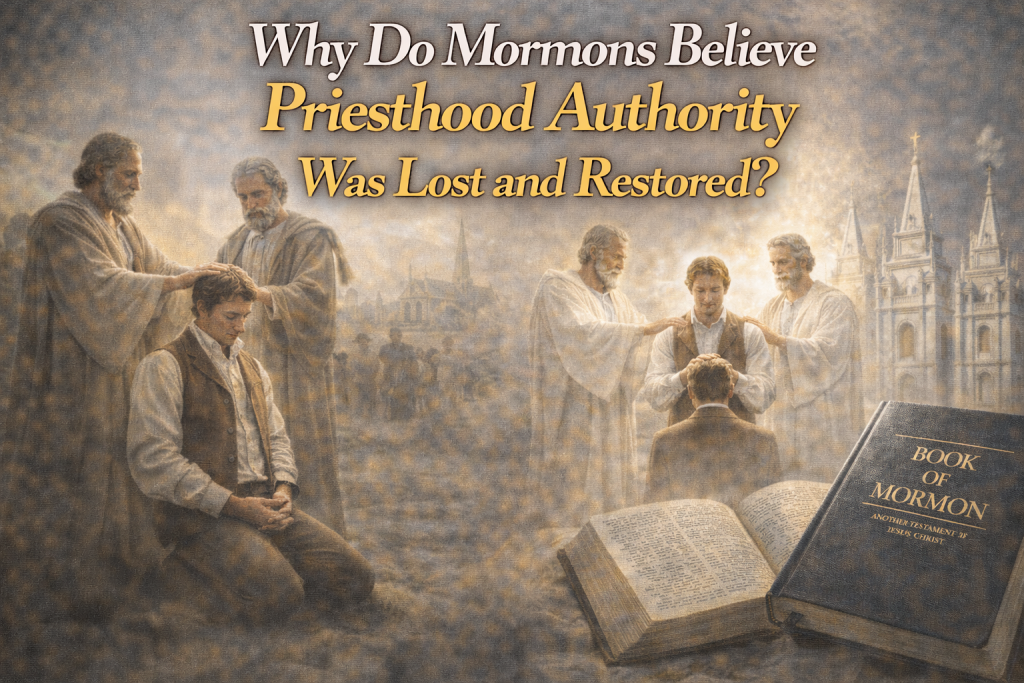
  • Why Do Mormons Believe Priesthood Authority Was Lost and Restored?

    Why Do Mormons Believe Priesthood Authority Was Lost and Restored?

    Latter-day Saints believe priesthood authority was lost and later restored because they believe Jesus Christ established His Church with divine authority, appointed apostles to lead it, and gave them power to perform ordinances in His name. According to this belief, while faith in Christ continued after the deaths of the original apostles, the specific authority to officially act for God did not continue uninterrupted.

    This belief is foundational to how Latter-day Saints understand ordinances, church leadership, revelation, and salvation. It explains why they emphasize living prophets, authorized baptism, temple ordinances, and a structured church organization. For them, restoration was not a rejection of Christianity, but a fulfillment of God’s plan to reestablish what was lost.

    Rather than viewing history as a failure, Latter-day Saints see apostasy and restoration as part of a divine pattern that respects human agency while ensuring God’s purposes ultimately continue.

    What Is Priesthood Authority?

    Priesthood authority is understood as the right and power given by God to act in His name for the benefit of others. It is not personal status, spiritual superiority, or political control. Instead, it is divine authorization to perform ordinances, lead the Church, and administer covenants that God recognizes as binding.

    Latter-day Saints distinguish clearly between personal spirituality and priesthood authority. A person may have sincere faith, moral integrity, and spiritual influence without holding priesthood authority. Authority, however, requires divine commissioning through proper ordination.

    Authority Is Given, Not Taken

    Priesthood authority cannot be claimed, earned, or assumed. It is not based on education, charisma, seniority, or popular support. According to Latter-day Saint belief, authority must come from God through an unbroken chain of ordination.

    This principle reflects the belief that God is a God of order, not confusion.

    Acting in God’s Name

    When ordinances such as baptism or confirmation are performed, Latter-day Saints believe they must be done by someone authorized to act in God’s name. Without that authorization, the act may be meaningful to participants but is not believed to be officially recognized by God.

    This distinction explains why priesthood authority matters deeply in Latter-day Saint theology.

    Priesthood Authority in the New Testament

    Latter-day Saints believe the New Testament clearly shows Jesus Christ giving authority to His apostles. He called them individually, instructed them, and empowered them to teach, baptize, heal, and govern the Church.

    This authority was not symbolic. Jesus gave specific responsibilities and keys that allowed apostles to act on His behalf.

    Apostles as Holders of Authority

    The apostles were not merely teachers or missionaries. They were witnesses of Christ’s resurrection and holders of priesthood keys—authority to direct the Church, establish doctrine, and perform ordinances.

    Jesus taught that what they bound on earth could be bound in heaven, indicating divine recognition of their authority.

    Authority Passed Through Ordination

    The New Testament describes authority being passed through the laying on of hands. This pattern shows continuity, order, and divine commissioning rather than spontaneous or self-appointed leadership.

    Latter-day Saints view this as evidence that authority was essential to Christ’s Church, not optional.

    The Role of Apostles in Maintaining Authority

    Apostles were central to preserving priesthood authority. They ordained leaders, resolved doctrinal disputes, and maintained unity among believers.

    As long as apostles lived, authority continued. When apostles were killed and no successors were ordained with the same keys, Latter-day Saints believe authority could not be preserved.

    Leadership Was Centralized, Not Decentralized

    Latter-day Saints believe Christ intended His Church to be guided by apostles, not fragmented into independent interpretations. Apostolic leadership provided doctrinal stability and divine oversight.

    Without apostles, authority became localized, inconsistent, and eventually lost.

    Loss of Authority After the Apostles

    After the deaths of the apostles, early Christians faced intense persecution, political pressure, and internal disagreements. Many faithful believers continued to worship Christ sincerely, but Latter-day Saints believe the structure Christ established could not be maintained without apostles holding priesthood keys.

    A Gradual Loss

    Latter-day Saints emphasize that authority was lost gradually, not suddenly. There was no single moment when everything disappeared. Instead, changes occurred over generations as leadership structures evolved without divine authorization.

    Faith Continued

    Importantly, Latter-day Saints do not believe faith vanished. Scripture was preserved, devotion to Christ endured, and moral teachings continued to influence societies.

    They believe God continued to inspire goodness even without full priesthood authority.

    Apostasy Does Not Mean Moral Collapse

    In Latter-day Saint belief, apostasy does not mean Christianity became evil or meaningless. It means that essential elements of Christ’s original Church—particularly authority and certain ordinances—were no longer present in their original form.

    This distinction allows Latter-day Saints to respect other Christians while still believing restoration was necessary.

    Respect for Christian History

    Latter-day Saints openly acknowledge that many devoted Christians preserved scripture, defended belief in Christ, and lived lives of deep faith during centuries without restored authority.

    They see these individuals as instruments in God’s broader plan.

    Biblical Warnings of Apostasy

    Latter-day Saints point to biblical passages that warn of a falling away or loss of truth before Christ’s return. These passages are interpreted as evidence that apostasy was foreseen rather than accidental.

    Such warnings suggest that God anticipated the need for restoration.

    Apostasy Was Foreknown

    Because apostasy was foretold, Latter-day Saints believe restoration was also part of God’s plan, not a reaction to failure.

    God allows human agency while ensuring His purposes ultimately prevail.

    Why Restoration Was Necessary

    If priesthood authority was lost, Latter-day Saints believe reform alone could not restore it. Reform can change beliefs or practices, but it cannot recreate divine authority.

    Only God could restore what was lost.

    Restoration Versus Reformation

    The Protestant Reformation preserved many important truths, but Latter-day Saints believe it did not restore priesthood authority or apostolic keys.

    Restoration required divine intervention, not institutional reform.

    Divine Recommissioning

    Priesthood authority had to come from heaven, not history. According to Latter-day Saint belief, only God could recommission servants with authority to act in His name.

    Restoration Through Heavenly Messengers

    Latter-day Saints believe priesthood authority was restored through divine messengers rather than human appointment. They believe John the Baptist restored authority to baptize, and that Peter, James, and John later restored higher priesthood authority.

    This restoration reconnected modern priesthood authority directly to ancient apostles.

    Continuity With Ancient Christianity

    Restored authority is believed to be the same authority Christ originally gave His apostles—not a new or modified version.

    This continuity is central to Latter-day Saint confidence in ordinances and covenants.

    Ongoing Authority in the Church

    Latter-day Saints believe priesthood authority continues today through living prophets and apostles. Authority is passed through ordination under proper keys, maintaining continuity and order.

    This allows ordinances to be consistent across cultures, nations, and generations.

    Order and Unity

    Priesthood authority ensures unity in doctrine, practice, and governance. It prevents fragmentation and conflicting interpretations from defining the Church.

    Unity is achieved through divine order rather than enforced conformity.

    Priesthood Authority and Jesus Christ

    Jesus Christ is the source of all priesthood authority. Latter-day Saints believe priesthood holders act in His name, under His direction, and for His purposes.

    Authority does not replace Christ—it points to Him.

    Christ-Centered Power

    The priesthood exists to testify of Christ, administer His ordinances, and invite people to follow Him. When authority is exercised properly, it reflects Christlike service rather than control.

    Common Misunderstandings

    A common misunderstanding is that Latter-day Saints believe God cannot work without priesthood authority. In reality, they believe God can inspire anyone, anywhere, at any time.

    However, ordinances that bind on earth and in heaven require authorization.

    Another misunderstanding is that belief in restoration condemns other Christians. Latter-day Saints strongly reject this idea and emphasize respect, gratitude, and shared devotion to Christ.

    Some assume priesthood authority implies superiority. Latter-day Saints teach that authority increases responsibility, not status.

    Why This Belief Matters

    Belief in the loss and restoration of priesthood authority explains why Latter-day Saints emphasize authorized ordinances, temple worship, and living prophets. It provides confidence that covenants are divinely recognized and spiritually binding.

    For believers, this doctrine affirms that God is consistent, orderly, and actively involved in guiding His Church. It reassures them that Christ continues to lead His people today, just as He did anciently.

    Priesthood authority matters not because of power, but because it represents God’s willingness to work through people to bless, heal, teach, and redeem His children.

    Sources

    The Church of Jesus Christ of Latter-day Saints – Gospel Topics: Priesthood Authority
    https://www.churchofjesuschrist.org

    Joseph Smith Papers – Priesthood Restoration Accounts
    https://www.josephsmithpapers.org

    Doctrine and Covenants Central
    https://doctrineandcovenantscentral.org

    Scripture Central
    https://scripturecentral.org

  • Why do Mormons believe differently than other Christians?

    Why do Mormons believe differently than other Christians?

    To many people, Christianity appears unified on the surface. Churches read the Bible, preach about Jesus Christ, and emphasize faith, prayer, and moral living. Yet when someone encounters Latter-day Saints for the first time, it often becomes clear that their beliefs sound different from those of many other Christian traditions. These differences can raise questions: Why do Mormons interpret scripture differently? Why do they emphasize modern prophets and additional revelation? Why don’t they simply follow the same creeds and doctrines accepted by most Christians?

    Latter-day Saints believe differently than many other Christians because they approach the gospel of Jesus Christ through the lens of restoration rather than historical development alone. They believe that after the time of the apostles, Christianity preserved many essential truths but lost divine authority and certain teachings through centuries of theological debate, cultural influence, and institutional change. Because of this, they believe God restored His original church rather than reforming existing traditions.

    These differences are not meant to reject Christianity or diminish the faith of others. On the contrary, Latter-day Saints see themselves as deeply Christian. Their beliefs are intended to explain why their theology may sound unfamiliar, while still affirming devotion to Jesus Christ as Savior and Redeemer.

    Understanding why Latter-day Saints believe differently requires exploring how they understand authority, revelation, scripture, salvation, and God’s ongoing relationship with humanity.

    Restoration Versus Tradition

    One of the most fundamental differences between Latter-day Saints and other Christian traditions lies in how doctrine is understood to have developed over time. Most Christian denominations trace their theology through centuries of creeds, councils, and theological reflection. These traditions emphasize continuity through historical interpretation and institutional authority.

    Latter-day Saints, however, believe that after the deaths of the apostles, the church Jesus Christ established lost direct guidance through revelation. Without apostles authorized to receive revelation for the entire church, doctrine became shaped increasingly by debate, philosophy, and political influence rather than divine instruction.

    As a result, Latter-day Saints believe restoration was necessary.

    Restoration, Not Reformation

    Latter-day Saints do not believe Christianity merely needed reform. Reformation implies correcting human error within an existing structure. Restoration, by contrast, means God Himself reestablished His church through divine revelation.

    According to Latter-day Saint belief, restoration involved the return of priesthood authority, original doctrine, sacred ordinances, and prophetic leadership. This is why they emphasize modern prophets and new scripture rather than relying solely on historical tradition.

    Doctrine, in this view, comes from God speaking to humanity, not from consensus formed over centuries.

    Authority Matters

    For Latter-day Saints, truth is inseparable from divine authority. Interpretation alone is not enough. They believe Jesus Christ gave authority to His apostles, and that authority must exist today for ordinances and doctrine to be fully valid.

    This focus on authority explains why Latter-day Saints do not rely on councils or creeds as final arbiters of truth. Authority must be restored by God, not reconstructed by human reasoning.

    Continuing Revelation

    Another major difference between Latter-day Saints and many other Christians is belief in continuing revelation. Most Christian traditions hold that public revelation ended with the Bible, and that God no longer reveals new doctrine to the church as a whole.

    Latter-day Saints believe this idea conflicts with belief in a living God.

    They believe God continues to speak, guide, and instruct His people through prophets, just as He did in biblical times.

    A Living Church

    Latter-day Saints often describe their church as a living church led by a living God. If God is active and personal, they reason, He must be able to guide His church in the present, not only in the past.

    This belief allows doctrine to be clarified, corrected, and applied as circumstances change, while still remaining anchored in eternal principles.

    A living church requires living guidance.

    Guidance for Modern Times

    Modern life presents challenges unknown to the ancient world. Latter-day Saints believe continuing revelation allows God to address issues such as global church growth, social change, technology, and moral complexity.

    Rather than seeing revelation as adding new truths arbitrarily, they see it as God applying eternal truths to new situations.

    This belief explains why some teachings may develop over time while core doctrine remains stable.

    Additional Scripture

    Another significant difference is belief in additional scripture beyond the Bible. Latter-day Saints believe God has revealed scripture in other times and places, including the Book of Mormon and modern revelations.

    These scriptures are not viewed as replacements for the Bible, but as complementary witnesses of Jesus Christ.

    Most other Christian traditions believe the biblical canon is closed.

    Multiple Witnesses of Christ

    Latter-day Saints believe truth is strengthened by multiple witnesses. Just as the Bible contains four Gospels testifying of Christ, additional scripture is seen as reinforcing that testimony.

    They believe God would not limit His word to one volume or one culture if His purpose is to reach all humanity.

    Additional scripture, in this view, reflects abundance rather than insufficiency.

    View of God

    One of the most noticeable theological differences concerns the nature of God. Most Christian traditions rely on creeds developed in the early centuries of Christianity to define God as a single being expressed in three persons.

    Latter-day Saints, by contrast, believe God the Father and Jesus Christ are distinct beings united in purpose, will, and love. This belief is based on their reading of scripture and modern revelation rather than later philosophical formulations.

    They believe biblical language describing God is often more literal than symbolic.

    Biblical Language Taken Literally

    When scripture describes Jesus praying to the Father, being sent by the Father, or standing at God’s right hand, Latter-day Saints interpret these passages more literally.

    They believe early Christians understood God in more relational and embodied terms, and that later philosophical interpretations introduced ideas not explicitly found in scripture.

    This approach leads to a different understanding of God’s nature while still affirming His divinity.

    Priesthood Authority

    Another key difference is belief in restored priesthood authority. Latter-day Saints believe ordinances such as baptism require divine authorization to be eternally binding.

    Many Christian traditions emphasize faith alone or symbolic ordinances without institutional authority.

    For Latter-day Saints, authority matters because ordinances are believed to have eternal consequences.

    Authority and Ordinances

    Priesthood authority is believed to be passed through ordination by those who already hold it, tracing back to Jesus Christ.

    Without this authority, ordinances may be meaningful expressions of faith, but they are not believed to be divinely binding beyond mortal life.

    This belief shapes how Latter-day Saints view baptism, confirmation, and other sacred rites.

    Eternal Perspective on Salvation

    Latter-day Saints also differ in how they understand salvation. While many Christians emphasize a single moment of conversion or justification, Latter-day Saints view salvation as a lifelong and eternal process.

    Salvation involves grace, faith, covenants, and personal growth over time.

    Rather than focusing solely on rescue from sin, they emphasize transformation into Christlike beings.

    Grace and Growth

    Grace is central to Latter-day Saint belief, but it is understood as empowering growth rather than replacing effort. Individuals are saved through Christ’s grace as they learn, repent, and progress.

    This view broadens the purpose of mortal life, framing it as a time of preparation, learning, and spiritual development.

    Salvation is not merely an event, but a journey.

    Respect for Other Christians

    Despite these differences, Latter-day Saints emphasize respect for other Christians. They believe truth, goodness, and sincere devotion to Christ exist throughout Christianity.

    Differences are understood as theological rather than personal.

    Latter-day Saints do not believe they are the only people loved by God or capable of righteousness.

    Shared Faith in Christ

    Jesus Christ remains the central figure of all Christian belief. Latter-day Saints affirm His divinity, atonement, resurrection, and role as Savior.

    This shared faith creates common ground even amid theological differences.

    Members are encouraged to build relationships, engage in dialogue, and cooperate with other Christians in service and moral efforts.

    Common Misunderstandings

    A common misunderstanding is that Latter-day Saints reject Christianity. They consider themselves devoted followers of Jesus Christ.

    Another misunderstanding is that differences imply hostility or judgment. Church teachings emphasize humility, kindness, and mutual respect.

    Some assume differences are arbitrary or cultural. Latter-day Saints believe they arise from restored doctrine and revelation, not preference.

    Why This Belief Matters

    Believing differently shapes worship, doctrine, and daily religious practice. For Latter-day Saints, restored beliefs provide clarity, purpose, and confidence in God’s ongoing guidance.

    These differences reflect faith in a God who continues to speak, guide, and restore truth according to His will.

    Ultimately, Latter-day Saints believe their differences testify not of division, but of a living relationship between God and humanity—one that did not end in ancient times and continues today through Jesus Christ.

    Sources

    The Church of Jesus Christ of Latter-day Saints – Gospel Topics: Restoration
    https://www.churchofjesuschrist.org

    Doctrine and Covenants Central – Restoration Doctrine
    https://doctrineandcovenantscentral.org

    Scripture Central – Restoration and Theology
    https://scripturecentral.org

  • Why Do Mormons Donate Time and Service?

    Why Do Mormons Donate Time and Service?

    In many modern societies, time is considered one of the most valuable and limited resources a person has. Work schedules are demanding, family responsibilities are complex, and personal rest often feels scarce. Against this reality, the willingness of Latter-day Saints to donate large amounts of time and service frequently stands out. From unpaid church responsibilities to community service, disaster relief, and daily acts of help, service plays a visible role in Mormon life.

    For members of The Church of Jesus Christ of Latter-day Saints, donating time is not an extracurricular activity or a temporary phase of religious enthusiasm. It is a way of life rooted in their understanding of Jesus Christ and what it means to follow Him. Service is not viewed as optional charity reserved for moments of convenience, but as a core expression of discipleship, faith, and love for God and neighbor.

    Latter-day Saints believe that faith must be lived, not merely professed. Giving time and service is often considered just as important as giving money, because it reflects personal sacrifice, compassion, and willingness to act. Through service, beliefs are translated into daily behavior, relationships are strengthened, and spiritual growth becomes tangible.

    Understanding why Mormons donate time and service requires exploring their view of Christ’s teachings, church organization, community life, personal development, and the role of agency in religious practice.

    Service as a Commandment

    Latter-day Saints believe that service is not simply encouraged by Jesus Christ, but commanded. In their understanding of the New Testament, Christ repeatedly taught His followers to serve one another, care for the poor, lift the weak, and love others through action.

    Service is seen as a direct way to obey God. Rather than separating worship from daily life, Latter-day Saints believe serving others is itself a form of worship.

    Helping someone in need, offering time to teach or support, and contributing effort without expectation of reward are all considered ways of serving God.

    Following Christ’s Example

    Jesus Christ’s life is viewed as the ultimate model of service. He healed the sick, fed the hungry, comforted the suffering, and spent His time among those often overlooked by society.

    Latter-day Saints believe that following Christ means imitating His example. Service becomes a way to walk the same path of humility, compassion, and selflessness that Christ demonstrated.

    Rather than admiring Christ’s service from a distance, members are encouraged to practice it actively in their own lives.

    Love in Action

    In Latter-day Saint belief, love is not only a feeling or intention, but an action. Service turns abstract belief into concrete expression.

    Acts of service are seen as visible evidence of love for God and for others. Whether large or small, these acts demonstrate commitment to living Christian values in real situations.

    Service becomes the language through which faith is expressed daily.

    Unpaid Church Leadership

    One of the most practical reasons Latter-day Saints donate significant amounts of time is the structure of their church organization. Most leadership positions in local congregations are unpaid and filled by volunteer members.

    Teachers, youth leaders, bishops, counselors, and program organizers serve without financial compensation. These responsibilities are viewed as callings rather than jobs.

    This system ensures that church life is sustained by member participation rather than professional clergy.

    Every Member Serves

    Service in the Church is broadly distributed. Rather than relying on a small group of professionals, responsibility is shared among many members.

    This approach encourages active involvement and prevents religious life from becoming passive or consumer-based. Members are participants rather than spectators.

    Every member, regardless of background or income, has opportunities to serve and contribute.

    Developing Skills and Faith

    Volunteering within the Church often helps members develop practical skills such as leadership, communication, organization, and teaching.

    At the same time, service fosters spiritual growth. Members learn patience, humility, cooperation, and reliance on God as they serve others.

    This dual development—personal and spiritual—is seen as one of the great blessings of unpaid service.

    Building Community and Belonging

    Service plays a central role in building strong community bonds among Latter-day Saints. Serving together creates shared experiences that strengthen trust, empathy, and connection.

    Rather than interacting only during worship services, members work side by side in meaningful ways. This cooperation builds relationships that go beyond casual acquaintance.

    Service transforms congregations into communities where people know and support one another.

    Shared Sacrifice

    When members serve together, they share sacrifices of time, energy, and comfort. These shared sacrifices create deeper bonds and mutual understanding.

    Helping move a family, preparing meals, organizing youth activities, or responding to emergencies fosters a sense of belonging and collective responsibility.

    Shared service turns individual faith into a communal experience.

    Welfare and Humanitarian Service

    Latter-day Saints are strongly encouraged to assist those in need through organized welfare and humanitarian efforts. Service extends beyond local congregations to regional, national, and international initiatives.

    These efforts include disaster relief, food assistance, refugee support, clean water projects, and medical aid.

    Humanitarian service is viewed as an essential expression of faith, not a secondary activity.

    Helping Without Conditions

    A defining characteristic of Latter-day Saint humanitarian service is that assistance is offered regardless of religious affiliation. People do not need to be Church members to receive help.

    This unconditional approach reflects Christ’s teaching to love and serve all people. Service is not used as a tool for conversion, but as an expression of compassion.

    Members see humanitarian service as fulfilling a moral responsibility to alleviate suffering wherever possible.

    Service as Personal Growth

    Beyond helping others, Latter-day Saints believe service transforms the person who serves. Giving time and effort refines character and deepens spiritual awareness.

    Through service, individuals confront their limitations, learn empathy, and develop gratitude. Serving others often shifts perspective away from self-centered concerns.

    This internal transformation is considered one of the most valuable outcomes of service.

    Becoming More Like Christ

    Service is viewed as a pathway to becoming more Christlike. As individuals practice patience, forgiveness, and selflessness, they grow closer to the example of Jesus Christ.

    Spiritual growth through service is often gradual and experiential. Faith deepens through action rather than abstract belief.

    For many Latter-day Saints, service becomes one of the most meaningful ways to connect with God.

    Family and Youth Service

    Service is taught and practiced within families. Parents are encouraged to involve children in service activities, helping them develop compassion and responsibility from a young age.

    Family service may include helping neighbors, participating in community projects, or assisting those in need.

    Youth programs place strong emphasis on service as part of character development.

    Teaching Through Example

    Latter-day Saints believe service is learned best through experience. Children and youth are taught not only through instruction but through participation.

    By serving alongside parents and leaders, young people see how faith translates into action. These experiences often shape lifelong habits of generosity and involvement.

    Youth service programs also foster leadership, teamwork, and empathy.

    Agency and Willingness

    Although service is strongly emphasized, it is voluntary. Latter-day Saints place high value on moral agency—the ability to choose freely.

    Members are encouraged to serve according to their abilities, circumstances, and inspiration. There is recognition that time, health, and capacity vary.

    Service is meaningful because it is chosen, not enforced.

    Willing Hearts

    Service is believed to have greater spiritual value when offered willingly. Acts of service motivated by love and compassion are seen as more transformative than those done out of obligation.

    This emphasis on willingness helps maintain balance and respect for personal boundaries.

    Members are encouraged to serve joyfully rather than resentfully.

    Common Misunderstandings

    One common misunderstanding is that service is used to control members’ time or create excessive demands. Latter-day Saints emphasize balance, agency, and personal discernment.

    Another misunderstanding is that volunteer service replaces professional expertise. In practice, professionals and volunteers often work together, especially in humanitarian efforts.

    Some also assume service is a burden. Many members describe service as a source of fulfillment, connection, and spiritual strength.

    Why This Belief Matters

    Donating time and service reflects a belief that faith should shape daily life, not remain abstract or private. Service encourages compassion, humility, cooperation, and active discipleship.

    For Latter-day Saints, service is a way to follow Jesus Christ, strengthen families and communities, and experience personal spiritual growth.

    Ultimately, giving time and service expresses a conviction that love is best shown through action and that lives are enriched when faith is lived, shared, and practiced.

    Sources

    The Church of Jesus Christ of Latter-day Saints – Gospel Topics: Service
    https://www.churchofjesuschrist.org

    Church News – Service and Humanitarian Efforts
    https://www.thechurchnews.com

    Scripture Central – Charity and Service
    https://scripturecentral.org