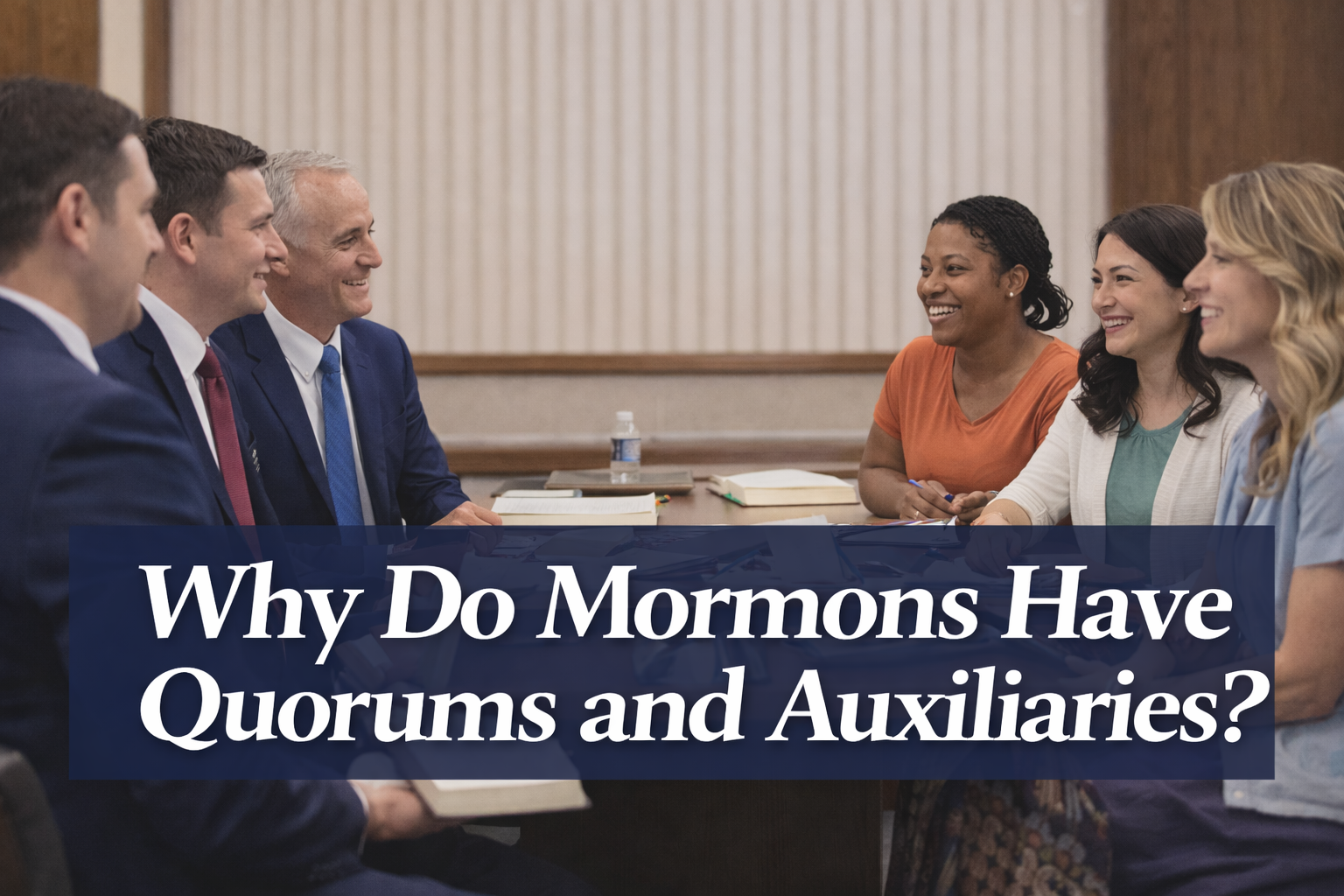
One of the most distinctive aspects of The Church of Jesus Christ of Latter-day Saints is its highly organized structure of quorums, auxiliaries, and councils. For many observers, this raises an important question: why does the Church rely so heavily on organized groups rather than only on individual faith or centralized leadership?
Latter-day Saints believe that the Church of Jesus Christ is meant to function as a living body, not as a collection of isolated individuals. Every member has spiritual value, responsibility, and the potential to serve. Quorums and auxiliaries exist to help members grow spiritually, care for one another, develop leadership, and work together in unity under the direction of Jesus Christ.
Rather than creating bureaucracy for its own sake, this organizational structure reflects the belief that God works through order, cooperation, and shared responsibility. Quorums and auxiliaries are designed to ensure that no one is overlooked, that service is personal, and that spiritual growth happens at every stage of life.
What Are Quorums and Auxiliaries?
In Latter-day Saint belief, quorums and auxiliaries are organized groups within the Church that support worship, learning, service, and leadership development.
Quorums are typically associated with priesthood organization. Examples include elders quorums, priests quorums, teachers quorums, and deacons quorums. These groups bring together men and young men according to priesthood office or age, allowing them to learn their responsibilities, serve others, and grow in faith.
Auxiliaries are organizations designed to support spiritual development for women, youth, and children, as well as the entire congregation. Major auxiliaries include Relief Society, Young Women, Primary, Sunday School, and youth programs.
Each quorum and auxiliary has a specific purpose, but none operate in isolation. They work together under the direction of priesthood leadership and in coordination with one another.
Organized for Service
Latter-day Saints believe that organization enhances service. When responsibilities are clearly defined, care becomes more effective and consistent.
Quorums and auxiliaries allow members to know who is responsible for teaching, ministering, and supporting individuals and families. This structure helps ensure that spiritual and temporal needs are identified and addressed.
Participation at Every Stage of Life
From childhood through adulthood, every member is invited to participate in Church life. Children learn in Primary, youth participate in age-based organizations, adults serve in quorums and auxiliaries.
This inclusive structure reflects the belief that discipleship is lifelong and that everyone has something meaningful to contribute.
Biblical Foundations for Organized Groups
Latter-day Saints believe that organization is not a modern invention but a biblical principle. Throughout scripture, God organized His people into groups with defined roles and responsibilities.
Jesus Christ Himself organized His Church. He chose apostles, called disciples, and sent them out in pairs or groups to teach and serve. He did not expect His followers to work independently without structure.
The New Testament describes a church with elders, teachers, bishops, and various callings. Paul compared the Church to a body, explaining that each part has a different function but all are necessary.
Many Members, One Body
This metaphor of the body is central to Latter-day Saint understanding of quorums and auxiliaries. Just as a body requires many parts working together, the Church requires organized cooperation.
No single part is more important than the others. Strength comes from unity, coordination, and mutual dependence.
God as a God of Order
A foundational belief among Latter-day Saints is that God is a God of order, not confusion. Organization reflects His nature.
Order does not mean rigidity or lack of compassion. Instead, it provides a framework within which love, service, and revelation can flourish.
Quorums and auxiliaries are expressions of divine order applied to a global church with millions of members.
Role of Priesthood Quorums
Priesthood quorums play a central role in Church life for men and young men. These quorums are not social clubs or status groups. They are spiritual organizations focused on responsibility, service, and discipleship.
Members of priesthood quorums learn doctrine, develop Christlike attributes, and serve individuals and families in practical ways.
Brotherhood and Responsibility
Quorums foster a sense of brotherhood and shared responsibility. Members support one another spiritually, emotionally, and practically.
This brotherhood encourages accountability, compassion, and mutual growth rather than competition or hierarchy.
Ministering and Care
One of the primary responsibilities of priesthood quorums is ministering. Members are assigned to care for individuals and families, offering friendship, support, and help during times of need.
Ministering reflects Jesus Christ’s example of personal, compassionate service.
Role of Auxiliaries
Auxiliaries are essential to the life and mission of the Church. They provide structure for teaching, leadership development, and service for women, youth, and children.
Each auxiliary has its own history, purpose, and responsibilities, but all are centered on helping individuals come closer to Jesus Christ.
Relief Society
The Relief Society is one of the oldest women’s organizations in the world. Its purpose is to increase faith, strengthen families, and provide service.
Relief Society emphasizes compassion, education, and spiritual growth. Women serve in leadership roles, teach doctrine, and coordinate service efforts.
Young Women and Young Men
Youth organizations help adolescents develop faith, character, and life skills. Activities are designed to strengthen testimony, encourage healthy relationships, and prepare youth for future responsibilities.
These programs emphasize agency, moral development, and Christ-centered living.
Primary
Primary focuses on teaching children the gospel of Jesus Christ. Through lessons, music, and activities, children learn foundational principles in age-appropriate ways.
Primary helps children feel valued, safe, and spiritually nurtured.
Sunday School
Sunday School supports gospel learning for all ages. It emphasizes scripture study, discussion, and application of gospel principles.
This auxiliary reinforces the idea that learning is ongoing and essential to discipleship.
Auxiliaries and Priesthood: Working Together
A common misunderstanding is that auxiliaries operate independently or in competition with priesthood leadership. Latter-day Saints believe the opposite.
Auxiliaries and priesthood quorums function in harmony, each contributing unique perspectives and strengths. Leadership is shared through councils rather than centralized in a single individual.
This cooperation reflects mutual respect and shared purpose.
Unity Through Councils
Councils are a defining feature of Latter-day Saint organization. Leaders from quorums and auxiliaries meet together to discuss needs, seek revelation, and coordinate efforts.
Councils encourage listening, collaboration, and spiritual discernment. Decisions are made through prayer and discussion rather than command alone.
Revelation Through Discussion
Latter-day Saints believe revelation often comes through collective counsel. Different perspectives help leaders understand situations more fully and make inspired decisions.
Councils help prevent isolation, bias, and misuse of authority.
Leadership Development Through Organization
Quorums and auxiliaries provide opportunities for leadership development at every level. Members learn to teach, organize, serve, and lead in supportive environments.
Leadership is viewed as a skill developed through service rather than a position of privilege.
This prepares members to serve effectively in families, communities, and professional life.
Lay Participation and Shared Responsibility
Because the Church has no paid local clergy, quorums and auxiliaries allow for broad participation. Many members serve in leadership roles at different times in their lives.
This shared responsibility fosters humility, empathy, and practical experience.
Care for Individuals
One of the strongest reasons Latter-day Saints value quorums and auxiliaries is personal care. Large institutions risk overlooking individuals, but organized groups help prevent that.
Members are known by name. Needs are discussed. Support is offered in times of illness, grief, unemployment, or crisis.
This reflects Christ’s concern for the individual.
Global Church, Local Care
The Church operates globally but cares locally. Quorums and auxiliaries make it possible to adapt global principles to local circumstances.
Cultural differences are respected while maintaining unity in doctrine and purpose.
Preventing Isolation and Loneliness
Organized groups help members feel connected. Regular meetings, service opportunities, and shared worship foster belonging.
This is especially important in a world where loneliness and disconnection are increasingly common.
Teaching Responsibility and Agency
Participation in quorums and auxiliaries teaches responsibility. Members are invited, not forced, to serve.
Agency is respected. Growth happens through choice and experience.
Common Misunderstandings
Some believe quorums and auxiliaries create unnecessary bureaucracy. Latter-day Saints believe organization increases effectiveness, compassion, and accountability.
Others assume organization limits spirituality. Members believe structure supports spirituality rather than replacing it.
Another misunderstanding is that these organizations are rigid. In practice, they are flexible and adapted to local needs.
Why This Belief Matters
Belief in quorums and auxiliaries matters because it shapes how Latter-day Saints live their faith. It encourages participation, service, and growth for everyone.
This structure helps the Church function as a global body while remaining personal and compassionate.
Christ at the Center
Ultimately, quorums and auxiliaries exist because of Jesus Christ. He is the reason for organization, service, and unity.
Every teaching, meeting, and act of service is meant to point individuals toward Him.
A Living Church
Latter-day Saints believe the Church is a living organism guided by Jesus Christ. Quorums and auxiliaries help it function effectively in a complex world.
They reflect a belief that God values order, cooperation, and shared service.
An Invitation
Latter-day Saints invite others to see quorums and auxiliaries not as bureaucracy, but as expressions of community and care.
They encourage sincere seekers to attend meetings, observe interactions, and experience the sense of belonging these organizations create.
Conclusion
Quorums and auxiliaries exist because Latter-day Saints believe God’s Church is meant to be organized, inclusive, and service-oriented. Through these groups, members learn, serve, and grow together.
This structure reflects a Christ-centered vision of shared responsibility, unity, and love.
Sources
The Church of Jesus Christ of Latter-day Saints – Gospel Topics: Church Organization
https://www.churchofjesuschrist.org
Church News – Quorums and Auxiliaries
https://www.thechurchnews.com
Doctrine and Covenants Central
https://doctrineandcovenantscentral.org
Scripture Central
https://scripturecentral.org