Tag: Jesus Christ

  • Why Do Mormons Believe Priesthood Authority Was Lost and Restored?

    Why Do Mormons Believe Priesthood Authority Was Lost and Restored?

    Latter-day Saints believe priesthood authority was lost and later restored because they believe Jesus Christ established His Church with divine authority, appointed apostles to lead it, and gave them power to perform ordinances in His name. According to this belief, while faith in Christ continued after the deaths of the original apostles, the specific authority to officially act for God did not continue uninterrupted.

    This belief is foundational to how Latter-day Saints understand ordinances, church leadership, revelation, and salvation. It explains why they emphasize living prophets, authorized baptism, temple ordinances, and a structured church organization. For them, restoration was not a rejection of Christianity, but a fulfillment of God’s plan to reestablish what was lost.

    Rather than viewing history as a failure, Latter-day Saints see apostasy and restoration as part of a divine pattern that respects human agency while ensuring God’s purposes ultimately continue.

    What Is Priesthood Authority?

    Priesthood authority is understood as the right and power given by God to act in His name for the benefit of others. It is not personal status, spiritual superiority, or political control. Instead, it is divine authorization to perform ordinances, lead the Church, and administer covenants that God recognizes as binding.

    Latter-day Saints distinguish clearly between personal spirituality and priesthood authority. A person may have sincere faith, moral integrity, and spiritual influence without holding priesthood authority. Authority, however, requires divine commissioning through proper ordination.

    Authority Is Given, Not Taken

    Priesthood authority cannot be claimed, earned, or assumed. It is not based on education, charisma, seniority, or popular support. According to Latter-day Saint belief, authority must come from God through an unbroken chain of ordination.

    This principle reflects the belief that God is a God of order, not confusion.

    Acting in God’s Name

    When ordinances such as baptism or confirmation are performed, Latter-day Saints believe they must be done by someone authorized to act in God’s name. Without that authorization, the act may be meaningful to participants but is not believed to be officially recognized by God.

    This distinction explains why priesthood authority matters deeply in Latter-day Saint theology.

    Priesthood Authority in the New Testament

    Latter-day Saints believe the New Testament clearly shows Jesus Christ giving authority to His apostles. He called them individually, instructed them, and empowered them to teach, baptize, heal, and govern the Church.

    This authority was not symbolic. Jesus gave specific responsibilities and keys that allowed apostles to act on His behalf.

    Apostles as Holders of Authority

    The apostles were not merely teachers or missionaries. They were witnesses of Christ’s resurrection and holders of priesthood keys—authority to direct the Church, establish doctrine, and perform ordinances.

    Jesus taught that what they bound on earth could be bound in heaven, indicating divine recognition of their authority.

    Authority Passed Through Ordination

    The New Testament describes authority being passed through the laying on of hands. This pattern shows continuity, order, and divine commissioning rather than spontaneous or self-appointed leadership.

    Latter-day Saints view this as evidence that authority was essential to Christ’s Church, not optional.

    The Role of Apostles in Maintaining Authority

    Apostles were central to preserving priesthood authority. They ordained leaders, resolved doctrinal disputes, and maintained unity among believers.

    As long as apostles lived, authority continued. When apostles were killed and no successors were ordained with the same keys, Latter-day Saints believe authority could not be preserved.

    Leadership Was Centralized, Not Decentralized

    Latter-day Saints believe Christ intended His Church to be guided by apostles, not fragmented into independent interpretations. Apostolic leadership provided doctrinal stability and divine oversight.

    Without apostles, authority became localized, inconsistent, and eventually lost.

    Loss of Authority After the Apostles

    After the deaths of the apostles, early Christians faced intense persecution, political pressure, and internal disagreements. Many faithful believers continued to worship Christ sincerely, but Latter-day Saints believe the structure Christ established could not be maintained without apostles holding priesthood keys.

    A Gradual Loss

    Latter-day Saints emphasize that authority was lost gradually, not suddenly. There was no single moment when everything disappeared. Instead, changes occurred over generations as leadership structures evolved without divine authorization.

    Faith Continued

    Importantly, Latter-day Saints do not believe faith vanished. Scripture was preserved, devotion to Christ endured, and moral teachings continued to influence societies.

    They believe God continued to inspire goodness even without full priesthood authority.

    Apostasy Does Not Mean Moral Collapse

    In Latter-day Saint belief, apostasy does not mean Christianity became evil or meaningless. It means that essential elements of Christ’s original Church—particularly authority and certain ordinances—were no longer present in their original form.

    This distinction allows Latter-day Saints to respect other Christians while still believing restoration was necessary.

    Respect for Christian History

    Latter-day Saints openly acknowledge that many devoted Christians preserved scripture, defended belief in Christ, and lived lives of deep faith during centuries without restored authority.

    They see these individuals as instruments in God’s broader plan.

    Biblical Warnings of Apostasy

    Latter-day Saints point to biblical passages that warn of a falling away or loss of truth before Christ’s return. These passages are interpreted as evidence that apostasy was foreseen rather than accidental.

    Such warnings suggest that God anticipated the need for restoration.

    Apostasy Was Foreknown

    Because apostasy was foretold, Latter-day Saints believe restoration was also part of God’s plan, not a reaction to failure.

    God allows human agency while ensuring His purposes ultimately prevail.

    Why Restoration Was Necessary

    If priesthood authority was lost, Latter-day Saints believe reform alone could not restore it. Reform can change beliefs or practices, but it cannot recreate divine authority.

    Only God could restore what was lost.

    Restoration Versus Reformation

    The Protestant Reformation preserved many important truths, but Latter-day Saints believe it did not restore priesthood authority or apostolic keys.

    Restoration required divine intervention, not institutional reform.

    Divine Recommissioning

    Priesthood authority had to come from heaven, not history. According to Latter-day Saint belief, only God could recommission servants with authority to act in His name.

    Restoration Through Heavenly Messengers

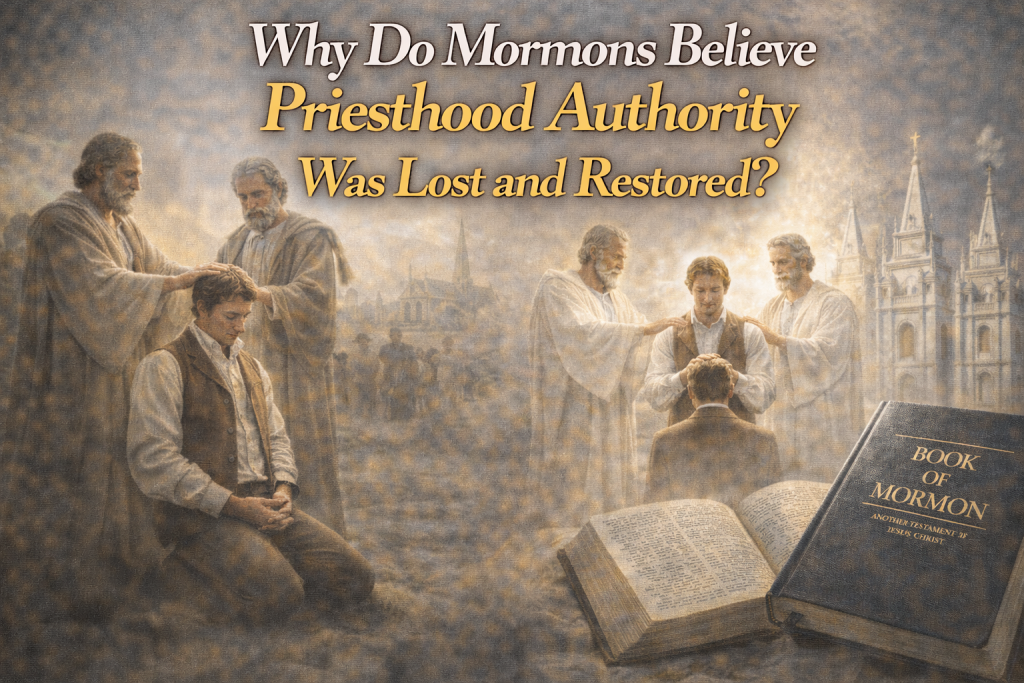
    Latter-day Saints believe priesthood authority was restored through divine messengers rather than human appointment. They believe John the Baptist restored authority to baptize, and that Peter, James, and John later restored higher priesthood authority.

    This restoration reconnected modern priesthood authority directly to ancient apostles.

    Continuity With Ancient Christianity

    Restored authority is believed to be the same authority Christ originally gave His apostles—not a new or modified version.

    This continuity is central to Latter-day Saint confidence in ordinances and covenants.

    Ongoing Authority in the Church

    Latter-day Saints believe priesthood authority continues today through living prophets and apostles. Authority is passed through ordination under proper keys, maintaining continuity and order.

    This allows ordinances to be consistent across cultures, nations, and generations.

    Order and Unity

    Priesthood authority ensures unity in doctrine, practice, and governance. It prevents fragmentation and conflicting interpretations from defining the Church.

    Unity is achieved through divine order rather than enforced conformity.

    Priesthood Authority and Jesus Christ

    Jesus Christ is the source of all priesthood authority. Latter-day Saints believe priesthood holders act in His name, under His direction, and for His purposes.

    Authority does not replace Christ—it points to Him.

    Christ-Centered Power

    The priesthood exists to testify of Christ, administer His ordinances, and invite people to follow Him. When authority is exercised properly, it reflects Christlike service rather than control.

    Common Misunderstandings

    A common misunderstanding is that Latter-day Saints believe God cannot work without priesthood authority. In reality, they believe God can inspire anyone, anywhere, at any time.

    However, ordinances that bind on earth and in heaven require authorization.

    Another misunderstanding is that belief in restoration condemns other Christians. Latter-day Saints strongly reject this idea and emphasize respect, gratitude, and shared devotion to Christ.

    Some assume priesthood authority implies superiority. Latter-day Saints teach that authority increases responsibility, not status.

    Why This Belief Matters

    Belief in the loss and restoration of priesthood authority explains why Latter-day Saints emphasize authorized ordinances, temple worship, and living prophets. It provides confidence that covenants are divinely recognized and spiritually binding.

    For believers, this doctrine affirms that God is consistent, orderly, and actively involved in guiding His Church. It reassures them that Christ continues to lead His people today, just as He did anciently.

    Priesthood authority matters not because of power, but because it represents God’s willingness to work through people to bless, heal, teach, and redeem His children.

    Sources

    The Church of Jesus Christ of Latter-day Saints – Gospel Topics: Priesthood Authority
    https://www.churchofjesuschrist.org

    Joseph Smith Papers – Priesthood Restoration Accounts
    https://www.josephsmithpapers.org

    Doctrine and Covenants Central
    https://doctrineandcovenantscentral.org

    Scripture Central
    https://scripturecentral.org

  • Why Do Mormons Believe in a Pre-Mortal Life?

    Why Do Mormons Believe in a Pre-Mortal Life?

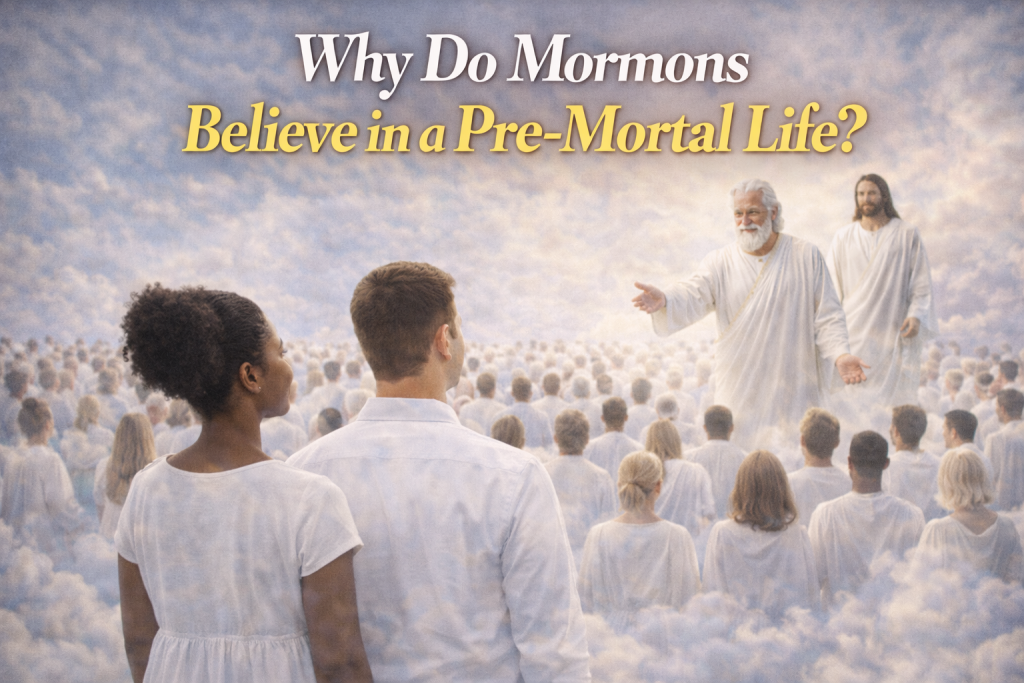
    Long before birth, before names or nations, Latter-day Saints believe each person already existed. According to this belief, human life did not begin on earth but started with God in a spiritual realm. This understanding gives deeper meaning to questions of identity, purpose, and God’s relationship with humanity.

    Rather than seeing life as a brief and random event, Latter-day Saints view mortal life as one chapter in an eternal journey that began before birth and continues beyond death.

    God as the Father of Spirits

    Latter-day Saints believe God is literally the Father of human spirits. Before coming to earth, individuals lived with Him in a pre-mortal existence where they learned, grew, and prepared for mortal life.

    This belief teaches that human beings are divine in origin. God is not distant or impersonal but a loving Father who knows His children and desires their growth and happiness.

    Biblical Foundations for Pre-Mortal Life

    Latter-day Saints find support for belief in pre-mortal life within the Bible. Certain passages suggest that individuals existed and were known by God before birth.

    One frequently cited example is when God tells the prophet Jeremiah that He knew him before he was formed in the womb. Latter-day Saints understand this as evidence of conscious existence prior to mortality.

    Known and Chosen Before Birth

    Other scriptures speak of individuals being chosen or foreordained before coming to earth. Latter-day Saints believe foreordination reflects God’s recognition of individuals’ willingness and potential in the pre-mortal life.

    Foreordination and Agency

    Foreordination does not mean destiny is fixed. Latter-day Saints believe each person retains full agency and is free to choose how to live during mortal life.

    The Council in Heaven

    Latter-day Saints believe that before the creation of the earth, God presented a plan for His children’s eternal progression. This plan included receiving physical bodies, experiencing mortality, and returning to God through Jesus Christ.

    This gathering is often called the Council in Heaven. During this council, Jesus Christ was chosen as the Savior, and God’s children exercised agency by accepting His plan.

    Agency as a Central Principle

    Agency—the power to choose—is central to Latter-day Saint belief. The pre-mortal life is understood as a place where agency was already being used, shaping the course of mortal experience.

    Opposition and Growth

    Latter-day Saints believe growth requires opposition. Mortal life was designed to include challenges so individuals could learn, grow, and become more like God through their choices.

    Why Mortal Life Matters

    Earthly life is seen as a vital stage in eternal development. Through mortal experiences, individuals receive physical bodies, develop character, and learn to follow Jesus Christ.

    Belief in a pre-mortal life helps explain why life includes testing, learning, and growth rather than immediate perfection.

    Common Misunderstandings

    Some believe that belief in pre-mortal life minimizes the importance of mortal life. Latter-day Saints believe the opposite—mortal life is sacred, purposeful, and essential.

    Others think this belief removes accountability. In Latter-day Saint belief, individuals are fully responsible for the choices they make during mortality.

    Why This Belief Matters

    Belief in a pre-mortal life gives Latter-day Saints a strong sense of identity and purpose. It teaches that life has meaning beyond chance and that every person is known and loved by God.

    This doctrine also brings comfort, reminding individuals that their worth existed before birth and continues eternally.

    An Invitation

    Latter-day Saints invite all people to reflect on their divine identity and seek understanding through prayer and study. They believe God can help each person discover their eternal purpose and relationship with Him.

    Sources

    The Church of Jesus Christ of Latter-day Saints – Gospel Topics: Kingdoms of Glory
    https://www.churchofjesuschrist.org

    Doctrine and Covenants Central
    https://doctrineandcovenantscentral.org

    Scripture Central
    https://scripturecentral.org

    Pearl of Great Price Central
    https://www.pearlofgreatpricecentral.org

  • Why Do Mormons Believe Baptism Is Required for Salvation?

    Why Do Mormons Believe Baptism Is Required for Salvation?

    Why Mormons?

    When Jesus Christ began His ministry, one of His first public acts was baptism. For Latter-day Saints, this moment is deeply meaningful. They believe baptism is not optional, but a sacred step commanded by Jesus Christ for all who desire to follow Him and receive salvation.
    Rather than seeing baptism as a symbolic gesture alone, Latter-day Saints believe it is a divine ordinance—an act that forms a covenant between God and His children and plays an essential role in God’s plan of salvation.

    Baptism in the Teachings of Jesus Christ

    Latter-day Saints look to the New Testament as the foundation of their belief in baptism. Jesus Himself was baptized, even though He was sinless. He also taught that individuals must be born of water and of the Spirit to enter the kingdom of God.

    Because Jesus set the example and clearly commanded His followers to be baptized, Latter-day Saints believe baptism remains a requirement for discipleship today.

    Christ’s Example

    Jesus’ baptism demonstrates humility, obedience, and complete submission to the will of the Father. Latter-day Saints believe that if the Son of God chose to be baptized, His followers should do the same.

    A Commandment, Not a Tradition

    Baptism is not viewed as a cultural practice or church tradition. It is understood as a commandment given directly by Jesus Christ, inviting individuals into a covenant relationship with God.

    What Baptism Represents

    In Latter-day Saint belief, baptism represents cleansing from sin, spiritual rebirth, and a commitment to follow Jesus Christ. It marks a new beginning and a conscious decision to live according to Christ’s teachings.

    Baptism also represents entry into the Church and the start of a lifelong journey of discipleship.

    A Covenant With God

    Through baptism, individuals promise to take upon themselves the name of Jesus Christ, keep His commandments, and serve others. In return, God promises forgiveness of sins and the gift of the Holy Ghost.

    Renewal Through the Sacrament

    Latter-day Saints believe these baptismal covenants are renewed weekly through the sacrament, helping members recommit to their promises and stay focused on Christ.

    Proper Authority for Baptism

    Latter-day Saints believe baptism must be performed by proper priesthood authority. They teach that this authority comes from God and was restored through the prophet Joseph Smith.

    While baptisms performed without this authority may be sincere, Latter-day Saints believe divine authorization is required for the ordinance to be fully valid.

    Restoration of Authority

    According to Latter-day Saint belief, heavenly messengers restored priesthood authority, allowing ordinances such as baptism to be performed as Jesus Christ intended.

    Baptism and Grace

    Latter-day Saints believe baptism does not replace grace. Salvation is possible only because of Jesus Christ. Baptism is one way individuals accept His grace and demonstrate faith in Him.

    Faith, Repentance, and Obedience

    Baptism follows faith and repentance. It is an outward expression of inward commitment, trust, and willingness to follow Jesus Christ throughout life.

    Common Misunderstandings

    Some believe Latter-day Saints teach that baptism alone saves. In reality, they believe baptism must be accompanied by faith, repentance, and continued discipleship.

    Others think baptism limits God’s mercy. Latter-day Saints believe God provides opportunities for all people to receive baptism, including those who did not have the chance during mortal life.

    Why This Belief Matters

    Belief in baptism as essential emphasizes commitment, obedience, and a personal covenant with God. It encourages individuals to make a conscious choice to follow Jesus Christ.

    For Latter-day Saints, baptism is not the end—it is a joyful beginning, marking the start of a lifelong journey of faith, growth, and discipleship.

    An Invitation

    Latter-day Saints invite all people to learn about Jesus Christ, study His teachings, and consider baptism as He taught. They believe God guides sincere seekers as they take steps to follow His Son.

    Sources

    The Church of Jesus Christ of Latter-day Saints – Gospel Topics: Baptism
    https://www.churchofjesuschrist.org

    Doctrine and Covenants Central
    https://doctrineandcovenantscentral.org

    Scripture Central
    https://scripturecentral.org

    Joseph Smith Papers
    https://www.josephsmithpapers.org

  • Why Do Mormons Baptize for the Dead?

    Why Do Mormons Baptize for the Dead?

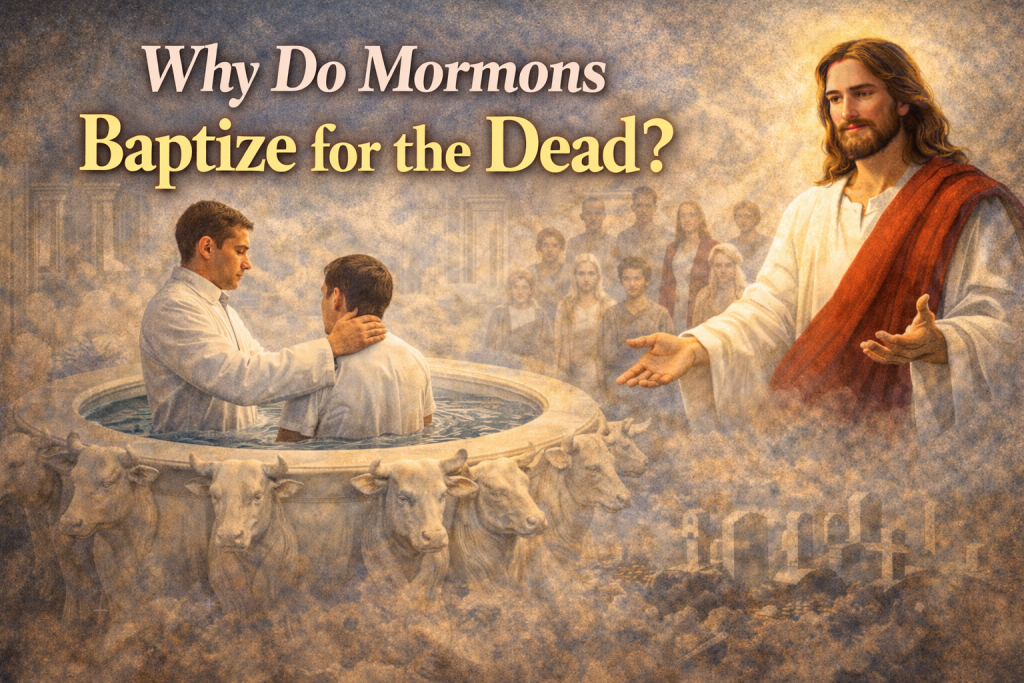
    One of the most common questions people ask about Latter-day Saints is why they perform baptisms for the dead. At the heart of this belief is a deep trust in God’s justice and mercy. Latter-day Saints believe that a loving God would never deny His children a fair opportunity to accept Jesus Christ and receive essential ordinances like baptism.
    Baptism for the dead reflects the belief that God’s plan includes everyone—those who lived with access to the gospel and those who did not—while always preserving individual choice.

    The Need for Baptism

    Latter-day Saints believe baptism is required for salvation, as taught by Jesus Christ. At the same time, they recognize that millions of people lived and died without ever hearing about Christ or having the opportunity to be baptized.

    Baptism for the dead provides a way for these individuals to receive that opportunity after death, without removing their agency or forcing belief.

    God’s Justice and Mercy

    This doctrine reflects a balance between God’s justice and His mercy. God does not condemn people for circumstances beyond their control, and He also does not remove baptism as a commandment given by Jesus Christ.

    Choice After Death

    Although the ordinance is performed on earth, Latter-day Saints believe those who have died remain free to choose whether or not to accept the baptism performed on their behalf in the spirit world.

    Biblical Foundations for Baptism for the Dead

    Latter-day Saints find support for this practice in the Bible. The Apostle Paul referred to baptism for the dead when he asked why people would be baptized for the dead if the dead do not rise, suggesting that the practice was known among early Christians.

    Latter-day Saints believe this passage points to an early Christian understanding of proxy ordinances.

    Early Christian Practice

    Although the Bible does not provide many details, Latter-day Saints see Paul’s statement as evidence that the principle of baptism for the dead was practiced rather than invented in modern times.

    Temple Ordinances and Authority

    Baptism for the dead is performed in Latter-day Saint temples by living individuals who act as proxies. These ordinances are carried out with reverence and proper priesthood authority.

    Temples are considered sacred places where eternal ordinances are performed for both the living and the dead.

    The Importance of Priesthood Authority

    Latter-day Saints believe ordinances must be performed with authority restored by God through Joseph Smith. This authority ensures that ordinances are recognized by God.

    A Sacred Responsibility

    Participating in baptisms for the dead is seen as an act of love and service—especially toward ancestors and family members—reflecting Christlike compassion.

    The Central Role of Jesus Christ

    Jesus Christ is central to the doctrine of baptism for the dead. Through His atonement, death is overcome, and all people will be resurrected and judged with perfect fairness.

    Without Christ’s victory over death, baptism for the dead would have no saving power or purpose.

    Common Misunderstandings

    Some believe Latter-day Saints think they can force deceased individuals into their faith. In reality, no one is compelled to accept baptism performed on their behalf.

    Others believe this doctrine minimizes the importance of faith in mortal life. Latter-day Saints believe mortal choices remain deeply significant and meaningful.

    Why This Belief Matters

    Baptism for the dead reflects God’s universal love and fairness. It reassures believers that God provides opportunities for salvation to all His children, regardless of time, place, or circumstance.

    This doctrine also strengthens family connections and encourages compassion, service, and respect for individual agency.

    An Invitation

    Latter-day Saints invite others to learn more about God’s plan of salvation and the role of Jesus Christ in offering hope to all humanity—both living and dead.

    Sources

    The Church of Jesus Christ of Latter-day Saints – Gospel Topics: Baptism for the Dead
    https://www.churchofjesuschrist.org

    Gospel Topics Essays – Salvation for the Dead
    https://www.churchofjesuschrist.org/study/manual/gospel-topics-essays

    Doctrine and Covenants Central
    https://doctrineandcovenantscentral.org

    Scripture Central
    https://scripturecentral.org

  • Why Do Mormons Do Temple Sealings?

    Why Do Mormons Do Temple Sealings?

    For many people, the idea that families can remain together forever is deeply comforting—but also unfamiliar. In most Christian traditions, marriage is understood as a relationship that lasts only during mortal life. Latter-day Saints, however, believe something different. They believe that through temple sealings, family relationships can continue beyond death and into eternity.

    Temple sealings are one of the most distinctive beliefs of The Church of Jesus Christ of Latter-day Saints. They reflect a hopeful and expansive view of God’s plan—one in which love, family, and relationships are not meant to end at the grave. For Latter-day Saints, sealings express God’s desire to unite His children eternally through Jesus Christ.

    This belief is not based on sentiment alone. It is rooted in scripture, modern revelation, and a specific understanding of Christ’s power over sin and death. To understand why Mormons do temple sealings, it is necessary to explore how they understand authority, covenants, salvation, family, agency, and the central role of Jesus Christ.

    What Is a Temple Sealing?

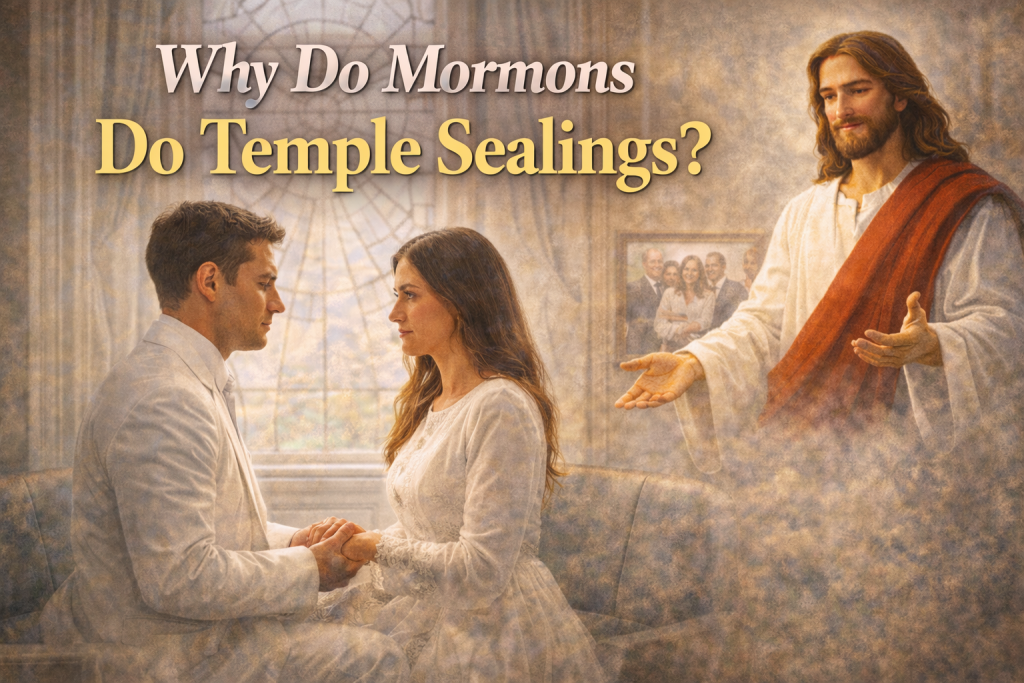
    A temple sealing is a sacred ordinance performed in a Latter-day Saint temple by priesthood authority. Through this ordinance, a husband and wife are sealed together as an eternal family unit. Children may also be sealed to their parents, creating an eternal family bond.

    Unlike civil marriages, which are valid only “until death,” temple sealings are believed to endure beyond mortal life. Latter-day Saints believe these relationships continue after resurrection, provided individuals remain faithful to the covenants they make with God.

    A sealing is not merely symbolic. It is understood as a covenant—an agreement between God and individuals—made possible through divine authority restored by Jesus Christ.

    Authority to Seal

    Latter-day Saints believe that Jesus Christ granted sealing authority to His apostles during His mortal ministry. This authority allowed them to perform actions on earth that would be recognized in heaven.

    They believe this authority was lost after the deaths of the apostles and later restored through modern revelation. Without this authority, eternal sealings would not be possible.

    Binding on Earth and in Heaven

    This belief is based on Jesus’ statement that what is bound on earth can be bound in heaven. Latter-day Saints understand this to mean that God can authorize ordinances performed on earth to have eternal effect.

    Temple sealings are believed to operate under this principle. They are not human contracts but divine covenants recognized by God.

    The Importance of Covenants

    Covenants are central to Latter-day Saint belief. A covenant is a sacred promise between God and an individual, involving commitment, responsibility, and divine promises.

    Temple sealings are covenant-based. They are not automatic guarantees of eternal family life, but conditional relationships that depend on faithfulness, repentance, and reliance on Jesus Christ.

    Latter-day Saints believe covenants help guide behavior, strengthen relationships, and align lives with God’s will. Sealings, in particular, emphasize commitment, sacrifice, forgiveness, and long-term devotion within families.

    Biblical Foundations for Temple Sealings

    Latter-day Saints believe temple sealings are consistent with biblical teachings, even if the full doctrine is not explicitly detailed in the Bible.

    Scripture teaches that God has power over death and that relationships can transcend mortal boundaries. Jesus Christ’s resurrection demonstrates that death does not have final authority.

    The Bible also emphasizes covenant relationships. God consistently works through covenants—agreements that bind His people to Him across generations.

    Elijah’s Role

    One of the strongest biblical foundations for temple sealings comes from prophecy concerning Elijah. The Bible foretells that Elijah would return before the “great and dreadful day of the Lord” to turn the hearts of parents to their children and children to their parents.

    Latter-day Saints believe this prophecy refers to the restoration of sealing authority. They believe Elijah appeared in modern times to restore this authority, making eternal family relationships possible again.

    Turning of Hearts

    This “turning of hearts” is understood not merely as emotional reconciliation, but as covenant connection. Temple sealings bind families across generations, fulfilling this prophecy in a literal and eternal sense.

    Sealings and Jesus Christ

    Jesus Christ is the foundation of temple sealings. Latter-day Saints believe that without His atonement and resurrection, eternal relationships would be impossible.

    Death separates families. Christ overcomes death.

    Through His resurrection, Jesus Christ made it possible for relationships to continue beyond mortality. Sealings are effective because of His power—not because of human effort.

    Sealings do not replace Christ; they depend entirely on Him.

    Covenants and Faithfulness

    Temple sealings are conditional upon faithfulness. Latter-day Saints believe eternal family relationships are not automatic or guaranteed regardless of behavior.

    Faith in Jesus Christ, repentance, obedience, and continued commitment to covenants matter deeply. Sealings invite individuals to live Christlike lives within family relationships.

    Grace and Mercy

    Latter-day Saints believe God’s grace makes allowance for human weakness. Eternal families are not built on perfection, but on repentance, forgiveness, and growth.

    God’s mercy works alongside justice, honoring agency while offering opportunity for healing and reconciliation.

    Sealings for the Living

    Temple sealings are often performed for living couples and families. When a man and woman are sealed in the temple, they commit not only to each other, but to God.

    This covenant encourages long-term commitment. Marriage is viewed not as a temporary arrangement, but as an eternal partnership designed to foster growth, service, and mutual support.

    Children born to sealed parents are believed to be born into the covenant, automatically connected to their parents eternally.

    Sealings for the Dead

    Temple sealings are also performed for deceased ancestors. Just as baptisms can be performed by proxy, sealings can extend eternal family relationships to those who lived and died without the opportunity to receive these ordinances in mortality.

    Latter-day Saints believe these ordinances do not force acceptance. Individuals who have died retain agency and may choose whether to accept or reject the sealing in the spirit world.

    This belief reflects a God who is fair, loving, and respectful of individual choice.

    The Role of Agency

    Agency is central to Latter-day Saint belief. Temple sealings do not override personal choice.

    Even sealed relationships depend on individual willingness to accept God’s plan. Eternal families are built through love, faith, and shared commitment—not compulsion.

    This emphasis on agency preserves moral responsibility and respects individual dignity.

    Sealings and Eternal Families

    The doctrine of eternal families shapes how Latter-day Saints view marriage, parenting, and relationships.

    Families are seen as central to God’s plan. Home life becomes a place of spiritual growth, service, and discipleship.

    This belief encourages patience, forgiveness, and long-term thinking. Challenges are viewed through an eternal lens rather than a temporary one.

    Comfort in Times of Loss

    One of the most meaningful aspects of temple sealings is the comfort they provide in times of death and separation.

    Latter-day Saints believe death does not permanently sever family relationships. Sealings offer hope that loved ones will be reunited and relationships restored.

    This belief provides emotional and spiritual comfort, especially during grief.

    Common Misunderstandings

    A common misunderstanding is that sealings guarantee eternal family relationships regardless of behavior. Latter-day Saints believe faithfulness and agency matter deeply.

    Another misunderstanding is that sealings diminish individual salvation. In reality, Latter-day Saints believe personal faith in Jesus Christ is essential. Sealings do not replace individual accountability.

    Some assume sealings are exclusive or elitist. Latter-day Saints believe they are inclusive, extending opportunity to all people through proxy ordinances.

    Sealings and Christian Faith

    Temple sealings are sometimes misunderstood as being separate from Christianity. Latter-day Saints believe the opposite.

    They see sealings as an extension of Christ’s saving work. Jesus Christ is at the center of every covenant, ordinance, and eternal promise.

    Rather than competing with Christ, sealings testify of His power to save, unite, and redeem.

    Why This Belief Matters

    Temple sealings matter because they offer a vision of eternity grounded in love, responsibility, and hope.

    They encourage commitment within families, inspire reconciliation, and provide motivation to live Christlike lives.

    For Latter-day Saints, sealings reinforce the belief that relationships matter eternally and that God’s plan is deeply relational.

    A Broader View of Salvation

    This doctrine expands the understanding of salvation beyond individual reward. Salvation is not only about personal redemption, but about eternal relationships.

    God’s plan is communal, familial, and interconnected.

    Temple sealings reflect this expansive vision.

    An Invitation

    Latter-day Saints invite others to learn about eternal families, study the teachings of Jesus Christ, and seek understanding through prayer.

    They believe God reveals truth to sincere seekers and that His plan is one of hope, healing, and eternal connection.

    Sources

    The Church of Jesus Christ of Latter-day Saints – Gospel Topics: Sealing
    https://www.churchofjesuschrist.org

    Gospel Topics Essays – Marriage and Family
    https://www.churchofjesuschrist.org/study/manual/gospel-topics-essays

    Doctrine and Covenants Central
    https://doctrineandcovenantscentral.org

    Scripture Central
    https://scripturecentral.org

  • Why Do Mormons Do Proxy Ordinances?

    Why Do Mormons Do Proxy Ordinances?

    Among the many beliefs of The Church of Jesus Christ of Latter-day Saints, one that often raises sincere questions is the practice of proxy ordinances. Why would living people perform religious ordinances on behalf of those who have died? What purpose does this serve? And how does this belief fit within Christianity?
    For Latter-day Saints, proxy ordinances are rooted in a deeply held conviction that God desires the salvation of all His children. They believe that certain ordinances are required for salvation, but they also recognize a reality that spans human history: countless people lived and died without ever having the opportunity to hear of Jesus Christ or receive those ordinances.

    Rather than believing that God condemns people for circumstances beyond their control, Latter-day Saints believe God has provided a loving and fair solution. Proxy ordinances extend opportunity without removing agency. They do not force belief, membership, or salvation. Instead, they offer a choice—one that each individual remains free to accept or reject.

    Understanding why Mormons do proxy ordinances requires understanding how they view justice, mercy, agency, salvation, the spirit world, and above all, the central role of Jesus Christ in God’s plan.

    God’s Desire to Save All His Children

    At the heart of proxy ordinances is a belief in God’s character. Latter-day Saints believe God is perfectly just, perfectly merciful, and perfectly loving. These attributes are not in conflict; they work together.

    Justice requires that God’s laws apply equally to all. Mercy ensures that no one is punished for circumstances they did not choose. Love motivates God to provide opportunity, guidance, and redemption for every soul.

    Latter-day Saints believe salvation is not meant to be exclusive or dependent on birthplace, time period, or access to information. God’s plan, they believe, accounts for every human life.

    Proxy ordinances are one way God extends salvation universally while preserving moral responsibility and personal choice.

    What Are Proxy Ordinances?

    Proxy ordinances are sacred rites performed by living individuals on behalf of those who have died. These ordinances include baptism, confirmation, endowment, and sealing ordinances.

    In each case, a living person temporarily acts as a representative for a deceased individual. The ordinance is performed using the same form and authority as it would be for a living person.

    The key distinction is this: the ordinance is offered, not imposed. Latter-day Saints believe the deceased individual retains full agency to accept or reject the ordinance in the spirit world.

    Acting as a Representative

    The proxy does not receive the ordinance for themselves. They do not gain personal spiritual credit, status, or benefit from acting as a proxy.

    Instead, they stand in place of another person so the ordinance can be properly performed according to God’s requirements. This act is viewed as one of service, humility, and compassion.

    Many Latter-day Saints describe proxy work as deeply meaningful because it reflects selfless love rather than personal reward.

    Choice Is Always Preserved

    A foundational belief of Latter-day Saints is agency—the ability to choose. Proxy ordinances do not override this principle.

    No ordinance is effective unless the individual for whom it is performed willingly accepts it. Acceptance occurs in the spirit world, not on earth. God does not compel belief or obedience.

    This ensures that proxy ordinances extend opportunity without violating freedom of choice.

    Why Ordinances Matter

    To understand proxy ordinances, it is important to understand why ordinances matter at all in Latter-day Saint belief.

    Latter-day Saints believe ordinances are outward expressions of inward faith. They are not empty rituals, but sacred acts instituted by Jesus Christ. Baptism, for example, symbolizes spiritual rebirth and covenant commitment.

    Jesus Himself was baptized and commanded His followers to do the same. Latter-day Saints believe ordinances are required not because God needs them, but because humans need them to learn obedience, humility, and trust in Christ.

    If ordinances are required for salvation, then God must provide a way for everyone to receive them fairly.

    The Problem of Unequal Opportunity

    Human history is marked by inequality of opportunity. Entire civilizations lived and died without exposure to Christianity. Even after Jesus Christ’s ministry, centuries passed before the gospel spread widely.

    Latter-day Saints believe God foresaw this and prepared a solution. Proxy ordinances ensure that salvation is not limited by geography, time, or culture.

    This belief challenges the idea that salvation is a matter of luck. Instead, it emphasizes informed choice.

    Biblical Foundations for Proxy Ordinances

    Latter-day Saints believe proxy ordinances are not a modern invention. They find biblical support, particularly in the New Testament.

    The Apostle Paul referred to baptism for the dead when he asked why people would be baptized for the dead if the dead do not rise. Paul does not condemn the practice or explain it away. He treats it as something his audience already understands.

    Latter-day Saints believe this reference indicates that proxy ordinances existed among early Christians.

    Vicarious Service in Scripture

    Beyond this specific reference, Latter-day Saints see proxy ordinances as part of a broader scriptural pattern of vicarious service.

    Jesus Christ Himself acted vicariously. He suffered and died for all humanity, taking upon Himself sins He did not commit so others could be saved.

    Proxy ordinances follow this same pattern of selfless service. A living person stands in place of another, not for personal gain, but to offer opportunity.

    Loss and Restoration of Priesthood Authority

    Latter-day Saints believe that after the deaths of Jesus’ apostles, priesthood authority and many sacred practices were lost over time.

    They believe proxy ordinances were among the doctrines that faded as the Church moved away from its original organization. Through modern revelation, these doctrines and authorities were restored.

    This restoration explains why proxy ordinances are practiced today but not widely found in other Christian traditions.

    The Role of Temples

    Proxy ordinances are performed in temples because of their eternal significance. Temples are not ordinary places of worship. They are considered houses of the Lord, set apart for sacred acts that bind heaven and earth.

    The temple environment emphasizes reverence, preparation, and order. Everything about temple worship—from clothing to language to atmosphere—is designed to encourage spiritual focus.

    Sacred Records and Order

    Latter-day Saints believe ordinances are carefully recorded to ensure accuracy and respect for each individual’s identity. This reflects the belief that salvation is personal and specific, not abstract.

    Names, dates, and relationships matter because people matter.

    Service for the Dead

    Many Latter-day Saints view proxy ordinances as acts of love toward ancestors and others who have passed away. This service strengthens family connections and fosters gratitude for those who came before.

    Proxy work is often described as one of the most Christlike forms of service because it expects nothing in return.

    The Spirit World

    Latter-day Saints believe that after death, individuals enter the spirit world, where they continue to exist consciously. Learning, growth, and choice continue.

    Those who did not have the opportunity to learn about Jesus Christ in mortality may do so there. Proxy ordinances provide the necessary physical ordinances so individuals can fully act on that knowledge.

    This belief emphasizes that God’s work does not end at death.

    Role of Jesus Christ

    Jesus Christ is the foundation of proxy ordinances. Without His atonement and resurrection, no ordinance—living or proxy—would have saving power.

    Christ overcame sin and death, making salvation possible for all. Proxy ordinances do not bypass Christ; they rely entirely on Him.

    Latter-day Saints believe this doctrine magnifies Christ’s role as Savior of all humanity, not only those who lived in Christian societies.

    Proxy Ordinances and Grace

    Some assume proxy ordinances diminish grace. Latter-day Saints believe the opposite.

    Grace makes salvation possible. Ordinances provide a way for individuals to accept that grace knowingly and willingly.

    Salvation remains a gift of Jesus Christ. Proxy ordinances simply ensure everyone has access to that gift.

    Mortal Life Still Matters

    Another misunderstanding is that proxy ordinances make mortal life unimportant. Latter-day Saints believe choices made in mortality remain extremely significant.

    What people choose in this life shapes character, desires, and readiness. Proxy ordinances do not erase mortal responsibility; they extend opportunity.

    Common Misunderstandings

    One common misunderstanding is that proxy ordinances force conversion. This is not true. Acceptance is voluntary and based on agency.

    Another misunderstanding is that Latter-day Saints believe they can save others without their consent. In reality, God honors individual choice at every stage.

    Some also believe proxy ordinances are disrespectful to other faiths. Latter-day Saints see them as offers, not impositions.

    Why This Belief Matters

    Proxy ordinances reveal a God who is inclusive, thoughtful, and fair. They demonstrate that no life is forgotten and no soul is beyond God’s reach.

    This belief encourages compassion, humility, and service. It motivates family history work and strengthens connections across generations.

    A Broader Vision of Salvation

    Proxy ordinances expand the understanding of salvation beyond mortal boundaries. They show that God’s plan is vast, patient, and deeply personal.

    Salvation is not rushed or careless. It is deliberate, loving, and respectful of agency.

    Personal Impact on Believers

    For many Latter-day Saints, participating in proxy ordinances is spiritually transformative. It fosters gratitude, empathy, and awareness of humanity’s shared destiny.

    It reminds believers that they are part of something larger than themselves.

    An Invitation

    Latter-day Saints invite all people to learn about proxy ordinances, study the teachings of Jesus Christ, and seek understanding through prayer.

    They believe sincere seekers will find a God who is just, merciful, and deeply invested in every human soul.

    Sources

    The Church of Jesus Christ of Latter-day Saints – Gospel Topics: Endowment
    https://www.churchofjesuschrist.org

    Gospel Topics Essays – Temple Worship
    https://www.churchofjesuschrist.org/study/manual/gospel-topics-essays

    Doctrine and Covenants Central
    https://doctrineandcovenantscentral.org

    Scripture Central
    https://scripturecentral.org

  • Why Do Mormons Believe Jesus Visited the Americas?

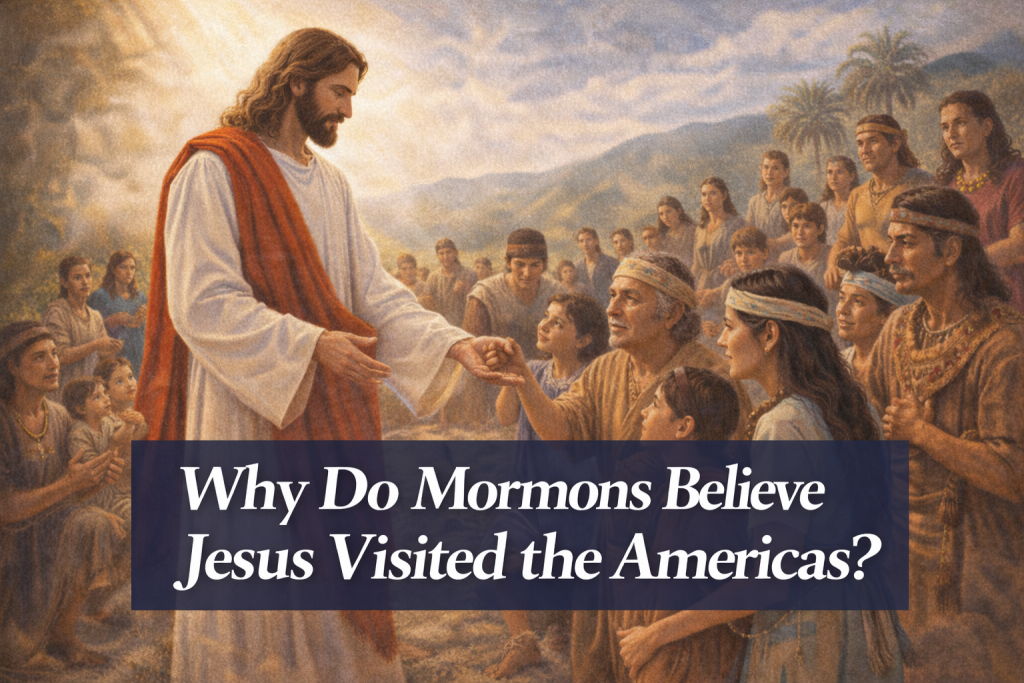
    Why Do Mormons Believe Jesus Visited the Americas?

    Jesus Christ declared that He is the Good Shepherd who knows all His sheep. Latter-day Saints believe this promise extends beyond the lands described in the Bible. According to their faith, the resurrected Savior reached people in other parts of the world, including the Americas.

    This belief comes from the Book of Mormon and reflects a conviction that Jesus Christ’s mission was global in scope. Rather than limiting His ministry to one region, Latter-day Saints believe Christ sought to bring hope, healing, and salvation to all of God’s children.

    The Book of Mormon Account

    The Book of Mormon records that after His resurrection in Jerusalem, Jesus Christ appeared to people living in the Americas. During this visit, He taught His gospel, invited individuals to feel the wounds in His hands and feet, healed the sick, and established His Church among them.

    This account is presented as a continuation of Christ’s ministry, not a separate story. The teachings He gives closely resemble those found in the New Testament, emphasizing faith, repentance, baptism, and love for others.

    Purpose of Christ’s Visit

    Latter-day Saints believe Christ’s visit had several purposes. He testified of His divine identity, taught His gospel, established sacred ordinances, and demonstrated His compassion for all people. His appearance also fulfilled prophecies found in both the Bible and the Book of Mormon.

    Christ as Savior of the Whole World

    Central to this belief is the conviction that Jesus Christ is the Savior of all humanity. His visit to the Americas reinforces the idea that God’s love and plan of salvation extend to every nation, culture, and people.

    Biblical Support for a Global Ministry

    Although the Bible does not explicitly record Christ visiting the Americas, Latter-day Saints believe it contains indications of a broader ministry. Jesus spoke of having “other sheep” who were not of the same fold, suggesting that His work extended beyond those living in Israel.

    Latter-day Saints believe the Book of Mormon offers additional insight into this global ministry without contradicting biblical teachings.

    Prophecies of the Resurrected Christ

    The Bible teaches that Jesus Christ continued His work after His resurrection. Latter-day Saints see Christ’s post-resurrection appearances as evidence that His mission did not end at the tomb, but expanded in power and reach.

    Harmony Between the Bible and the Book of Mormon

    Latter-day Saints believe the Bible and the Book of Mormon stand together as witnesses of Jesus Christ. The Book of Mormon does not replace the Bible; instead, it adds another testimony of Christ’s divinity and mission.

    Both books teach the same core principles: faith in Jesus Christ, repentance, baptism, obedience to God, and love for others. This harmony strengthens belief in their shared divine origin.

    Christ-Centered Teachings

    One reason Latter-day Saints accept the Book of Mormon account is its strong focus on Jesus Christ. His teachings in the Americas mirror those in the New Testament, emphasizing humility, forgiveness, charity, and covenant faithfulness.

    An Invitation to Come Unto Christ

    Throughout the Book of Mormon, Christ invites people to come unto Him. This invitation echoes His words in the Bible, reinforcing the belief that the same Savior was ministering to different peoples across the world.

    Common Misunderstandings

    Some believe that accepting Christ’s visit to the Americas diminishes the importance of the Bible. Latter-day Saints believe the opposite—that it strengthens biblical testimony by highlighting Christ’s universal mission.

    Others assume this belief separates Latter-day Saints from Christianity. In reality, Latter-day Saints see this doctrine as deeply Christian, centered entirely on Jesus Christ as Savior and Redeemer.

    Why This Belief Matters

    Belief that Jesus Christ visited the Americas reinforces the truth that His love and salvation are meant for all people. It helps believers feel included in Christ’s ministry and reassures them that God is aware of every nation and culture.

    This doctrine encourages Latter-day Saints to see themselves as part of a global family of God, united through faith in Jesus Christ.

    An Invitation

    Latter-day Saints invite all people to learn about Jesus Christ, study His teachings, and seek Him through prayer. They believe that as individuals sincerely seek truth, God will help them come to know His Son.

    Sources

    The Church of Jesus Christ of Latter-day Saints – Gospel Topics: Book of Mormon
    https://www.churchofjesuschrist.org

    Book of Mormon Central / Scripture Central
    https://scripturecentral.org

    Pearl of Great Price Central
    https://www.pearlofgreatpricecentral.org

    Witnesses of the Book of Mormon
    https://witnessesofthebookofmormon.org

  • Why Do Mormons Have Quorums and Auxiliaries?

    Why Do Mormons Have Quorums and Auxiliaries?

    One of the most distinctive aspects of The Church of Jesus Christ of Latter-day Saints is its highly organized structure of quorums, auxiliaries, and councils. For many observers, this raises an important question: why does the Church rely so heavily on organized groups rather than only on individual faith or centralized leadership?

    Latter-day Saints believe that the Church of Jesus Christ is meant to function as a living body, not as a collection of isolated individuals. Every member has spiritual value, responsibility, and the potential to serve. Quorums and auxiliaries exist to help members grow spiritually, care for one another, develop leadership, and work together in unity under the direction of Jesus Christ.

    Rather than creating bureaucracy for its own sake, this organizational structure reflects the belief that God works through order, cooperation, and shared responsibility. Quorums and auxiliaries are designed to ensure that no one is overlooked, that service is personal, and that spiritual growth happens at every stage of life.

    What Are Quorums and Auxiliaries?

    In Latter-day Saint belief, quorums and auxiliaries are organized groups within the Church that support worship, learning, service, and leadership development.

    Quorums are typically associated with priesthood organization. Examples include elders quorums, priests quorums, teachers quorums, and deacons quorums. These groups bring together men and young men according to priesthood office or age, allowing them to learn their responsibilities, serve others, and grow in faith.

    Auxiliaries are organizations designed to support spiritual development for women, youth, and children, as well as the entire congregation. Major auxiliaries include Relief Society, Young Women, Primary, Sunday School, and youth programs.

    Each quorum and auxiliary has a specific purpose, but none operate in isolation. They work together under the direction of priesthood leadership and in coordination with one another.

    Organized for Service

    Latter-day Saints believe that organization enhances service. When responsibilities are clearly defined, care becomes more effective and consistent.

    Quorums and auxiliaries allow members to know who is responsible for teaching, ministering, and supporting individuals and families. This structure helps ensure that spiritual and temporal needs are identified and addressed.

    Participation at Every Stage of Life

    From childhood through adulthood, every member is invited to participate in Church life. Children learn in Primary, youth participate in age-based organizations, adults serve in quorums and auxiliaries.

    This inclusive structure reflects the belief that discipleship is lifelong and that everyone has something meaningful to contribute.

    Biblical Foundations for Organized Groups

    Latter-day Saints believe that organization is not a modern invention but a biblical principle. Throughout scripture, God organized His people into groups with defined roles and responsibilities.

    Jesus Christ Himself organized His Church. He chose apostles, called disciples, and sent them out in pairs or groups to teach and serve. He did not expect His followers to work independently without structure.

    The New Testament describes a church with elders, teachers, bishops, and various callings. Paul compared the Church to a body, explaining that each part has a different function but all are necessary.

    Many Members, One Body

    This metaphor of the body is central to Latter-day Saint understanding of quorums and auxiliaries. Just as a body requires many parts working together, the Church requires organized cooperation.

    No single part is more important than the others. Strength comes from unity, coordination, and mutual dependence.

    God as a God of Order

    A foundational belief among Latter-day Saints is that God is a God of order, not confusion. Organization reflects His nature.

    Order does not mean rigidity or lack of compassion. Instead, it provides a framework within which love, service, and revelation can flourish.

    Quorums and auxiliaries are expressions of divine order applied to a global church with millions of members.

    Role of Priesthood Quorums

    Priesthood quorums play a central role in Church life for men and young men. These quorums are not social clubs or status groups. They are spiritual organizations focused on responsibility, service, and discipleship.

    Members of priesthood quorums learn doctrine, develop Christlike attributes, and serve individuals and families in practical ways.

    Brotherhood and Responsibility

    Quorums foster a sense of brotherhood and shared responsibility. Members support one another spiritually, emotionally, and practically.

    This brotherhood encourages accountability, compassion, and mutual growth rather than competition or hierarchy.

    Ministering and Care

    One of the primary responsibilities of priesthood quorums is ministering. Members are assigned to care for individuals and families, offering friendship, support, and help during times of need.

    Ministering reflects Jesus Christ’s example of personal, compassionate service.

    Role of Auxiliaries

    Auxiliaries are essential to the life and mission of the Church. They provide structure for teaching, leadership development, and service for women, youth, and children.

    Each auxiliary has its own history, purpose, and responsibilities, but all are centered on helping individuals come closer to Jesus Christ.

    Relief Society

    The Relief Society is one of the oldest women’s organizations in the world. Its purpose is to increase faith, strengthen families, and provide service.

    Relief Society emphasizes compassion, education, and spiritual growth. Women serve in leadership roles, teach doctrine, and coordinate service efforts.

    Young Women and Young Men

    Youth organizations help adolescents develop faith, character, and life skills. Activities are designed to strengthen testimony, encourage healthy relationships, and prepare youth for future responsibilities.

    These programs emphasize agency, moral development, and Christ-centered living.

    Primary

    Primary focuses on teaching children the gospel of Jesus Christ. Through lessons, music, and activities, children learn foundational principles in age-appropriate ways.

    Primary helps children feel valued, safe, and spiritually nurtured.

    Sunday School

    Sunday School supports gospel learning for all ages. It emphasizes scripture study, discussion, and application of gospel principles.

    This auxiliary reinforces the idea that learning is ongoing and essential to discipleship.

    Auxiliaries and Priesthood: Working Together

    A common misunderstanding is that auxiliaries operate independently or in competition with priesthood leadership. Latter-day Saints believe the opposite.

    Auxiliaries and priesthood quorums function in harmony, each contributing unique perspectives and strengths. Leadership is shared through councils rather than centralized in a single individual.

    This cooperation reflects mutual respect and shared purpose.

    Unity Through Councils

    Councils are a defining feature of Latter-day Saint organization. Leaders from quorums and auxiliaries meet together to discuss needs, seek revelation, and coordinate efforts.

    Councils encourage listening, collaboration, and spiritual discernment. Decisions are made through prayer and discussion rather than command alone.

    Revelation Through Discussion

    Latter-day Saints believe revelation often comes through collective counsel. Different perspectives help leaders understand situations more fully and make inspired decisions.

    Councils help prevent isolation, bias, and misuse of authority.

    Leadership Development Through Organization

    Quorums and auxiliaries provide opportunities for leadership development at every level. Members learn to teach, organize, serve, and lead in supportive environments.

    Leadership is viewed as a skill developed through service rather than a position of privilege.

    This prepares members to serve effectively in families, communities, and professional life.

    Lay Participation and Shared Responsibility

    Because the Church has no paid local clergy, quorums and auxiliaries allow for broad participation. Many members serve in leadership roles at different times in their lives.

    This shared responsibility fosters humility, empathy, and practical experience.

    Care for Individuals

    One of the strongest reasons Latter-day Saints value quorums and auxiliaries is personal care. Large institutions risk overlooking individuals, but organized groups help prevent that.

    Members are known by name. Needs are discussed. Support is offered in times of illness, grief, unemployment, or crisis.

    This reflects Christ’s concern for the individual.

    Global Church, Local Care

    The Church operates globally but cares locally. Quorums and auxiliaries make it possible to adapt global principles to local circumstances.

    Cultural differences are respected while maintaining unity in doctrine and purpose.

    Preventing Isolation and Loneliness

    Organized groups help members feel connected. Regular meetings, service opportunities, and shared worship foster belonging.

    This is especially important in a world where loneliness and disconnection are increasingly common.

    Teaching Responsibility and Agency

    Participation in quorums and auxiliaries teaches responsibility. Members are invited, not forced, to serve.

    Agency is respected. Growth happens through choice and experience.

    Common Misunderstandings

    Some believe quorums and auxiliaries create unnecessary bureaucracy. Latter-day Saints believe organization increases effectiveness, compassion, and accountability.

    Others assume organization limits spirituality. Members believe structure supports spirituality rather than replacing it.

    Another misunderstanding is that these organizations are rigid. In practice, they are flexible and adapted to local needs.

    Why This Belief Matters

    Belief in quorums and auxiliaries matters because it shapes how Latter-day Saints live their faith. It encourages participation, service, and growth for everyone.

    This structure helps the Church function as a global body while remaining personal and compassionate.

    Christ at the Center

    Ultimately, quorums and auxiliaries exist because of Jesus Christ. He is the reason for organization, service, and unity.

    Every teaching, meeting, and act of service is meant to point individuals toward Him.

    A Living Church

    Latter-day Saints believe the Church is a living organism guided by Jesus Christ. Quorums and auxiliaries help it function effectively in a complex world.

    They reflect a belief that God values order, cooperation, and shared service.

    An Invitation

    Latter-day Saints invite others to see quorums and auxiliaries not as bureaucracy, but as expressions of community and care.

    They encourage sincere seekers to attend meetings, observe interactions, and experience the sense of belonging these organizations create.

    Conclusion

    Quorums and auxiliaries exist because Latter-day Saints believe God’s Church is meant to be organized, inclusive, and service-oriented. Through these groups, members learn, serve, and grow together.

    This structure reflects a Christ-centered vision of shared responsibility, unity, and love.

    Sources

    The Church of Jesus Christ of Latter-day Saints – Gospel Topics: Church Organization
    https://www.churchofjesuschrist.org

    Church News – Quorums and Auxiliaries
    https://www.thechurchnews.com

    Doctrine and Covenants Central
    https://doctrineandcovenantscentral.org

    Scripture Central
    https://scripturecentral.org

  • Why Do Mormons Wear Temple Garments?

    Why Do Mormons Wear Temple Garments?

    For many people who encounter members of The Church of Jesus Christ of Latter-day Saints for the first time, one of the most misunderstood aspects of their faith is the practice of wearing temple garments. Questions often arise: Why do Mormons wear temple garments? What do they represent? Are they required? And what meaning do they hold in everyday life?

    For Latter-day Saints, temple garments are not about superstition, secrecy, or outward display. They are sacred religious clothing worn privately as a reminder of covenants made with God. The garment does not replace faith in Jesus Christ, nor does it possess magical or supernatural power. Instead, it serves as a constant, personal reminder of a commitment to follow Jesus Christ and live according to His teachings.

    In a world where religious belief is often confined to specific times or places, Latter-day Saints believe discipleship should shape daily life. The temple garment reflects this belief by helping individuals carry their faith with them in ordinary moments—at work, at home, and in private decisions that define character and devotion.

    Understanding why Mormons wear temple garments requires understanding how they view covenants, discipleship, personal holiness, and the role of Jesus Christ in everyday life.

    What Are Temple Garments?

    Temple garments are simple, modest underclothing worn by adult members of the Church who have participated in specific temple ordinances. They are worn beneath regular clothing and are not intended to be seen or discussed casually. Their purpose is deeply personal rather than public.

    The garment is received in the temple and is associated with sacred covenants made with God. While the garment itself is physical clothing, its meaning is spiritual. Latter-day Saints do not believe holiness comes from fabric, but from a heart committed to God and a life aligned with Jesus Christ.

    The garment is not worn as a uniform or badge of identity. Many people who interact daily with Latter-day Saints may never know whether someone wears the garment, because it is intentionally private.

    A Symbol of Covenants

    At its core, the temple garment symbolizes covenants—solemn promises between God and an individual. These covenants include commitments to live moral lives, practice honesty, show compassion, and follow Jesus Christ.

    For Latter-day Saints, covenants are not casual promises. They represent a sacred relationship with God, entered willingly and thoughtfully. The garment serves as a physical reminder of these promises, reinforcing spiritual accountability.

    Personal and Private

    Because of its sacred nature, the garment is treated with reverence. Discussion of it is generally respectful and limited. Latter-day Saints view it as a personal expression of faith rather than something to be debated or displayed publicly.

    This privacy reflects the belief that some aspects of religious life are meant to be lived quietly and sincerely, without performance or external validation.

    Covenants and the Latter-day Saint View of Discipleship

    To understand temple garments, it is essential to understand the role of covenants in Latter-day Saint belief.

    A covenant is more than a religious obligation. It is a mutual promise between God and an individual, involving commitment, trust, and divine grace. Latter-day Saints believe covenants help structure a life of discipleship by providing spiritual direction and purpose.

    Wearing the garment does not make someone righteous. Rather, it reminds the wearer of the path they have chosen—a path centered on Jesus Christ.

    Latter-day Saints believe discipleship is lived daily, not only during worship services. The garment supports this belief by encouraging consistency between belief and behavior.

    Biblical and Historical Precedents

    Latter-day Saints see the temple garment as part of a broader biblical tradition of sacred clothing associated with worship and devotion to God.

    In the Old Testament, priests were commanded to wear holy garments when serving in sacred roles. These garments symbolized purity, dedication, and divine calling. They were not believed to possess power on their own, but served as reminders of sacred responsibility.

    Scripture frequently uses clothing as a metaphor for spiritual condition. Phrases such as “putting on righteousness” or being “clothed in salvation” reflect the symbolic role clothing plays in religious language.

    Latter-day Saints believe the temple garment fits within this symbolic tradition, pointing not to outward appearance, but to inward commitment.

    Clothing as a Symbol of Holiness

    Throughout scripture, clothing represents identity, belonging, and transformation. Latter-day Saints believe that wearing the garment reinforces awareness of one’s spiritual identity as a follower of Jesus Christ.

    Just as wedding rings symbolize marital commitment, the garment symbolizes a covenant relationship with God—personal, sacred, and enduring.

    Purpose of Wearing the Garment

    The primary purpose of wearing the temple garment is spiritual remembrance. It serves as a daily reminder of faith, commitment, and identity.

    Latter-day Saints believe that spiritual growth happens not only in dramatic moments, but in everyday choices. The garment quietly reinforces values such as modesty, self-discipline, humility, and devotion to Christ.

    The garment does not dictate behavior, but it encourages mindfulness. It invites the wearer to pause and consider how their actions align with their covenants.

    A Reminder, Not a Guarantee

    A critical point in understanding temple garments is recognizing what they are not. Latter-day Saints do not believe the garment protects from physical harm, guarantees blessings, or replaces moral responsibility.

    Faith in Jesus Christ, repentance, obedience, and grace are central. The garment supports faith; it does not replace it.

    Spiritual Awareness

    Many Latter-day Saints describe the garment as helping them remain spiritually aware throughout the day. In moments of temptation, stress, or decision-making, the garment can serve as a quiet reminder of higher priorities and eternal perspective.

    This awareness is personal and varies from individual to individual, but the underlying purpose remains the same: to encourage faithful living.

    The Garment and Modesty

    Modesty is an important value in Latter-day Saint belief, though it is often misunderstood. Modesty is not simply about clothing length or style, but about respect for oneself, others, and God.

    The garment supports modesty by encouraging thoughtful choices in dress and behavior. It promotes the idea that the body is sacred and deserving of respect.

    For Latter-day Saints, modesty is not about judgment or control, but about discipleship and self-respect rooted in faith.

    The Garment and Grace

    Another common misunderstanding is that wearing the garment replaces grace or earns salvation. Latter-day Saints firmly believe salvation comes only through Jesus Christ.

    The garment does not save. Jesus Christ saves.

    The garment is a reminder of covenants made possible by Christ’s atonement. It reflects gratitude, not self-righteousness. Wearing it is an expression of faith in Christ, not a substitute for Him.

    Common Misunderstandings

    One widespread misconception is that Latter-day Saints believe the garment has magical or supernatural power. In reality, it holds meaning only insofar as the wearer honors the covenants it represents.

    Another misunderstanding is that the garment is worn to display religious superiority. Because it is worn privately, it is not intended as a public signal of belief.

    Some also assume the garment is worn at all times without exception. In reality, Latter-day Saints approach its use with reverence and practical wisdom, recognizing health, safety, and situational considerations.

    Why This Belief Matters

    Temple garments help Latter-day Saints integrate faith into daily life. Rather than separating religion from ordinary activities, the garment symbolizes consistency between belief and behavior.

    For believers, it represents devotion, humility, and a desire to follow Jesus Christ not only in words, but in daily actions.

    In a world where faith can easily become compartmentalized, the garment encourages wholeness—living the gospel in private moments as well as public ones.

    Personal Agency and Choice

    Importantly, wearing the temple garment is a personal choice. It is connected to temple participation and covenant making, both of which are entered voluntarily.

    Latter-day Saints believe agency is central to God’s plan. The garment is meaningful only when worn with understanding and sincere intent.

    The Garment and Modern Life

    In modern society, where values often shift rapidly, the garment serves as a stabilizing influence for many believers. It reminds them of enduring principles amid changing cultural norms.

    This does not mean Latter-day Saints reject the modern world. Rather, they seek to live in it with purpose, guided by eternal values.

    Why Temple Garments Are Often Misunderstood

    Because temple garments are private and sacred, misinformation can easily arise. Popular culture, stereotypes, and incomplete explanations often distort their meaning.

    Latter-day Saints emphasize that understanding comes best through respectful dialogue and learning, rather than assumptions.

    Why This Belief Matters Spiritually

    Ultimately, temple garments matter because they reflect a desire to follow Jesus Christ more fully. They symbolize commitment, covenant, and discipleship.

    For Latter-day Saints, wearing the garment is not about obligation, but about devotion. It is a quiet expression of faith lived day by day.

    An Invitation

    Latter-day Saints invite others to learn about their beliefs with openness and curiosity. They believe sincere questions lead to greater understanding and respect.

    They also believe that following Jesus Christ is a personal journey, guided by faith, prayer, and love.

    Sources

    The Church of Jesus Christ of Latter-day Saints – Gospel Topics: Temple Garments
    https://www.churchofjesuschrist.org

    Gospel Topics Essays – Temple Worship
    https://www.churchofjesuschrist.org/study/manual/gospel-topics-essays

    Doctrine and Covenants Central
    https://doctrineandcovenantscentral.org

    Scripture Central
    https://scripturecentral.org

  • Why Don’t Mormons Swear?

    Why Don’t Mormons Swear?

    In everyday conversations, movies, music, and social media, strong language and swearing have become common and often socially accepted. Because of this, many people notice that members of The Church of Jesus Christ of Latter-day Saints usually avoid swearing, profanity, and offensive language. This difference often leads to a simple but sincere question: Why don’t Mormons swear?

    For Latter-day Saints, avoiding swearing is not about appearing polite, superior, or culturally different. It is rooted in a belief that words matter deeply. Speech is seen as a reflection of the heart, a tool that shapes character, and an expression of discipleship. Members believe that the way people speak influences their thoughts, their relationships, and their spiritual sensitivity.

    Rather than focusing only on outward behavior, this belief emphasizes inner discipline, reverence, and a desire to follow Jesus Christ in everyday life. For Latter-day Saints, language is not a minor detail—it is part of living the gospel.

    Understanding why Mormons avoid swearing requires exploring how they view God’s name, the power of words, personal character, agency, and what it means to live as a disciple of Jesus Christ.

    Respect for God’s Name

    One of the primary reasons Latter-day Saints avoid swearing is their deep respect for the name of God. The Bible teaches that God’s name is holy and should not be taken in vain. Latter-day Saints take this commandment seriously, not only in formal worship but in daily speech.

    Swearing often involves using God’s name casually, angrily, or disrespectfully. Latter-day Saints believe that doing so diminishes reverence and weakens spiritual sensitivity. God’s name, in their belief, represents His character, authority, and love. Speaking it carelessly is seen as inconsistent with gratitude and worship.

    A Biblical Commandment

    The Ten Commandments include a clear instruction regarding the use of God’s name. Latter-day Saints understand this commandment as applying to everyday language, not just religious settings.

    They believe that honoring God’s name involves more than avoiding explicit misuse. It includes cultivating a respectful attitude toward sacred things and avoiding speech that treats the divine casually or irreverently.

    Reverence in Daily Life

    For Latter-day Saints, reverence is not limited to church buildings or formal prayers. It is meant to extend into daily life—at work, at home, and in social interactions.

    Avoiding swearing is one way members try to carry reverence with them wherever they go. It reflects a desire to keep God in mind not only in belief, but in behavior.

    The Power of Words

    Another key reason Latter-day Saints avoid swearing is their belief in the power of words. They believe words shape thoughts, attitudes, emotions, and actions. Language is not neutral; it influences the inner life of the speaker and the environment around them.

    Kind, respectful language is believed to promote peace, understanding, and spiritual awareness. Harsh, vulgar, or offensive language is seen as contributing to negativity, anger, and emotional distance.

    Latter-day Saints believe that what people repeatedly say affects how they think and feel over time. Because of this, they try to choose words that uplift rather than tear down.

    Speech Shapes Character

    Latter-day Saints believe character is formed through small, consistent choices. Language is one of those choices.

    The words people use regularly influence how they see others, how they respond to stress, and how they express emotions. Choosing respectful language helps cultivate patience, humility, and self-control.

    Over time, speech patterns can either reinforce kindness or normalize harshness. Latter-day Saints believe avoiding swearing helps align daily behavior with higher moral and spiritual goals.

    Uplifting Communication

    Members are encouraged to use language that builds rather than harms. This does not mean avoiding honesty or suppressing emotion. It means expressing feelings in ways that respect oneself and others.

    Uplifting communication helps create healthier relationships, more peaceful homes, and more supportive communities. For Latter-day Saints, this is an expression of love rather than restriction.

    Following the Example of Jesus Christ

    At the center of Latter-day Saint belief is the desire to follow Jesus Christ. Members strive to model their lives—including their speech—after His example.

    Jesus taught with compassion, patience, and authority. His words healed, encouraged, corrected, and invited people to change. Latter-day Saints believe His example shows that powerful communication does not require vulgar or degrading language.

    Avoiding swearing is one way members try to reflect Christ’s character in daily interactions.

    Speech as Discipleship

    Latter-day Saints view discipleship as a way of life, not a set of isolated behaviors. How one speaks is considered part of living the gospel.

    Speech is seen as an outward expression of inward commitment. Choosing respectful language reflects a desire to let faith influence everyday habits, not just religious observance.

    This perspective helps explain why language standards matter to Latter-day Saints even when no one else seems to care.

    Self-Control and Spiritual Discipline

    Avoiding swearing also reflects a broader emphasis on self-control. Latter-day Saints believe discipleship involves learning to govern impulses, emotions, and reactions.

    Swearing often occurs in moments of anger, frustration, or shock. Choosing not to swear requires pause and awareness. Over time, this practice can strengthen emotional regulation and patience.

    Latter-day Saints believe self-control is not repression, but mastery. It allows individuals to respond thoughtfully rather than react impulsively.

    Inner Character Over Outward Image

    A common misunderstanding is that avoiding swearing is about appearing polite or morally superior. Latter-day Saints emphasize that the focus is not on outward image, but on inner character.

    They believe language reflects what is happening internally. By choosing respectful speech, members seek to align their inner thoughts and outer actions with their values.

    This approach encourages sincerity rather than performance.

    Cultural Versus Spiritual Reasons

    From the outside, avoiding swearing can appear to be a cultural habit. While culture does play a role in shaping behavior, Latter-day Saints view this practice primarily as a spiritual discipline.

    The goal is not to stand out or judge others. It is to live consistently with personal beliefs about reverence, kindness, and discipleship.

    Members are taught to be patient and understanding toward those who use different language standards. Respect for others’ choices is considered part of living the gospel.

    Expressing Emotion Without Swearing

    Another common misconception is that avoiding swearing means suppressing emotions. Latter-day Saints believe emotions are natural and should be expressed honestly.

    However, they believe emotions can be communicated without degrading language. Anger, frustration, and pain can be expressed through words that communicate meaning without harming others.

    This approach encourages emotional intelligence rather than emotional denial.

    The Influence of Environment

    Latter-day Saints are aware that language habits are influenced by environment. Media, peer groups, and workplace culture all affect how people speak.

    Members are encouraged to be mindful of these influences and to make conscious choices rather than simply absorbing surrounding norms.

    This awareness is not about isolation, but about intentional living.

    Language and the Holy Spirit

    Latter-day Saints believe the Holy Spirit influences thoughts, feelings, and conscience. They believe harsh or vulgar language can dull spiritual sensitivity, making it harder to recognize spiritual promptings.

    Choosing clean and respectful language is believed to help create an environment where spiritual guidance is more easily felt.

    This belief connects language choices directly to spiritual awareness.

    Avoiding Judgment of Others

    Latter-day Saints are taught not to judge others for their language choices. The focus is on personal commitment rather than policing behavior.

    Members recognize that everyone is on a different journey and that language habits vary widely based on culture, upbringing, and experience.

    Respect and kindness toward others are considered more important than enforcing standards.

    Why This Practice Matters in Daily Life

    Avoiding swearing affects more than speech. It influences attitudes, relationships, and emotional tone.

    Many Latter-day Saints report that choosing respectful language helps reduce anger, improve communication, and foster more positive interactions.

    Over time, this practice contributes to a more peaceful and respectful way of living.

    Teaching Children and Youth

    Latter-day Saints often emphasize language standards in family life, especially with children and youth. Parents teach that words have meaning and that respectful speech shows respect for self and others.

    This teaching is not about fear or punishment, but about helping young people develop self-respect and empathy.

    Language as a Reflection of Values

    Ultimately, Latter-day Saints believe language reflects what people value. Choosing not to swear communicates respect for God, others, and oneself.

    This does not mean perfection is expected. Members acknowledge mistakes and strive to improve rather than judge.

    Why This Belief Matters Spiritually

    Avoiding swearing matters because it helps align daily behavior with spiritual goals. It encourages mindfulness, reverence, and consistency in discipleship.

    For Latter-day Saints, speech is one of the many small ways faith becomes visible in everyday life.

    A Broader Christian Perspective

    Latter-day Saints see their approach to language as consistent with broader Christian teachings about kindness, self-control, and reverence.

    Many Christian traditions emphasize wholesome speech and respect for God’s name. Latter-day Saints believe their language standards reflect these shared values.

    An Invitation

    Latter-day Saints invite others to understand this belief not as a rule imposed from outside, but as a personal choice rooted in faith.

    They believe everyone benefits from thoughtful, respectful communication and that kindness in speech can change relationships and communities.

    They invite all people to reflect on the power of words and the example of Jesus Christ in how He spoke to others.

    Sources

    The Church of Jesus Christ of Latter-day Saints – Gospel Topics: Reverence
    https://www.churchofjesuschrist.org

    Bible – Ten Commandments
    https://www.churchofjesuschrist.org

    Scripture Central
    https://scripturecentral.org

    Church News – Living Gospel Standards
    https://www.thechurchnews.com