
Tag: Church Leadership

  • Why Do Mormons Have Unpaid Clergy?

    Why Do Mormons Have Unpaid Clergy?

    One of the most frequently noticed differences between The Church of Jesus Christ of Latter-day Saints and many other Christian denominations is the absence of paid clergy at the local level. Visitors are often surprised to learn that bishops, counselors, teachers, and many other leaders serve without financial compensation while maintaining full-time jobs and family responsibilities. This naturally raises an important question: Why do Mormons have unpaid clergy?

    For Latter-day Saints, this practice is not about devaluing religious leadership or denying the importance of preparation and care. Instead, it reflects a deeply held belief that church leadership is a form of service rather than a profession. Leaders are called by God, not hired by an institution, and their authority comes from divine calling rather than salary or academic credentials.

    Unpaid clergy reinforces humility, equality, shared responsibility, and reliance on Jesus Christ. It reflects a vision of a church led by ordinary people doing extraordinary service through faith. Understanding this belief requires exploring biblical foundations, early Christian practice, stewardship, lay ministry, spiritual benefits, and the role of agency in church leadership.

    Lay Ministry in Practice

    In The Church of Jesus Christ of Latter-day Saints, most leadership roles are filled by lay members. This includes bishops, counselors, elders quorum presidents, Relief Society presidents, teachers, youth leaders, and many others. These individuals are not professional clergy and are not paid for their service.

    They are members of the congregation who continue in their normal employment while fulfilling church responsibilities. Leadership callings are temporary and rotate regularly, allowing many members to serve over time.

    This system reflects the belief that the church belongs to its members collectively, not to a professional class.

    Callings Based on Inspiration

    Latter-day Saints believe leaders are called through prayer and inspiration rather than through résumés, interviews, or career advancement. Church leaders seek divine guidance when extending callings, trusting that God knows who is best suited to serve at a given time.

    Members are encouraged to accept callings with faith, even when they feel inadequate. This reliance on divine calling rather than professional qualification is central to the concept of unpaid clergy.

    Temporary Service

    Most leadership callings last only a few years. This prevents the concentration of power, reduces burnout, and reinforces humility. When a calling ends, the individual returns to being a regular member without special status.

    This rotation helps ensure that leadership is seen as service rather than entitlement.

    Biblical Foundations for Unpaid Ministry

    Latter-day Saints believe unpaid clergy aligns with patterns found in the Bible. In the New Testament, many early church leaders supported themselves financially while serving in ministry.

    The Apostle Paul is a well-known example. He worked as a tentmaker while traveling, teaching, and leading the Church. Paul explicitly stated that he chose not to rely on financial support so that the gospel would not be seen as motivated by gain.

    Early Christian leadership was often local, voluntary, and deeply integrated into everyday life.

    Service Without Financial Motive

    Latter-day Saints believe unpaid ministry helps remove financial motives from religious leadership. Leaders do not serve for income, status, or job security.

    This reinforces sincerity and devotion. Members believe leaders are more likely to act out of love and faith when service is not tied to compensation.

    Authority Through Calling, Not Salary

    In Latter-day Saint belief, spiritual authority does not come from education, ordination fees, or salary. It comes from God through priesthood authority and calling.

    Unpaid clergy reinforces the idea that authority is spiritual rather than institutional. Leaders serve because they are called, not because they are hired.

    This distinction helps members focus on Christ as the true head of the Church.

    Financial Stewardship and Church Resources

    Another important reason Latter-day Saints have unpaid clergy is financial stewardship. Church funds come primarily from voluntary tithes and offerings given by members.

    By not paying local clergy, these funds can be directed toward other purposes such as humanitarian aid, education, temple construction, disaster relief, missionary work, and welfare assistance.

    Members believe donations should be used to bless as many people as possible rather than supporting salaries at the local level.

    Focus on Charity and Service

    The Church operates extensive humanitarian programs worldwide, providing food, medical aid, clean water, education, and emergency relief. Unpaid clergy helps make this possible.

    Members often see unpaid ministry as a way of ensuring that resources go outward to serve others rather than inward to sustain leadership.

    Accountability and Transparency

    Church finances are managed carefully, with systems of accountability designed to ensure responsible use. The absence of paid local clergy simplifies financial administration and reduces potential conflicts of interest.

    Spiritual Benefits of Lay Leadership

    Unpaid clergy offers significant spiritual benefits to both leaders and congregations.

    Because leaders live the same lives as those they serve, they understand everyday challenges related to work, family, finances, and faith. This relatability fosters empathy and trust.

    Leaders are not separated from the congregation by professional distance. They worship alongside those they lead and face similar struggles.

    Leaders Who Understand Real Life

    A bishop who balances work deadlines, family responsibilities, and church service understands the pressures members face. This shared experience helps leaders offer practical, compassionate guidance.

    Members often feel more comfortable approaching leaders who understand their daily realities.

    Growth Through Service

    Serving without pay encourages leaders to rely on God rather than personal expertise. Many leaders testify that their faith deepened as they served in roles they initially felt unqualified to fill.

    This growth-through-service model reflects the belief that God qualifies those He calls.

    Shared Responsibility in the Church

    Unpaid clergy encourages shared responsibility among members. Because leaders are volunteers, the Church depends on widespread participation.

    Teaching, organizing activities, ministering, and caring for others are shared responsibilities rather than tasks delegated exclusively to professionals.

    This creates a strong sense of ownership and community.

    Participation Builds Faith

    Members who serve learn by doing. Teaching a lesson, organizing service, or leading a group helps individuals develop faith, leadership skills, and compassion.

    Unpaid clergy supports a culture where everyone contributes.

    Avoiding a Clergy-Laity Divide

    In many religious traditions, a sharp distinction exists between clergy and laity. Latter-day Saints believe unpaid clergy helps minimize this divide.

    Leaders and members are fundamentally equals. Leadership is temporary, and everyone is expected to serve at different times.

    This structure reinforces the belief that all are children of God with equal worth and responsibility.

    Addressing Concerns About Training

    One common concern is whether unpaid clergy lack training. Latter-day Saints acknowledge that leaders are not professionally trained clergy, but they believe God provides guidance through revelation, scripture, and experience.

    Leaders also receive ongoing instruction, handbooks, and support from higher church leadership.

    When professional expertise is needed, leaders encourage members to seek qualified help. The role of a bishop is spiritual guidance, not replacing doctors, therapists, or legal professionals.

    Unpaid Clergy and Quality of Care

    Another concern is whether unpaid clergy can provide adequate care given time constraints. Latter-day Saints recognize the sacrifices leaders make and emphasize shared leadership to prevent overload.

    Counselors and auxiliary leaders share responsibilities, and no one leader is expected to do everything.

    This collaborative approach helps maintain quality care.

    Unpaid Clergy and Equality

    Unpaid clergy reinforces equality within the Church. Leaders do not receive financial privileges or elevated social status.

    This equality helps prevent pride and fosters humility. Leaders are reminded that their authority exists to serve, not to elevate themselves.

    Members often express appreciation for leaders who serve quietly and return to ordinary life when their calling ends.

    Historical Development

    From its early beginnings, The Church of Jesus Christ of Latter-day Saints emphasized lay leadership. Early members often served while building communities, farming, and working trades.

    This tradition continued as the Church grew globally. Lay leadership allowed the Church to expand rapidly without reliance on professional clergy infrastructure.

    Global Church, Local Leadership

    As a global church, unpaid clergy allows leadership to arise from within local cultures. Leaders understand local languages, customs, and challenges.

    This local leadership fosters cultural sensitivity while maintaining doctrinal unity.

    Faith Over Convenience

    Unpaid clergy is not always convenient. Leaders sacrifice time, energy, and sometimes comfort. Members believe this sacrifice is meaningful and Christlike.

    Serving without pay reflects Jesus Christ’s example of selfless service.

    Unpaid Clergy and Agency

    Members are free to accept or decline callings. Serving is voluntary, not coerced. This preserves agency and personal choice.

    When members accept callings, they do so as an act of faith rather than obligation.

    Common Misunderstandings

    A common misunderstanding is that unpaid clergy means leadership is unimportant. Latter-day Saints believe leadership is deeply important, which is why it is treated as sacred service rather than employment.

    Another misunderstanding is that unpaid clergy leads to amateurism. Members believe divine guidance compensates for lack of professionalization.

    Some assume unpaid clergy benefits the institution at the expense of individuals. Members often testify that service blesses leaders as much as those they serve.

    Why This Belief Matters

    Having unpaid clergy matters because it shapes the culture of the Church. It emphasizes service over status, participation over passivity, and faith over financial incentive.

    It reinforces humility, equality, and reliance on God.

    For believers, unpaid clergy reflects trust that Jesus Christ can guide His Church through ordinary people willing to serve.

    A Christ-Centered Model of Leadership

    Latter-day Saints believe Jesus Christ Himself exemplified unpaid, sacrificial service. He taught without charge, healed freely, and served without seeking status.

    Unpaid clergy is seen as an effort to follow His example.

    Leadership is measured by love, sacrifice, and faithfulness rather than income.

    A Broader Christian Perspective

    Many Christian traditions value volunteer service alongside paid clergy. Latter-day Saints extend this principle to nearly all local leadership roles.

    They believe this approach strengthens discipleship and community involvement.

    An Invitation

    Latter-day Saints invite others to see unpaid clergy not as a lack, but as a deliberate expression of faith.

    They encourage sincere seekers to observe how lay leadership functions in practice and to ask questions with openness.

    They believe God honors willing service and qualifies those He calls.

    Sources

    The Church of Jesus Christ of Latter-day Saints – Gospel Topics: Church Leadership
    https://www.churchofjesuschrist.org

    Church News – Lay Ministry
    https://www.thechurchnews.com

    Doctrine and Covenants Central
    https://doctrineandcovenantscentral.org

    Scripture Central
    https://scripturecentral.org
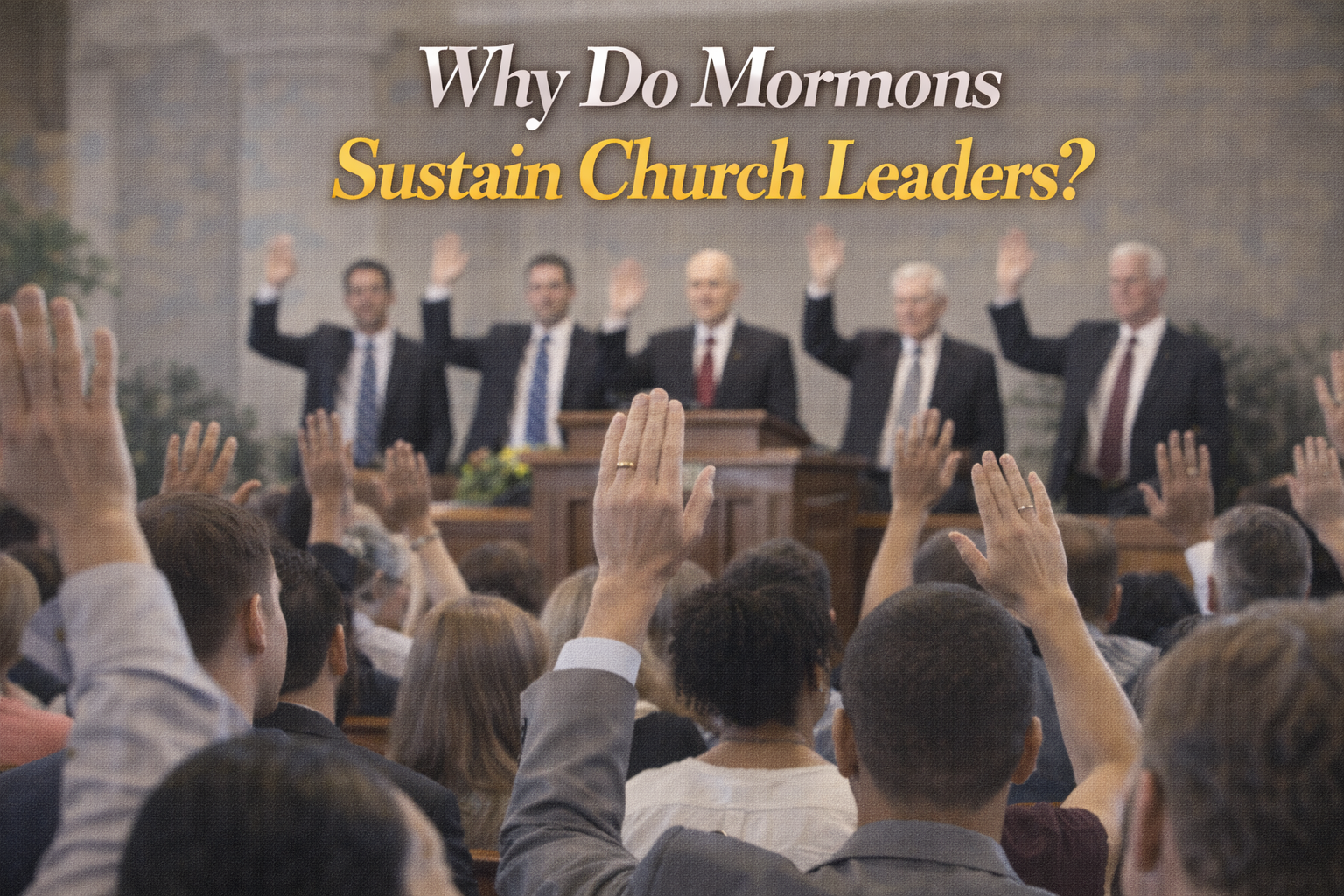
  • Why Do Mormons Sustain Church Leaders?

    Why Do Mormons Sustain Church Leaders?

    Visitors and new members of The Church of Jesus Christ of Latter-day Saints often notice a unique practice during worship services: members are invited to “sustain” church leaders by raising their hand. This practice can seem unfamiliar or even puzzling to those outside the faith, leading to an important question: Why do Mormons sustain church leaders?

    For Latter-day Saints, sustaining leaders is not about blind obedience, hero worship, or surrendering personal judgment. Instead, it is a deeply spiritual practice rooted in faith, agency, accountability, and unity. Sustaining leaders reflects a willingness to support individuals who have been called to serve, while still recognizing that those leaders are human and imperfect.

    At its heart, sustaining is an expression of trust in God rather than in people. Members believe God calls leaders through inspiration, and by sustaining them, members commit themselves to work together in building Christ’s Church. This practice reinforces the belief that discipleship is not passive but participatory.

    Understanding why Mormons sustain church leaders requires exploring what sustaining truly means, its biblical foundations, the role of agency, the place of imperfection, and how this practice strengthens faith and community.

    What Does “Sustaining” Mean?

    In everyday language, to sustain means to support, uphold, or maintain. In a religious context, Latter-day Saints use the word to describe a voluntary commitment to support church leaders in their responsibilities.

    When members sustain a leader, they are not declaring that the leader is perfect, infallible, or beyond question. Rather, they are expressing a willingness to cooperate, pray for, and assist that person in fulfilling their calling.

    Sustaining is both public and private. Publicly, it is expressed during church meetings when members raise their hand. Privately, it is lived out through respectful interaction, service, and unity.

    A Willing Commitment

    Sustaining is always voluntary. Members are never forced to sustain a leader. The act of sustaining reflects a personal decision based on faith and conscience.

    Members are encouraged to think carefully, pray, and seek spiritual confirmation before sustaining leaders. This reinforces the principle of agency—each person chooses for themselves.

    Support Through Action

    True sustaining goes beyond a raised hand. It includes practical support such as serving in callings, offering help when needed, avoiding gossip, and working cooperatively within the church community.

    Sustaining leaders means helping them succeed, not undermining their efforts.

    Sustaining Is Not Worship

    A crucial distinction in Latter-day Saint belief is that sustaining leaders is not worship. Worship is reserved exclusively for God the Father and Jesus Christ.

    Church leaders are respected, listened to, and supported, but they are not adored or treated as divine. Members are taught repeatedly that leaders are servants, not masters.

    This distinction protects against unhealthy dependency on individuals and keeps the focus on Jesus Christ.

    Biblical Foundations for Sustaining Leaders

    Latter-day Saints believe sustaining leaders follows patterns found in the Bible. Throughout scripture, God’s people were invited to support and uphold those He called to lead them.

    In the Old Testament, prophets such as Moses were sustained by the people as they followed God’s direction. When Moses was overwhelmed, others helped support his leadership, demonstrating that leadership was meant to be shared and upheld by the community.

    In the New Testament, church leaders were appointed, recognized, and supported by believers. Unity among believers was seen as essential for the church to function effectively.

    Latter-day Saints view sustaining leaders as part of this biblical tradition of shared responsibility.

    Unity Among Believers

    Scripture emphasizes unity as a hallmark of Christ’s church. Sustaining leaders helps create unity by aligning members in purpose and direction.

    Unity does not mean uniformity of thought or blind agreement. It means choosing cooperation over division and faith over cynicism.

    Agency and Personal Confirmation

    One of the most important aspects of sustaining leaders in Latter-day Saint belief is agency. Members are taught to seek their own spiritual confirmation regarding church leaders and teachings.

    Sustaining is meaningful precisely because it is chosen, not imposed.

    Members are encouraged to pray, study, and listen to the Holy Spirit. If they feel confident that a leader is called of God, they may sustain that leader with integrity.

    If concerns arise, members are encouraged to approach them prayerfully and respectfully rather than through rebellion or gossip.

    Faith and Responsibility

    Sustaining leaders requires faith, but it does not remove personal responsibility. Members remain accountable for their own actions, beliefs, and choices.

    Leaders provide guidance, but individuals must decide how to apply that guidance in their own lives.

    Accountability on Both Sides

    In Latter-day Saint belief, leaders are accountable to God for how they serve. Members are accountable to God for how they respond.

    This shared accountability fosters humility on both sides.

    Sustaining Despite Imperfection

    A common misunderstanding is that sustaining leaders requires believing leaders are flawless. Latter-day Saints explicitly reject this idea.

    They believe all people—including prophets and apostles—are imperfect. Mistakes, misunderstandings, and human limitations exist.

    Sustaining leaders is not a declaration of perfection, but an expression of trust that God can work through imperfect people.

    God’s Pattern of Using Imperfect Servants

    Throughout scripture, God consistently worked through flawed individuals. Peter denied Christ. Moses doubted his abilities. David made serious moral errors.

    Yet God continued to work through them.

    Latter-day Saints believe this pattern continues today. God calls willing servants and refines them through service.

    Sustaining as a Test of Discipleship

    Sustaining leaders is also seen as a test of discipleship. Supporting others, even when imperfect, requires humility, patience, and faith.

    Discipleship often involves choosing cooperation over criticism and service over suspicion.

    By sustaining leaders, members practice Christlike attributes such as charity, forgiveness, and long-suffering.

    Sustaining Leaders in a Lay Church

    The Church of Jesus Christ of Latter-day Saints is largely run by lay leadership. Most leaders serve voluntarily while maintaining jobs and family responsibilities.

    Because leaders are not professional clergy, they rely heavily on the support of the congregation.

    Sustaining leaders in this context means recognizing the sacrifices leaders make and helping them fulfill their responsibilities effectively.

    Shared Leadership and Participation

    Sustaining leaders reinforces the idea that the Church belongs to its members collectively. Everyone has a role.

    Rather than expecting leaders to do everything, members participate actively in teaching, serving, and ministering.

    This shared model strengthens community bonds.

    Sustaining Leaders and Church Order

    Latter-day Saints believe God is a God of order. Church organization, callings, and leadership structures exist to help the Church function smoothly and serve people effectively.

    Sustaining leaders supports this order. It helps prevent chaos, division, and power struggles.

    Order is not seen as rigid control, but as a framework that allows service and revelation to flow.

    Sustaining Leaders During Disagreement

    Another important question is what happens when members disagree with leaders. Latter-day Saints believe disagreement does not automatically negate sustaining.

    Members may have different perspectives or questions. Sustaining means choosing respectful dialogue rather than rebellion.

    Members are encouraged to express concerns privately and appropriately, trusting that God values honesty and humility.

    Public opposition or undermining leadership is discouraged because it damages unity and trust.

    Sustaining Leaders and Personal Growth

    Sustaining leaders can contribute to personal spiritual growth. It requires members to develop patience, humility, and trust in God’s timing.

    Sometimes leaders make decisions that members do not fully understand. In those moments, sustaining becomes an exercise in faith.

    Many members testify that choosing to sustain leaders has helped them grow closer to Christ.

    Sustaining Leaders and Community Strength

    Communities function best when there is mutual trust and cooperation. Sustaining leaders helps create an environment where people feel safe, supported, and unified.

    This unity allows congregations to focus on worship, service, and spiritual growth rather than internal conflict.

    Strong communities are built on shared commitment, not constant suspicion.

    Avoiding Blind Obedience

    While sustaining involves support, Latter-day Saints strongly reject blind obedience. Members are repeatedly taught to think, pray, and seek personal revelation.

    Sustaining leaders does not mean surrendering conscience or moral responsibility.

    Members are encouraged to confirm truth for themselves and to follow Christ first and foremost.

    Sustaining Leaders as an Act of Faith in God

    Ultimately, sustaining leaders is an expression of faith in God rather than in human leadership.

    By sustaining leaders, members declare their trust that God is guiding His Church and that He can work through imperfect servants to accomplish His purposes.

    This faith helps members remain grounded during uncertainty and change.

    Why This Belief Matters

    Sustaining church leaders matters because it shapes how Latter-day Saints live their faith collectively. It encourages unity without uniformity, respect without worship, and support without blind obedience.

    It allows a global church to function effectively while preserving individual agency.

    For believers, sustaining leaders reinforces trust in God’s order, commitment to Christ-centered discipleship, and willingness to serve together.

    A Christ-Centered Practice

    Latter-day Saints believe Jesus Christ is the ultimate leader of the Church. Sustaining leaders is meaningful only because they believe Christ is guiding His Church.

    Leaders point to Christ, not to themselves. Sustaining leaders is, in this sense, an extension of sustaining Christ’s work on earth.

    A Broader Christian Perspective

    Many Christian traditions value supporting pastors, elders, and ministers. Latter-day Saints see sustaining leaders as their way of expressing similar support within a distinct structure.

    They believe supporting those who serve strengthens the entire body of believers.

    An Invitation

    Latter-day Saints invite others to view sustaining leaders not as a surrender of freedom, but as a voluntary act of faith, unity, and service.

    They encourage sincere seekers to study, ask questions, and seek God’s guidance about leadership and authority.

    They believe God honors honest faith and personal agency.

    Sources

    The Church of Jesus Christ of Latter-day Saints – Gospel Topics: Church Leadership
    https://www.churchofjesuschrist.org

    Doctrine and Covenants Central
    https://doctrineandcovenantscentral.org

    Joseph Smith Papers
    https://www.josephsmithpapers.org

    Scripture Central
    https://scripturecentral.org

  • Why Do Mormons Have a Living Prophet?

    Why Do Mormons Have a Living Prophet?

    One of the most distinctive beliefs of members of The Church of Jesus Christ of Latter-day Saints is the belief in a living prophet. While many Christian traditions look to prophets only as figures of the past—men and women whose words are preserved in the Bible—Latter-day Saints believe God continues to call prophets today. This belief naturally raises questions: Why would a modern prophet be necessary? Has God not already spoken enough through the Bible? And how does a living prophet fit into Christian faith centered on Jesus Christ?

    For Latter-day Saints, belief in a living prophet is not about replacing Jesus Christ, diminishing the Bible, or adding unnecessary authority. Instead, it reflects a conviction that God is loving, involved, and actively guiding His children in every generation. Just as God spoke through prophets in ancient times, they believe He continues to do so in the modern world.

    Having a living prophet affirms that God is not silent, distant, or disengaged. It teaches that revelation did not end with the last page of scripture, but continues according to God’s wisdom and timing. For believers, this doctrine provides reassurance that divine guidance is available for contemporary challenges while remaining rooted in eternal truths.

    Understanding why Mormons have a living prophet requires exploring biblical patterns, the nature of revelation, the role of Jesus Christ, modern challenges, agency, and how prophetic leadership functions within the Church today.

    Prophets in the Bible

    The Bible is filled with accounts of prophets called by God to lead, warn, teach, and guide His people. From the earliest pages of scripture, God communicates through chosen servants who speak on His behalf.

    Moses led Israel out of bondage and received commandments that shaped an entire nation. Isaiah warned of coming judgment while testifying of the Messiah. Jeremiah spoke during times of political and spiritual collapse. Peter led the early Christian church after the resurrection of Jesus Christ. These prophets did not simply repeat earlier revelation; they addressed the needs, sins, and questions of their own time.

    Latter-day Saints see prophets as evidence of a consistent pattern: when God has a people, He calls prophets to guide them.

    God’s Pattern of Communication

    Throughout scripture, God rarely leaves His people without direction. Prophets serve as messengers, teachers, and witnesses of divine truth. They call people to repentance, explain doctrine, and help apply God’s will to real-life situations.

    Latter-day Saints believe this pattern reflects God’s character. A loving Father does not abandon His children or stop communicating without reason.

    Leadership for Each Generation

    Each generation faces unique circumstances. Ancient Israel struggled with idolatry and covenant faithfulness. Early Christians faced persecution and doctrinal confusion. Modern society faces challenges related to technology, global communication, moral complexity, and rapid cultural change.

    Latter-day Saints believe that just as ancient prophets addressed the needs of their time, a living prophet addresses the needs of the present.

    Why a Living Prophet Is Needed Today

    Many people ask why scripture alone is not sufficient. Latter-day Saints believe the Bible is sacred and essential, but they also believe it does not contain answers to every modern question in explicit terms.

    The Bible does not directly address issues such as modern technology, global humanitarian crises, or many contemporary social challenges. A living prophet helps apply eternal principles to new situations.

    Revelation for Modern Times

    Latter-day Saints believe revelation is not about changing eternal truth, but about clarifying and applying it. A living prophet does not rewrite doctrine at will. Instead, he seeks divine guidance to help the Church remain faithful while responding to new circumstances.

    For example, guidance on family life, moral conduct, service, and worship often requires adaptation to modern realities. A living prophet helps provide that guidance.

    Unity and Direction in a Global Church

    The Church of Jesus Christ of Latter-day Saints is a global church with members in many cultures, languages, and political systems. Without unified leadership, interpretation of doctrine could fragment.

    Latter-day Saints believe a living prophet helps maintain unity by providing consistent direction rooted in revelation rather than personal opinion. This unity allows a worldwide church to remain spiritually connected despite cultural diversity.

    How a Living Prophet Is Chosen

    Latter-day Saints believe prophets are called by God, not elected through popular vote or appointed through ambition. The living prophet is also the president of the Church and is chosen through priesthood authority.

    When a prophet passes away, the senior apostle is sustained as the next president of the Church after prayerful confirmation.

    Sustaining the Prophet

    Members of the Church are invited to sustain the prophet. Sustaining does not mean blind obedience or worship. It means expressing support and willingness to follow inspired counsel while seeking personal confirmation through prayer.

    This process reflects the importance of agency. Members are encouraged to ask God for their own witness that the prophet is called by Him.

    Prophets Are Not Worshiped

    A critical distinction in Latter-day Saint belief is that prophets are respected but not worshiped. Worship is directed only to God the Father and Jesus Christ.

    Prophets are seen as servants and witnesses, not objects of devotion.

    The Role of Jesus Christ

    Central to understanding why Mormons have a living prophet is their belief that Jesus Christ is the head of the Church. The prophet does not replace Christ, compete with Him, or stand above Him.

    Latter-day Saints believe the prophet acts under Christ’s direction. His primary role is to testify of Jesus Christ and lead people closer to Him.

    Christ-Centered Leadership

    All prophetic teachings are expected to align with the gospel of Jesus Christ. If guidance does not point people toward faith, repentance, love, and discipleship, it is not considered truly prophetic.

    The prophet’s authority exists because of Christ, not independently of Him.

    Revelation and Scripture

    Another common question is whether living prophets replace scripture. Latter-day Saints believe scripture and revelation work together.

    The Bible and other scriptures provide foundational doctrine. Living prophets help interpret, clarify, and apply those teachings in modern contexts.

    Revelation is seen as cumulative, not contradictory.

    Continuity, Not Contradiction

    Latter-day Saints believe God does not contradict Himself. Prophetic guidance is expected to be consistent with established doctrine while addressing new situations.

    When new revelation is given, it is studied carefully and accepted through spiritual confirmation.

    Human Imperfection and Prophetic Calling

    A common misunderstanding is that Latter-day Saints believe prophets are perfect. They do not. Prophets are human beings with weaknesses, personalities, and limitations.

    What makes them prophets is not perfection, but calling and divine guidance.

    God Works Through Imperfect People

    Throughout the Bible, God worked through imperfect individuals. Moses doubted his ability to speak. Peter made serious mistakes. David sinned deeply.

    Latter-day Saints believe God continues to work through imperfect servants because perfection is not required for divine calling—humility and willingness are.

    Prophets and Agency

    Another misunderstanding is that prophetic guidance removes personal agency. Latter-day Saints believe the opposite.

    Prophets teach and warn, but individuals remain responsible for their choices. Prophetic counsel invites reflection, prayer, and personal confirmation.

    Agency remains central to God’s plan.

    Moral and Spiritual Guidance

    Living prophets often address moral and spiritual issues facing society. This guidance is intended to help individuals navigate complex environments with faith and integrity.

    Prophetic counsel often emphasizes compassion, service, family, honesty, and commitment to Christ.

    Rather than offering political solutions, prophets focus on spiritual principles that transcend political systems.

    Prophets and Change

    Some critics point to changes in church practice as evidence against prophetic leadership. Latter-day Saints view change differently.

    They believe God may adjust practices as circumstances change, while eternal truths remain constant.

    In the Bible, practices changed as God’s people moved from one covenant stage to another. Latter-day Saints see modern changes as part of that same divine pattern.

    Prophets and Peace

    Many members testify that prophetic guidance brings peace, clarity, and reassurance. In times of uncertainty, having a trusted spiritual voice helps individuals feel grounded.

    This peace does not come from certainty about the future, but from trust in God’s continued involvement.

    Prophets and Personal Faith

    While prophets guide the Church as a whole, Latter-day Saints emphasize personal revelation. Members are encouraged to seek God’s guidance in their own lives.

    Prophetic leadership does not replace personal prayer or scripture study. It complements them.

    Common Misunderstandings

    One common misunderstanding is that prophets add new requirements for salvation. Latter-day Saints believe salvation comes only through Jesus Christ.

    Another misunderstanding is that prophets claim infallibility. They do not. They claim divine calling and guidance, not personal perfection.

    Some assume prophets control every aspect of members’ lives. In reality, prophetic guidance focuses on principles rather than micromanagement.

    Why This Belief Matters

    Belief in a living prophet matters because it shapes how Latter-day Saints see God. It reinforces the belief that God is present, aware, and responsive.

    It provides a sense of continuity between ancient scripture and modern life. It offers guidance in a rapidly changing world.

    For believers, this doctrine strengthens faith that God’s Church is actively led by Jesus Christ today.

    A Living Relationship With God

    Having a living prophet supports the idea that faith is not static. Revelation is not frozen in time. God continues to teach His children as they grow.

    This belief encourages humility, listening, and openness to divine instruction.

    A Broader Christian Context

    While belief in modern prophets is distinctive, many Christian traditions believe God still guides believers through the Holy Spirit.

    Latter-day Saints see prophets as one way God provides that guidance on a collective level.

    They view prophetic leadership as consistent with a God who speaks, leads, and loves.

    An Invitation

    Latter-day Saints invite others to learn about living prophets with openness rather than fear.

    They encourage sincere seekers to study, pray, and ask God whether He still speaks today.

    They believe God answers honest questions and invites all people to come closer to Jesus Christ.

    Sources

    The Church of Jesus Christ of Latter-day Saints – Gospel Topics: Prophets
    https://www.churchofjesuschrist.org

    Joseph Smith Papers – Prophetic Calling
    https://www.josephsmithpapers.org

    Doctrine and Covenants Central
    https://doctrineandcovenantscentral.org

    Scripture Central
    https://scripturecentral.org

  • Why Do Mormons Have Bishops?

    Why Do Mormons Have Bishops?

    When people attend a worship service of The Church of Jesus Christ of Latter-day Saints or learn about how the Church is organized, they often hear about bishops. Members speak of meeting with “the bishop,” bishops preside over congregations, and they play a visible role in the spiritual and practical life of Church members. This naturally leads to the question: Why do Mormons have bishops?

    For Latter-day Saints, bishops exist because they believe Jesus Christ established a church led by called servants who care for both the spiritual and temporal needs of God’s people. Bishops are local leaders who guide congregations, provide pastoral care, administer ordinances, and help members live the teachings of Jesus Christ in everyday life.

    Unlike professional clergy found in many religious traditions, Latter-day Saint bishops are lay leaders. They are not paid, do not receive formal theological degrees for their role, and continue working in their regular professions while serving. This reflects a belief that church leadership is a form of service and stewardship rather than a career or position of prestige.

    Understanding why Mormons have bishops requires exploring how they understand church leadership, priesthood authority, service, community care, and the example of Jesus Christ as the Good Shepherd.

    The Role of a Bishop in a Local Congregation

    In The Church of Jesus Christ of Latter-day Saints, a bishop presides over a local congregation known as a ward. A ward typically consists of several hundred members living in the same geographic area.

    The bishop is responsible for overseeing worship services, ensuring doctrine is taught correctly, and helping members strengthen their faith in Jesus Christ. He works closely with other local leaders and volunteers to meet the needs of the congregation.

    While the bishop presides, he does not lead alone. Leadership is shared among many members, reinforcing the belief that the Church functions through collective service rather than centralized authority.

    Shepherd of the Congregation

    Latter-day Saints often describe a bishop as a shepherd. This image comes directly from the teachings of Jesus Christ, who referred to Himself as the Good Shepherd and taught leaders to care for the flock with love and humility.

    A bishop’s role includes watching over the spiritual well-being of members, offering guidance, encouragement, and correction when needed. This shepherding is personal and relational rather than distant or institutional.

    Personal Pastoral Care

    One of the most distinctive aspects of a bishop’s role is personal pastoral care. Members often meet privately with the bishop to seek counsel, confess sins, discuss spiritual struggles, or receive encouragement.

    These meetings are confidential and focused on helping individuals grow spiritually rather than judging or condemning them. Bishops are taught to listen with compassion, patience, and respect.

    For many members, the bishop is a trusted spiritual guide during significant life challenges such as illness, family difficulties, repentance, or major decisions.

    Bishops as Lay Leaders

    A defining characteristic of Latter-day Saint bishops is that they are lay leaders. They are not paid clergy and do not serve as full-time religious professionals.

    Bishops continue in their regular employment—whether as teachers, doctors, engineers, farmers, or in countless other professions—while serving in the Church. Their role as bishop is voluntary and temporary.

    This approach reflects several core beliefs about leadership and community.

    Callings, Not Careers

    Latter-day Saints believe bishops are called by God through inspiration rather than chosen based on ambition, education, or desire for authority. A bishop is typically called to serve for a limited period, often several years, and then returns to being a regular member without special status.

    This reinforces the idea that leadership in the Church is a calling—a responsibility entrusted for a time—rather than a lifelong position or career.

    Humility and Equality

    Because bishops are unpaid and temporary, no one is elevated permanently above others. This structure promotes humility and equality among members.

    A bishop sits among the congregation, participates as a fellow worshipper, and relies on God rather than professional training alone. This helps prevent the creation of a separate clerical class.

    Shared Responsibility

    Leadership responsibilities are shared among many members, including counselors, teachers, and auxiliary leaders. This shared model reduces hierarchy and encourages widespread participation.

    Members learn that building the Church is a collective effort rather than the responsibility of a few professionals.

    Biblical Foundations for Bishops

    Latter-day Saints believe the office of bishop has roots in the New Testament. The Bible mentions bishops as leaders in the early Christian church who were responsible for overseeing congregations and caring for both spiritual and temporal needs.

    In the New Testament, bishops are described as servants who must be blameless, patient, and devoted to teaching truth. Their role included managing church resources and ensuring the welfare of members.

    Latter-day Saints see modern bishops as a continuation of this early Christian pattern.

    Early Christian Leadership

    In early Christianity, leadership was local and personal. Bishops knew their congregations and were involved in daily concerns.

    Latter-day Saints believe modern bishops reflect this same model—leaders who live among the people they serve and understand local needs.

    Priesthood Authority and Bishops

    Another reason Latter-day Saints have bishops is their belief in priesthood authority. They believe Jesus Christ gave authority to His apostles to lead His Church and that this authority has been restored in modern times.

    Bishops hold priesthood authority that allows them to preside over a congregation, perform ordinances, and exercise spiritual stewardship.

    This authority is not seen as personal power, but as delegated responsibility to serve in Christ’s name.

    Authority as Service

    In Latter-day Saint belief, priesthood authority exists to bless others, not to control them. Bishops are taught that their authority should be exercised with persuasion, patience, kindness, and love.

    This view aligns with Jesus Christ’s teaching that those who lead should serve.

    Temporal and Welfare Responsibilities

    In addition to spiritual leadership, bishops have significant temporal responsibilities. One of the most important is overseeing welfare and assistance for members in need.

    Bishops help coordinate food, financial assistance, counseling, and other support for individuals and families facing hardship. This includes unemployment, illness, housing instability, and other challenges.

    Caring for the Needy

    Latter-day Saints believe caring for the poor and needy is a core Christian responsibility. Bishops play a central role in ensuring that assistance is provided with dignity, respect, and confidentiality.

    Rather than distributing aid impersonally, bishops work one-on-one with individuals to understand needs and encourage self-reliance alongside compassion.

    This personalized approach reflects Christ’s example of caring for individuals.

    Balancing Help and Responsibility

    While bishops provide assistance, they also encourage personal responsibility and growth. The goal is not dependence, but stability and empowerment.

    This balance between compassion and accountability is central to the bishop’s welfare role.

    Bishops and Youth Guidance

    Bishops play an especially important role in guiding youth and young adults. They meet regularly with young people to encourage spiritual development, moral decision-making, and personal growth.

    These meetings are meant to be supportive rather than intimidating. Bishops help youth navigate challenges related to faith, education, relationships, and identity.

    For many young members, the bishop is a mentor and trusted adult outside the family.

    Bishops and Community Strength

    Because bishops serve locally, they understand the unique needs and culture of their congregation. This local leadership strengthens community bonds.

    Members know their bishop personally, often through years of shared worship and service. This familiarity builds trust and accountability.

    The bishop becomes a central figure in fostering unity, cooperation, and mutual support within the ward.

    Avoiding Professional Clergy

    One question often asked is why Latter-day Saints do not have professional clergy at the local level. Their answer is rooted in belief rather than efficiency.

    They believe having lay leaders encourages spiritual growth among all members. Teaching, serving, and leading are seen as responsibilities shared by the entire community.

    This structure prevents reliance on a few experts and encourages everyone to develop faith, leadership skills, and compassion.

    Learning Through Service

    Serving as a bishop is considered a profound spiritual learning experience. Bishops often speak of how the role deepens their faith, empathy, and reliance on God.

    Because bishops are ordinary members called to extraordinary responsibility, they learn humility and dependence on divine guidance.

    This learning-through-service model applies to all members in different callings throughout the Church.

    Common Misunderstandings About Bishops

    One common misunderstanding is that bishops function like traditional clergy with professional authority and specialized training. In reality, they rely on prayer, scripture, and the guidance of the Holy Spirit rather than formal religious education.

    Another misunderstanding is that bishops replace personal responsibility. Latter-day Saints believe each individual remains responsible for their own spiritual growth. Bishops guide and support, but do not control.

    Some assume bishops wield unchecked authority. In fact, bishops are accountable to higher Church leadership and operate within established guidelines.

    Bishops and Confidentiality

    Confidentiality is a critical aspect of a bishop’s role. Members must feel safe sharing personal concerns without fear of exposure.

    Bishops are instructed to treat all conversations with care and discretion. This trust is essential for effective pastoral care.

    Bishops as Volunteers, Not Experts

    Bishops do not claim to be experts in psychology, finance, or law. When appropriate, they encourage members to seek professional help.

    Their role is spiritual guidance, moral support, and coordination of resources—not replacing professional care.

    Why This Belief Matters

    Having bishops matters because it shapes how Latter-day Saints experience church life. Local leadership allows for personalized care, strong community bonds, and shared responsibility.

    Bishops embody Christlike leadership rooted in service rather than status. Their unpaid, temporary service reinforces humility and equality.

    For believers, bishops represent a tangible expression of how Jesus Christ leads His Church—through love, guidance, and personal care.

    A Christ-Centered Model of Leadership

    Latter-day Saints believe Jesus Christ remains the head of the Church. Bishops act under His authority and seek to reflect His teachings.

    They strive to lead as Christ led—by serving, listening, and loving.

    This model of leadership challenges cultural ideas about power and hierarchy, replacing them with stewardship and compassion.

    The Impact on Members’ Lives

    Many members testify that bishops have played a crucial role during difficult moments—helping them find hope, direction, and healing.

    Because bishops serve close to home, their influence is immediate and personal.

    A Broader Christian Context

    While the structure may differ, many Christian traditions value pastoral leadership. Latter-day Saints see their bishops as fulfilling a similar role through a distinctive model of lay service.

    They believe this approach strengthens faith, community, and accountability.

    An Invitation

    Latter-day Saints invite others to learn about bishops not as authority figures to fear, but as servants called to help.

    They encourage anyone with questions or needs to approach local leaders with trust and openness.

    They believe God works through ordinary people willing to serve in extraordinary ways.

    Sources

    The Church of Jesus Christ of Latter-day Saints – Gospel Topics: Bishops
    https://www.churchofjesuschrist.org

    Church News – Role of Bishops
    https://www.thechurchnews.com

    Doctrine and Covenants Central
    https://doctrineandcovenantscentral.org

    Scripture Central
    https://scripturecentral.org

  • Why Do Mormons Have Quorums and Auxiliaries?

    Why Do Mormons Have Quorums and Auxiliaries?

    One of the most distinctive aspects of The Church of Jesus Christ of Latter-day Saints is its highly organized structure of quorums, auxiliaries, and councils. For many observers, this raises an important question: why does the Church rely so heavily on organized groups rather than only on individual faith or centralized leadership?

    Latter-day Saints believe that the Church of Jesus Christ is meant to function as a living body, not as a collection of isolated individuals. Every member has spiritual value, responsibility, and the potential to serve. Quorums and auxiliaries exist to help members grow spiritually, care for one another, develop leadership, and work together in unity under the direction of Jesus Christ.

    Rather than creating bureaucracy for its own sake, this organizational structure reflects the belief that God works through order, cooperation, and shared responsibility. Quorums and auxiliaries are designed to ensure that no one is overlooked, that service is personal, and that spiritual growth happens at every stage of life.

    What Are Quorums and Auxiliaries?

    In Latter-day Saint belief, quorums and auxiliaries are organized groups within the Church that support worship, learning, service, and leadership development.

    Quorums are typically associated with priesthood organization. Examples include elders quorums, priests quorums, teachers quorums, and deacons quorums. These groups bring together men and young men according to priesthood office or age, allowing them to learn their responsibilities, serve others, and grow in faith.

    Auxiliaries are organizations designed to support spiritual development for women, youth, and children, as well as the entire congregation. Major auxiliaries include Relief Society, Young Women, Primary, Sunday School, and youth programs.

    Each quorum and auxiliary has a specific purpose, but none operate in isolation. They work together under the direction of priesthood leadership and in coordination with one another.

    Organized for Service

    Latter-day Saints believe that organization enhances service. When responsibilities are clearly defined, care becomes more effective and consistent.

    Quorums and auxiliaries allow members to know who is responsible for teaching, ministering, and supporting individuals and families. This structure helps ensure that spiritual and temporal needs are identified and addressed.

    Participation at Every Stage of Life

    From childhood through adulthood, every member is invited to participate in Church life. Children learn in Primary, youth participate in age-based organizations, adults serve in quorums and auxiliaries.

    This inclusive structure reflects the belief that discipleship is lifelong and that everyone has something meaningful to contribute.

    Biblical Foundations for Organized Groups

    Latter-day Saints believe that organization is not a modern invention but a biblical principle. Throughout scripture, God organized His people into groups with defined roles and responsibilities.

    Jesus Christ Himself organized His Church. He chose apostles, called disciples, and sent them out in pairs or groups to teach and serve. He did not expect His followers to work independently without structure.

    The New Testament describes a church with elders, teachers, bishops, and various callings. Paul compared the Church to a body, explaining that each part has a different function but all are necessary.

    Many Members, One Body

    This metaphor of the body is central to Latter-day Saint understanding of quorums and auxiliaries. Just as a body requires many parts working together, the Church requires organized cooperation.

    No single part is more important than the others. Strength comes from unity, coordination, and mutual dependence.

    God as a God of Order

    A foundational belief among Latter-day Saints is that God is a God of order, not confusion. Organization reflects His nature.

    Order does not mean rigidity or lack of compassion. Instead, it provides a framework within which love, service, and revelation can flourish.

    Quorums and auxiliaries are expressions of divine order applied to a global church with millions of members.

    Role of Priesthood Quorums

    Priesthood quorums play a central role in Church life for men and young men. These quorums are not social clubs or status groups. They are spiritual organizations focused on responsibility, service, and discipleship.

    Members of priesthood quorums learn doctrine, develop Christlike attributes, and serve individuals and families in practical ways.

    Brotherhood and Responsibility

    Quorums foster a sense of brotherhood and shared responsibility. Members support one another spiritually, emotionally, and practically.

    This brotherhood encourages accountability, compassion, and mutual growth rather than competition or hierarchy.

    Ministering and Care

    One of the primary responsibilities of priesthood quorums is ministering. Members are assigned to care for individuals and families, offering friendship, support, and help during times of need.

    Ministering reflects Jesus Christ’s example of personal, compassionate service.

    Role of Auxiliaries

    Auxiliaries are essential to the life and mission of the Church. They provide structure for teaching, leadership development, and service for women, youth, and children.

    Each auxiliary has its own history, purpose, and responsibilities, but all are centered on helping individuals come closer to Jesus Christ.

    Relief Society

    The Relief Society is one of the oldest women’s organizations in the world. Its purpose is to increase faith, strengthen families, and provide service.

    Relief Society emphasizes compassion, education, and spiritual growth. Women serve in leadership roles, teach doctrine, and coordinate service efforts.

    Young Women and Young Men

    Youth organizations help adolescents develop faith, character, and life skills. Activities are designed to strengthen testimony, encourage healthy relationships, and prepare youth for future responsibilities.

    These programs emphasize agency, moral development, and Christ-centered living.

    Primary

    Primary focuses on teaching children the gospel of Jesus Christ. Through lessons, music, and activities, children learn foundational principles in age-appropriate ways.

    Primary helps children feel valued, safe, and spiritually nurtured.

    Sunday School

    Sunday School supports gospel learning for all ages. It emphasizes scripture study, discussion, and application of gospel principles.

    This auxiliary reinforces the idea that learning is ongoing and essential to discipleship.

    Auxiliaries and Priesthood: Working Together

    A common misunderstanding is that auxiliaries operate independently or in competition with priesthood leadership. Latter-day Saints believe the opposite.

    Auxiliaries and priesthood quorums function in harmony, each contributing unique perspectives and strengths. Leadership is shared through councils rather than centralized in a single individual.

    This cooperation reflects mutual respect and shared purpose.

    Unity Through Councils

    Councils are a defining feature of Latter-day Saint organization. Leaders from quorums and auxiliaries meet together to discuss needs, seek revelation, and coordinate efforts.

    Councils encourage listening, collaboration, and spiritual discernment. Decisions are made through prayer and discussion rather than command alone.

    Revelation Through Discussion

    Latter-day Saints believe revelation often comes through collective counsel. Different perspectives help leaders understand situations more fully and make inspired decisions.

    Councils help prevent isolation, bias, and misuse of authority.

    Leadership Development Through Organization

    Quorums and auxiliaries provide opportunities for leadership development at every level. Members learn to teach, organize, serve, and lead in supportive environments.

    Leadership is viewed as a skill developed through service rather than a position of privilege.

    This prepares members to serve effectively in families, communities, and professional life.

    Lay Participation and Shared Responsibility

    Because the Church has no paid local clergy, quorums and auxiliaries allow for broad participation. Many members serve in leadership roles at different times in their lives.

    This shared responsibility fosters humility, empathy, and practical experience.

    Care for Individuals

    One of the strongest reasons Latter-day Saints value quorums and auxiliaries is personal care. Large institutions risk overlooking individuals, but organized groups help prevent that.

    Members are known by name. Needs are discussed. Support is offered in times of illness, grief, unemployment, or crisis.

    This reflects Christ’s concern for the individual.

    Global Church, Local Care

    The Church operates globally but cares locally. Quorums and auxiliaries make it possible to adapt global principles to local circumstances.

    Cultural differences are respected while maintaining unity in doctrine and purpose.

    Preventing Isolation and Loneliness

    Organized groups help members feel connected. Regular meetings, service opportunities, and shared worship foster belonging.

    This is especially important in a world where loneliness and disconnection are increasingly common.

    Teaching Responsibility and Agency

    Participation in quorums and auxiliaries teaches responsibility. Members are invited, not forced, to serve.

    Agency is respected. Growth happens through choice and experience.

    Common Misunderstandings

    Some believe quorums and auxiliaries create unnecessary bureaucracy. Latter-day Saints believe organization increases effectiveness, compassion, and accountability.

    Others assume organization limits spirituality. Members believe structure supports spirituality rather than replacing it.

    Another misunderstanding is that these organizations are rigid. In practice, they are flexible and adapted to local needs.

    Why This Belief Matters

    Belief in quorums and auxiliaries matters because it shapes how Latter-day Saints live their faith. It encourages participation, service, and growth for everyone.

    This structure helps the Church function as a global body while remaining personal and compassionate.

    Christ at the Center

    Ultimately, quorums and auxiliaries exist because of Jesus Christ. He is the reason for organization, service, and unity.

    Every teaching, meeting, and act of service is meant to point individuals toward Him.

    A Living Church

    Latter-day Saints believe the Church is a living organism guided by Jesus Christ. Quorums and auxiliaries help it function effectively in a complex world.

    They reflect a belief that God values order, cooperation, and shared service.

    An Invitation

    Latter-day Saints invite others to see quorums and auxiliaries not as bureaucracy, but as expressions of community and care.

    They encourage sincere seekers to attend meetings, observe interactions, and experience the sense of belonging these organizations create.

    Conclusion

    Quorums and auxiliaries exist because Latter-day Saints believe God’s Church is meant to be organized, inclusive, and service-oriented. Through these groups, members learn, serve, and grow together.

    This structure reflects a Christ-centered vision of shared responsibility, unity, and love.

    Sources

    The Church of Jesus Christ of Latter-day Saints – Gospel Topics: Church Organization
    https://www.churchofjesuschrist.org

    Church News – Quorums and Auxiliaries
    https://www.thechurchnews.com

    Doctrine and Covenants Central
    https://doctrineandcovenantscentral.org

    Scripture Central
    https://scripturecentral.org