Tag: Church History

  • Why do Mormons believe in apostasy and restoration?

    Why do Mormons believe in apostasy and restoration?

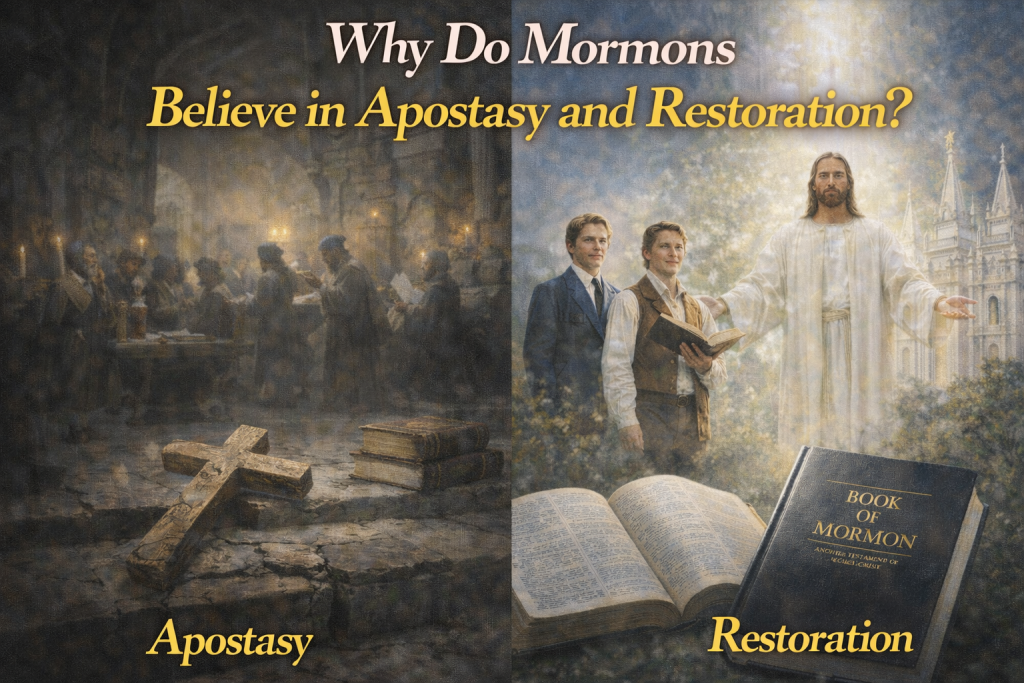
    One of the most distinctive teachings of The Church of Jesus Christ of Latter-day Saints is the belief in apostasy and restoration. This doctrine shapes how Latter-day Saints understand Christian history, authority, revelation, and God’s ongoing relationship with humanity. Rather than viewing history as a straight, uninterrupted continuation of Christ’s original church, they believe there was a period of loss followed by a divine renewal.

    Latter-day Saints believe Jesus Christ established an organized church with apostles, priesthood authority, and sacred ordinances. They also believe that after the deaths of the original apostles, these essential elements were gradually lost. This loss, known as apostasy, was not permanent. According to their belief, God promised that what was lost would one day be restored through divine intervention.

    For believers, apostasy and restoration are not ideas meant to criticize others or dismiss centuries of Christian faith. Instead, they reflect confidence in a consistent, loving God who allows human agency, works patiently through history, and restores truth according to His divine plan centered on Jesus Christ.

    What Is Apostasy?

    In Latter-day Saint belief, apostasy refers to a falling away from divinely revealed truth and authority. It does not mean that individuals stopped believing in God or that goodness disappeared from the earth. Rather, it describes the gradual loss of priesthood authority, prophetic leadership, and certain doctrines Christ originally established.

    Apostasy is understood as a process, not a single event. It unfolded over time due to a combination of persecution, internal disagreements, loss of revelation, and the deaths of apostles who held divine authority.

    Gradual, Not Sudden

    Latter-day Saints emphasize that apostasy was not immediate. Early Christians remained faithful, devoted, and sincere. Changes occurred slowly, across generations, as circumstances shifted and revelation ceased.

    Loss of Authority

    A key element of apostasy, according to this belief, was the loss of priesthood authority. Without apostles to pass on authority through ordination, the original authorization to act in God’s name could not continue as Christ established it.

    Apostasy Does Not Mean Total Darkness

    A common misunderstanding is that apostasy implies complete spiritual darkness. Latter-day Saints explicitly reject this idea. They believe many essential truths were preserved, including belief in Jesus Christ, the Bible, moral teachings, prayer, and sincere devotion.

    They honor the countless Christians who lived faithfully, often at great personal cost, during centuries without restored authority. God, they believe, continued to inspire goodness, truth, and moral progress.

    Truth Was Preserved

    Scripture, ethical teachings, and devotion to Christ remained influential throughout history. Apostasy is therefore viewed as partial loss rather than total abandonment.

    God Still Worked Through People

    Latter-day Saints believe God continued to influence individuals, cultures, and movements that promoted justice, compassion, and spiritual growth, even without the fullness of restored authority.

    The Church Jesus Christ Established

    To understand apostasy, Latter-day Saints look first at the church Jesus Christ established. They believe Christ organized a church with apostles, prophets, authority, ordinances, and ongoing revelation.

    Jesus called apostles, gave them priesthood authority, taught doctrine, and authorized ordinances such as baptism. After His resurrection, He continued to guide the church through revelation.

    The early church functioned through divine authority rather than written creeds or councils alone.

    Biblical Basis for Apostasy

    Latter-day Saints believe the Bible itself predicts a falling away. They point to passages in which apostles warned of false teachers, doctrinal corruption, and loss of truth.

    These warnings suggest that apostasy was foreseen and allowed by God, not an unexpected failure.

    Scriptural Warnings

    New Testament writers cautioned that after their departure, grievous wolves would enter the flock and that some would turn away from truth. Latter-day Saints interpret these passages as indicators of future loss.

    Why Apostasy Was Allowed

    Rather than seeing apostasy as divine abandonment, Latter-day Saints believe God allowed it to occur as part of respecting human agency. People are free to choose, even when those choices lead to loss.

    God, they believe, does not override agency to preserve institutions indefinitely. Instead, He works through history, preparing a time for renewal.

    Why Restoration Was Necessary

    If essential authority and ordinances were lost, Latter-day Saints believe reform alone was insufficient. Reform can adjust beliefs and practices, but it cannot restore divine authority.

    Restoration, therefore, required God to act directly to reestablish what Christ originally gave.

    Restoration Versus Reformation

    The Protestant Reformation preserved important truths and increased access to scripture. Latter-day Saints respect reformers for their courage and faith. However, they believe reformation did not restore priesthood authority or apostles.

    Biblical Basis for Restoration

    Just as scripture speaks of apostasy, Latter-day Saints believe it also promises restoration. They point to passages that describe truth being restored, knowledge increasing, and God acting again in the latter days.

    Restoration is seen as fulfillment of prophecy rather than contradiction of Christianity.

    Prophecies of Renewal

    Scriptures referring to the “restitution of all things” are central to this belief. God, they believe, always intended to restore what was lost.

    The Role of Joseph Smith in the Restoration

    Latter-day Saints believe God initiated the restoration through Joseph Smith, not because he was powerful or educated, but because he was willing and sincere.

    Through visions, revelations, and heavenly messengers, they believe priesthood authority, doctrine, and ordinances were restored.

    Divine Initiative

    Restoration began with God reaching out to humanity, not humans rediscovering truth on their own.

    Restoration of Priesthood Authority

    A defining element of restoration is the return of priesthood authority. Latter-day Saints believe heavenly messengers restored the same authority held by John the Baptist and Christ’s apostles.

    This authority allows ordinances to be performed in God’s name with divine approval.

    Continuity With the Early Church

    Restored priesthood authority is believed to be identical in power and purpose to that held in the early Christian church, creating continuity rather than rupture.

    Restoration of Doctrine

    Along with authority, doctrine was restored. Latter-day Saints believe God clarified truths about His nature, the divine potential of humanity, the plan of salvation, and the role of Jesus Christ.

    They believe these teachings harmonize with the Bible while restoring clarity.

    Additional Scripture as Part of Restoration

    The Book of Mormon is viewed as part of the restoration. Latter-day Saints believe it is another testament of Jesus Christ that supports the Bible and restores truths lost over time.

    They believe God has spoken through scripture in many eras and cultures.

    Organization of the Restored Church

    The Church of Jesus Christ of Latter-day Saints was organized gradually through revelation. Leadership offices, councils, quorums, and ordinances were established according to divine instruction.

    This reflects belief in order, accountability, and shared leadership under Christ.

    Continuing Restoration

    Restoration is not viewed as a single completed event. Latter-day Saints believe God continues to reveal truth through living prophets.

    This allows the Church to remain grounded in eternal doctrine while responding to modern challenges.

    Line Upon Line

    Truth is revealed gradually, according to God’s wisdom and humanity’s readiness.

    Apostasy, Restoration, and God’s Character

    This doctrine reflects belief in a God who is patient, merciful, and purposeful. God allows loss but prepares renewal. He does not abandon His children permanently.

    Apostasy and restoration together demonstrate divine consistency rather than contradiction.

    Respect for Other Christians

    A common misunderstanding is that belief in apostasy insults other Christians. Latter-day Saints emphasize gratitude for those who preserved scripture, faith, and moral teachings.

    They believe restoration builds upon Christian history rather than erasing it.

    Why This Belief Matters Today

    Belief in apostasy and restoration explains why Latter-day Saints emphasize modern prophets, priesthood authority, temples, and additional scripture.

    It frames history as purposeful and hopeful rather than tragic.

    Apostasy, Restoration, and Missionary Work

    This belief motivates missionary work. If God restored truth and authority, believers feel a responsibility to share that message respectfully.

    Missionary work is seen as invitation, not condemnation.

    Apostasy, Restoration, and Personal Faith

    Latter-day Saints believe individuals should seek personal confirmation of restoration through prayer and study. Faith is meant to be personal, not inherited.

    Common Misunderstandings

    Some believe apostasy implies God failed. Latter-day Saints believe it demonstrates God’s respect for agency and long-term planning.

    Others think restoration claims exclusivity. Members believe restoration brings responsibility, not superiority.

    Why This Belief Matters

    Belief in apostasy and restoration gives Latter-day Saints confidence that God continues to act in history. It affirms hope that what is lost can be renewed and that Jesus Christ still leads His church.

    For believers, this doctrine explains the existence of modern prophets, living revelation, and restored ordinances—all centered on Jesus Christ.

    Conclusion

    Latter-day Saints believe in apostasy and restoration because they believe Jesus Christ established a church with authority and revelation, that these elements were lost over time, and that God restored them according to His promises.

    This belief does not deny Christian history but completes it. It reflects faith in a living God who allows loss, honors agency, and restores truth in His own time.

    For believers, apostasy and restoration affirm that Jesus Christ continues to guide His church and lovingly leads humanity toward eternal truth.

    Sources

    The Church of Jesus Christ of Latter-day Saints – Gospel Topics: Apostasy
    https://www.churchofjesuschrist.org

    Joseph Smith Papers – Restoration and Authority
    https://www.josephsmithpapers.org

    Doctrine and Covenants Central
    https://doctrineandcovenantscentral.org

    Scripture Central
    https://scripturecentral.org

  • Why Did Joseph Smith Start Mormonism?

    Why Did Joseph Smith Start Mormonism?

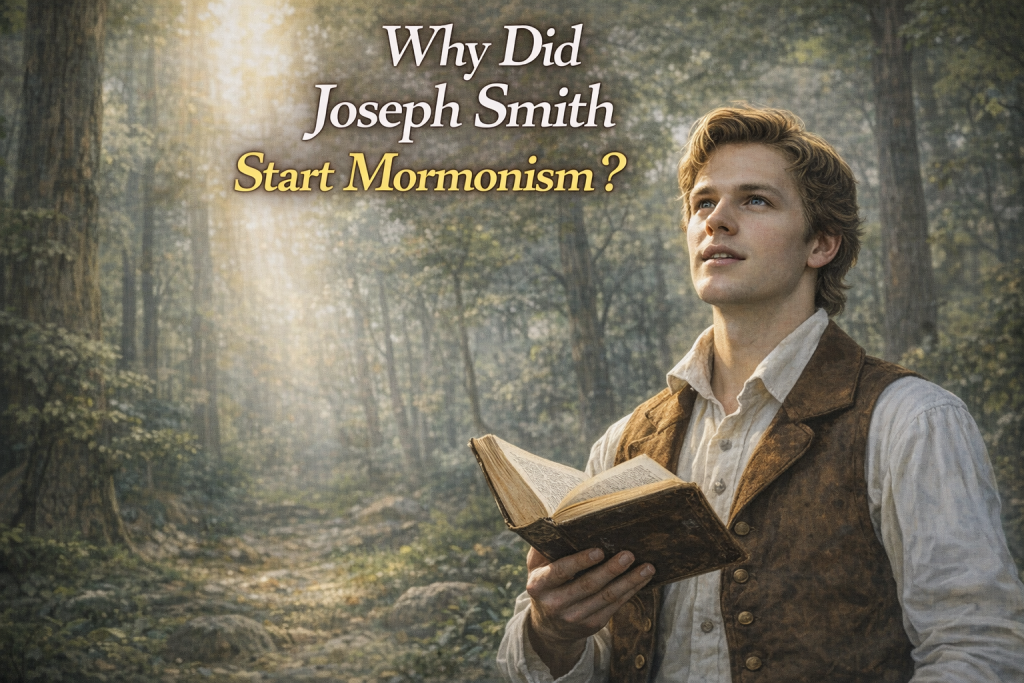
    From the outside, it can appear that Joseph Smith simply started a new religion in nineteenth-century America. Latter-day Saints, however, understand the origins of Mormonism very differently. They believe Joseph Smith did not set out to create a new faith, denomination, or movement. Instead, they believe he was called by God to restore the original Church of Jesus Christ, which they believe had been lost over time.
    According to Latter-day Saint belief, Mormonism did not begin as an act of rebellion against Christianity, nor as a theological experiment. It began with a sincere question asked by a young man who wanted to know how to follow God correctly. What followed, they believe, was not innovation but restoration—God reestablishing doctrines, authority, and ordinances that existed in the early Christian church but were no longer fully present.

    Joseph Smith is therefore viewed not as the founder of a new religion, but as a prophet called to help restore Christ’s church in preparation for the latter days.

    The Religious World Joseph Smith Inherited

    Joseph Smith was born in 1805 in Vermont and grew up in a time of intense religious enthusiasm known as the Second Great Awakening. Churches were multiplying rapidly across the United States, especially in upstate New York, where Joseph lived. Ministers from different denominations preached passionately, each claiming biblical authority, yet teaching contradictory doctrines.

    Some taught salvation by predestination, others emphasized emotional conversion experiences, and still others stressed strict obedience to creeds and confessions. For many people, this environment was energizing. For Joseph Smith, it was deeply confusing.

    A Young Man With Serious Spiritual Questions

    Latter-day Saints emphasize that Joseph Smith’s motivation was not curiosity or rebellion, but concern for his soul. As a teenager, he attended revival meetings and listened carefully to ministers from different churches. Instead of finding clarity, he found confusion.

    He wanted to know which church taught the truth about God, salvation, and how to live according to God’s will. More importantly, he wanted to know how he personally could be forgiven of sins and be right with God.

    A Sincere Search for Truth

    Joseph Smith did not assume he already knew the answer. He believed God was real, caring, and capable of answering sincere questions. His search was rooted in humility rather than confidence.

    Turning to the Bible

    According to his own account, Joseph was particularly struck by a verse in the New Testament, James 1:5: “If any of you lack wisdom, let him ask of God.” Latter-day Saints believe this verse became the catalyst for everything that followed. Joseph concluded that if God answered prayers in biblical times, He could do so again.

    The First Vision

    Latter-day Saints believe that in the spring of 1820, Joseph Smith prayed to God in a grove of trees near his home, asking which church he should join. In response, he experienced what they call the First Vision.

    According to his account, God the Father and Jesus Christ appeared to him. He was told that none of the existing churches possessed the fullness of Christ’s original church and that he should not join any of them at that time.

    God Speaks Again

    This experience is foundational to Latter-day Saint belief. It represents the conviction that God still speaks, reveals Himself, and responds to sincere prayer. It also marks the beginning of what Latter-day Saints call the Restoration.

    Foundation of the Restoration

    Rather than immediately creating a church, Joseph Smith continued to learn, grow, and receive guidance over time. The Restoration unfolded gradually, not all at once.

    Restoration Rather Than Innovation

    One of the most important distinctions Latter-day Saints make is between restoration and invention. Joseph Smith did not claim to improve Christianity or reform doctrine according to his own ideas. He claimed ancient truths were restored through revelation.

    This included teachings about the nature of God, the role of Jesus Christ, the purpose of life, and the reality of ongoing revelation.

    The Role of Additional Scripture

    Part of the Restoration included the coming forth of the Book of Mormon, which Joseph Smith translated by divine guidance. Latter-day Saints believe it is another testament of Jesus Christ that complements the Bible rather than replacing it.

    They believe its purpose is to clarify doctrine, testify of Christ, and restore truths that were lost or obscured over time.

    Priesthood Authority and Divine Calling

    A central claim of Joseph Smith was that authority to act in God’s name had been lost after the deaths of Christ’s apostles. While sincere believers and spiritual leaders remained, Latter-day Saints believe the original priesthood authority no longer existed on the earth.

    Joseph Smith taught that this authority was restored through heavenly messengers, including John the Baptist and ancient apostles. This restoration of authority, they believe, allowed ordinances such as baptism and confirmation to be performed with divine approval.

    Return of Ancient Authority

    This claim sets Mormonism apart from Protestant reform movements. Rather than reforming existing churches, Joseph Smith taught that God restored something entirely lost.

    Organization of the Church

    The Church of Jesus Christ of Latter-day Saints was formally organized in 1830, ten years after the First Vision. According to Latter-day Saint belief, this organization occurred by divine instruction rather than human planning.

    The Church’s structure, leadership, and practices developed gradually as Joseph Smith continued to receive revelation.

    Order and Revelation

    Rather than following a pre-written constitution or creed, the Church evolved through guidance believed to come from God. This reinforced the belief that Christ Himself directs His church.

    Growth and Early Converts

    Early converts joined not because of social advantage, but often at great personal cost. Many faced ridicule, loss of employment, and estrangement from family. Latter-day Saints argue this challenges the idea that Mormonism spread through manipulation or coercion.

    People joined because they believed the message was true and that Joseph Smith was a prophet of God.

    Opposition and Persecution

    From the beginning, Joseph Smith and early members faced intense opposition. Newspapers mocked them, ministers denounced them, and mobs attacked them. Joseph Smith was arrested repeatedly, often without conviction.

    He spent months in jail, lost property, and was forced to move repeatedly to escape violence.

    Sacrifice and Commitment

    Latter-day Saints point out that Joseph Smith gained no lasting wealth, security, or comfort from his role. Instead, he endured hardship and danger throughout his life.

    Martyrdom and Final Testimony

    In 1844, Joseph Smith was killed by a mob while imprisoned in Carthage, Illinois. Latter-day Saints refer to his death as martyrdom, believing he died because of his testimony of Jesus Christ and the Restoration.

    They argue that few people would endure such suffering and death for something they knew to be false.

    Common Misunderstandings About Joseph Smith

    A frequent accusation is that Joseph Smith invented Mormonism for power or control. Latter-day Saints counter this by pointing to his lack of personal gain and the intense persecution he endured.

    Another misunderstanding is that Mormonism rejected Christianity. Latter-day Saints emphasize that Jesus Christ is central to all their doctrine, worship, and scripture.

    Christianity at the Center

    Joseph Smith taught more about Jesus Christ than about himself. His sermons, revelations, and writings consistently focused on Christ’s role as Savior, Redeemer, and Son of God.

    Latter-day Saints believe the Restoration was meant to bring people closer to Christ, not away from Him.

    Why This Belief Matters

    Belief that Joseph Smith was called by God underpins all Latter-day Saint doctrine. It explains belief in modern prophets, continuing revelation, restored priesthood authority, temples, and additional scripture.

    Without Joseph Smith’s calling, these beliefs would have no foundation.

    Implications for Modern Believers

    For Latter-day Saints today, Joseph Smith’s role confirms that God is not distant or silent. They believe God still guides His church, responds to prayer, and reveals truth according to humanity’s needs.

    This belief gives meaning to worship, confidence in ordinances, and hope for divine guidance in a complex world.

    Faith and Personal Confirmation

    Latter-day Saints emphasize that belief in Joseph Smith is not meant to be blind or inherited. Individuals are encouraged to study, pray, and seek personal confirmation from God.

    Faith, they believe, must be personal and sincere.

    Conclusion

    Joseph Smith did not start Mormonism because he wanted power, fame, or influence. According to Latter-day Saints, he acted because he believed God called him to restore what had been lost—the Church Jesus Christ originally established.

    Whether one accepts this claim or not, understanding Mormonism requires understanding this foundational belief. For Latter-day Saints, Joseph Smith was not a religious innovator, but a reluctant prophet who responded to divine calling at great personal cost.

    Their faith rests not in Joseph Smith himself, but in the God they believe spoke to him and continues to guide His church today through Jesus Christ.

    Sources

    The Church of Jesus Christ of Latter-day Saints – Gospel Topics: Joseph Smith
    https://www.churchofjesuschrist.org

    Joseph Smith Papers – Foundational Documents
    https://www.josephsmithpapers.org

    BYU Studies – Early Church History
    https://byustudies.byu.edu

    Scripture Central
    https://scripturecentral.org

  • Why Do Mormons Believe Priesthood Authority Was Lost and Restored?

    Why Do Mormons Believe Priesthood Authority Was Lost and Restored?

    Latter-day Saints believe priesthood authority was lost and later restored because they believe Jesus Christ established His Church with divine authority, appointed apostles to lead it, and gave them power to perform ordinances in His name. According to this belief, while faith in Christ continued after the deaths of the original apostles, the specific authority to officially act for God did not continue uninterrupted.

    This belief is foundational to how Latter-day Saints understand ordinances, church leadership, revelation, and salvation. It explains why they emphasize living prophets, authorized baptism, temple ordinances, and a structured church organization. For them, restoration was not a rejection of Christianity, but a fulfillment of God’s plan to reestablish what was lost.

    Rather than viewing history as a failure, Latter-day Saints see apostasy and restoration as part of a divine pattern that respects human agency while ensuring God’s purposes ultimately continue.

    What Is Priesthood Authority?

    Priesthood authority is understood as the right and power given by God to act in His name for the benefit of others. It is not personal status, spiritual superiority, or political control. Instead, it is divine authorization to perform ordinances, lead the Church, and administer covenants that God recognizes as binding.

    Latter-day Saints distinguish clearly between personal spirituality and priesthood authority. A person may have sincere faith, moral integrity, and spiritual influence without holding priesthood authority. Authority, however, requires divine commissioning through proper ordination.

    Authority Is Given, Not Taken

    Priesthood authority cannot be claimed, earned, or assumed. It is not based on education, charisma, seniority, or popular support. According to Latter-day Saint belief, authority must come from God through an unbroken chain of ordination.

    This principle reflects the belief that God is a God of order, not confusion.

    Acting in God’s Name

    When ordinances such as baptism or confirmation are performed, Latter-day Saints believe they must be done by someone authorized to act in God’s name. Without that authorization, the act may be meaningful to participants but is not believed to be officially recognized by God.

    This distinction explains why priesthood authority matters deeply in Latter-day Saint theology.

    Priesthood Authority in the New Testament

    Latter-day Saints believe the New Testament clearly shows Jesus Christ giving authority to His apostles. He called them individually, instructed them, and empowered them to teach, baptize, heal, and govern the Church.

    This authority was not symbolic. Jesus gave specific responsibilities and keys that allowed apostles to act on His behalf.

    Apostles as Holders of Authority

    The apostles were not merely teachers or missionaries. They were witnesses of Christ’s resurrection and holders of priesthood keys—authority to direct the Church, establish doctrine, and perform ordinances.

    Jesus taught that what they bound on earth could be bound in heaven, indicating divine recognition of their authority.

    Authority Passed Through Ordination

    The New Testament describes authority being passed through the laying on of hands. This pattern shows continuity, order, and divine commissioning rather than spontaneous or self-appointed leadership.

    Latter-day Saints view this as evidence that authority was essential to Christ’s Church, not optional.

    The Role of Apostles in Maintaining Authority

    Apostles were central to preserving priesthood authority. They ordained leaders, resolved doctrinal disputes, and maintained unity among believers.

    As long as apostles lived, authority continued. When apostles were killed and no successors were ordained with the same keys, Latter-day Saints believe authority could not be preserved.

    Leadership Was Centralized, Not Decentralized

    Latter-day Saints believe Christ intended His Church to be guided by apostles, not fragmented into independent interpretations. Apostolic leadership provided doctrinal stability and divine oversight.

    Without apostles, authority became localized, inconsistent, and eventually lost.

    Loss of Authority After the Apostles

    After the deaths of the apostles, early Christians faced intense persecution, political pressure, and internal disagreements. Many faithful believers continued to worship Christ sincerely, but Latter-day Saints believe the structure Christ established could not be maintained without apostles holding priesthood keys.

    A Gradual Loss

    Latter-day Saints emphasize that authority was lost gradually, not suddenly. There was no single moment when everything disappeared. Instead, changes occurred over generations as leadership structures evolved without divine authorization.

    Faith Continued

    Importantly, Latter-day Saints do not believe faith vanished. Scripture was preserved, devotion to Christ endured, and moral teachings continued to influence societies.

    They believe God continued to inspire goodness even without full priesthood authority.

    Apostasy Does Not Mean Moral Collapse

    In Latter-day Saint belief, apostasy does not mean Christianity became evil or meaningless. It means that essential elements of Christ’s original Church—particularly authority and certain ordinances—were no longer present in their original form.

    This distinction allows Latter-day Saints to respect other Christians while still believing restoration was necessary.

    Respect for Christian History

    Latter-day Saints openly acknowledge that many devoted Christians preserved scripture, defended belief in Christ, and lived lives of deep faith during centuries without restored authority.

    They see these individuals as instruments in God’s broader plan.

    Biblical Warnings of Apostasy

    Latter-day Saints point to biblical passages that warn of a falling away or loss of truth before Christ’s return. These passages are interpreted as evidence that apostasy was foreseen rather than accidental.

    Such warnings suggest that God anticipated the need for restoration.

    Apostasy Was Foreknown

    Because apostasy was foretold, Latter-day Saints believe restoration was also part of God’s plan, not a reaction to failure.

    God allows human agency while ensuring His purposes ultimately prevail.

    Why Restoration Was Necessary

    If priesthood authority was lost, Latter-day Saints believe reform alone could not restore it. Reform can change beliefs or practices, but it cannot recreate divine authority.

    Only God could restore what was lost.

    Restoration Versus Reformation

    The Protestant Reformation preserved many important truths, but Latter-day Saints believe it did not restore priesthood authority or apostolic keys.

    Restoration required divine intervention, not institutional reform.

    Divine Recommissioning

    Priesthood authority had to come from heaven, not history. According to Latter-day Saint belief, only God could recommission servants with authority to act in His name.

    Restoration Through Heavenly Messengers

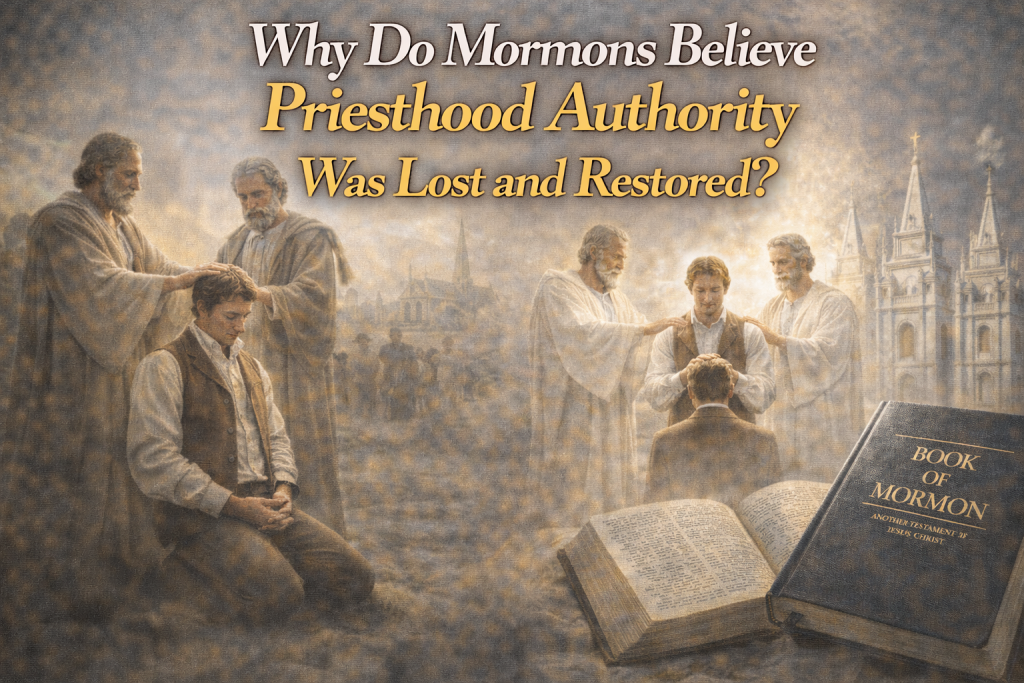
    Latter-day Saints believe priesthood authority was restored through divine messengers rather than human appointment. They believe John the Baptist restored authority to baptize, and that Peter, James, and John later restored higher priesthood authority.

    This restoration reconnected modern priesthood authority directly to ancient apostles.

    Continuity With Ancient Christianity

    Restored authority is believed to be the same authority Christ originally gave His apostles—not a new or modified version.

    This continuity is central to Latter-day Saint confidence in ordinances and covenants.

    Ongoing Authority in the Church

    Latter-day Saints believe priesthood authority continues today through living prophets and apostles. Authority is passed through ordination under proper keys, maintaining continuity and order.

    This allows ordinances to be consistent across cultures, nations, and generations.

    Order and Unity

    Priesthood authority ensures unity in doctrine, practice, and governance. It prevents fragmentation and conflicting interpretations from defining the Church.

    Unity is achieved through divine order rather than enforced conformity.

    Priesthood Authority and Jesus Christ

    Jesus Christ is the source of all priesthood authority. Latter-day Saints believe priesthood holders act in His name, under His direction, and for His purposes.

    Authority does not replace Christ—it points to Him.

    Christ-Centered Power

    The priesthood exists to testify of Christ, administer His ordinances, and invite people to follow Him. When authority is exercised properly, it reflects Christlike service rather than control.

    Common Misunderstandings

    A common misunderstanding is that Latter-day Saints believe God cannot work without priesthood authority. In reality, they believe God can inspire anyone, anywhere, at any time.

    However, ordinances that bind on earth and in heaven require authorization.

    Another misunderstanding is that belief in restoration condemns other Christians. Latter-day Saints strongly reject this idea and emphasize respect, gratitude, and shared devotion to Christ.

    Some assume priesthood authority implies superiority. Latter-day Saints teach that authority increases responsibility, not status.

    Why This Belief Matters

    Belief in the loss and restoration of priesthood authority explains why Latter-day Saints emphasize authorized ordinances, temple worship, and living prophets. It provides confidence that covenants are divinely recognized and spiritually binding.

    For believers, this doctrine affirms that God is consistent, orderly, and actively involved in guiding His Church. It reassures them that Christ continues to lead His people today, just as He did anciently.

    Priesthood authority matters not because of power, but because it represents God’s willingness to work through people to bless, heal, teach, and redeem His children.

    Sources

    The Church of Jesus Christ of Latter-day Saints – Gospel Topics: Priesthood Authority
    https://www.churchofjesuschrist.org

    Joseph Smith Papers – Priesthood Restoration Accounts
    https://www.josephsmithpapers.org

    Doctrine and Covenants Central
    https://doctrineandcovenantscentral.org

    Scripture Central
    https://scripturecentral.org