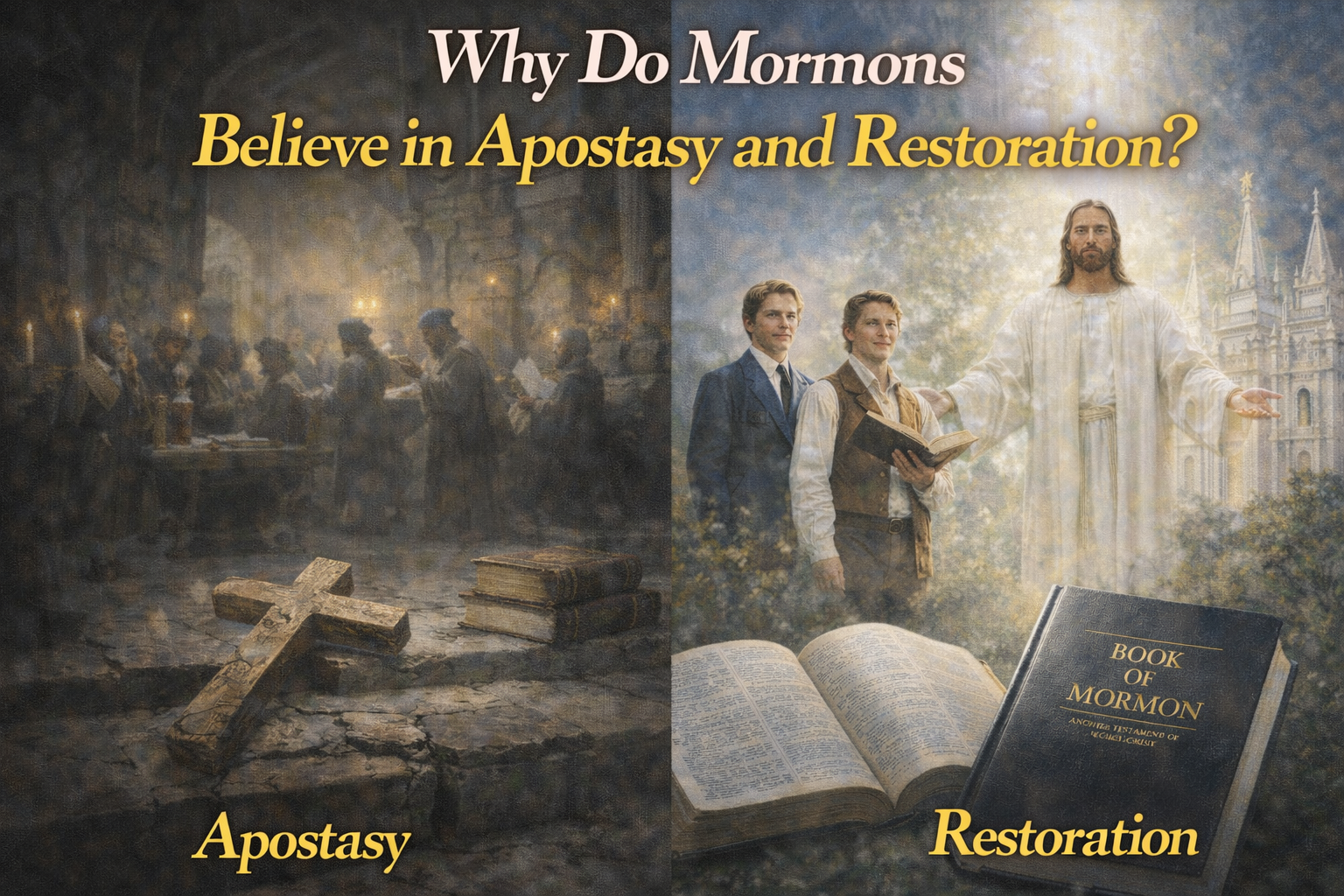
One of the most distinctive teachings of The Church of Jesus Christ of Latter-day Saints is the belief in apostasy and restoration. This doctrine shapes how Latter-day Saints understand Christian history, authority, revelation, and God’s ongoing relationship with humanity. Rather than viewing history as a straight, uninterrupted continuation of Christ’s original church, they believe there was a period of loss followed by a divine renewal.
Latter-day Saints believe Jesus Christ established an organized church with apostles, priesthood authority, and sacred ordinances. They also believe that after the deaths of the original apostles, these essential elements were gradually lost. This loss, known as apostasy, was not permanent. According to their belief, God promised that what was lost would one day be restored through divine intervention.
For believers, apostasy and restoration are not ideas meant to criticize others or dismiss centuries of Christian faith. Instead, they reflect confidence in a consistent, loving God who allows human agency, works patiently through history, and restores truth according to His divine plan centered on Jesus Christ.
What Is Apostasy?
In Latter-day Saint belief, apostasy refers to a falling away from divinely revealed truth and authority. It does not mean that individuals stopped believing in God or that goodness disappeared from the earth. Rather, it describes the gradual loss of priesthood authority, prophetic leadership, and certain doctrines Christ originally established.
Apostasy is understood as a process, not a single event. It unfolded over time due to a combination of persecution, internal disagreements, loss of revelation, and the deaths of apostles who held divine authority.
Gradual, Not Sudden
Latter-day Saints emphasize that apostasy was not immediate. Early Christians remained faithful, devoted, and sincere. Changes occurred slowly, across generations, as circumstances shifted and revelation ceased.
Loss of Authority
A key element of apostasy, according to this belief, was the loss of priesthood authority. Without apostles to pass on authority through ordination, the original authorization to act in God’s name could not continue as Christ established it.
Apostasy Does Not Mean Total Darkness
A common misunderstanding is that apostasy implies complete spiritual darkness. Latter-day Saints explicitly reject this idea. They believe many essential truths were preserved, including belief in Jesus Christ, the Bible, moral teachings, prayer, and sincere devotion.
They honor the countless Christians who lived faithfully, often at great personal cost, during centuries without restored authority. God, they believe, continued to inspire goodness, truth, and moral progress.
Truth Was Preserved
Scripture, ethical teachings, and devotion to Christ remained influential throughout history. Apostasy is therefore viewed as partial loss rather than total abandonment.
God Still Worked Through People
Latter-day Saints believe God continued to influence individuals, cultures, and movements that promoted justice, compassion, and spiritual growth, even without the fullness of restored authority.
The Church Jesus Christ Established
To understand apostasy, Latter-day Saints look first at the church Jesus Christ established. They believe Christ organized a church with apostles, prophets, authority, ordinances, and ongoing revelation.
Jesus called apostles, gave them priesthood authority, taught doctrine, and authorized ordinances such as baptism. After His resurrection, He continued to guide the church through revelation.
The early church functioned through divine authority rather than written creeds or councils alone.
Biblical Basis for Apostasy
Latter-day Saints believe the Bible itself predicts a falling away. They point to passages in which apostles warned of false teachers, doctrinal corruption, and loss of truth.
These warnings suggest that apostasy was foreseen and allowed by God, not an unexpected failure.
Scriptural Warnings
New Testament writers cautioned that after their departure, grievous wolves would enter the flock and that some would turn away from truth. Latter-day Saints interpret these passages as indicators of future loss.
Why Apostasy Was Allowed
Rather than seeing apostasy as divine abandonment, Latter-day Saints believe God allowed it to occur as part of respecting human agency. People are free to choose, even when those choices lead to loss.
God, they believe, does not override agency to preserve institutions indefinitely. Instead, He works through history, preparing a time for renewal.
Why Restoration Was Necessary
If essential authority and ordinances were lost, Latter-day Saints believe reform alone was insufficient. Reform can adjust beliefs and practices, but it cannot restore divine authority.
Restoration, therefore, required God to act directly to reestablish what Christ originally gave.
Restoration Versus Reformation
The Protestant Reformation preserved important truths and increased access to scripture. Latter-day Saints respect reformers for their courage and faith. However, they believe reformation did not restore priesthood authority or apostles.
Biblical Basis for Restoration
Just as scripture speaks of apostasy, Latter-day Saints believe it also promises restoration. They point to passages that describe truth being restored, knowledge increasing, and God acting again in the latter days.
Restoration is seen as fulfillment of prophecy rather than contradiction of Christianity.
Prophecies of Renewal
Scriptures referring to the “restitution of all things” are central to this belief. God, they believe, always intended to restore what was lost.
The Role of Joseph Smith in the Restoration
Latter-day Saints believe God initiated the restoration through Joseph Smith, not because he was powerful or educated, but because he was willing and sincere.
Through visions, revelations, and heavenly messengers, they believe priesthood authority, doctrine, and ordinances were restored.
Divine Initiative
Restoration began with God reaching out to humanity, not humans rediscovering truth on their own.
Restoration of Priesthood Authority
A defining element of restoration is the return of priesthood authority. Latter-day Saints believe heavenly messengers restored the same authority held by John the Baptist and Christ’s apostles.
This authority allows ordinances to be performed in God’s name with divine approval.
Continuity With the Early Church
Restored priesthood authority is believed to be identical in power and purpose to that held in the early Christian church, creating continuity rather than rupture.
Restoration of Doctrine
Along with authority, doctrine was restored. Latter-day Saints believe God clarified truths about His nature, the divine potential of humanity, the plan of salvation, and the role of Jesus Christ.
They believe these teachings harmonize with the Bible while restoring clarity.
Additional Scripture as Part of Restoration
The Book of Mormon is viewed as part of the restoration. Latter-day Saints believe it is another testament of Jesus Christ that supports the Bible and restores truths lost over time.
They believe God has spoken through scripture in many eras and cultures.
Organization of the Restored Church
The Church of Jesus Christ of Latter-day Saints was organized gradually through revelation. Leadership offices, councils, quorums, and ordinances were established according to divine instruction.
This reflects belief in order, accountability, and shared leadership under Christ.
Continuing Restoration
Restoration is not viewed as a single completed event. Latter-day Saints believe God continues to reveal truth through living prophets.
This allows the Church to remain grounded in eternal doctrine while responding to modern challenges.
Line Upon Line
Truth is revealed gradually, according to God’s wisdom and humanity’s readiness.
Apostasy, Restoration, and God’s Character
This doctrine reflects belief in a God who is patient, merciful, and purposeful. God allows loss but prepares renewal. He does not abandon His children permanently.
Apostasy and restoration together demonstrate divine consistency rather than contradiction.
Respect for Other Christians
A common misunderstanding is that belief in apostasy insults other Christians. Latter-day Saints emphasize gratitude for those who preserved scripture, faith, and moral teachings.
They believe restoration builds upon Christian history rather than erasing it.
Why This Belief Matters Today
Belief in apostasy and restoration explains why Latter-day Saints emphasize modern prophets, priesthood authority, temples, and additional scripture.
It frames history as purposeful and hopeful rather than tragic.
Apostasy, Restoration, and Missionary Work
This belief motivates missionary work. If God restored truth and authority, believers feel a responsibility to share that message respectfully.
Missionary work is seen as invitation, not condemnation.
Apostasy, Restoration, and Personal Faith
Latter-day Saints believe individuals should seek personal confirmation of restoration through prayer and study. Faith is meant to be personal, not inherited.
Common Misunderstandings
Some believe apostasy implies God failed. Latter-day Saints believe it demonstrates God’s respect for agency and long-term planning.
Others think restoration claims exclusivity. Members believe restoration brings responsibility, not superiority.
Why This Belief Matters
Belief in apostasy and restoration gives Latter-day Saints confidence that God continues to act in history. It affirms hope that what is lost can be renewed and that Jesus Christ still leads His church.
For believers, this doctrine explains the existence of modern prophets, living revelation, and restored ordinances—all centered on Jesus Christ.
Conclusion
Latter-day Saints believe in apostasy and restoration because they believe Jesus Christ established a church with authority and revelation, that these elements were lost over time, and that God restored them according to His promises.
This belief does not deny Christian history but completes it. It reflects faith in a living God who allows loss, honors agency, and restores truth in His own time.
For believers, apostasy and restoration affirm that Jesus Christ continues to guide His church and lovingly leads humanity toward eternal truth.
Sources
The Church of Jesus Christ of Latter-day Saints – Gospel Topics: Apostasy
https://www.churchofjesuschrist.org
Joseph Smith Papers – Restoration and Authority
https://www.josephsmithpapers.org
Doctrine and Covenants Central
https://doctrineandcovenantscentral.org
Scripture Central
https://scripturecentral.org