
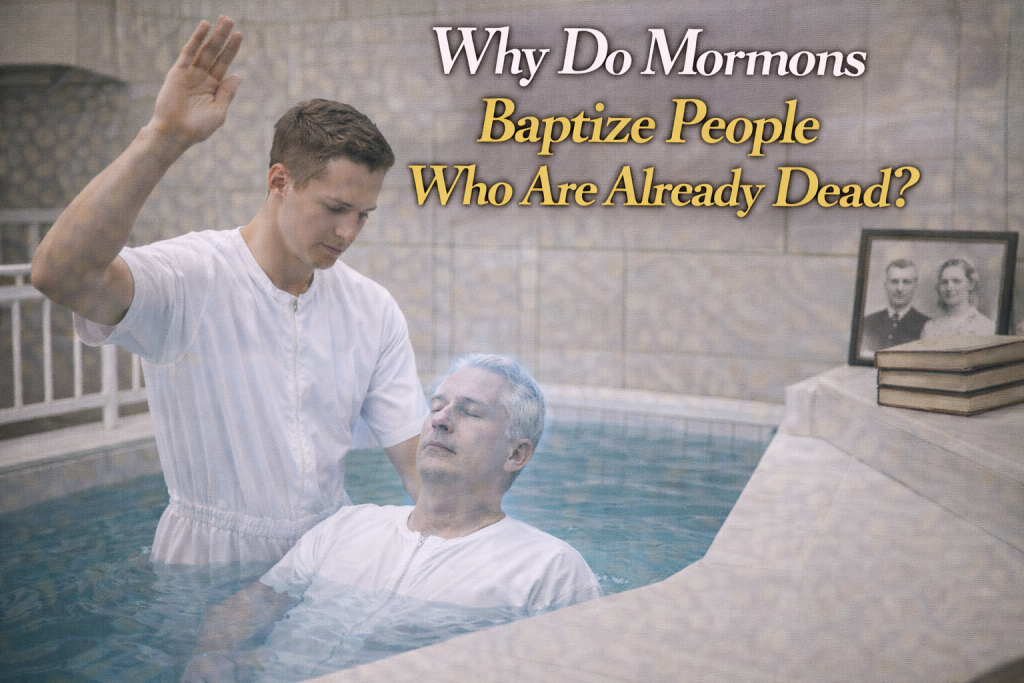
Why Do Mormons Baptize People Who Are Already Dead?
…eternal opportunity. It is not about rewriting a person’s beliefs or imposing religion after death. Instead, it is about offering the same choice to all of God’s children, regardless of…
…eternal opportunity. It is not about rewriting a person’s beliefs or imposing religion after death. Instead, it is about offering the same choice to all of God’s children, regardless of…

…individuals. We believe that having a body is not a limitation, but part of God’s eternal plan. Physical bodies allow growth, joy, and deeper experience. Because God has a body,…

…decision-making. Eternal Perspective Latter-day Saints frequently view life through an eternal lens. Choices are evaluated not only by how they feel now, but by how they align with long-term identity…

…view mortal life as one chapter in an eternal journey that began before birth and continues beyond death. God as the Father of Spirits Latter-day Saints believe God is literally…

…necessary for salvation and eternal life. Because of this belief, access to temples is deeply important. As the Church grows globally, Latter-day Saints believe it would be unjust for only…

…Performed Baptisms for the dead are performed in Latter-day Saint temples. Temples are considered sacred houses of the Lord, reserved for ordinances with eternal significance. In these baptisms, a living…

…living prophet helps apply eternal principles to new situations. Revelation for Modern Times Latter-day Saints believe revelation is not about changing eternal truth, but about clarifying and applying it. A…

…help communities through humanitarian aid, disaster relief, language teaching, and everyday acts of kindness. Service demonstrates Christlike love regardless of religious outcome. Belief in Eternal Truths Latter-day Saints believe the…

…salvation, covenants, priesthood, and eternal family relationships. Completeness does not mean that every truth is fully understood, but that the core framework God intends for His church is in place….

…is their belief in God’s perfect justice. They believe it would be unjust for eternal destiny to depend solely on factors beyond a person’s control, such as birthplace or historical…