Deepen Your Understanding
Welcome to the Why Mormon? Resource Center
Welcome to the Why Mormon? Resource Center.
This page is designed to provide structured, reliable, and carefully selected materials for those who desire to explore the beliefs, history, doctrine, and foundational teachings of The Church of Jesus Christ of Latter-day Saints in greater depth.
Religious understanding rarely develops through brief explanations alone. While introductory articles can clarify basic concepts, deeper comprehension requires study, reflection, and access to organized resources. This Resource Center exists to guide that process.
Here, you will find curated study guides, doctrinal summaries, historical overviews, and structured explanations designed to build knowledge step by step. Whether you are new to Latter-day Saint beliefs or seeking a more thorough understanding of specific doctrines, this page serves as a gateway to continued learning.
Our goal is not merely to provide information, but to encourage informed exploration.
Why a Resource Center Matters?
In a digital world filled with fragmented commentary, social media debates, and partial explanations, it can be difficult to know where to begin serious study.
Many individuals encounter Latter-day Saint beliefs through short videos, online discussions, or secondhand summaries. While some of these sources are helpful, others lack context, accuracy, or doctrinal clarity.
The Why Mormon? Resource Center seeks to offer something different:
Rather than overwhelming readers with scattered information, we present materials in a progression that allows understanding to grow logically and coherently.
Learning about any religious tradition requires patience and context. This Resource Center is designed to provide both.
Study Guides
The following guides offer structured explanations to help you understand key topics clearly. Each guide is designed to stand alone while also connecting to broader themes within Latter-day Saint theology.
A Beginner’s Guide to Mormon Beliefs
If you are new to The Church of Jesus Christ of Latter-day Saints, this guide provides a foundational overview of core doctrines.
Topics include:
-
Who Latter-day Saints believe God is
-
The role of Jesus Christ as Savior and Redeemer
-
The purpose of mortal life
-
The plan of salvation
-
The role of scripture in LDS belief
-
The importance of covenants and ordinances
-
The structure of Church leadership
This guide is designed to clarify common misconceptions and explain beliefs in straightforward language. It serves as a starting point for anyone seeking a clear introduction to Mormon doctrine without unnecessary complexity.
Understanding begins with foundations. This guide lays them carefully.
Understanding the Book of Mormon
The Book of Mormon is central to Latter-day Saint faith. It is described as “another testament of Jesus Christ” and stands alongside the Bible as scripture.
This guide explores:
-
What the Book of Mormon claims to be
-
How it was translated according to Joseph Smith
-
Its historical and theological themes
-
Its relationship to the Bible
-
Why it is considered evidence of the Restoration
-
How Latter-day Saints use it in personal devotion
Rather than focusing only on controversy or criticism, this resource explains the book’s purpose, structure, and spiritual message as understood by believers.
For many Latter-day Saints, the Book of Mormon is not simply an additional text—it is a witness of Jesus Christ and a source of doctrinal clarity.
Who Is Jesus Christ in Mormon Doctrine?
Some assume that Latter-day Saints hold a radically different view of Jesus Christ than other Christians. Others wonder how LDS theology defines Christ’s nature and role.
This guide provides a clear and structured explanation of:
-
Jesus Christ as the Son of God
-
His premortal existence
-
His divine mission
-
The Atonement and its meaning
-
Grace, repentance, and redemption
-
Resurrection and eternal life
The focus remains on Christ as central to all Latter-day Saint belief. Understanding Mormon theology requires recognizing that everything—covenants, priesthood, temples, scripture—points to Him.
This guide helps clarify how Latter-day Saints understand and worship Jesus Christ.
Prophets and Modern Revelation Explained
One of the defining features of The Church of Jesus Christ of Latter-day Saints is belief in living prophets.
For many observers, this concept raises important questions:
-
Why are prophets necessary today?
-
How does modern revelation function?
-
Does new revelation replace the Bible?
-
How are prophets called?
-
What authority do they hold?
This guide addresses these questions directly.
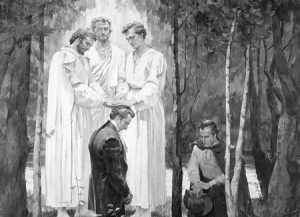
It explains the biblical foundation for prophetic leadership, the concept of priesthood keys, and the role of revelation in guiding the Church. It also clarifies the difference between personal revelation and prophetic revelation.
Understanding this topic is essential because continuing revelation shapes Latter-day Saint doctrine, governance, and temple worship.
A Brief Overview of Church History
This guide provides a concise but structured overview of key moments in the history of the Church, including:
-
The First Vision
-
The translation of the Book of Mormon
-
Early persecutions
-
The gathering to Ohio, Missouri, and Illinois
-
The martyrdom of Joseph Smith
-
The westward migration
-
The global expansion of the Church
Rather than presenting isolated events, this overview explains how history connects to doctrine. Many Latter-day Saint teachings—including temple worship, priesthood authority, and missionary work—are rooted in historical claims of restoration.
This guide provides the background necessary to understand those claims responsibly.
How to Use These Study Guides
These resources are designed to be read in sequence or individually.
If you are new to Latter-day Saint beliefs, we recommend beginning with A Beginner’s Guide to Mormon Beliefs and then progressing to the Book of Mormon and Jesus Christ guides.
If you are researching a specific topic—such as prophets or temple worship—you may navigate directly to the relevant section.
Each guide is structured to include:
Our intention is to provide content that is accessible without sacrificing depth.
Responsible Learning and Thoughtful Study
Religious literacy requires more than surface-level exposure. It demands patience, intellectual honesty, and a willingness to engage primary sources rather than relying solely on summaries or commentary. In an age shaped by rapid information exchange and short-form media, serious study has become increasingly rare. Yet when it comes to faith—particularly a faith tradition as historically and doctrinally distinct as The Church of Jesus Christ of Latter-day Saints—careful learning is essential.
Understanding cannot be built on fragments. It must be built on context.
Responsible learning involves:
Reading Primary Sources
Rather than relying exclusively on secondhand descriptions, thoughtful study begins with original materials. For Latter-day Saint beliefs, this includes reading the Bible, the Book of Mormon, the Doctrine and Covenants, and the Pearl of Great Price. It also includes examining official Church publications, conference addresses, and historical documents.
Primary sources allow readers to encounter doctrine as it is expressed by believers themselves. They reduce distortion and provide direct insight into theological foundations. When studying any religion, hearing from adherents rather than solely from critics or commentators creates a more accurate and balanced understanding.
Understanding Historical Development
Religious movements develop over time. Historical context shapes language, institutional structure, and doctrinal clarification. Without understanding the historical setting in which teachings were revealed or events unfolded, interpretation can become shallow or misleading.
Responsible study asks questions such as:
-
What historical circumstances surrounded this event?
-
How did early members understand this doctrine?
-
How has interpretation developed over time?
-
What was happening culturally and socially at the time?
Context does not eliminate complexity, but it prevents oversimplification.
Distinguishing Doctrine from Culture
One of the most common sources of misunderstanding arises from confusing cultural expression with official doctrine. Every religious community develops traditions, habits, and social norms shaped by geography and history. Not all of these represent binding theological commitments.
Thoughtful engagement requires distinguishing between:
-
Core doctrine formally taught by the Church
-
Historical practices tied to specific eras
-
Local cultural customs among members
-
Personal interpretations or opinions
This distinction allows readers to evaluate beliefs accurately rather than attributing peripheral practices to central theology.
Asking Sincere Questions
Serious inquiry is not hostile. Asking questions does not signal disbelief. In fact, sincere questioning often reflects intellectual integrity.
We encourage readers to ask:
-
What does this doctrine claim?
-
What scriptural basis supports it?
-
How do believers understand it?
-
What problem is this teaching addressing?
Questions framed sincerely open the door to deeper understanding. Reactionary judgment closes it prematurely.
Evaluating Claims Carefully
Not every source carries equal reliability. Online discussions, short video clips, and opinion-driven commentary may lack nuance or context. Responsible learning requires evaluating sources critically:
-
Is the information drawn from primary documents?
-
Is the historical context represented fairly?
-
Is the tone respectful and balanced?
-
Are quotations presented accurately?
Intellectual honesty requires resisting the temptation to accept information that merely confirms prior assumptions. It invites careful verification instead.
The Why Mormon? Resource Center encourages thoughtful engagement rather than reactionary judgment. Our goal is not to rush readers toward conclusions but to equip them with organized, reliable information so they can form well-informed perspectives.
We believe that faith traditions deserve to be studied fairly and understood accurately before conclusions are drawn. Whether one ultimately agrees or disagrees with Latter-day Saint theology, the discussion benefits when it begins with clarity and responsible inquiry.
Understanding precedes evaluation.
An Invitation to Explore Further
The materials listed here represent only a beginning.
Religious understanding is rarely achieved in a single article. It unfolds gradually, as themes connect and patterns emerge. The Why Mormon? Resource Center is designed as an evolving library—one that will continue expanding to address additional questions, clarify complex doctrines, and provide deeper study tools.
As new articles and guides are developed, this Resource Center will expand to include:
Temple Worship Explanations
A structured and accessible exploration of why temples are central to Latter-day Saint belief, including covenants, priesthood authority, sacred ordinances, and eternal families.
The Plan of Salvation in Detail
A comprehensive explanation of premortal life, mortal probation, the Atonement of Jesus Christ, resurrection, judgment, and eternal life. This guide will outline how each stage of existence connects within a coherent theological framework.
Eternal Families and Sealing Authority
A deeper study of temple sealing, the restoration of Elijah’s keys, and the doctrine that families can continue beyond death through priesthood authority.
Frequently Asked Doctrinal Questions
Structured responses to recurring inquiries about grace, works, scripture, modern revelation, priesthood authority, and Church governance.
Scriptural Cross-Reference Guides
Organized references that connect biblical passages with Book of Mormon teachings and modern revelation, allowing readers to trace doctrinal themes across scripture.
Comparative Theology Discussions
Thoughtful comparisons between Latter-day Saint doctrine and traditional Christian theology, presented respectfully and analytically, highlighting both shared beliefs and meaningful differences.
Each addition will follow the same guiding principles:
Clarity
Structure
Doctrinal accuracy
Historical awareness
Respectful tone
We are committed to building a resource library that supports serious study rather than superficial engagement.
This is an open invitation—to explore further, to read deeply, and to consider carefully.
Frequently Asked Questions
Certain questions arise repeatedly in conversations about The Church of Jesus Christ of Latter-day Saints. Rather than avoiding these topics, we address them directly and thoughtfully.
Are Mormons Christian?
This question often reflects differences in theological definitions. Latter-day Saints affirm belief in Jesus Christ as the Son of God and Savior of the world. They worship Him, pray in His name, and center all doctrine on His redemptive mission. At the same time, some traditional Christian communities define “Christian” in ways that exclude theological distinctions held by Latter-day Saints.
Understanding this discussion requires careful definition of terms rather than quick categorization. Our resources explore this question thoroughly and respectfully.
What Makes Mormonism Different from Traditional Christianity?
While Latter-day Saints share core Christian beliefs in Jesus Christ, scripture, repentance, and resurrection, they also teach distinctive doctrines, including continuing revelation, modern prophets, temple ordinances, and additional scripture.
This section examines similarities and differences without caricature or hostility, helping readers understand both shared foundations and doctrinal distinctions.
Why Do Mormons Have Additional Scripture?
The Book of Mormon, Doctrine and Covenants, and Pearl of Great Price are considered scripture alongside the Bible. This raises important questions about canon, revelation, and authority.
Our guides explain why Latter-day Saints believe God continues to reveal scripture and how additional scripture complements rather than replaces biblical teaching.
What Is the Role of Modern Prophets?
Belief in living prophets distinguishes The Church of Jesus Christ of Latter-day Saints from most Christian denominations. Readers often wonder how prophetic authority functions, what limitations exist, and how revelation is understood.
We address these questions carefully, explaining the theological framework behind continuing revelation and priesthood keys.
These frequently asked questions represent only a starting point. Additional inquiries will be added as the Resource Center grows.
We invite readers not merely to scan headlines, but to engage thoughtfully with each topic. Religious understanding is not achieved through quick answers alone. It requires depth, context, and sincerity.
Study carefully.
Ask sincerely.
Evaluate responsibly.
And above all, seek understanding before judgment.
Recommended Reading