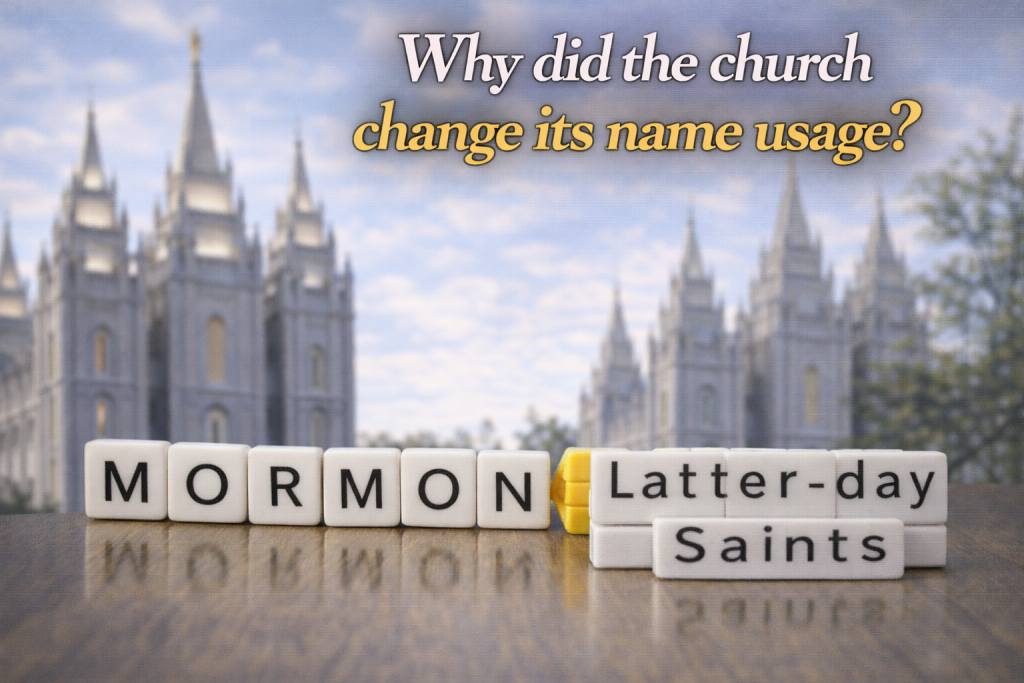
Why did the church change its name usage?
Why Do Mormons Believe They Are the True Church?
Introduction
The idea of a church claiming to be “the true Church.” often makes people uncomfortable. In a world shaped by religious diversity, interfaith dialogue, and personal spirituality, such a claim can sound arrogant, dismissive, or even divisive. When Latter-day Saints say they believe they belong to the true Church of Jesus Christ, many assume this means they see themselves as morally superior or believe everyone else is wrong.
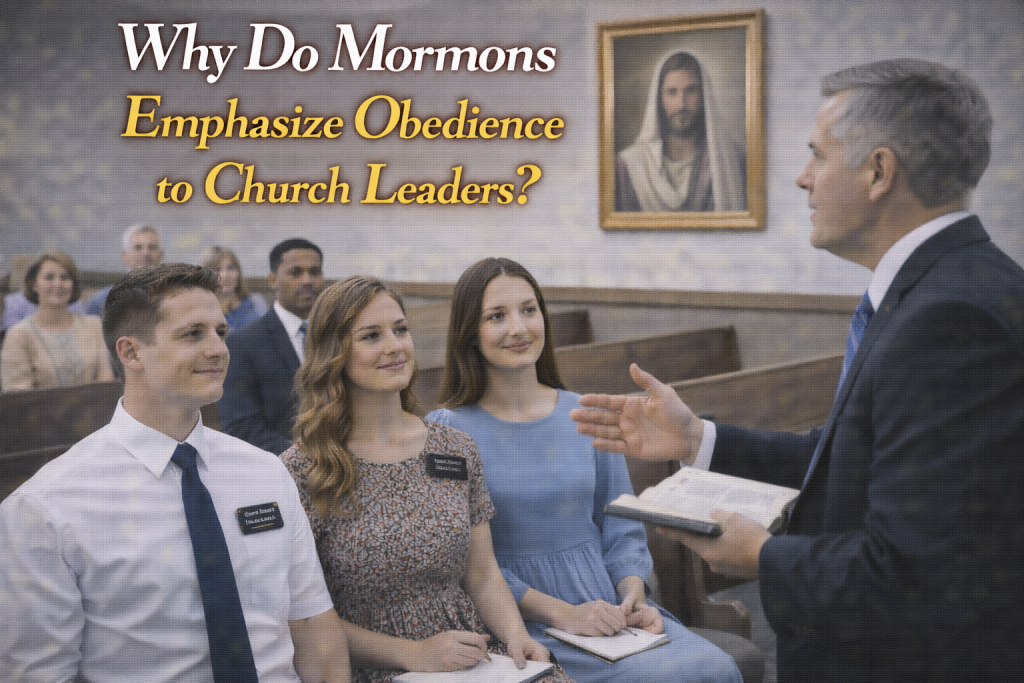
For members of The Church of Jesus Christ of Latter-day Saints, however, the meaning of “true Church” is far more specific and theological than personal or cultural. It is not a statement about who is good, sincere, or loved by God. Instead, it is a belief about authority, divine organization, restored ordinances, and God’s active involvement in guiding His church on earth.
Latter-day Saints believe they belong to the true Church of Jesus Christ because they believe that Jesus Christ Himself restored His original church through divine revelation, priesthood authority, and living prophets. This belief centers on continuity with the New Testament church, not superiority over other Christians.
In this context, “true” refers to divine authorization and completeness of doctrine, not to the value or sincerity of individuals in other faith traditions. Understanding this belief requires unpacking what Latter-day Saints mean by “true,” why they emphasize restoration rather than reformation, and how this doctrine coexists with respect, humility, and compassion toward others.
What Does “True Church” Mean to Latter-day Saints?
In Latter-day Saint belief, the true Church is defined by its origin and authority, not by the moral perfection of its members. A true church is one that Jesus Christ personally established, authorized, and continues to guide.
This definition includes several essential elements. First, the church must possess priesthood authority—the divine right to act in God’s name. Second, it must administer ordinances that are valid and binding in God’s eyes. Third, it must receive ongoing revelation so that God can guide His people in changing circumstances.
Truth, therefore, is institutional and doctrinal rather than personal. Latter-day Saints do not believe that membership automatically makes someone righteous, nor do they believe that people outside their church lack faith or goodness.
Authority and Ordinances
A central feature of what makes a church “true” in Latter-day Saint belief is authority. Authority is understood as power delegated by God, not assumed by individuals or institutions.
This authority is required to perform ordinances such as baptism, confirmation, and other sacred rites believed to be necessary for salvation. Without proper authority, ordinances may be sincere and meaningful, but they are not believed to be divinely binding.
For Latter-day Saints, authority connects modern religious practice directly to Jesus Christ and His apostles.
Completeness of Doctrine
Another defining feature of the true Church is doctrinal completeness. Latter-day Saints believe all essential teachings and ordinances must be present, not partially recovered or symbolically preserved.
This includes teachings about God, Jesus Christ, salvation, covenants, priesthood, and eternal family relationships. Completeness does not mean that every truth is fully understood, but that the core framework God intends for His church is in place.
From this perspective, truth is cumulative and revealed progressively through divine guidance.
Restoration Rather Than Reformation
One of the most distinctive beliefs of Latter-day Saints is that the true Church did not simply evolve or reform over time, but was restored by God after a period of apostasy. Apostasy refers to the loss of divine authority and doctrinal clarity following the deaths of Christ’s original apostles.
Rather than believing the true Church continued uninterrupted through history, Latter-day Saints believe it was lost and later restored through revelation.
This belief sets the Restoration apart from movements that sought to reform existing Christian institutions.
Divine Initiative
According to Latter-day Saint belief, the Restoration began with God reaching out to humanity, not humans rediscovering truth on their own. God initiated the process by calling a prophet and restoring authority, doctrine, and ordinances.
This emphasis on divine initiative reinforces the belief that the Church exists because of revelation rather than historical development.
The Restoration is understood as an act of divine mercy rather than human correction.
Not a Human Movement
Because the Church is believed to have been restored by God, not created by reformers, its authority does not rest on tradition, scholarship, or popular support.
Latter-day Saints believe this explains why new scripture, modern prophets, and continuing revelation are necessary. A restored church must be guided the same way the original church was guided—by God speaking to chosen servants.
Role of Priesthood Authority
Priesthood authority is one of the strongest reasons Latter-day Saints believe their church is the true Church of Jesus Christ. They believe this authority was originally given by Christ to His apostles and later restored through heavenly messengers.
Authority is transmitted through ordination, not assumed through position or education.
Without this authority, ordinances are believed to lack eternal binding power.
Authority Passed by Ordination
Latter-day Saints believe priesthood authority is passed from one person to another through ordination, following a chain that traces back to Jesus Christ.
This belief mirrors New Testament patterns in which apostles conferred authority through the laying on of hands.
Authority is therefore something received, not claimed. This transmission ensures continuity between Christ’s original church and the restored Church today.
Living Prophets and Ongoing Revelation
Another defining belief is that a true church must have living prophets. Latter-day Saints believe God continues to speak and guide His church in modern times.
Revelation did not end with the Bible. Instead, it continues according to God’s will and humanity’s needs.
This belief allows the Church to remain responsive to contemporary issues while remaining anchored in eternal principles.
God Still Speaks
Latter-day Saints believe a silent God would contradict the idea of a living church. If God is actively involved in human history, He must be able to guide His people today.
Living prophets provide direction, correction, and reassurance. They do not replace scripture but help apply eternal truths to modern contexts.
Guidance for a Living Church
A living church faces challenges unknown to ancient societies. Ongoing revelation allows God to address new circumstances without abandoning core doctrine.
This balance between continuity and adaptation is seen as evidence of divine guidance rather than institutional rigidity.
Respect for Other Christian Churches
Despite believing they belong to the true Church, Latter-day Saints emphasize respect for other Christian churches. They believe truth, goodness, and inspiration exist throughout Christianity.
Other churches are seen as sincere, faithful communities that teach moral truth and devotion to Jesus Christ.
Claiming institutional truth does not mean denying spiritual value elsewhere.
Truth Exists Elsewhere
Latter-day Saints believe God works through many people and institutions. Inspiration, moral goodness, and spiritual insight are not limited to one church.
This belief encourages humility and cooperation rather than hostility or isolation.
Members are taught to honor faith wherever it is found.
Individual Salvation and God’s Mercy
Latter-day Saints strongly reject the idea that salvation is limited only to members of their church. They believe God judges individuals based on their hearts, actions, and opportunities—not solely on church affiliation.
They also believe God provides opportunities for all people to accept truth, either in this life or the next.
This belief balances claims of institutional truth with divine compassion.
God Is Just and Merciful
God’s justice ensures fairness, while His mercy ensures opportunity. Latter-day Saints believe no one is condemned for circumstances beyond their control.
This view prevents the doctrine of the true Church from becoming a tool of condemnation.
Personal Confirmation Through Revelation
Latter-day Saints are not asked to accept the Church’s truthfulness blindly. Members are encouraged to seek personal confirmation through prayer and spiritual experience.
Faith is meant to be grounded in individual revelation, not only institutional claims.
Ask and Receive
Individuals are encouraged to ask God directly whether the Church is true. This personal confirmation is considered essential to genuine conviction.
Truth, in this sense, is both revealed and experienced.
Common Misunderstandings
A common misunderstanding is that claiming to be the true Church means rejecting all others. Latter-day Saints explicitly reject this interpretation.
Another misunderstanding is that this belief promotes arrogance or exclusivity. Church teachings emphasize humility, service, and respect.
The doctrine is about God’s actions, not human superiority.
Why This Belief Matters
Believing the Church is the true Church gives meaning to ordinances, authority, and revelation. It explains why Latter-day Saints emphasize covenants, priesthood, and prophetic guidance.
For believers, this doctrine affirms that God has not abandoned humanity. He continues to speak, guide, and organize His church through Jesus Christ.
Ultimately, the belief is not about winning arguments, but about trusting that God is still involved in human history and invites all people to come unto Christ.
Sources
The Church of Jesus Christ of Latter-day Saints – Gospel Topics: The Church of Jesus Christ
https://www.churchofjesuschrist.org
Joseph Smith Papers – Restoration and Authority
https://www.josephsmithpapers.org
Doctrine and Covenants Central – Restoration Doctrine
https://doctrineandcovenantscentral.org
Scripture Central
https://scripturecentral.org