Category: Church Organization and Authority

Church Organization and Authority: Explains how the Church is organized, including leadership roles, priesthood authority, governance, and how decisions are made within the Church.

  • Why Do Mormons Emphasize Obedience?

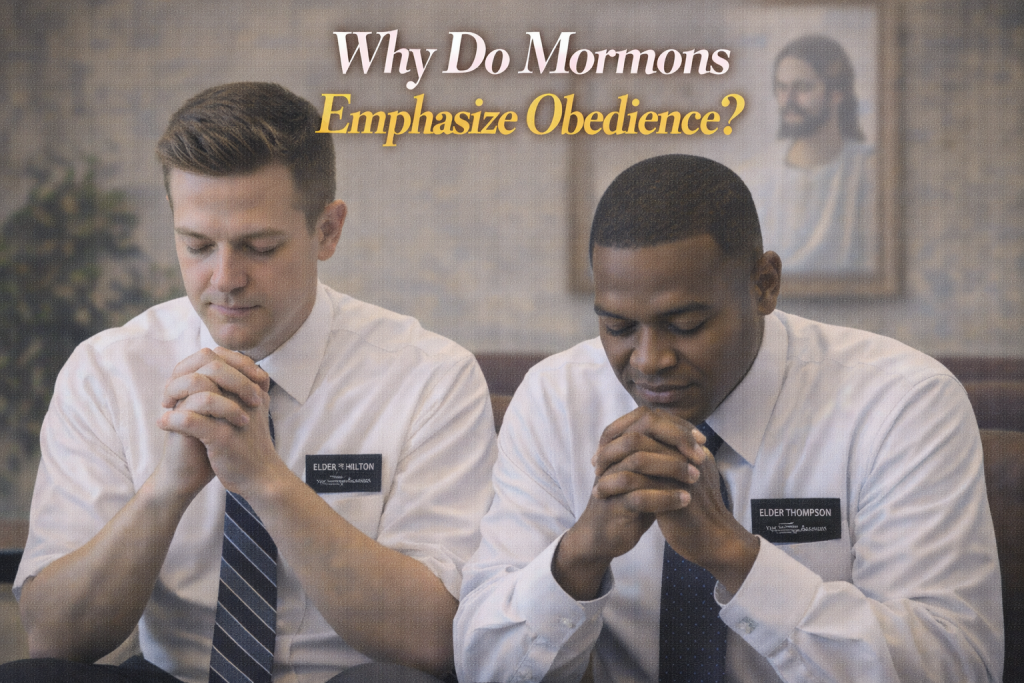
    Why Do Mormons Emphasize Obedience?

    Among the beliefs and practices of The Church of Jesus Christ of Latter-day Saints, few are as frequently misunderstood as the emphasis on obedience. To some observers, this emphasis may appear strict, controlling, or even incompatible with freedom and individuality. This leads to a natural and sincere question: Why do Mormons emphasize obedience?

    For Latter-day Saints, obedience is not about blind submission, loss of personal identity, or rigid rule-following for its own sake. Instead, obedience is understood as a voluntary, thoughtful, and faith-driven response to God’s love. It is deeply connected to trust, agency, growth, and discipleship centered on Jesus Christ.

    Rather than seeing obedience as a limitation, Latter-day Saints believe it is a pathway to spiritual maturity, inner freedom, and lasting happiness. They view obedience not as an end in itself, but as a means of aligning one’s life with divine principles that lead to peace, clarity, and transformation.

    To understand why obedience is emphasized, it is essential to explore how Latter-day Saints view God, Jesus Christ, agency, commandments, grace, spiritual growth, and the purpose of mortal life.

    Obedience as an Act of Love

    At the heart of Latter-day Saint belief is the idea that obedience flows from love rather than fear. Jesus Christ taught that love for Him naturally leads to keeping His commandments. Obedience, therefore, is not primarily about avoiding punishment or earning approval, but about responding to a loving relationship.

    Latter-day Saints believe God’s commandments are expressions of His care and concern for His children. When members choose to obey, they are expressing trust in God’s wisdom and love.

    Rather than obeying to earn God’s favor, they believe obedience helps them receive blessings God already desires to give.

    Relationship Over Rule-Keeping

    Commandments are not viewed as arbitrary rules imposed by an authoritarian God. Instead, they are seen as guidance offered by a loving Father who understands human nature, long-term consequences, and eternal potential.

    Just as parents establish rules to protect and teach their children, Latter-day Saints believe God provides commandments to help His children grow safely and wisely.

    Trust in God’s Wisdom

    Obedience reflects trust that God sees more than humans do. While individuals often focus on immediate desires or short-term outcomes, God is believed to understand the full scope of consequences—both temporal and eternal.

    Choosing obedience is an act of humility and faith that God’s perspective is broader and more reliable than one’s own.

    Agency and Obedience

    One of the most important doctrines in Latter-day Saint theology is moral agency—the ability to choose freely. Obedience is meaningful precisely because individuals are free to choose otherwise.

    God does not force obedience. Latter-day Saints believe compulsion contradicts God’s plan. Instead, God invites, teaches, and persuades.

    Obedience, therefore, is not evidence of control, but of choice.

    Choice and Accountability

    With agency comes accountability. Latter-day Saints believe choices have consequences that shape character, relationships, and spiritual development.

    Obedience is seen as choosing alignment with divine law, while disobedience often leads to confusion, regret, or spiritual distance.

    This understanding encourages thoughtful decision-making rather than impulsive behavior.

    Growth Through Experience

    Latter-day Saints believe obedience often leads to learning through lived experience. Some commandments make sense immediately; others are understood more fully over time as individuals see their effects.

    Growth is not purely intellectual—it is experiential. Obedience becomes a way of learning truth by living it.

    Obedience and Spiritual Growth

    Latter-day Saints believe obedience opens the door to spiritual understanding. As individuals act on God’s teachings, they become more receptive to spiritual insight, peace, and guidance.

    Spiritual growth is not instantaneous. Members are encouraged to progress gradually, learning “line upon line” rather than expecting immediate perfection.

    Obedience supports this process by creating patterns of faithfulness and trust.

    Learning Line Upon Line

    Spiritual maturity develops over time. Latter-day Saints believe God meets individuals where they are and invites steady growth.

    Obedience is not about flawless performance, but about direction—choosing to move toward God rather than away from Him.

    Grace and Effort Together

    A frequent misunderstanding is that obedience competes with grace. Latter-day Saints reject this idea.

    They believe salvation is possible only through the grace of Jesus Christ. Obedience does not replace grace; it reflects willingness to accept and live by Christ’s teachings.

    Grace provides power to change, while obedience provides direction for that change.

    Obedience and Commandments

    Commandments play a significant role in Latter-day Saint life. Teachings such as honesty, chastity, Sabbath observance, health practices, and service are viewed as protective rather than restrictive.

    Latter-day Saints believe these commandments are designed to promote happiness, stability, self-respect, and spiritual clarity.

    Rather than seeing commandments as obstacles to freedom, they believe obedience helps individuals avoid behaviors that lead to addiction, broken trust, and emotional harm.

    Freedom Through Discipline

    A core belief is that discipline creates freedom. Just as discipline in education, health, or skill development leads to greater ability and confidence, spiritual discipline leads to greater moral freedom.

    Obedience reduces chaos and regret, allowing individuals to live with clarity and purpose.

    Obedience and Jesus Christ

    Jesus Christ is the central model of obedience in Latter-day Saint belief. He obeyed the Father perfectly—not out of compulsion, but out of love.

    His obedience led to the Atonement, resurrection, and salvation of humanity. Latter-day Saints believe following Christ includes learning to obey as He did.

    Obedience to Christ is seen as discipleship in action.

    Obedience in Church Life

    Latter-day Saints emphasize obedience in sustaining leaders, participating in ordinances, and following church teachings. However, this obedience is never meant to replace personal revelation.

    Members are encouraged to study, pray, and seek spiritual confirmation for themselves.

    Obedience without understanding is discouraged. Faith is meant to be informed and personal.

    Obedience and Revelation

    Personal revelation plays a central role in how members live commandments. Obedience is strengthened when individuals feel personal spiritual confirmation rather than relying solely on external authority.

    This balance helps prevent obedience from becoming mechanical or resentful.

    Unity Without Uniformity

    Obedience promotes unity within the Church while allowing for individual circumstances. Members apply commandments according to their personal situations, health, culture, and stage of spiritual growth.

    Unity comes from shared commitment, not identical experiences.

    Obedience and Moral Clarity

    In a world with competing values and shifting moral standards, Latter-day Saints believe obedience provides moral clarity.

    Commandments offer stable reference points that help individuals navigate complex ethical situations with consistency and integrity.

    This clarity reduces confusion and internal conflict.

    Obedience and Self-Mastery

    Obedience is also connected to self-mastery. Choosing to live by principles rather than impulses builds character, patience, and emotional resilience.

    Latter-day Saints believe self-mastery is essential for healthy relationships, effective service, and long-term happiness.

    Obedience and Happiness

    Contrary to the idea that obedience diminishes joy, Latter-day Saints believe obedience leads to deeper and more lasting happiness.

    This happiness is not constant pleasure, but a sense of peace, purpose, and alignment with God.

    Many members testify that obedience has brought stability and meaning during difficult times.

    Obedience and Repentance

    Latter-day Saints recognize that no one obeys perfectly. Obedience is not about never making mistakes, but about responding when mistakes occur.

    Repentance allows individuals to return to obedience after failure. This process reinforces humility, hope, and trust in Christ’s mercy.

    Obedience and repentance work together in spiritual growth.

    Common Misunderstandings About Obedience

    One common misunderstanding is that Latter-day Saints believe obedience earns salvation. They do not. Salvation comes through Jesus Christ alone.

    Another misunderstanding is that obedience suppresses individuality. Latter-day Saints believe obedience helps individuals become their truest selves by aligning with divine identity.

    Some assume obedience discourages questioning. In reality, members are encouraged to ask sincere questions and seek understanding.

    Obedience and Emotional Health

    Many members find that obedience supports emotional well-being. Living consistently with values reduces inner conflict and regret.

    Obedience provides a sense of direction and stability during uncertainty.

    Obedience as a Lifelong Journey

    Obedience is not a one-time decision but a lifelong journey. Individuals grow, learn, struggle, and improve over time.

    God’s expectations are seen as patient and compassionate rather than harsh or rigid.

    Why This Belief Matters

    Emphasizing obedience matters because it shapes how Latter-day Saints live daily life. It encourages intentional living, moral consistency, and trust in God’s plan.

    Obedience helps believers align actions with beliefs, creating integrity and spiritual coherence.

    For Latter-day Saints, obedience is not about control—it is about transformation.

    A Christ-Centered Understanding of Obedience

    Ultimately, obedience is meaningful only because of Jesus Christ. His grace makes growth possible, and His example shows how obedience leads to life and love.

    Latter-day Saints emphasize obedience because they believe Christ emphasized it—not as domination, but as discipleship.

    A Broader Christian Perspective

    Many Christian traditions emphasize obedience to God’s will. Latter-day Saints see their focus as part of this broader Christian heritage, expressed through distinctive beliefs about agency and revelation.

    They believe obedience remains relevant in every generation.

    An Invitation

    Latter-day Saints invite others to consider obedience not as loss of freedom, but as an invitation to deeper faith.

    They encourage sincere seekers to study Christ’s teachings, pray for understanding, and experiment with living gospel principles.

    They believe God honors honest effort and guides those who seek Him.

    Sources

    The Church of Jesus Christ of Latter-day Saints – Gospel Topics: Missionary Service
    https://www.churchofjesuschrist.org

    Church News – Young Missionaries
    https://www.thechurchnews.com

    Doctrine and Covenants Central
    https://doctrineandcovenantscentral.org

    Scripture Central
    https://scripturecentral.org

  • Why Do Mormons Believe Priesthood Authority Matters?

    Why Do Mormons Believe Priesthood Authority Matters?

    One of the most distinctive beliefs of members of The Church of Jesus Christ of Latter-day Saints is the emphasis on priesthood authority. To many Christians, this raises sincere and important questions: Why does authority matter so much? Isn’t faith in Jesus Christ enough? Can God work without formal authority?

    For Latter-day Saints, priesthood authority is not about hierarchy, power, or personal status. It is about God’s order, consistency, and love. They believe God works through divinely authorized servants to bless His children, administer sacred ordinances, and guide His Church. Authority, in this view, is God’s permission to act in His name for the benefit of others.

    Priesthood authority gives meaning and reliability to ordinances such as baptism, confirmation, the sacrament, and temple covenants. Latter-day Saints believe these ordinances are not merely symbolic acts, but sacred covenants that must be performed as God has directed in order to be recognized by Him.

    Understanding why Mormons believe priesthood authority matters requires exploring how they understand God’s nature, Jesus Christ’s ministry, biblical patterns of authority, the loss and restoration of authority, and how authority functions today as a tool of service rather than control.

    What Is the Priesthood?

    In Latter-day Saint belief, the priesthood is the authority and power of God delegated to human beings so they can act in His name. It is not a title of honor, an indication of spiritual superiority, or a reward for righteousness. It is a responsibility to serve.

    The priesthood is received through ordination by someone who already holds that authority. No one can claim it independently, earn it through education, or assume it through personal ambition.

    Latter-day Saints carefully distinguish between priesthood authority and personal righteousness. A person may hold authority and still be accountable for how they live and act.

    Authority Versus Influence

    Holding priesthood authority does not mean someone is more valuable, more loved by God, or spiritually superior to others. All people are considered equal before God.

    Authority refers only to the right to perform certain acts in God’s name, such as administering ordinances or presiding in specific responsibilities. Influence, on the other hand, comes from Christlike behavior, humility, love, and service.

    Service, Not Control

    A core teaching in Latter-day Saint belief is that priesthood authority exists to serve, bless, and lift others. It is not meant to dominate, coerce, or control.

    Jesus Christ taught that true leadership means serving others. Priesthood authority is meant to reflect that same principle.

    Biblical Foundations for Priesthood Authority

    Latter-day Saints believe priesthood authority is deeply rooted in the Bible. From the beginning of scripture, God worked through individuals He called and authorized.

    In the Old Testament, prophets such as Moses, Aaron, and others were given authority to lead Israel, administer ordinances, and represent God. Their authority was not self-appointed; it was given directly by God.

    In the New Testament, Jesus Christ Himself organized His Church and gave authority to His apostles. He chose them, ordained them, and sent them forth to preach, baptize, heal, and govern the Church.

    Jesus Christ and Authority

    Latter-day Saints point to Jesus Christ as the ultimate example of authorized ministry. Christ did not claim authority independently; He declared that His authority came from the Father.

    He gave His apostles specific authority, including the power to bind and loose on earth and in heaven. This authority allowed them to act in His name, not merely as private believers.

    Authority Passed Through Ordination

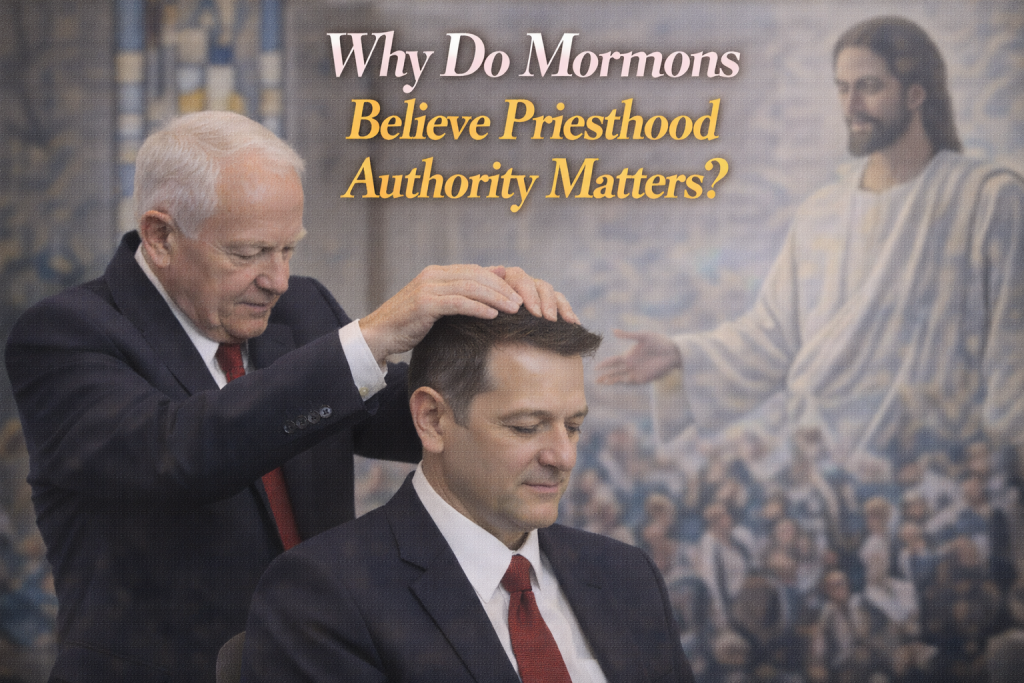
    Throughout scripture, authority was passed through ordination by the laying on of hands. This showed that authority was transmitted in an orderly way rather than assumed.

    Latter-day Saints believe this pattern demonstrates that authority matters to God and is not interchangeable with personal faith alone.

    Why Authority Matters in God’s Plan

    A key reason Latter-day Saints believe priesthood authority matters is their belief that God is a God of order. He does not operate through confusion, contradiction, or random self-appointment.

    Just as God established order in creation, He also established order in His Church. Authority ensures that ordinances, teachings, and leadership are consistent and reliable.

    Authority does not limit God’s power. Rather, it reflects how God chooses to work with humanity.

    Loss of Priesthood Authority After the Apostles

    Latter-day Saints believe that after the deaths of Jesus Christ’s apostles, the original priesthood authority was gradually lost. This belief is often called the Great Apostasy.

    They do not believe this happened because people were evil or insincere. Many faithful Christians remained and did their best to follow Christ. However, without apostles holding authority, the ability to pass that authority on was lost.

    Over time, doctrines were debated, practices changed, and authority fragmented. While truth and goodness remained, Latter-day Saints believe the original authority Christ gave His apostles was no longer present.

    Restoration of Priesthood Authority

    Latter-day Saints believe priesthood authority was restored in the early nineteenth century through divine intervention. They believe God once again called prophets and restored authority through heavenly messengers.

    According to their belief, John the Baptist restored the authority to baptize, and later, ancient apostles such as Peter, James, and John restored higher priesthood authority.

    This restoration is believed to reconnect the modern Church with the authority Jesus Christ originally established.

    Continuity With Ancient Christianity

    Latter-day Saints believe the restored priesthood is not new or invented, but the same authority held by prophets and apostles in biblical times.

    This continuity is central to why priesthood authority matters—it connects modern ordinances directly to Christ.

    Why Authority Matters for Ordinances

    For Latter-day Saints, ordinances are sacred covenants between God and individuals. Baptism, confirmation, priesthood ordination, and temple covenants are not merely symbolic rituals.

    They believe these ordinances must be performed by someone authorized by God in order to be valid in heaven as well as on earth.

    Without priesthood authority, an ordinance may be sincere and meaningful, but Latter-day Saints believe it lacks divine authorization.

    God’s Order and Consistency

    Authority ensures that ordinances are performed the same way throughout the world. This consistency reflects God’s order and prevents confusion.

    A worldwide church requires shared standards so that members in different cultures can trust that ordinances have the same meaning and validity everywhere.

    Priesthood Authority and Jesus Christ

    Jesus Christ is the source of all priesthood authority. Latter-day Saints believe no one acts independently of Him.

    Priesthood holders act in Christ’s name and under His direction. Their role is to represent Him, not replace Him.

    Christ-Centered Power

    The priesthood exists to testify of Jesus Christ, administer His ordinances, and help people come unto Him. It has no purpose outside of Christ.

    Any use of priesthood authority that does not reflect Christ’s character is considered a misuse of that authority.

    Priesthood Authority and Equality

    A common concern is whether priesthood authority creates inequality. Latter-day Saints emphasize that authority does not determine worth.

    All people—men and women—are considered equally valuable before God. Authority is about responsibility, not privilege.

    While priesthood offices are held by men in the Church, women exercise significant spiritual authority through callings, teaching, leadership, and participation in ordinances. Authority and influence are understood differently but are both essential.

    Accountability and Responsibility

    Holding priesthood authority does not excuse wrongdoing. On the contrary, it increases accountability.

    Priesthood holders are taught that misuse of authority brings serious spiritual consequences. Authority must be exercised with persuasion, kindness, patience, and love.

    This emphasis protects against abuse and reinforces humility.

    Priesthood Authority in Daily Church Life

    Priesthood authority is present in everyday church life, often quietly and without display. It is seen when ordinances are performed, when blessings are given, and when leaders serve.

    Most priesthood holders are ordinary men balancing work, family, and service. Authority does not elevate them above others; it gives them responsibility to serve faithfully.

    Authority and Personal Revelation

    Another important balance in Latter-day Saint belief is the relationship between priesthood authority and personal revelation.

    Authority provides structure and order for the Church as a whole. Personal revelation guides individuals in their own lives.

    These two are meant to work together, not compete. Authority does not replace personal spiritual experience, and personal revelation does not override priesthood order for the Church.

    Common Misunderstandings About Priesthood Authority

    One common misunderstanding is that priesthood authority guarantees righteousness. Latter-day Saints do not believe this. Authority does not make someone morally superior.

    Another misunderstanding is that priesthood authority limits God’s power. Latter-day Saints believe God chooses to work through authorized means, not because He must, but because He is a God of order.

    Some believe priesthood authority is about control. In Latter-day Saint belief, authority exists to serve, not dominate.

    Priesthood Authority and Trust

    Belief in priesthood authority gives Latter-day Saints confidence that ordinances are valid, covenants are binding, and guidance is consistent.

    This trust allows members to focus on discipleship rather than uncertainty about legitimacy.

    Authority creates spiritual assurance rather than dependence on personalities.

    Priesthood Authority and Unity

    Authority helps unify a global church. Shared authority prevents fragmentation and doctrinal chaos.

    Members in different countries can worship together knowing they share the same covenants and ordinances.

    Priesthood Authority and Faith

    Faith in priesthood authority is ultimately faith in Jesus Christ. Members trust that Christ directs His Church and honors ordinances performed in His name.

    This faith does not remove the need for personal effort, repentance, or growth. It provides a framework within which faith can flourish.

    Why This Belief Matters

    Belief in priesthood authority matters because it shapes how Latter-day Saints understand God’s involvement in the world. It affirms that God is not distant, but actively guiding His Church.

    It provides continuity with ancient Christianity and confidence in modern worship.

    For believers, priesthood authority brings spiritual assurance, unity, and trust in God’s order.

    A Christ-Centered Understanding of Authority

    Ultimately, priesthood authority matters because of Jesus Christ. He is the source, the model, and the purpose of all authority.

    Latter-day Saints believe authority is meaningful only when it reflects Christ’s love, humility, and service.

    Authority without Christ has no power.

    A Broader Christian Context

    Many Christian traditions recognize the importance of authority in different ways. Latter-day Saints see their belief as one expression of a broader Christian concern for legitimacy, order, and faithfulness to Christ’s original Church.

    They believe God continues to guide His people through authorized servants.

    An Invitation

    Latter-day Saints invite others to explore priesthood authority with openness rather than fear. They encourage sincere seekers to study the life of Christ, the scriptures, and the role of authority in God’s work.

    They believe God honors honest questions and reveals truth through the Holy Spirit.

    Sources

    The Church of Jesus Christ of Latter-day Saints – Gospel Topics: Priesthood
    https://www.churchofjesuschrist.org

    Joseph Smith Papers – Priesthood Restoration
    https://www.josephsmithpapers.org

    Doctrine and Covenants Central
    https://doctrineandcovenantscentral.org

    Scripture Central
    https://scripturecentral.org

  • Why Do Mormons Have Unpaid Clergy?

    Why Do Mormons Have Unpaid Clergy?

    One of the most frequently noticed differences between The Church of Jesus Christ of Latter-day Saints and many other Christian denominations is the absence of paid clergy at the local level. Visitors are often surprised to learn that bishops, counselors, teachers, and many other leaders serve without financial compensation while maintaining full-time jobs and family responsibilities. This naturally raises an important question: Why do Mormons have unpaid clergy?

    For Latter-day Saints, this practice is not about devaluing religious leadership or denying the importance of preparation and care. Instead, it reflects a deeply held belief that church leadership is a form of service rather than a profession. Leaders are called by God, not hired by an institution, and their authority comes from divine calling rather than salary or academic credentials.

    Unpaid clergy reinforces humility, equality, shared responsibility, and reliance on Jesus Christ. It reflects a vision of a church led by ordinary people doing extraordinary service through faith. Understanding this belief requires exploring biblical foundations, early Christian practice, stewardship, lay ministry, spiritual benefits, and the role of agency in church leadership.

    Lay Ministry in Practice

    In The Church of Jesus Christ of Latter-day Saints, most leadership roles are filled by lay members. This includes bishops, counselors, elders quorum presidents, Relief Society presidents, teachers, youth leaders, and many others. These individuals are not professional clergy and are not paid for their service.

    They are members of the congregation who continue in their normal employment while fulfilling church responsibilities. Leadership callings are temporary and rotate regularly, allowing many members to serve over time.

    This system reflects the belief that the church belongs to its members collectively, not to a professional class.

    Callings Based on Inspiration

    Latter-day Saints believe leaders are called through prayer and inspiration rather than through résumés, interviews, or career advancement. Church leaders seek divine guidance when extending callings, trusting that God knows who is best suited to serve at a given time.

    Members are encouraged to accept callings with faith, even when they feel inadequate. This reliance on divine calling rather than professional qualification is central to the concept of unpaid clergy.

    Temporary Service

    Most leadership callings last only a few years. This prevents the concentration of power, reduces burnout, and reinforces humility. When a calling ends, the individual returns to being a regular member without special status.

    This rotation helps ensure that leadership is seen as service rather than entitlement.

    Biblical Foundations for Unpaid Ministry

    Latter-day Saints believe unpaid clergy aligns with patterns found in the Bible. In the New Testament, many early church leaders supported themselves financially while serving in ministry.

    The Apostle Paul is a well-known example. He worked as a tentmaker while traveling, teaching, and leading the Church. Paul explicitly stated that he chose not to rely on financial support so that the gospel would not be seen as motivated by gain.

    Early Christian leadership was often local, voluntary, and deeply integrated into everyday life.

    Service Without Financial Motive

    Latter-day Saints believe unpaid ministry helps remove financial motives from religious leadership. Leaders do not serve for income, status, or job security.

    This reinforces sincerity and devotion. Members believe leaders are more likely to act out of love and faith when service is not tied to compensation.

    Authority Through Calling, Not Salary

    In Latter-day Saint belief, spiritual authority does not come from education, ordination fees, or salary. It comes from God through priesthood authority and calling.

    Unpaid clergy reinforces the idea that authority is spiritual rather than institutional. Leaders serve because they are called, not because they are hired.

    This distinction helps members focus on Christ as the true head of the Church.

    Financial Stewardship and Church Resources

    Another important reason Latter-day Saints have unpaid clergy is financial stewardship. Church funds come primarily from voluntary tithes and offerings given by members.

    By not paying local clergy, these funds can be directed toward other purposes such as humanitarian aid, education, temple construction, disaster relief, missionary work, and welfare assistance.

    Members believe donations should be used to bless as many people as possible rather than supporting salaries at the local level.

    Focus on Charity and Service

    The Church operates extensive humanitarian programs worldwide, providing food, medical aid, clean water, education, and emergency relief. Unpaid clergy helps make this possible.

    Members often see unpaid ministry as a way of ensuring that resources go outward to serve others rather than inward to sustain leadership.

    Accountability and Transparency

    Church finances are managed carefully, with systems of accountability designed to ensure responsible use. The absence of paid local clergy simplifies financial administration and reduces potential conflicts of interest.

    Spiritual Benefits of Lay Leadership

    Unpaid clergy offers significant spiritual benefits to both leaders and congregations.

    Because leaders live the same lives as those they serve, they understand everyday challenges related to work, family, finances, and faith. This relatability fosters empathy and trust.

    Leaders are not separated from the congregation by professional distance. They worship alongside those they lead and face similar struggles.

    Leaders Who Understand Real Life

    A bishop who balances work deadlines, family responsibilities, and church service understands the pressures members face. This shared experience helps leaders offer practical, compassionate guidance.

    Members often feel more comfortable approaching leaders who understand their daily realities.

    Growth Through Service

    Serving without pay encourages leaders to rely on God rather than personal expertise. Many leaders testify that their faith deepened as they served in roles they initially felt unqualified to fill.

    This growth-through-service model reflects the belief that God qualifies those He calls.

    Shared Responsibility in the Church

    Unpaid clergy encourages shared responsibility among members. Because leaders are volunteers, the Church depends on widespread participation.

    Teaching, organizing activities, ministering, and caring for others are shared responsibilities rather than tasks delegated exclusively to professionals.

    This creates a strong sense of ownership and community.

    Participation Builds Faith

    Members who serve learn by doing. Teaching a lesson, organizing service, or leading a group helps individuals develop faith, leadership skills, and compassion.

    Unpaid clergy supports a culture where everyone contributes.

    Avoiding a Clergy-Laity Divide

    In many religious traditions, a sharp distinction exists between clergy and laity. Latter-day Saints believe unpaid clergy helps minimize this divide.

    Leaders and members are fundamentally equals. Leadership is temporary, and everyone is expected to serve at different times.

    This structure reinforces the belief that all are children of God with equal worth and responsibility.

    Addressing Concerns About Training

    One common concern is whether unpaid clergy lack training. Latter-day Saints acknowledge that leaders are not professionally trained clergy, but they believe God provides guidance through revelation, scripture, and experience.

    Leaders also receive ongoing instruction, handbooks, and support from higher church leadership.

    When professional expertise is needed, leaders encourage members to seek qualified help. The role of a bishop is spiritual guidance, not replacing doctors, therapists, or legal professionals.

    Unpaid Clergy and Quality of Care

    Another concern is whether unpaid clergy can provide adequate care given time constraints. Latter-day Saints recognize the sacrifices leaders make and emphasize shared leadership to prevent overload.

    Counselors and auxiliary leaders share responsibilities, and no one leader is expected to do everything.

    This collaborative approach helps maintain quality care.

    Unpaid Clergy and Equality

    Unpaid clergy reinforces equality within the Church. Leaders do not receive financial privileges or elevated social status.

    This equality helps prevent pride and fosters humility. Leaders are reminded that their authority exists to serve, not to elevate themselves.

    Members often express appreciation for leaders who serve quietly and return to ordinary life when their calling ends.

    Historical Development

    From its early beginnings, The Church of Jesus Christ of Latter-day Saints emphasized lay leadership. Early members often served while building communities, farming, and working trades.

    This tradition continued as the Church grew globally. Lay leadership allowed the Church to expand rapidly without reliance on professional clergy infrastructure.

    Global Church, Local Leadership

    As a global church, unpaid clergy allows leadership to arise from within local cultures. Leaders understand local languages, customs, and challenges.

    This local leadership fosters cultural sensitivity while maintaining doctrinal unity.

    Faith Over Convenience

    Unpaid clergy is not always convenient. Leaders sacrifice time, energy, and sometimes comfort. Members believe this sacrifice is meaningful and Christlike.

    Serving without pay reflects Jesus Christ’s example of selfless service.

    Unpaid Clergy and Agency

    Members are free to accept or decline callings. Serving is voluntary, not coerced. This preserves agency and personal choice.

    When members accept callings, they do so as an act of faith rather than obligation.

    Common Misunderstandings

    A common misunderstanding is that unpaid clergy means leadership is unimportant. Latter-day Saints believe leadership is deeply important, which is why it is treated as sacred service rather than employment.

    Another misunderstanding is that unpaid clergy leads to amateurism. Members believe divine guidance compensates for lack of professionalization.

    Some assume unpaid clergy benefits the institution at the expense of individuals. Members often testify that service blesses leaders as much as those they serve.

    Why This Belief Matters

    Having unpaid clergy matters because it shapes the culture of the Church. It emphasizes service over status, participation over passivity, and faith over financial incentive.

    It reinforces humility, equality, and reliance on God.

    For believers, unpaid clergy reflects trust that Jesus Christ can guide His Church through ordinary people willing to serve.

    A Christ-Centered Model of Leadership

    Latter-day Saints believe Jesus Christ Himself exemplified unpaid, sacrificial service. He taught without charge, healed freely, and served without seeking status.

    Unpaid clergy is seen as an effort to follow His example.

    Leadership is measured by love, sacrifice, and faithfulness rather than income.

    A Broader Christian Perspective

    Many Christian traditions value volunteer service alongside paid clergy. Latter-day Saints extend this principle to nearly all local leadership roles.

    They believe this approach strengthens discipleship and community involvement.

    An Invitation

    Latter-day Saints invite others to see unpaid clergy not as a lack, but as a deliberate expression of faith.

    They encourage sincere seekers to observe how lay leadership functions in practice and to ask questions with openness.

    They believe God honors willing service and qualifies those He calls.

    Sources

    The Church of Jesus Christ of Latter-day Saints – Gospel Topics: Church Leadership
    https://www.churchofjesuschrist.org

    Church News – Lay Ministry
    https://www.thechurchnews.com

    Doctrine and Covenants Central
    https://doctrineandcovenantscentral.org

    Scripture Central
    https://scripturecentral.org

  • Why Do Mormons Have a Living Prophet?

    Why Do Mormons Have a Living Prophet?

    One of the most distinctive beliefs of members of The Church of Jesus Christ of Latter-day Saints is the belief in a living prophet. While many Christian traditions look to prophets only as figures of the past—men and women whose words are preserved in the Bible—Latter-day Saints believe God continues to call prophets today. This belief naturally raises questions: Why would a modern prophet be necessary? Has God not already spoken enough through the Bible? And how does a living prophet fit into Christian faith centered on Jesus Christ?

    For Latter-day Saints, belief in a living prophet is not about replacing Jesus Christ, diminishing the Bible, or adding unnecessary authority. Instead, it reflects a conviction that God is loving, involved, and actively guiding His children in every generation. Just as God spoke through prophets in ancient times, they believe He continues to do so in the modern world.

    Having a living prophet affirms that God is not silent, distant, or disengaged. It teaches that revelation did not end with the last page of scripture, but continues according to God’s wisdom and timing. For believers, this doctrine provides reassurance that divine guidance is available for contemporary challenges while remaining rooted in eternal truths.

    Understanding why Mormons have a living prophet requires exploring biblical patterns, the nature of revelation, the role of Jesus Christ, modern challenges, agency, and how prophetic leadership functions within the Church today.

    Prophets in the Bible

    The Bible is filled with accounts of prophets called by God to lead, warn, teach, and guide His people. From the earliest pages of scripture, God communicates through chosen servants who speak on His behalf.

    Moses led Israel out of bondage and received commandments that shaped an entire nation. Isaiah warned of coming judgment while testifying of the Messiah. Jeremiah spoke during times of political and spiritual collapse. Peter led the early Christian church after the resurrection of Jesus Christ. These prophets did not simply repeat earlier revelation; they addressed the needs, sins, and questions of their own time.

    Latter-day Saints see prophets as evidence of a consistent pattern: when God has a people, He calls prophets to guide them.

    God’s Pattern of Communication

    Throughout scripture, God rarely leaves His people without direction. Prophets serve as messengers, teachers, and witnesses of divine truth. They call people to repentance, explain doctrine, and help apply God’s will to real-life situations.

    Latter-day Saints believe this pattern reflects God’s character. A loving Father does not abandon His children or stop communicating without reason.

    Leadership for Each Generation

    Each generation faces unique circumstances. Ancient Israel struggled with idolatry and covenant faithfulness. Early Christians faced persecution and doctrinal confusion. Modern society faces challenges related to technology, global communication, moral complexity, and rapid cultural change.

    Latter-day Saints believe that just as ancient prophets addressed the needs of their time, a living prophet addresses the needs of the present.

    Why a Living Prophet Is Needed Today

    Many people ask why scripture alone is not sufficient. Latter-day Saints believe the Bible is sacred and essential, but they also believe it does not contain answers to every modern question in explicit terms.

    The Bible does not directly address issues such as modern technology, global humanitarian crises, or many contemporary social challenges. A living prophet helps apply eternal principles to new situations.

    Revelation for Modern Times

    Latter-day Saints believe revelation is not about changing eternal truth, but about clarifying and applying it. A living prophet does not rewrite doctrine at will. Instead, he seeks divine guidance to help the Church remain faithful while responding to new circumstances.

    For example, guidance on family life, moral conduct, service, and worship often requires adaptation to modern realities. A living prophet helps provide that guidance.

    Unity and Direction in a Global Church

    The Church of Jesus Christ of Latter-day Saints is a global church with members in many cultures, languages, and political systems. Without unified leadership, interpretation of doctrine could fragment.

    Latter-day Saints believe a living prophet helps maintain unity by providing consistent direction rooted in revelation rather than personal opinion. This unity allows a worldwide church to remain spiritually connected despite cultural diversity.

    How a Living Prophet Is Chosen

    Latter-day Saints believe prophets are called by God, not elected through popular vote or appointed through ambition. The living prophet is also the president of the Church and is chosen through priesthood authority.

    When a prophet passes away, the senior apostle is sustained as the next president of the Church after prayerful confirmation.

    Sustaining the Prophet

    Members of the Church are invited to sustain the prophet. Sustaining does not mean blind obedience or worship. It means expressing support and willingness to follow inspired counsel while seeking personal confirmation through prayer.

    This process reflects the importance of agency. Members are encouraged to ask God for their own witness that the prophet is called by Him.

    Prophets Are Not Worshiped

    A critical distinction in Latter-day Saint belief is that prophets are respected but not worshiped. Worship is directed only to God the Father and Jesus Christ.

    Prophets are seen as servants and witnesses, not objects of devotion.

    The Role of Jesus Christ

    Central to understanding why Mormons have a living prophet is their belief that Jesus Christ is the head of the Church. The prophet does not replace Christ, compete with Him, or stand above Him.

    Latter-day Saints believe the prophet acts under Christ’s direction. His primary role is to testify of Jesus Christ and lead people closer to Him.

    Christ-Centered Leadership

    All prophetic teachings are expected to align with the gospel of Jesus Christ. If guidance does not point people toward faith, repentance, love, and discipleship, it is not considered truly prophetic.

    The prophet’s authority exists because of Christ, not independently of Him.

    Revelation and Scripture

    Another common question is whether living prophets replace scripture. Latter-day Saints believe scripture and revelation work together.

    The Bible and other scriptures provide foundational doctrine. Living prophets help interpret, clarify, and apply those teachings in modern contexts.

    Revelation is seen as cumulative, not contradictory.

    Continuity, Not Contradiction

    Latter-day Saints believe God does not contradict Himself. Prophetic guidance is expected to be consistent with established doctrine while addressing new situations.

    When new revelation is given, it is studied carefully and accepted through spiritual confirmation.

    Human Imperfection and Prophetic Calling

    A common misunderstanding is that Latter-day Saints believe prophets are perfect. They do not. Prophets are human beings with weaknesses, personalities, and limitations.

    What makes them prophets is not perfection, but calling and divine guidance.

    God Works Through Imperfect People

    Throughout the Bible, God worked through imperfect individuals. Moses doubted his ability to speak. Peter made serious mistakes. David sinned deeply.

    Latter-day Saints believe God continues to work through imperfect servants because perfection is not required for divine calling—humility and willingness are.

    Prophets and Agency

    Another misunderstanding is that prophetic guidance removes personal agency. Latter-day Saints believe the opposite.

    Prophets teach and warn, but individuals remain responsible for their choices. Prophetic counsel invites reflection, prayer, and personal confirmation.

    Agency remains central to God’s plan.

    Moral and Spiritual Guidance

    Living prophets often address moral and spiritual issues facing society. This guidance is intended to help individuals navigate complex environments with faith and integrity.

    Prophetic counsel often emphasizes compassion, service, family, honesty, and commitment to Christ.

    Rather than offering political solutions, prophets focus on spiritual principles that transcend political systems.

    Prophets and Change

    Some critics point to changes in church practice as evidence against prophetic leadership. Latter-day Saints view change differently.

    They believe God may adjust practices as circumstances change, while eternal truths remain constant.

    In the Bible, practices changed as God’s people moved from one covenant stage to another. Latter-day Saints see modern changes as part of that same divine pattern.

    Prophets and Peace

    Many members testify that prophetic guidance brings peace, clarity, and reassurance. In times of uncertainty, having a trusted spiritual voice helps individuals feel grounded.

    This peace does not come from certainty about the future, but from trust in God’s continued involvement.

    Prophets and Personal Faith

    While prophets guide the Church as a whole, Latter-day Saints emphasize personal revelation. Members are encouraged to seek God’s guidance in their own lives.

    Prophetic leadership does not replace personal prayer or scripture study. It complements them.

    Common Misunderstandings

    One common misunderstanding is that prophets add new requirements for salvation. Latter-day Saints believe salvation comes only through Jesus Christ.

    Another misunderstanding is that prophets claim infallibility. They do not. They claim divine calling and guidance, not personal perfection.

    Some assume prophets control every aspect of members’ lives. In reality, prophetic guidance focuses on principles rather than micromanagement.

    Why This Belief Matters

    Belief in a living prophet matters because it shapes how Latter-day Saints see God. It reinforces the belief that God is present, aware, and responsive.

    It provides a sense of continuity between ancient scripture and modern life. It offers guidance in a rapidly changing world.

    For believers, this doctrine strengthens faith that God’s Church is actively led by Jesus Christ today.

    A Living Relationship With God

    Having a living prophet supports the idea that faith is not static. Revelation is not frozen in time. God continues to teach His children as they grow.

    This belief encourages humility, listening, and openness to divine instruction.

    A Broader Christian Context

    While belief in modern prophets is distinctive, many Christian traditions believe God still guides believers through the Holy Spirit.

    Latter-day Saints see prophets as one way God provides that guidance on a collective level.

    They view prophetic leadership as consistent with a God who speaks, leads, and loves.

    An Invitation

    Latter-day Saints invite others to learn about living prophets with openness rather than fear.

    They encourage sincere seekers to study, pray, and ask God whether He still speaks today.

    They believe God answers honest questions and invites all people to come closer to Jesus Christ.

    Sources

    The Church of Jesus Christ of Latter-day Saints – Gospel Topics: Prophets
    https://www.churchofjesuschrist.org

    Joseph Smith Papers – Prophetic Calling
    https://www.josephsmithpapers.org

    Doctrine and Covenants Central
    https://doctrineandcovenantscentral.org

    Scripture Central
    https://scripturecentral.org

  • Why Do Mormons Have Bishops?

    Why Do Mormons Have Bishops?

    When people attend a worship service of The Church of Jesus Christ of Latter-day Saints or learn about how the Church is organized, they often hear about bishops. Members speak of meeting with “the bishop,” bishops preside over congregations, and they play a visible role in the spiritual and practical life of Church members. This naturally leads to the question: Why do Mormons have bishops?

    For Latter-day Saints, bishops exist because they believe Jesus Christ established a church led by called servants who care for both the spiritual and temporal needs of God’s people. Bishops are local leaders who guide congregations, provide pastoral care, administer ordinances, and help members live the teachings of Jesus Christ in everyday life.

    Unlike professional clergy found in many religious traditions, Latter-day Saint bishops are lay leaders. They are not paid, do not receive formal theological degrees for their role, and continue working in their regular professions while serving. This reflects a belief that church leadership is a form of service and stewardship rather than a career or position of prestige.

    Understanding why Mormons have bishops requires exploring how they understand church leadership, priesthood authority, service, community care, and the example of Jesus Christ as the Good Shepherd.

    The Role of a Bishop in a Local Congregation

    In The Church of Jesus Christ of Latter-day Saints, a bishop presides over a local congregation known as a ward. A ward typically consists of several hundred members living in the same geographic area.

    The bishop is responsible for overseeing worship services, ensuring doctrine is taught correctly, and helping members strengthen their faith in Jesus Christ. He works closely with other local leaders and volunteers to meet the needs of the congregation.

    While the bishop presides, he does not lead alone. Leadership is shared among many members, reinforcing the belief that the Church functions through collective service rather than centralized authority.

    Shepherd of the Congregation

    Latter-day Saints often describe a bishop as a shepherd. This image comes directly from the teachings of Jesus Christ, who referred to Himself as the Good Shepherd and taught leaders to care for the flock with love and humility.

    A bishop’s role includes watching over the spiritual well-being of members, offering guidance, encouragement, and correction when needed. This shepherding is personal and relational rather than distant or institutional.

    Personal Pastoral Care

    One of the most distinctive aspects of a bishop’s role is personal pastoral care. Members often meet privately with the bishop to seek counsel, confess sins, discuss spiritual struggles, or receive encouragement.

    These meetings are confidential and focused on helping individuals grow spiritually rather than judging or condemning them. Bishops are taught to listen with compassion, patience, and respect.

    For many members, the bishop is a trusted spiritual guide during significant life challenges such as illness, family difficulties, repentance, or major decisions.

    Bishops as Lay Leaders

    A defining characteristic of Latter-day Saint bishops is that they are lay leaders. They are not paid clergy and do not serve as full-time religious professionals.

    Bishops continue in their regular employment—whether as teachers, doctors, engineers, farmers, or in countless other professions—while serving in the Church. Their role as bishop is voluntary and temporary.

    This approach reflects several core beliefs about leadership and community.

    Callings, Not Careers

    Latter-day Saints believe bishops are called by God through inspiration rather than chosen based on ambition, education, or desire for authority. A bishop is typically called to serve for a limited period, often several years, and then returns to being a regular member without special status.

    This reinforces the idea that leadership in the Church is a calling—a responsibility entrusted for a time—rather than a lifelong position or career.

    Humility and Equality

    Because bishops are unpaid and temporary, no one is elevated permanently above others. This structure promotes humility and equality among members.

    A bishop sits among the congregation, participates as a fellow worshipper, and relies on God rather than professional training alone. This helps prevent the creation of a separate clerical class.

    Shared Responsibility

    Leadership responsibilities are shared among many members, including counselors, teachers, and auxiliary leaders. This shared model reduces hierarchy and encourages widespread participation.

    Members learn that building the Church is a collective effort rather than the responsibility of a few professionals.

    Biblical Foundations for Bishops

    Latter-day Saints believe the office of bishop has roots in the New Testament. The Bible mentions bishops as leaders in the early Christian church who were responsible for overseeing congregations and caring for both spiritual and temporal needs.

    In the New Testament, bishops are described as servants who must be blameless, patient, and devoted to teaching truth. Their role included managing church resources and ensuring the welfare of members.

    Latter-day Saints see modern bishops as a continuation of this early Christian pattern.

    Early Christian Leadership

    In early Christianity, leadership was local and personal. Bishops knew their congregations and were involved in daily concerns.

    Latter-day Saints believe modern bishops reflect this same model—leaders who live among the people they serve and understand local needs.

    Priesthood Authority and Bishops

    Another reason Latter-day Saints have bishops is their belief in priesthood authority. They believe Jesus Christ gave authority to His apostles to lead His Church and that this authority has been restored in modern times.

    Bishops hold priesthood authority that allows them to preside over a congregation, perform ordinances, and exercise spiritual stewardship.

    This authority is not seen as personal power, but as delegated responsibility to serve in Christ’s name.

    Authority as Service

    In Latter-day Saint belief, priesthood authority exists to bless others, not to control them. Bishops are taught that their authority should be exercised with persuasion, patience, kindness, and love.

    This view aligns with Jesus Christ’s teaching that those who lead should serve.

    Temporal and Welfare Responsibilities

    In addition to spiritual leadership, bishops have significant temporal responsibilities. One of the most important is overseeing welfare and assistance for members in need.

    Bishops help coordinate food, financial assistance, counseling, and other support for individuals and families facing hardship. This includes unemployment, illness, housing instability, and other challenges.

    Caring for the Needy

    Latter-day Saints believe caring for the poor and needy is a core Christian responsibility. Bishops play a central role in ensuring that assistance is provided with dignity, respect, and confidentiality.

    Rather than distributing aid impersonally, bishops work one-on-one with individuals to understand needs and encourage self-reliance alongside compassion.

    This personalized approach reflects Christ’s example of caring for individuals.

    Balancing Help and Responsibility

    While bishops provide assistance, they also encourage personal responsibility and growth. The goal is not dependence, but stability and empowerment.

    This balance between compassion and accountability is central to the bishop’s welfare role.

    Bishops and Youth Guidance

    Bishops play an especially important role in guiding youth and young adults. They meet regularly with young people to encourage spiritual development, moral decision-making, and personal growth.

    These meetings are meant to be supportive rather than intimidating. Bishops help youth navigate challenges related to faith, education, relationships, and identity.

    For many young members, the bishop is a mentor and trusted adult outside the family.

    Bishops and Community Strength

    Because bishops serve locally, they understand the unique needs and culture of their congregation. This local leadership strengthens community bonds.

    Members know their bishop personally, often through years of shared worship and service. This familiarity builds trust and accountability.

    The bishop becomes a central figure in fostering unity, cooperation, and mutual support within the ward.

    Avoiding Professional Clergy

    One question often asked is why Latter-day Saints do not have professional clergy at the local level. Their answer is rooted in belief rather than efficiency.

    They believe having lay leaders encourages spiritual growth among all members. Teaching, serving, and leading are seen as responsibilities shared by the entire community.

    This structure prevents reliance on a few experts and encourages everyone to develop faith, leadership skills, and compassion.

    Learning Through Service

    Serving as a bishop is considered a profound spiritual learning experience. Bishops often speak of how the role deepens their faith, empathy, and reliance on God.

    Because bishops are ordinary members called to extraordinary responsibility, they learn humility and dependence on divine guidance.

    This learning-through-service model applies to all members in different callings throughout the Church.

    Common Misunderstandings About Bishops

    One common misunderstanding is that bishops function like traditional clergy with professional authority and specialized training. In reality, they rely on prayer, scripture, and the guidance of the Holy Spirit rather than formal religious education.

    Another misunderstanding is that bishops replace personal responsibility. Latter-day Saints believe each individual remains responsible for their own spiritual growth. Bishops guide and support, but do not control.

    Some assume bishops wield unchecked authority. In fact, bishops are accountable to higher Church leadership and operate within established guidelines.

    Bishops and Confidentiality

    Confidentiality is a critical aspect of a bishop’s role. Members must feel safe sharing personal concerns without fear of exposure.

    Bishops are instructed to treat all conversations with care and discretion. This trust is essential for effective pastoral care.

    Bishops as Volunteers, Not Experts

    Bishops do not claim to be experts in psychology, finance, or law. When appropriate, they encourage members to seek professional help.

    Their role is spiritual guidance, moral support, and coordination of resources—not replacing professional care.

    Why This Belief Matters

    Having bishops matters because it shapes how Latter-day Saints experience church life. Local leadership allows for personalized care, strong community bonds, and shared responsibility.

    Bishops embody Christlike leadership rooted in service rather than status. Their unpaid, temporary service reinforces humility and equality.

    For believers, bishops represent a tangible expression of how Jesus Christ leads His Church—through love, guidance, and personal care.

    A Christ-Centered Model of Leadership

    Latter-day Saints believe Jesus Christ remains the head of the Church. Bishops act under His authority and seek to reflect His teachings.

    They strive to lead as Christ led—by serving, listening, and loving.

    This model of leadership challenges cultural ideas about power and hierarchy, replacing them with stewardship and compassion.

    The Impact on Members’ Lives

    Many members testify that bishops have played a crucial role during difficult moments—helping them find hope, direction, and healing.

    Because bishops serve close to home, their influence is immediate and personal.

    A Broader Christian Context

    While the structure may differ, many Christian traditions value pastoral leadership. Latter-day Saints see their bishops as fulfilling a similar role through a distinctive model of lay service.

    They believe this approach strengthens faith, community, and accountability.

    An Invitation

    Latter-day Saints invite others to learn about bishops not as authority figures to fear, but as servants called to help.

    They encourage anyone with questions or needs to approach local leaders with trust and openness.

    They believe God works through ordinary people willing to serve in extraordinary ways.

    Sources

    The Church of Jesus Christ of Latter-day Saints – Gospel Topics: Bishops
    https://www.churchofjesuschrist.org

    Church News – Role of Bishops
    https://www.thechurchnews.com

    Doctrine and Covenants Central
    https://doctrineandcovenantscentral.org

    Scripture Central
    https://scripturecentral.org

  • Why do Mormons believe tithing is a commandment?

    Why do Mormons believe tithing is a commandment?

    Why do Mormons?

    Few religious buildings draw as much attention, curiosity, and sometimes criticism as Latter-day Saint temples. Their architecture is often striking, their interiors carefully crafted, and their construction costs frequently discussed in public conversations. For those unfamiliar with Latter-day Saint beliefs, a natural question arises: why would a church invest so much care, time, and money into building temples?

    From the outside, temples may appear similar to cathedrals or monumental religious structures, leading some to assume they represent excess or misplaced priorities. From a Latter-day Saint perspective, however, temples are fundamentally different from ordinary church buildings. They are not designed for weekly worship services or public gatherings. Instead, they are considered the most sacred places of worship on earth.

    Latter-day Saints believe temples are essential to God’s plan for humanity. The quality, beauty, and durability of temples are not expressions of luxury, but reflections of reverence. Building temples with care is seen as an act of devotion, sacrifice, and long-term faith. To understand why Mormons build what are often described as “expensive” temples, it is necessary to understand what temples represent, what happens inside them, and why they are central to Latter-day Saint theology.

    Temples as the House of the Lord

    Latter-day Saints believe temples are literally the “house of the Lord.” This belief shapes every aspect of how temples are designed, constructed, and maintained. Temples are set apart from ordinary life and ordinary worship spaces.

    While regular church meetinghouses are used for weekly services, social gatherings, and teaching, temples are reserved for sacred ordinances and covenants. Because of this distinction, temples are approached with a level of care and reverence not typically associated with everyday religious buildings.

    The goal of temple construction is not to impress or display wealth, but to create an environment that reflects holiness, order, and permanence.

    Sacred Space

    Temples are intentionally designed to feel different from the outside world. The architecture, landscaping, interior design, and atmosphere are all meant to invite reflection, peace, and reverence.

    Latter-day Saints believe sacred space helps individuals focus on God and eternal realities. By setting temples apart from daily noise and distraction, the physical environment supports spiritual worship.

    This separation from ordinary life is one reason temples are built with such care and attention to detail.

    Offering the Best to God

    Another reason temples are built with high-quality materials and craftsmanship is the belief that offering one’s best to God is an expression of faith and respect. Throughout scripture, sacred offerings were expected to meet high standards, not because God needed them, but because they reflected the devotion of the worshipper.

    Latter-day Saints see temple construction as a modern expression of this principle. Durable materials, skilled craftsmanship, and thoughtful design are ways of honoring God and showing reverence for sacred ordinances.

    Quality is not viewed as indulgence, but as devotion.

    Purpose of Temple Ordinances

    The most important reason Latter-day Saints invest heavily in temples is the purpose they serve. Temples are used for ordinances that members believe are essential for eternal salvation and family unity.

    These ordinances include eternal marriage, covenants of commitment to God, and proxy ordinances performed on behalf of deceased ancestors. Unlike weekly worship, these ordinances can only be performed in temples.

    Because these practices are central to Latter-day Saint theology, temples are considered among the most significant investments the Church can make.

    Eternal Significance

    Temple ordinances are believed to have eternal significance. They are not symbolic rituals meant only to inspire, but sacred acts believed to carry spiritual power that affects both mortal life and the afterlife.

    Eternal marriage, for example, reflects the belief that family relationships can continue beyond death. Proxy ordinances for the dead reflect the belief that God provides opportunities for all people, living or deceased, to accept or reject sacred covenants.

    Because these ordinances are believed to influence eternal destiny, the places where they are performed are treated with extraordinary care.

    Focus on Salvation

    From a Latter-day Saint perspective, temples directly support God’s plan of salvation. They are not peripheral to faith, but central to it.

    Investing in temples is therefore seen as investing in eternal outcomes rather than temporary benefits. Members believe that no other use of resources has greater long-term spiritual impact.

    This belief explains why temples receive such focused attention and funding.

    Longevity and Stewardship

    Temples are built with the expectation that they will serve for generations. Rather than constructing buildings meant to be replaced or renovated frequently, the Church builds temples to last for decades or even centuries.

    Durable materials, careful engineering, and timeless design reduce long-term maintenance costs and ensure that temples remain functional and dignified over time.

    From a Latter-day Saint perspective, building well initially is an act of wise stewardship.

    Long-Term Vision

    Temple construction reflects a long-term vision rather than short-term efficiency. Latter-day Saints believe they have a responsibility not only to current members, but to future generations.

    A temple built today may serve grandchildren and great-grandchildren who have not yet been born. This future-oriented perspective influences decisions about materials, design, and location.

    Rather than rebuilding repeatedly, the Church aims to build once and build well.

    Consistency and Equality Worldwide

    Latter-day Saint temples vary in size, but they are built to consistent standards of reverence and quality regardless of location. Whether a temple is located in a major metropolitan area or a small nation, it is designed to reflect the same spiritual importance.

    This consistency reinforces the belief that all members, regardless of economic or geographic circumstances, deserve access to sacred ordinances in dignified spaces.

    Temples are not built to reflect local wealth, but spiritual equality.

    Equal Worth

    Building temples with consistent care emphasizes that all members are equally valued. A member in a developing nation is not expected to worship in a lesser space simply because of economic conditions.

    This principle of equal worth aligns with the belief that God does not value people based on wealth or status. Sacred spaces should reflect that belief.

    Funding Through Sacred Donations

    Temple construction is funded through voluntary donations, primarily tithing. Members give these donations willingly, believing they are contributing to eternal purposes.

    No one is required to donate specifically for temple construction, and no admission fee exists to enter a temple. Access to temples is based on spiritual preparation, not financial contribution.

    Members view their donations as sacred offerings rather than payments for services.

    Voluntary Sacrifice

    For many Latter-day Saints, contributing to temple construction is an act of personal sacrifice. Members from all economic backgrounds give according to their circumstances, united by shared belief.

    This collective sacrifice strengthens community identity and reinforces the idea that temples belong to the faith as a whole, not to any individual or group.

    Modesty Within Beauty

    Although temples are carefully designed, they are not intended to display personal wealth or luxury. Design choices emphasize symbolism, sacred meaning, and simplicity rather than extravagance.

    Temple interiors avoid excessive ornamentation and focus instead on harmony, light, and sacred symbolism. Every element is chosen for doctrinal or spiritual reasons rather than aesthetic indulgence.

    Beauty is present, but it serves a purpose beyond visual appeal.

    Symbolism Over Luxury

    Many architectural and design elements in temples carry symbolic meaning tied to Latter-day Saint beliefs about creation, covenants, and eternal life.

    This symbolism helps worshippers focus on spiritual truths rather than material display. The goal is to elevate thought and invite reflection, not to impress.

    From this perspective, what may appear expensive is actually intentional and meaningful rather than luxurious.

    Common Misunderstandings

    One common misunderstanding is that the cost of temples reflects excess wealth or misplaced priorities. Latter-day Saints believe temples fulfill core religious purposes that cannot be replaced by other programs.

    Another misunderstanding is that funds used for temples should instead be directed exclusively toward humanitarian aid. Members believe temples and humanitarian efforts are complementary, not competing, aspects of faith.

    Temples address eternal needs, while humanitarian aid addresses immediate physical needs. Both are seen as essential expressions of religious commitment.

    Some also assume temples are built to impress outsiders. In reality, temples are built for sacred use by believers, not as public attractions.

    Why This Belief Matters

    Building temples reflects some of the deepest beliefs of Latter-day Saints: belief in eternal families, sacred covenants, reverence for God, and long-term faith. Temples symbolize commitment, sacrifice, and continuity across generations.

    For believers, temples are not expensive buildings. They are holy places where heaven and earth meet, where families are united, and where individuals make sacred commitments to God.

    Understanding why Mormons build temples with such care helps clarify their priorities and values. It reveals a faith focused not on short-term gain, but on eternal purpose and devotion.

    Sources

    The Church of Jesus Christ of Latter-day Saints – Temples
    https://www.churchofjesuschrist.org

    Church News – Temple Construction and Purpose
    https://www.thechurchnews.com

    Doctrine and Covenants Central – Temple Doctrine
    https://doctrineandcovenantscentral.org

    Scripture Central
    https://scripturecentral.org

  • Why Does the Mormon Church Have Money?

    Why Does the Mormon Church Have Money?

    In discussions about religion and finances, few topics generate as much curiosity as the question of why a church would have significant financial resources. For many observers, the idea of a religious organization holding money seems, at first glance, contradictory to ideals of faith, humility, and charity. This question frequently arises in conversations about The Church of Jesus Christ of Latter-day Saints, often framed with suspicion or misunderstanding.

    From a Latter-day Saint perspective, however, the existence of financial resources within the Church is not about wealth for its own sake. It is about responsibility, continuity, and stewardship. Members believe the Church has money because it operates on a global scale and is responsible for carrying out religious, humanitarian, educational, and spiritual work across diverse cultures and economic conditions.

    Rather than viewing finances as profit, Latter-day Saints see Church funds as tools entrusted by God to fulfill sacred purposes. These resources support worship, service, self-reliance programs, education, humanitarian relief, and long-term stability. Understanding why the Mormon Church has money requires moving beyond assumptions and examining how faith, stewardship, global responsibility, and preparation intersect.

    Church Funds Come From Voluntary Donations

    A key point often overlooked in discussions about Church finances is the source of those funds. The Church of Jesus Christ of Latter-day Saints does not operate like a corporation seeking profit. Its primary source of income comes from voluntary donations given by members, most notably tithing.

    Members choose to contribute as an act of faith and devotion, not because of legal obligation or coercion. Giving is framed as a personal spiritual decision, guided by conscience and belief rather than pressure.

    These donations represent collective sacrifice. Millions of members around the world contribute small and large amounts according to their circumstances, creating a shared financial foundation that supports the Church’s mission.

    No Paid Clergy

    One distinctive feature of the Church is the absence of a paid local clergy. Bishops, counselors, and other local leaders serve voluntarily while maintaining their regular employment.

    Because local leadership positions are unpaid, donated funds are not consumed by salaries. Instead, resources are directed toward maintaining worship spaces, supporting programs, and funding global initiatives.

    This structure reinforces the idea that Church finances exist to support the mission rather than individual compensation.

    Shared Responsibility

    Church finances reflect shared responsibility. Members worldwide participate in sustaining the Church according to the same principles, regardless of nationality or economic status.

    This collective approach fosters unity. Members see themselves not as customers funding an institution, but as participants sustaining a shared religious mission.

    Supporting a Global Church

    The Church operates in nearly every country, encompassing diverse languages, cultures, and economic realities. Supporting a global church requires financial resources that allow consistency, accessibility, and long-term planning.

    Meetinghouses, temples, administrative offices, and communication systems must be built, maintained, and adapted to local needs. These operations require funds to ensure safe, functional, and dignified spaces for worship and service.

    Without financial resources, global coordination and equitable access to religious services would be impossible.

    Worldwide Operations

    A worldwide church faces logistical challenges that local congregations do not. Training materials must be translated, leaders must be supported, and infrastructure must be adapted to regional conditions.

    Financial stability allows the Church to operate responsibly rather than reactively. Long-term planning ensures that growth can be sustained without crisis-driven decision-making.

    Consistency Across Nations

    Resources help ensure that members in different countries have similar access to worship facilities, educational materials, and church programs. While local adaptations exist, financial support helps reduce disparities caused by economic inequality.

    This consistency reinforces the belief that all members are equally valued, regardless of where they live.

    Temples, Education, and Humanitarian Aid

    One of the most visible uses of Church funds is the construction and maintenance of temples. For Latter-day Saints, temples are sacred spaces central to their religious life. Building and maintaining them requires careful planning, skilled labor, and long-term investment.

    Beyond temples, Church funds support educational institutions, disaster relief, refugee assistance, and humanitarian projects worldwide. These efforts are not peripheral but central to the Church’s mission.

    Education is seen as a spiritual and practical investment. Humanitarian aid is viewed as an expression of Christlike service.

    Helping Beyond Membership

    A defining feature of the Church’s humanitarian work is that assistance is provided regardless of religious affiliation. Disaster relief, medical aid, clean water projects, and food assistance often benefit communities with few or no Church members.

    This outward focus reflects the belief that resources should be used to bless humanity broadly, not only those within the faith.

    Humanitarian efforts demonstrate that Church finances are directed toward service rather than accumulation.

    Financial Stewardship and Preparation

    Latter-day Saints place strong emphasis on preparedness, self-reliance, and wise planning. These principles apply not only to individuals and families but also to the Church as an institution.

    Financial reserves allow the Church to remain stable during economic downturns, global crises, or unexpected emergencies. This stability prevents sudden disruption of religious services and humanitarian efforts.

    From a Latter-day Saint perspective, preparation is a form of faith rather than fear.

    Preparedness

    Savings allow the Church to respond quickly to disasters, humanitarian crises, and sudden needs. Rather than waiting for emergency fundraising, existing resources can be mobilized immediately.

    Preparedness ensures continuity. Worship services, welfare programs, and educational initiatives can continue even during periods of global instability.

    This approach reflects the belief that responsible planning honors God by enabling effective service.

    Transparency and Accountability

    Latter-day Saints believe donated funds are sacred and must be handled with care. Church leaders consistently teach that money given to God should be managed with integrity, accountability, and ethical oversight.

    Financial management involves budgeting, auditing, and internal controls designed to prevent misuse. While specific financial reporting practices vary by country due to legal requirements, the emphasis on integrity remains consistent.

    Members are taught that stewardship over funds is a moral responsibility.

    Sacred Trust

    Church funds are considered consecrated to God. Leaders responsible for financial decisions are accountable not only to legal standards but also to spiritual expectations.

    This sense of sacred trust influences how funds are allocated, emphasizing long-term benefit, fairness, and mission alignment.

    Accountability is seen as essential to maintaining trust between members and leadership.

    Separation Between Wealth and Personal Gain

    Another frequent misunderstanding is the assumption that Church leaders personally profit from Church funds. In Latter-day Saint belief and practice, there is a clear separation between institutional resources and personal gain.

    Leaders are called to serve and are accountable for financial decisions. Wealth is not viewed as a measure of spiritual authority or success.

    Money is treated as a tool, not a reward.

    Service Over Profit

    The guiding principle behind Church finances is service rather than profit. Resources exist to bless lives, support worship, and enable humanitarian work.

    Personal enrichment is not the purpose of Church funds. Leadership is framed as stewardship, sacrifice, and accountability rather than status or financial advantage.

    This perspective helps explain why financial resources and personal humility are not seen as contradictory.

    Common Misunderstandings

    One common misunderstanding is that having money contradicts Christian humility. Latter-day Saints believe humility is measured by intent and use of resources, not by the absence of resources.

    Another misunderstanding is that money replaces faith. In reality, members believe faith motivates responsible stewardship. Financial planning is seen as a way to magnify service, not diminish reliance on God.

    Some also assume that wealth indicates greed or secrecy. From a Latter-day Saint viewpoint, resources reflect collective sacrifice and long-term planning rather than accumulation for its own sake.

    Why This Belief Matters

    Understanding why the Mormon Church has money helps clarify its mission, priorities, and values. Financial resources allow consistent worship, global service, education, and humanitarian aid across generations.

    For believers, Church finances represent collective faith in action. They reflect shared sacrifice, preparation, and commitment to serving God and humanity responsibly.

    Rather than contradicting religious values, financial stewardship is seen as a way to magnify service, ensure stability, and sustain a global religious mission over time.

    Sources

    The Church of Jesus Christ of Latter-day Saints – Tithing and Church Finances
    https://www.churchofjesuschrist.org

    Church News – Church Welfare and Humanitarian Efforts
    https://www.thechurchnews.com

    Scripture Central – Stewardship and Resources
    https://scripturecentral.org

  • Why Do Mormons Have Quorums and Auxiliaries?

    Why Do Mormons Have Quorums and Auxiliaries?

    One of the most distinctive aspects of The Church of Jesus Christ of Latter-day Saints is its highly organized structure of quorums, auxiliaries, and councils. For many observers, this raises an important question: why does the Church rely so heavily on organized groups rather than only on individual faith or centralized leadership?

    Latter-day Saints believe that the Church of Jesus Christ is meant to function as a living body, not as a collection of isolated individuals. Every member has spiritual value, responsibility, and the potential to serve. Quorums and auxiliaries exist to help members grow spiritually, care for one another, develop leadership, and work together in unity under the direction of Jesus Christ.

    Rather than creating bureaucracy for its own sake, this organizational structure reflects the belief that God works through order, cooperation, and shared responsibility. Quorums and auxiliaries are designed to ensure that no one is overlooked, that service is personal, and that spiritual growth happens at every stage of life.

    What Are Quorums and Auxiliaries?

    In Latter-day Saint belief, quorums and auxiliaries are organized groups within the Church that support worship, learning, service, and leadership development.

    Quorums are typically associated with priesthood organization. Examples include elders quorums, priests quorums, teachers quorums, and deacons quorums. These groups bring together men and young men according to priesthood office or age, allowing them to learn their responsibilities, serve others, and grow in faith.

    Auxiliaries are organizations designed to support spiritual development for women, youth, and children, as well as the entire congregation. Major auxiliaries include Relief Society, Young Women, Primary, Sunday School, and youth programs.

    Each quorum and auxiliary has a specific purpose, but none operate in isolation. They work together under the direction of priesthood leadership and in coordination with one another.

    Organized for Service

    Latter-day Saints believe that organization enhances service. When responsibilities are clearly defined, care becomes more effective and consistent.

    Quorums and auxiliaries allow members to know who is responsible for teaching, ministering, and supporting individuals and families. This structure helps ensure that spiritual and temporal needs are identified and addressed.

    Participation at Every Stage of Life

    From childhood through adulthood, every member is invited to participate in Church life. Children learn in Primary, youth participate in age-based organizations, adults serve in quorums and auxiliaries.

    This inclusive structure reflects the belief that discipleship is lifelong and that everyone has something meaningful to contribute.

    Biblical Foundations for Organized Groups

    Latter-day Saints believe that organization is not a modern invention but a biblical principle. Throughout scripture, God organized His people into groups with defined roles and responsibilities.

    Jesus Christ Himself organized His Church. He chose apostles, called disciples, and sent them out in pairs or groups to teach and serve. He did not expect His followers to work independently without structure.

    The New Testament describes a church with elders, teachers, bishops, and various callings. Paul compared the Church to a body, explaining that each part has a different function but all are necessary.

    Many Members, One Body

    This metaphor of the body is central to Latter-day Saint understanding of quorums and auxiliaries. Just as a body requires many parts working together, the Church requires organized cooperation.

    No single part is more important than the others. Strength comes from unity, coordination, and mutual dependence.

    God as a God of Order

    A foundational belief among Latter-day Saints is that God is a God of order, not confusion. Organization reflects His nature.

    Order does not mean rigidity or lack of compassion. Instead, it provides a framework within which love, service, and revelation can flourish.

    Quorums and auxiliaries are expressions of divine order applied to a global church with millions of members.

    Role of Priesthood Quorums

    Priesthood quorums play a central role in Church life for men and young men. These quorums are not social clubs or status groups. They are spiritual organizations focused on responsibility, service, and discipleship.

    Members of priesthood quorums learn doctrine, develop Christlike attributes, and serve individuals and families in practical ways.

    Brotherhood and Responsibility

    Quorums foster a sense of brotherhood and shared responsibility. Members support one another spiritually, emotionally, and practically.

    This brotherhood encourages accountability, compassion, and mutual growth rather than competition or hierarchy.

    Ministering and Care

    One of the primary responsibilities of priesthood quorums is ministering. Members are assigned to care for individuals and families, offering friendship, support, and help during times of need.

    Ministering reflects Jesus Christ’s example of personal, compassionate service.

    Role of Auxiliaries

    Auxiliaries are essential to the life and mission of the Church. They provide structure for teaching, leadership development, and service for women, youth, and children.

    Each auxiliary has its own history, purpose, and responsibilities, but all are centered on helping individuals come closer to Jesus Christ.

    Relief Society

    The Relief Society is one of the oldest women’s organizations in the world. Its purpose is to increase faith, strengthen families, and provide service.

    Relief Society emphasizes compassion, education, and spiritual growth. Women serve in leadership roles, teach doctrine, and coordinate service efforts.

    Young Women and Young Men

    Youth organizations help adolescents develop faith, character, and life skills. Activities are designed to strengthen testimony, encourage healthy relationships, and prepare youth for future responsibilities.

    These programs emphasize agency, moral development, and Christ-centered living.

    Primary

    Primary focuses on teaching children the gospel of Jesus Christ. Through lessons, music, and activities, children learn foundational principles in age-appropriate ways.

    Primary helps children feel valued, safe, and spiritually nurtured.

    Sunday School

    Sunday School supports gospel learning for all ages. It emphasizes scripture study, discussion, and application of gospel principles.

    This auxiliary reinforces the idea that learning is ongoing and essential to discipleship.

    Auxiliaries and Priesthood: Working Together

    A common misunderstanding is that auxiliaries operate independently or in competition with priesthood leadership. Latter-day Saints believe the opposite.

    Auxiliaries and priesthood quorums function in harmony, each contributing unique perspectives and strengths. Leadership is shared through councils rather than centralized in a single individual.

    This cooperation reflects mutual respect and shared purpose.

    Unity Through Councils

    Councils are a defining feature of Latter-day Saint organization. Leaders from quorums and auxiliaries meet together to discuss needs, seek revelation, and coordinate efforts.

    Councils encourage listening, collaboration, and spiritual discernment. Decisions are made through prayer and discussion rather than command alone.

    Revelation Through Discussion

    Latter-day Saints believe revelation often comes through collective counsel. Different perspectives help leaders understand situations more fully and make inspired decisions.

    Councils help prevent isolation, bias, and misuse of authority.

    Leadership Development Through Organization

    Quorums and auxiliaries provide opportunities for leadership development at every level. Members learn to teach, organize, serve, and lead in supportive environments.

    Leadership is viewed as a skill developed through service rather than a position of privilege.

    This prepares members to serve effectively in families, communities, and professional life.

    Lay Participation and Shared Responsibility

    Because the Church has no paid local clergy, quorums and auxiliaries allow for broad participation. Many members serve in leadership roles at different times in their lives.

    This shared responsibility fosters humility, empathy, and practical experience.

    Care for Individuals

    One of the strongest reasons Latter-day Saints value quorums and auxiliaries is personal care. Large institutions risk overlooking individuals, but organized groups help prevent that.

    Members are known by name. Needs are discussed. Support is offered in times of illness, grief, unemployment, or crisis.

    This reflects Christ’s concern for the individual.

    Global Church, Local Care

    The Church operates globally but cares locally. Quorums and auxiliaries make it possible to adapt global principles to local circumstances.

    Cultural differences are respected while maintaining unity in doctrine and purpose.

    Preventing Isolation and Loneliness

    Organized groups help members feel connected. Regular meetings, service opportunities, and shared worship foster belonging.

    This is especially important in a world where loneliness and disconnection are increasingly common.

    Teaching Responsibility and Agency

    Participation in quorums and auxiliaries teaches responsibility. Members are invited, not forced, to serve.

    Agency is respected. Growth happens through choice and experience.

    Common Misunderstandings

    Some believe quorums and auxiliaries create unnecessary bureaucracy. Latter-day Saints believe organization increases effectiveness, compassion, and accountability.

    Others assume organization limits spirituality. Members believe structure supports spirituality rather than replacing it.

    Another misunderstanding is that these organizations are rigid. In practice, they are flexible and adapted to local needs.

    Why This Belief Matters

    Belief in quorums and auxiliaries matters because it shapes how Latter-day Saints live their faith. It encourages participation, service, and growth for everyone.

    This structure helps the Church function as a global body while remaining personal and compassionate.

    Christ at the Center

    Ultimately, quorums and auxiliaries exist because of Jesus Christ. He is the reason for organization, service, and unity.

    Every teaching, meeting, and act of service is meant to point individuals toward Him.

    A Living Church

    Latter-day Saints believe the Church is a living organism guided by Jesus Christ. Quorums and auxiliaries help it function effectively in a complex world.

    They reflect a belief that God values order, cooperation, and shared service.

    An Invitation

    Latter-day Saints invite others to see quorums and auxiliaries not as bureaucracy, but as expressions of community and care.

    They encourage sincere seekers to attend meetings, observe interactions, and experience the sense of belonging these organizations create.

    Conclusion

    Quorums and auxiliaries exist because Latter-day Saints believe God’s Church is meant to be organized, inclusive, and service-oriented. Through these groups, members learn, serve, and grow together.

    This structure reflects a Christ-centered vision of shared responsibility, unity, and love.

    Sources

    The Church of Jesus Christ of Latter-day Saints – Gospel Topics: Church Organization
    https://www.churchofjesuschrist.org

    Church News – Quorums and Auxiliaries
    https://www.thechurchnews.com

    Doctrine and Covenants Central
    https://doctrineandcovenantscentral.org

    Scripture Central
    https://scripturecentral.org

  • Why Can’t Mormons Smoke?

    Why Can’t Mormons Smoke?

    Latter-day Saints do not smoke because smoking violates the Word of Wisdom, a revelation that teaches respect for the body and avoidance of harmful substances. While the Word of Wisdom was originally given as wise counsel rather than a strict commandment, abstaining from smoking eventually became a formal requirement for temple participation. Smoking does not prevent anyone from attending Sunday worship services, but it does affect eligibility for making sacred covenants through baptism and temple ordinances.

    Doctrine Explained

    When the Word of Wisdom was first revealed in the 19th century, it was presented as guidance rather than a binding law. Members were encouraged, but not required, to follow its health principles.

    Over time, Church leaders increasingly emphasized abstinence from tobacco as scientific understanding of its harms became clearer. By the early 21st century, abstaining from smoking was fully standardized as a requirement for receiving a temple recommend, which allows participation in sacred temple ordinances.

    Smoking is viewed as harmful to the body, which Latter-day Saints believe is a divine gift essential to God’s plan. Practices that intentionally damage the body are therefore considered inconsistent with making and honoring sacred covenants.

    Church Participation and Temples

    All people are welcome to attend Sunday meetings of the Church, regardless of personal habits or lifestyle choices. No one is required to stop smoking in order to visit or participate in regular worship services.

    Restrictions apply only to covenant-making ordinances such as baptism and temple worship. Temples are reserved for those who meet specific spiritual standards, which include obedience to the Word of Wisdom. More about temple worship can be found in the article Mormon temple ceremonies.

    Scriptural and Official Sources

    The Word of Wisdom is recorded in Doctrine and Covenants 89. Official guidance on tobacco use is also explained in the Gospel Topics article Word of Wisdom.

    Why Latter-day Saints Believe This

    Latter-day Saints believe God’s standards are meant to protect both spiritual sensitivity and physical health. Obedience to these standards is seen as preparation for making eternal promises with God.

    Clarifying Common Misunderstandings

    Latter-day Saints do not believe smokers are unwelcome, judged, or rejected. Participation in the Church is open to all, while covenant requirements are voluntary and personal.

    Faithful Affirmation

    Latter-day Saints affirm that God invites people to come as they are, while also inviting them to grow through covenant commitment.

    Sources

    The Church of Jesus Christ of Latter-day Saints – Gospel Topics: Word of Wisdom
    https://www.churchofjesuschrist.org

    Doctrine and Covenants Central – Section 89
    https://doctrineandcovenantscentral.org

  • Why Don’t Mormons Drink Coffee and Tea?

    Why Don’t Mormons Drink Coffee and Tea?

    Latter-day Saints do not drink coffee or tea because these drinks are prohibited by a health commandment known as the Word of Wisdom. This commandment specifically instructs members to avoid coffee and tea, and obedience to it is required for participation in temple ordinances. While many members associate the restriction with caffeine, the Church’s official teaching focuses on the substances named in the revelation rather than caffeine itself. Abstaining from coffee and tea has also made Latter-day Saints socially distinct, reinforcing religious identity and often prompting conversations about their beliefs.

    Doctrine Explained

    The Word of Wisdom instructs Church members to avoid “hot drinks,” a phrase that Church leaders have consistently interpreted as referring to coffee and tea. This instruction is treated as a commandment, and faithful members refrain from these beverages regardless of preparation method or temperature.

    Many Latter-day Saints personally associate the prohibition with caffeine because coffee and tea are well-known sources of it. As a result, some members choose to avoid caffeinated drinks entirely, including soda and energy drinks. However, the Church has clarified that caffeine itself is not prohibited, and consuming caffeinated beverages does not affect one’s eligibility to attend temples.

    Modern drinks such as soda were not common or widely available when the Word of Wisdom was revealed. Because the commandment specifically names coffee and tea, Church standards have remained focused on those substances rather than extending the restriction to newer beverages.

    Scriptural and Official Sources

    The Word of Wisdom is found in Doctrine and Covenants 89, which outlines principles of health and obedience. Church interpretation of coffee and tea is explained in the Gospel Topics article Word of Wisdom.

    Why Latter-day Saints Believe This

    Latter-day Saints believe that obedience to specific commandments, even when they set members apart socially, helps create a disciplined and covenant-focused community. Not drinking coffee or tea often makes members immediately recognizable in social or professional settings.

    This distinctiveness has historically functioned as a quiet missionary tool. Questions about why members refuse common beverages frequently open conversations about faith, health, and belief in modern revelation.

    Clarifying Common Misunderstandings

    Latter-day Saints do not believe coffee or tea drinkers are immoral. The restriction applies only to those who choose to make and keep religious covenants within the Church.

    Faithful Affirmation

    Latter-day Saints affirm that God sometimes asks His people to live differently from surrounding culture. They believe these distinctions serve both spiritual and practical purposes.

    Sources

    The Church of Jesus Christ of Latter-day Saints – Gospel Topics: Word of Wisdom
    https://www.churchofjesuschrist.org

    Doctrine and Covenants Central – Section 89
    https://doctrineandcovenantscentral.org

    Scripture Central
    https://scripturecentral.org

    Church News – Word of Wisdom Teachings
    https://www.thechurchnews.com