
Author: Milagre Muchocho

  • Why do Mormons believe tithing is a commandment?

    Why do Mormons believe tithing is a commandment?

    Why do Mormons?

    Few religious buildings draw as much attention, curiosity, and sometimes criticism as Latter-day Saint temples. Their architecture is often striking, their interiors carefully crafted, and their construction costs frequently discussed in public conversations. For those unfamiliar with Latter-day Saint beliefs, a natural question arises: why would a church invest so much care, time, and money into building temples?

    From the outside, temples may appear similar to cathedrals or monumental religious structures, leading some to assume they represent excess or misplaced priorities. From a Latter-day Saint perspective, however, temples are fundamentally different from ordinary church buildings. They are not designed for weekly worship services or public gatherings. Instead, they are considered the most sacred places of worship on earth.

    Latter-day Saints believe temples are essential to God’s plan for humanity. The quality, beauty, and durability of temples are not expressions of luxury, but reflections of reverence. Building temples with care is seen as an act of devotion, sacrifice, and long-term faith. To understand why Mormons build what are often described as “expensive” temples, it is necessary to understand what temples represent, what happens inside them, and why they are central to Latter-day Saint theology.

    Temples as the House of the Lord

    Latter-day Saints believe temples are literally the “house of the Lord.” This belief shapes every aspect of how temples are designed, constructed, and maintained. Temples are set apart from ordinary life and ordinary worship spaces.

    While regular church meetinghouses are used for weekly services, social gatherings, and teaching, temples are reserved for sacred ordinances and covenants. Because of this distinction, temples are approached with a level of care and reverence not typically associated with everyday religious buildings.

    The goal of temple construction is not to impress or display wealth, but to create an environment that reflects holiness, order, and permanence.

    Sacred Space

    Temples are intentionally designed to feel different from the outside world. The architecture, landscaping, interior design, and atmosphere are all meant to invite reflection, peace, and reverence.

    Latter-day Saints believe sacred space helps individuals focus on God and eternal realities. By setting temples apart from daily noise and distraction, the physical environment supports spiritual worship.

    This separation from ordinary life is one reason temples are built with such care and attention to detail.

    Offering the Best to God

    Another reason temples are built with high-quality materials and craftsmanship is the belief that offering one’s best to God is an expression of faith and respect. Throughout scripture, sacred offerings were expected to meet high standards, not because God needed them, but because they reflected the devotion of the worshipper.

    Latter-day Saints see temple construction as a modern expression of this principle. Durable materials, skilled craftsmanship, and thoughtful design are ways of honoring God and showing reverence for sacred ordinances.

    Quality is not viewed as indulgence, but as devotion.

    Purpose of Temple Ordinances

    The most important reason Latter-day Saints invest heavily in temples is the purpose they serve. Temples are used for ordinances that members believe are essential for eternal salvation and family unity.

    These ordinances include eternal marriage, covenants of commitment to God, and proxy ordinances performed on behalf of deceased ancestors. Unlike weekly worship, these ordinances can only be performed in temples.

    Because these practices are central to Latter-day Saint theology, temples are considered among the most significant investments the Church can make.

    Eternal Significance

    Temple ordinances are believed to have eternal significance. They are not symbolic rituals meant only to inspire, but sacred acts believed to carry spiritual power that affects both mortal life and the afterlife.

    Eternal marriage, for example, reflects the belief that family relationships can continue beyond death. Proxy ordinances for the dead reflect the belief that God provides opportunities for all people, living or deceased, to accept or reject sacred covenants.

    Because these ordinances are believed to influence eternal destiny, the places where they are performed are treated with extraordinary care.

    Focus on Salvation

    From a Latter-day Saint perspective, temples directly support God’s plan of salvation. They are not peripheral to faith, but central to it.

    Investing in temples is therefore seen as investing in eternal outcomes rather than temporary benefits. Members believe that no other use of resources has greater long-term spiritual impact.

    This belief explains why temples receive such focused attention and funding.

    Longevity and Stewardship

    Temples are built with the expectation that they will serve for generations. Rather than constructing buildings meant to be replaced or renovated frequently, the Church builds temples to last for decades or even centuries.

    Durable materials, careful engineering, and timeless design reduce long-term maintenance costs and ensure that temples remain functional and dignified over time.

    From a Latter-day Saint perspective, building well initially is an act of wise stewardship.

    Long-Term Vision

    Temple construction reflects a long-term vision rather than short-term efficiency. Latter-day Saints believe they have a responsibility not only to current members, but to future generations.

    A temple built today may serve grandchildren and great-grandchildren who have not yet been born. This future-oriented perspective influences decisions about materials, design, and location.

    Rather than rebuilding repeatedly, the Church aims to build once and build well.

    Consistency and Equality Worldwide

    Latter-day Saint temples vary in size, but they are built to consistent standards of reverence and quality regardless of location. Whether a temple is located in a major metropolitan area or a small nation, it is designed to reflect the same spiritual importance.

    This consistency reinforces the belief that all members, regardless of economic or geographic circumstances, deserve access to sacred ordinances in dignified spaces.

    Temples are not built to reflect local wealth, but spiritual equality.

    Equal Worth

    Building temples with consistent care emphasizes that all members are equally valued. A member in a developing nation is not expected to worship in a lesser space simply because of economic conditions.

    This principle of equal worth aligns with the belief that God does not value people based on wealth or status. Sacred spaces should reflect that belief.

    Funding Through Sacred Donations

    Temple construction is funded through voluntary donations, primarily tithing. Members give these donations willingly, believing they are contributing to eternal purposes.

    No one is required to donate specifically for temple construction, and no admission fee exists to enter a temple. Access to temples is based on spiritual preparation, not financial contribution.

    Members view their donations as sacred offerings rather than payments for services.

    Voluntary Sacrifice

    For many Latter-day Saints, contributing to temple construction is an act of personal sacrifice. Members from all economic backgrounds give according to their circumstances, united by shared belief.

    This collective sacrifice strengthens community identity and reinforces the idea that temples belong to the faith as a whole, not to any individual or group.

    Modesty Within Beauty

    Although temples are carefully designed, they are not intended to display personal wealth or luxury. Design choices emphasize symbolism, sacred meaning, and simplicity rather than extravagance.

    Temple interiors avoid excessive ornamentation and focus instead on harmony, light, and sacred symbolism. Every element is chosen for doctrinal or spiritual reasons rather than aesthetic indulgence.

    Beauty is present, but it serves a purpose beyond visual appeal.

    Symbolism Over Luxury

    Many architectural and design elements in temples carry symbolic meaning tied to Latter-day Saint beliefs about creation, covenants, and eternal life.

    This symbolism helps worshippers focus on spiritual truths rather than material display. The goal is to elevate thought and invite reflection, not to impress.

    From this perspective, what may appear expensive is actually intentional and meaningful rather than luxurious.

    Common Misunderstandings

    One common misunderstanding is that the cost of temples reflects excess wealth or misplaced priorities. Latter-day Saints believe temples fulfill core religious purposes that cannot be replaced by other programs.

    Another misunderstanding is that funds used for temples should instead be directed exclusively toward humanitarian aid. Members believe temples and humanitarian efforts are complementary, not competing, aspects of faith.

    Temples address eternal needs, while humanitarian aid addresses immediate physical needs. Both are seen as essential expressions of religious commitment.

    Some also assume temples are built to impress outsiders. In reality, temples are built for sacred use by believers, not as public attractions.

    Why This Belief Matters

    Building temples reflects some of the deepest beliefs of Latter-day Saints: belief in eternal families, sacred covenants, reverence for God, and long-term faith. Temples symbolize commitment, sacrifice, and continuity across generations.

    For believers, temples are not expensive buildings. They are holy places where heaven and earth meet, where families are united, and where individuals make sacred commitments to God.

    Understanding why Mormons build temples with such care helps clarify their priorities and values. It reveals a faith focused not on short-term gain, but on eternal purpose and devotion.

    Sources

    The Church of Jesus Christ of Latter-day Saints – Temples
    https://www.churchofjesuschrist.org

    Church News – Temple Construction and Purpose
    https://www.thechurchnews.com

    Doctrine and Covenants Central – Temple Doctrine
    https://doctrineandcovenantscentral.org

    Scripture Central
    https://scripturecentral.org

  • Why Do Mormons Believe They Are Building the Kingdom of God?

    Why Do Mormons Believe They Are Building the Kingdom of God?

    Kingdom of God

    When Latter-day Saints speak about “building the Kingdom of God,” the phrase can sound ambitious or even unsettling to those unfamiliar with their beliefs. Some imagine political aspirations, religious domination, or claims of superiority over others. In a world where religion and power have often been entangled in harmful ways, such concerns are understandable.

    For Latter-day Saints, however, the idea of building the Kingdom of God carries a very different meaning. It is not about controlling governments, imposing belief, or establishing a theocracy. Instead, it refers to participating in what they believe is God’s long-term, redemptive work among humanity—work centered on Jesus Christ, personal transformation, service, and covenant living.

    Building the Kingdom of God is understood as gradual, voluntary, and deeply spiritual. It unfolds through individual faith, families striving to live Christlike lives, communities caring for the vulnerable, and a global Church organized to support discipleship. The emphasis is not on power or visibility, but on preparation—preparing hearts, lives, and societies for the eventual return of Jesus Christ.

    To understand why Mormons use this language, it is essential to explore how they understand the Kingdom of God in scripture, daily life, community, and the future.

    The Kingdom of God in Scripture

    Latter-day Saints encounter the idea of God’s kingdom throughout both the Bible and modern revelation. Scripture presents the kingdom in two interconnected ways: as something already present and as something that will be fully realized in the future.

    Jesus Christ Himself frequently spoke of the Kingdom of God, describing it as near, growing, and transformative.

    Present and Future Kingdom

    In Latter-day Saint belief, the Kingdom of God exists now in a spiritual sense wherever people willingly follow Jesus Christ. At the same time, it will one day be fulfilled in a more complete way when Christ returns and reigns personally.

    This dual understanding allows members to see their current efforts as meaningful without believing they are creating heaven on earth by force.

    The kingdom grows quietly, often invisibly, through faith and righteousness.

    Christ at the Center

    Central to this belief is the conviction that Jesus Christ—not any institution or leader—is the head of the Kingdom of God. The Church exists to point people to Christ, not to replace Him.

    All kingdom-building efforts are measured by how well they reflect Christ’s teachings of love, humility, justice, and mercy.

    Without Christ at the center, the kingdom loses its meaning.

    Building Through Personal Righteousness

    Latter-day Saints believe the Kingdom of God is built one life at a time. It does not advance through conquest, legislation, or coercion. Instead, it grows as individuals choose faith, repentance, and discipleship.

    Personal transformation is the foundation of collective change.

    Conversion of the Heart

    True kingdom-building begins internally. Latter-day Saints emphasize changing the heart before changing structures. A person who becomes more honest, forgiving, patient, and compassionate is seen as actively participating in God’s kingdom.

    This inward focus guards against hypocrisy and spiritual pride.

    The kingdom expands as individuals align their lives with Christ’s teachings.

    Discipleship Over Power

    The language of “building” does not imply domination. Rather, it reflects steady effort, service, and commitment. Discipleship is prioritized over influence.

    Members believe the Kingdom of God advances through love expressed in daily actions, not through authority imposed on others.

    Covenants and Ordinances

    Sacred covenants and ordinances play a central role in how Latter-day Saints understand building the Kingdom of God. Covenants are voluntary promises made with God, binding individuals to Christ and to one another.

    These commitments create a spiritual community united by shared purpose.

    Covenant Community

    Through ordinances such as baptism and temple covenants, individuals commit to follow Jesus Christ and live His teachings. These covenants are believed to bind people together spiritually, forming the structure of God’s kingdom on earth.

    The kingdom is not merely an idea; it is embodied in covenant relationships.

    This shared commitment creates accountability, unity, and continuity.

    Missionary and Service Work

    Two of the most visible ways Latter-day Saints believe they help build the Kingdom of God are missionary work and service. These efforts are seen as complementary rather than separate.

    Teaching and serving are both expressions of Christ’s love.

    Preaching and Serving

    Missionary work invites people to learn about Jesus Christ and His gospel. It is based on persuasion, respect, and choice. Latter-day Saints do not believe faith can be forced.

    Service, on the other hand, meets immediate human needs. Feeding the hungry, responding to disasters, and supporting the vulnerable are considered acts of kingdom-building regardless of religious affiliation.

    Both teaching and service reflect Christ’s ministry.

    Zion and the Kingdom of God

    The concept of Zion is closely linked to building the Kingdom of God. While the Kingdom refers broadly to God’s rule and work, Zion represents the social and moral ideals of that kingdom lived out collectively.

    Zion reflects how kingdom values shape communities.

    A Society of the Righteous

    Zion is described as a people who are unified, just, and caring. It emphasizes equality, generosity, and concern for the poor.

    Latter-day Saints believe building Zion prepares the world for Christ’s return by modeling what life under His reign looks like.

    Zion is aspirational, not imposed.

    Global, Not Political

    One of the most important clarifications Latter-day Saints make is that the Kingdom of God is not political. It does not replace governments, endorse parties, or seek territorial control.

    It transcends national borders.

    Faith Above Politics

    Members are encouraged to be good citizens, obey laws, and participate responsibly in civic life. However, their ultimate loyalty is spiritual rather than political.

    The Kingdom of God exists wherever people follow Christ, regardless of political system.

    This distinction helps prevent misuse of religious language for power.

    Role of the Church

    Latter-day Saints believe the Church plays an essential but supportive role in building the Kingdom of God. The Church provides structure, ordinances, leadership, and community to help individuals live discipleship consistently.

    The Church organizes, but Christ directs.

    Christ Leads His Church

    Leaders are viewed as servants acting under Christ’s authority. The Church is seen as an instrument God uses, not the ultimate object of faith.

    Programs, policies, and organization exist to support spiritual growth and service.

    This perspective emphasizes humility and accountability.

    Imperfect People, Divine Purpose

    A defining feature of Latter-day Saint belief is the acknowledgment of imperfection. Members openly admit that they fall short, make mistakes, and require grace.

    Building the Kingdom of God does not require flawless people.

    Growth Over Perfection

    The kingdom is built through repentance, learning, and reliance on Christ. Progress is gradual and uneven.

    This belief creates space for patience, humility, and compassion within the faith community.

    God’s purposes move forward despite human weakness.

    Common Misunderstandings

    A common misunderstanding is that Latter-day Saints believe they alone are building God’s kingdom. In reality, they believe God works through many individuals, churches, and organizations worldwide.

    Another misunderstanding is that the kingdom excludes outsiders. Latter-day Saints emphasize agency, invitation, and love.

    Participation is voluntary, not restricted.

    Why This Belief Matters

    Believing they are helping build the Kingdom of God gives Latter-day Saints purpose and direction. It shapes daily choices, long-term goals, and attitudes toward service and sacrifice.

    This belief encourages hope rather than fear, responsibility rather than apathy, and love rather than domination.

    For believers, building the Kingdom of God means centering life on Jesus Christ and participating—imperfectly but sincerely—in God’s redemptive work for all humanity.

    Sources

    The Church of Jesus Christ of Latter-day Saints – Gospel Topics: Kingdom of God
    https://www.churchofjesuschrist.org

    Doctrine and Covenants Central – Zion and the Kingdom
    https://doctrineandcovenantscentral.org

    Scripture Central – Kingdom of God in Scripture
    https://scripturecentral.org

  • Why Do Mormons Emphasize Self-Reliance?

    Why Do Mormons Emphasize Self-Reliance?

    In a world where convenience, dependency, and instant solutions are increasingly common, the emphasis Latter-day Saints place on self-reliance can seem unusual. Observers may notice that members of The Church of Jesus Christ of Latter-day Saints often talk about preparation, savings, education, work, and personal responsibility. This raises an important question: why does this faith place such strong emphasis on self-reliance?

    For Latter-day Saints, self-reliance is not about isolation, pride, or rejecting help from others. It is not a declaration of independence from community or from God. Instead, self-reliance is understood as a gospel principle—one that prepares individuals to face life’s challenges with faith, wisdom, and resilience.

    Self-reliance is closely connected to discipleship. It reflects the belief that God wants His children to grow, develop capacity, and act with purpose. Being self-reliant allows individuals to care for themselves, support their families, and serve others more effectively.

    Rather than standing in opposition to faith, self-reliance is viewed as an expression of faith in a God who empowers His children to learn, prepare, and contribute meaningfully to the world around them.

    Self-Reliance as a Gospel Principle

    Latter-day Saints believe that God expects His children to use their abilities, effort, and resources wisely. Life is not meant to be passive or dependent by default. Instead, individuals are encouraged to act, choose, and take responsibility for their growth.

    Self-reliance is therefore seen as part of God’s plan for human development—both spiritually and temporally.

    This belief shapes how members view work, education, preparation, and daily decision-making.

    Responsibility and Growth

    Personal responsibility is central to spiritual growth. Latter-day Saints believe that growth rarely occurs without effort. Challenges, responsibilities, and accountability provide opportunities to develop patience, discipline, humility, and resilience.

    When individuals learn to meet their own needs, they gain confidence and capacity. This growth strengthens character and deepens gratitude for God’s help along the way.

    Responsibility is not viewed as punishment, but as opportunity.

    Acting With Faith

    Self-reliance does not replace faith; it works alongside it. Latter-day Saints believe God often blesses people through their efforts rather than instead of them.

    Acting with faith means doing what one can while trusting God to provide what one cannot. Preparation, effort, and prayer are meant to function together.

    Faith without action is incomplete, and action without faith lacks spiritual grounding.

    Preparation for Life’s Challenges

    Life is unpredictable. Illness, job loss, natural disasters, economic downturns, and personal crises can affect anyone. Latter-day Saints emphasize preparation because they believe preparation reduces fear and increases stability.

    Preparation is not about expecting disaster, but about facing uncertainty with confidence.

    This mindset encourages proactive rather than reactive living.

    Prepared, Not Anxious

    Latter-day Saints often distinguish between preparation and anxiety. Preparation is calm, thoughtful, and purposeful. Anxiety is driven by fear and lack of trust.

    By preparing financially, emotionally, and spiritually, individuals are better equipped to face difficulties without panic. Preparation creates options, while lack of preparation often limits them.

    Being prepared allows individuals to respond rather than react.

    Peace Through Readiness

    Prepared individuals tend to experience greater peace of mind. Knowing that basic needs can be met during difficult times reduces stress and emotional instability.

    This peace supports spiritual focus and family stability during hardship.

    Preparation is seen as an act of wisdom guided by faith.

    Work as a Divine Principle

    Work holds deep meaning in Latter-day Saint belief. Honest labor is not merely a way to earn money; it is a divine principle that contributes to dignity, self-respect, and purpose.

    Latter-day Saints believe God Himself works and that humans are meant to participate in meaningful labor.

    Idleness is discouraged because it limits growth and erodes purpose.

    Dignity of Labor

    Work provides structure, responsibility, and contribution. Regardless of profession, labor is viewed as honorable when it is honest and constructive.

    This belief reduces stigma around certain types of work and emphasizes effort over status.

    Through work, individuals develop skills, discipline, and appreciation for opportunity.

    Education and Skill Development

    Education is strongly encouraged as part of self-reliance. Latter-day Saints believe learning expands opportunity, independence, and capacity to serve.

    Education is not limited to formal schooling. Skill development, vocational training, and lifelong learning are all valued.

    Learning is seen as both a temporal and spiritual pursuit.

    Lifelong Learning

    Latter-day Saints believe learning continues throughout life. Developing skills allows individuals to adapt to changing circumstances and contribute meaningfully to society.

    Education increases options and reduces vulnerability. It also strengthens confidence and problem-solving ability.

    Knowledge is viewed as a form of stewardship.

    Financial Responsibility

    Financial self-reliance is a key aspect of this emphasis. Members are taught to live within their means, avoid unnecessary debt, and plan for the future.

    Money is viewed not as a measure of worth, but as a tool to meet needs and bless others.

    Wise financial management supports both independence and generosity.

    Stewardship of Resources

    Latter-day Saints believe resources ultimately come from God and should be managed wisely. Budgeting, saving, and avoiding excessive debt are acts of stewardship rather than fear.

    Financial self-reliance allows individuals to respond to needs without constant dependence on others.

    It also enables generosity when opportunities to help arise.

    Self-Reliance and Service

    Self-reliance is never presented as an end in itself. Its ultimate purpose is service. Latter-day Saints believe becoming stable and prepared increases one’s ability to lift others.

    Those who are self-reliant can give time, resources, and energy without being overwhelmed by their own unmet needs.

    Strength creates capacity to serve.

    Strength to Serve

    A person who is emotionally, financially, and spiritually stable is better equipped to help others. Self-reliance expands one’s ability to respond to suffering with compassion and effectiveness.

    Rather than focusing inward, self-reliance enables outward focus.

    Service becomes sustainable rather than draining.

    Church Welfare and Support

    Although self-reliance is emphasized, the Church provides welfare assistance when needed. Latter-day Saints believe accepting help during hardship is wise and humble, not shameful.

    Assistance is designed to be compassionate and dignified.

    The goal is to help individuals regain stability and independence over time.

    Help With Hope

    Church welfare programs focus on both immediate relief and long-term growth. Assistance is often paired with counseling, education, and encouragement.

    This approach preserves dignity and fosters hope rather than dependence.

    Help is given with respect, not judgment.

    Spiritual Self-Reliance

    Beyond material concerns, Latter-day Saints emphasize spiritual self-reliance. Individuals are encouraged to develop personal faith, testimony, and relationship with God.

    Spiritual strength cannot be borrowed; it must be cultivated personally.

    Members are taught to seek personal revelation and guidance.

    Faith and Personal Revelation

    Spiritual self-reliance means learning to pray, study scripture, and receive personal inspiration. While leaders offer guidance, individuals are responsible for their own spiritual growth.

    This emphasis builds confidence and resilience during doubt or difficulty.

    Faith becomes internal rather than inherited.

    Common Misunderstandings

    A common misunderstanding is that self-reliance means rejecting help or community. In reality, Latter-day Saints value both giving and receiving help at appropriate times.

    Another misunderstanding is that self-reliance replaces reliance on God. Members believe true self-reliance is built on trust in God, not independence from Him.

    Self-reliance and faith are complementary, not competing.

    Why This Belief Matters

    Emphasizing self-reliance shapes daily habits, long-term planning, and community strength. It promotes dignity, resilience, and responsibility.

    For Latter-day Saints, self-reliance reflects faith in a God who empowers His children to grow, prepare, and serve with confidence.

    It encourages individuals to face life proactively, trust God deeply, and use their abilities to bless both their families and the broader world.

    Self-reliance, in this view, is not about standing alone—it is about standing prepared, faithful, and ready to help others.

    Sources

    The Church of Jesus Christ of Latter-day Saints – Gospel Topics: Self-Reliance
    https://www.churchofjesuschrist.org

    Church News – Self-Reliance and Welfare
    https://www.thechurchnews.com

    Scripture Central – Work, Preparation, and Faith
    https://scripturecentral.org

  • Why Do Mormons Believe in a Pre-Mortal Life?

    Why Do Mormons Believe in a Pre-Mortal Life?

    Long before birth, before names or nations, Latter-day Saints believe each person already existed. According to this belief, human life did not begin on earth but started with God in a spiritual realm. This understanding gives deeper meaning to questions of identity, purpose, and God’s relationship with humanity.

    Rather than seeing life as a brief and random event, Latter-day Saints view mortal life as one chapter in an eternal journey that began before birth and continues beyond death.

    God as the Father of Spirits

    Latter-day Saints believe God is literally the Father of human spirits. Before coming to earth, individuals lived with Him in a pre-mortal existence where they learned, grew, and prepared for mortal life.

    This belief teaches that human beings are divine in origin. God is not distant or impersonal but a loving Father who knows His children and desires their growth and happiness.

    Biblical Foundations for Pre-Mortal Life

    Latter-day Saints find support for belief in pre-mortal life within the Bible. Certain passages suggest that individuals existed and were known by God before birth.

    One frequently cited example is when God tells the prophet Jeremiah that He knew him before he was formed in the womb. Latter-day Saints understand this as evidence of conscious existence prior to mortality.

    Known and Chosen Before Birth

    Other scriptures speak of individuals being chosen or foreordained before coming to earth. Latter-day Saints believe foreordination reflects God’s recognition of individuals’ willingness and potential in the pre-mortal life.

    Foreordination and Agency

    Foreordination does not mean destiny is fixed. Latter-day Saints believe each person retains full agency and is free to choose how to live during mortal life.

    The Council in Heaven

    Latter-day Saints believe that before the creation of the earth, God presented a plan for His children’s eternal progression. This plan included receiving physical bodies, experiencing mortality, and returning to God through Jesus Christ.

    This gathering is often called the Council in Heaven. During this council, Jesus Christ was chosen as the Savior, and God’s children exercised agency by accepting His plan.

    Agency as a Central Principle

    Agency—the power to choose—is central to Latter-day Saint belief. The pre-mortal life is understood as a place where agency was already being used, shaping the course of mortal experience.

    Opposition and Growth

    Latter-day Saints believe growth requires opposition. Mortal life was designed to include challenges so individuals could learn, grow, and become more like God through their choices.

    Why Mortal Life Matters

    Earthly life is seen as a vital stage in eternal development. Through mortal experiences, individuals receive physical bodies, develop character, and learn to follow Jesus Christ.

    Belief in a pre-mortal life helps explain why life includes testing, learning, and growth rather than immediate perfection.

    Common Misunderstandings

    Some believe that belief in pre-mortal life minimizes the importance of mortal life. Latter-day Saints believe the opposite—mortal life is sacred, purposeful, and essential.

    Others think this belief removes accountability. In Latter-day Saint belief, individuals are fully responsible for the choices they make during mortality.

    Why This Belief Matters

    Belief in a pre-mortal life gives Latter-day Saints a strong sense of identity and purpose. It teaches that life has meaning beyond chance and that every person is known and loved by God.

    This doctrine also brings comfort, reminding individuals that their worth existed before birth and continues eternally.

    An Invitation

    Latter-day Saints invite all people to reflect on their divine identity and seek understanding through prayer and study. They believe God can help each person discover their eternal purpose and relationship with Him.

    Sources

    The Church of Jesus Christ of Latter-day Saints – Gospel Topics: Kingdoms of Glory
    https://www.churchofjesuschrist.org

    Doctrine and Covenants Central
    https://doctrineandcovenantscentral.org

    Scripture Central
    https://scripturecentral.org

    Pearl of Great Price Central
    https://www.pearlofgreatpricecentral.org

  • Why Do Mormons Believe Baptism Is Required for Salvation?

    Why Do Mormons Believe Baptism Is Required for Salvation?

    Why Mormons?

    When Jesus Christ began His ministry, one of His first public acts was baptism. For Latter-day Saints, this moment is deeply meaningful. They believe baptism is not optional, but a sacred step commanded by Jesus Christ for all who desire to follow Him and receive salvation.
    Rather than seeing baptism as a symbolic gesture alone, Latter-day Saints believe it is a divine ordinance—an act that forms a covenant between God and His children and plays an essential role in God’s plan of salvation.

    Baptism in the Teachings of Jesus Christ

    Latter-day Saints look to the New Testament as the foundation of their belief in baptism. Jesus Himself was baptized, even though He was sinless. He also taught that individuals must be born of water and of the Spirit to enter the kingdom of God.

    Because Jesus set the example and clearly commanded His followers to be baptized, Latter-day Saints believe baptism remains a requirement for discipleship today.

    Christ’s Example

    Jesus’ baptism demonstrates humility, obedience, and complete submission to the will of the Father. Latter-day Saints believe that if the Son of God chose to be baptized, His followers should do the same.

    A Commandment, Not a Tradition

    Baptism is not viewed as a cultural practice or church tradition. It is understood as a commandment given directly by Jesus Christ, inviting individuals into a covenant relationship with God.

    What Baptism Represents

    In Latter-day Saint belief, baptism represents cleansing from sin, spiritual rebirth, and a commitment to follow Jesus Christ. It marks a new beginning and a conscious decision to live according to Christ’s teachings.

    Baptism also represents entry into the Church and the start of a lifelong journey of discipleship.

    A Covenant With God

    Through baptism, individuals promise to take upon themselves the name of Jesus Christ, keep His commandments, and serve others. In return, God promises forgiveness of sins and the gift of the Holy Ghost.

    Renewal Through the Sacrament

    Latter-day Saints believe these baptismal covenants are renewed weekly through the sacrament, helping members recommit to their promises and stay focused on Christ.

    Proper Authority for Baptism

    Latter-day Saints believe baptism must be performed by proper priesthood authority. They teach that this authority comes from God and was restored through the prophet Joseph Smith.

    While baptisms performed without this authority may be sincere, Latter-day Saints believe divine authorization is required for the ordinance to be fully valid.

    Restoration of Authority

    According to Latter-day Saint belief, heavenly messengers restored priesthood authority, allowing ordinances such as baptism to be performed as Jesus Christ intended.

    Baptism and Grace

    Latter-day Saints believe baptism does not replace grace. Salvation is possible only because of Jesus Christ. Baptism is one way individuals accept His grace and demonstrate faith in Him.

    Faith, Repentance, and Obedience

    Baptism follows faith and repentance. It is an outward expression of inward commitment, trust, and willingness to follow Jesus Christ throughout life.

    Common Misunderstandings

    Some believe Latter-day Saints teach that baptism alone saves. In reality, they believe baptism must be accompanied by faith, repentance, and continued discipleship.

    Others think baptism limits God’s mercy. Latter-day Saints believe God provides opportunities for all people to receive baptism, including those who did not have the chance during mortal life.

    Why This Belief Matters

    Belief in baptism as essential emphasizes commitment, obedience, and a personal covenant with God. It encourages individuals to make a conscious choice to follow Jesus Christ.

    For Latter-day Saints, baptism is not the end—it is a joyful beginning, marking the start of a lifelong journey of faith, growth, and discipleship.

    An Invitation

    Latter-day Saints invite all people to learn about Jesus Christ, study His teachings, and consider baptism as He taught. They believe God guides sincere seekers as they take steps to follow His Son.

    Sources

    The Church of Jesus Christ of Latter-day Saints – Gospel Topics: Baptism
    https://www.churchofjesuschrist.org

    Doctrine and Covenants Central
    https://doctrineandcovenantscentral.org

    Scripture Central
    https://scripturecentral.org

    Joseph Smith Papers
    https://www.josephsmithpapers.org

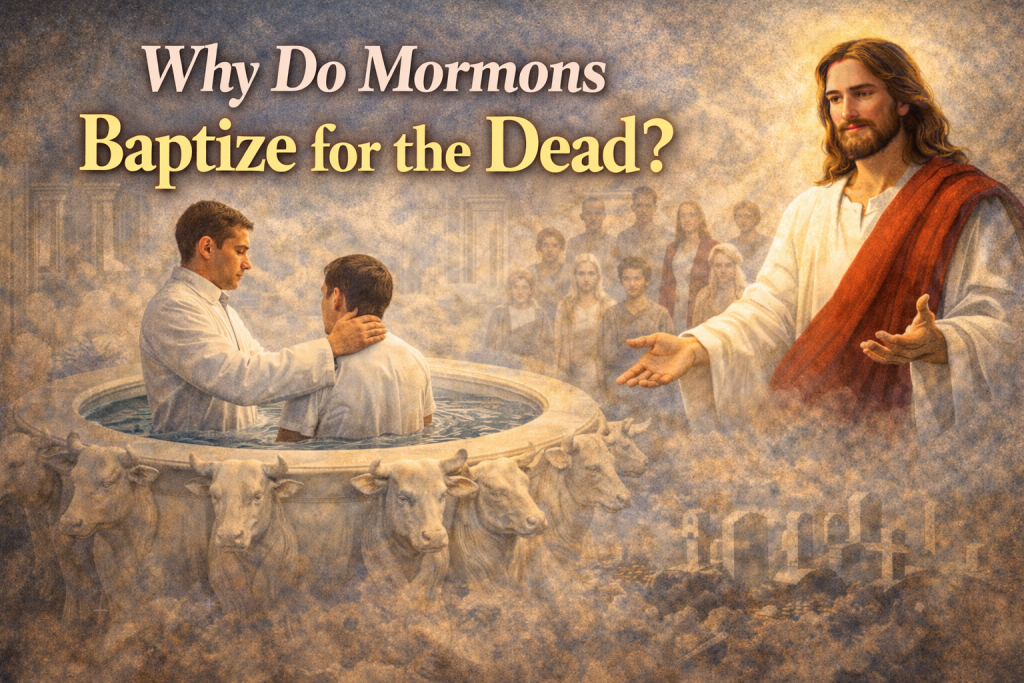
  • Why Do Mormons Baptize for the Dead?

    Why Do Mormons Baptize for the Dead?

    One of the most common questions people ask about Latter-day Saints is why they perform baptisms for the dead. At the heart of this belief is a deep trust in God’s justice and mercy. Latter-day Saints believe that a loving God would never deny His children a fair opportunity to accept Jesus Christ and receive essential ordinances like baptism.

    Baptism for the dead reflects the belief that God’s plan includes everyone—those who lived with access to the gospel and those who did not—while always preserving individual choice.

    The Need for Baptism

    Latter-day Saints believe baptism is required for salvation, as taught by Jesus Christ. At the same time, they recognize that millions of people lived and died without ever hearing about Christ or having the opportunity to be baptized.

    Baptism for the dead provides a way for these individuals to receive that opportunity after death, without removing their agency or forcing belief.

    God’s Justice and Mercy

    This doctrine reflects a balance between God’s justice and His mercy. God does not condemn people for circumstances beyond their control, and He also does not remove baptism as a commandment given by Jesus Christ.

    Choice After Death

    Although the ordinance is performed on earth, Latter-day Saints believe those who have died remain free to choose whether or not to accept the baptism performed on their behalf in the spirit world.

    Biblical Foundations for Baptism for the Dead

    Latter-day Saints find support for this practice in the Bible. The Apostle Paul referred to baptism for the dead when he asked why people would be baptized for the dead if the dead do not rise, suggesting that the practice was known among early Christians.

    Latter-day Saints believe this passage points to an early Christian understanding of proxy ordinances.

    Early Christian Practice

    Although the Bible does not provide many details, Latter-day Saints see Paul’s statement as evidence that the principle of baptism for the dead was practiced rather than invented in modern times.

    Temple Ordinances and Authority

    Baptism for the dead is performed in Latter-day Saint temples by living individuals who act as proxies. These ordinances are carried out with reverence and proper priesthood authority.

    Temples are considered sacred places where eternal ordinances are performed for both the living and the dead.

    The Importance of Priesthood Authority

    Latter-day Saints believe ordinances must be performed with authority restored by God through Joseph Smith. This authority ensures that ordinances are recognized by God.

    A Sacred Responsibility

    Participating in baptisms for the dead is seen as an act of love and service—especially toward ancestors and family members—reflecting Christlike compassion.

    The Central Role of Jesus Christ

    Jesus Christ is central to the doctrine of baptism for the dead. Through His atonement, death is overcome, and all people will be resurrected and judged with perfect fairness.

    Without Christ’s victory over death, baptism for the dead would have no saving power or purpose.

    Common Misunderstandings

    Some believe Latter-day Saints think they can force deceased individuals into their faith. In reality, no one is compelled to accept baptism performed on their behalf.

    Others believe this doctrine minimizes the importance of faith in mortal life. Latter-day Saints believe mortal choices remain deeply significant and meaningful.

    Why This Belief Matters

    Baptism for the dead reflects God’s universal love and fairness. It reassures believers that God provides opportunities for salvation to all His children, regardless of time, place, or circumstance.

    This doctrine also strengthens family connections and encourages compassion, service, and respect for individual agency.

    An Invitation

    Latter-day Saints invite others to learn more about God’s plan of salvation and the role of Jesus Christ in offering hope to all humanity—both living and dead.

    Sources

    The Church of Jesus Christ of Latter-day Saints – Gospel Topics: Baptism for the Dead
    https://www.churchofjesuschrist.org

    Gospel Topics Essays – Salvation for the Dead
    https://www.churchofjesuschrist.org/study/manual/gospel-topics-essays

    Doctrine and Covenants Central
    https://doctrineandcovenantscentral.org

    Scripture Central
    https://scripturecentral.org

  • Why Do Mormons Do Temple Sealings?

    Why Do Mormons Do Temple Sealings?

    For many people, the idea that families can remain together forever is deeply comforting—but also unfamiliar. In most Christian traditions, marriage is understood as a relationship that lasts only during mortal life. Latter-day Saints, however, believe something different. They believe that through temple sealings, family relationships can continue beyond death and into eternity.

    Temple sealings are one of the most distinctive beliefs of The Church of Jesus Christ of Latter-day Saints. They reflect a hopeful and expansive view of God’s plan—one in which love, family, and relationships are not meant to end at the grave. For Latter-day Saints, sealings express God’s desire to unite His children eternally through Jesus Christ.

    This belief is not based on sentiment alone. It is rooted in scripture, modern revelation, and a specific understanding of Christ’s power over sin and death. To understand why Mormons do temple sealings, it is necessary to explore how they understand authority, covenants, salvation, family, agency, and the central role of Jesus Christ.

    What Is a Temple Sealing?

    A temple sealing is a sacred ordinance performed in a Latter-day Saint temple by priesthood authority. Through this ordinance, a husband and wife are sealed together as an eternal family unit. Children may also be sealed to their parents, creating an eternal family bond.

    Unlike civil marriages, which are valid only “until death,” temple sealings are believed to endure beyond mortal life. Latter-day Saints believe these relationships continue after resurrection, provided individuals remain faithful to the covenants they make with God.

    A sealing is not merely symbolic. It is understood as a covenant—an agreement between God and individuals—made possible through divine authority restored by Jesus Christ.

    Authority to Seal

    Latter-day Saints believe that Jesus Christ granted sealing authority to His apostles during His mortal ministry. This authority allowed them to perform actions on earth that would be recognized in heaven.

    They believe this authority was lost after the deaths of the apostles and later restored through modern revelation. Without this authority, eternal sealings would not be possible.

    Binding on Earth and in Heaven

    This belief is based on Jesus’ statement that what is bound on earth can be bound in heaven. Latter-day Saints understand this to mean that God can authorize ordinances performed on earth to have eternal effect.

    Temple sealings are believed to operate under this principle. They are not human contracts but divine covenants recognized by God.

    The Importance of Covenants

    Covenants are central to Latter-day Saint belief. A covenant is a sacred promise between God and an individual, involving commitment, responsibility, and divine promises.

    Temple sealings are covenant-based. They are not automatic guarantees of eternal family life, but conditional relationships that depend on faithfulness, repentance, and reliance on Jesus Christ.

    Latter-day Saints believe covenants help guide behavior, strengthen relationships, and align lives with God’s will. Sealings, in particular, emphasize commitment, sacrifice, forgiveness, and long-term devotion within families.

    Biblical Foundations for Temple Sealings

    Latter-day Saints believe temple sealings are consistent with biblical teachings, even if the full doctrine is not explicitly detailed in the Bible.

    Scripture teaches that God has power over death and that relationships can transcend mortal boundaries. Jesus Christ’s resurrection demonstrates that death does not have final authority.

    The Bible also emphasizes covenant relationships. God consistently works through covenants—agreements that bind His people to Him across generations.

    Elijah’s Role

    One of the strongest biblical foundations for temple sealings comes from prophecy concerning Elijah. The Bible foretells that Elijah would return before the “great and dreadful day of the Lord” to turn the hearts of parents to their children and children to their parents.

    Latter-day Saints believe this prophecy refers to the restoration of sealing authority. They believe Elijah appeared in modern times to restore this authority, making eternal family relationships possible again.

    Turning of Hearts

    This “turning of hearts” is understood not merely as emotional reconciliation, but as covenant connection. Temple sealings bind families across generations, fulfilling this prophecy in a literal and eternal sense.

    Sealings and Jesus Christ

    Jesus Christ is the foundation of temple sealings. Latter-day Saints believe that without His atonement and resurrection, eternal relationships would be impossible.

    Death separates families. Christ overcomes death.

    Through His resurrection, Jesus Christ made it possible for relationships to continue beyond mortality. Sealings are effective because of His power—not because of human effort.

    Sealings do not replace Christ; they depend entirely on Him.

    Covenants and Faithfulness

    Temple sealings are conditional upon faithfulness. Latter-day Saints believe eternal family relationships are not automatic or guaranteed regardless of behavior.

    Faith in Jesus Christ, repentance, obedience, and continued commitment to covenants matter deeply. Sealings invite individuals to live Christlike lives within family relationships.

    Grace and Mercy

    Latter-day Saints believe God’s grace makes allowance for human weakness. Eternal families are not built on perfection, but on repentance, forgiveness, and growth.

    God’s mercy works alongside justice, honoring agency while offering opportunity for healing and reconciliation.

    Sealings for the Living

    Temple sealings are often performed for living couples and families. When a man and woman are sealed in the temple, they commit not only to each other, but to God.

    This covenant encourages long-term commitment. Marriage is viewed not as a temporary arrangement, but as an eternal partnership designed to foster growth, service, and mutual support.

    Children born to sealed parents are believed to be born into the covenant, automatically connected to their parents eternally.

    Sealings for the Dead

    Temple sealings are also performed for deceased ancestors. Just as baptisms can be performed by proxy, sealings can extend eternal family relationships to those who lived and died without the opportunity to receive these ordinances in mortality.

    Latter-day Saints believe these ordinances do not force acceptance. Individuals who have died retain agency and may choose whether to accept or reject the sealing in the spirit world.

    This belief reflects a God who is fair, loving, and respectful of individual choice.

    The Role of Agency

    Agency is central to Latter-day Saint belief. Temple sealings do not override personal choice.

    Even sealed relationships depend on individual willingness to accept God’s plan. Eternal families are built through love, faith, and shared commitment—not compulsion.

    This emphasis on agency preserves moral responsibility and respects individual dignity.

    Sealings and Eternal Families

    The doctrine of eternal families shapes how Latter-day Saints view marriage, parenting, and relationships.

    Families are seen as central to God’s plan. Home life becomes a place of spiritual growth, service, and discipleship.

    This belief encourages patience, forgiveness, and long-term thinking. Challenges are viewed through an eternal lens rather than a temporary one.

    Comfort in Times of Loss

    One of the most meaningful aspects of temple sealings is the comfort they provide in times of death and separation.

    Latter-day Saints believe death does not permanently sever family relationships. Sealings offer hope that loved ones will be reunited and relationships restored.

    This belief provides emotional and spiritual comfort, especially during grief.

    Common Misunderstandings

    A common misunderstanding is that sealings guarantee eternal family relationships regardless of behavior. Latter-day Saints believe faithfulness and agency matter deeply.

    Another misunderstanding is that sealings diminish individual salvation. In reality, Latter-day Saints believe personal faith in Jesus Christ is essential. Sealings do not replace individual accountability.

    Some assume sealings are exclusive or elitist. Latter-day Saints believe they are inclusive, extending opportunity to all people through proxy ordinances.

    Sealings and Christian Faith

    Temple sealings are sometimes misunderstood as being separate from Christianity. Latter-day Saints believe the opposite.

    They see sealings as an extension of Christ’s saving work. Jesus Christ is at the center of every covenant, ordinance, and eternal promise.

    Rather than competing with Christ, sealings testify of His power to save, unite, and redeem.

    Why This Belief Matters

    Temple sealings matter because they offer a vision of eternity grounded in love, responsibility, and hope.

    They encourage commitment within families, inspire reconciliation, and provide motivation to live Christlike lives.

    For Latter-day Saints, sealings reinforce the belief that relationships matter eternally and that God’s plan is deeply relational.

    A Broader View of Salvation

    This doctrine expands the understanding of salvation beyond individual reward. Salvation is not only about personal redemption, but about eternal relationships.

    God’s plan is communal, familial, and interconnected.

    Temple sealings reflect this expansive vision.

    An Invitation

    Latter-day Saints invite others to learn about eternal families, study the teachings of Jesus Christ, and seek understanding through prayer.

    They believe God reveals truth to sincere seekers and that His plan is one of hope, healing, and eternal connection.

    Sources

    The Church of Jesus Christ of Latter-day Saints – Gospel Topics: Sealing
    https://www.churchofjesuschrist.org

    Gospel Topics Essays – Marriage and Family
    https://www.churchofjesuschrist.org/study/manual/gospel-topics-essays

    Doctrine and Covenants Central
    https://doctrineandcovenantscentral.org

    Scripture Central
    https://scripturecentral.org

  • Why Do Mormons Do Proxy Ordinances?

    Why Do Mormons Do Proxy Ordinances?

    Among the many beliefs of The Church of Jesus Christ of Latter-day Saints, one that often raises sincere questions is the practice of proxy ordinances. Why would living people perform religious ordinances on behalf of those who have died? What purpose does this serve? And how does this belief fit within Christianity?

    For Latter-day Saints, proxy ordinances are rooted in a deeply held conviction that God desires the salvation of all His children. They believe that certain ordinances are required for salvation, but they also recognize a reality that spans human history: countless people lived and died without ever having the opportunity to hear of Jesus Christ or receive those ordinances.

    Rather than believing that God condemns people for circumstances beyond their control, Latter-day Saints believe God has provided a loving and fair solution. Proxy ordinances extend opportunity without removing agency. They do not force belief, membership, or salvation. Instead, they offer a choice—one that each individual remains free to accept or reject.

    Understanding why Mormons do proxy ordinances requires understanding how they view justice, mercy, agency, salvation, the spirit world, and above all, the central role of Jesus Christ in God’s plan.

    God’s Desire to Save All His Children

    At the heart of proxy ordinances is a belief in God’s character. Latter-day Saints believe God is perfectly just, perfectly merciful, and perfectly loving. These attributes are not in conflict; they work together.

    Justice requires that God’s laws apply equally to all. Mercy ensures that no one is punished for circumstances they did not choose. Love motivates God to provide opportunity, guidance, and redemption for every soul.

    Latter-day Saints believe salvation is not meant to be exclusive or dependent on birthplace, time period, or access to information. God’s plan, they believe, accounts for every human life.

    Proxy ordinances are one way God extends salvation universally while preserving moral responsibility and personal choice.

    What Are Proxy Ordinances?

    Proxy ordinances are sacred rites performed by living individuals on behalf of those who have died. These ordinances include baptism, confirmation, endowment, and sealing ordinances.

    In each case, a living person temporarily acts as a representative for a deceased individual. The ordinance is performed using the same form and authority as it would be for a living person.

    The key distinction is this: the ordinance is offered, not imposed. Latter-day Saints believe the deceased individual retains full agency to accept or reject the ordinance in the spirit world.

    Acting as a Representative

    The proxy does not receive the ordinance for themselves. They do not gain personal spiritual credit, status, or benefit from acting as a proxy.

    Instead, they stand in place of another person so the ordinance can be properly performed according to God’s requirements. This act is viewed as one of service, humility, and compassion.

    Many Latter-day Saints describe proxy work as deeply meaningful because it reflects selfless love rather than personal reward.

    Choice Is Always Preserved

    A foundational belief of Latter-day Saints is agency—the ability to choose. Proxy ordinances do not override this principle.

    No ordinance is effective unless the individual for whom it is performed willingly accepts it. Acceptance occurs in the spirit world, not on earth. God does not compel belief or obedience.

    This ensures that proxy ordinances extend opportunity without violating freedom of choice.

    Why Ordinances Matter

    To understand proxy ordinances, it is important to understand why ordinances matter at all in Latter-day Saint belief.

    Latter-day Saints believe ordinances are outward expressions of inward faith. They are not empty rituals, but sacred acts instituted by Jesus Christ. Baptism, for example, symbolizes spiritual rebirth and covenant commitment.

    Jesus Himself was baptized and commanded His followers to do the same. Latter-day Saints believe ordinances are required not because God needs them, but because humans need them to learn obedience, humility, and trust in Christ.

    If ordinances are required for salvation, then God must provide a way for everyone to receive them fairly.

    The Problem of Unequal Opportunity

    Human history is marked by inequality of opportunity. Entire civilizations lived and died without exposure to Christianity. Even after Jesus Christ’s ministry, centuries passed before the gospel spread widely.

    Latter-day Saints believe God foresaw this and prepared a solution. Proxy ordinances ensure that salvation is not limited by geography, time, or culture.

    This belief challenges the idea that salvation is a matter of luck. Instead, it emphasizes informed choice.

    Biblical Foundations for Proxy Ordinances

    Latter-day Saints believe proxy ordinances are not a modern invention. They find biblical support, particularly in the New Testament.

    The Apostle Paul referred to baptism for the dead when he asked why people would be baptized for the dead if the dead do not rise. Paul does not condemn the practice or explain it away. He treats it as something his audience already understands.

    Latter-day Saints believe this reference indicates that proxy ordinances existed among early Christians.

    Vicarious Service in Scripture

    Beyond this specific reference, Latter-day Saints see proxy ordinances as part of a broader scriptural pattern of vicarious service.

    Jesus Christ Himself acted vicariously. He suffered and died for all humanity, taking upon Himself sins He did not commit so others could be saved.

    Proxy ordinances follow this same pattern of selfless service. A living person stands in place of another, not for personal gain, but to offer opportunity.

    Loss and Restoration of Priesthood Authority

    Latter-day Saints believe that after the deaths of Jesus’ apostles, priesthood authority and many sacred practices were lost over time.

    They believe proxy ordinances were among the doctrines that faded as the Church moved away from its original organization. Through modern revelation, these doctrines and authorities were restored.

    This restoration explains why proxy ordinances are practiced today but not widely found in other Christian traditions.

    The Role of Temples

    Proxy ordinances are performed in temples because of their eternal significance. Temples are not ordinary places of worship. They are considered houses of the Lord, set apart for sacred acts that bind heaven and earth.

    The temple environment emphasizes reverence, preparation, and order. Everything about temple worship—from clothing to language to atmosphere—is designed to encourage spiritual focus.

    Sacred Records and Order

    Latter-day Saints believe ordinances are carefully recorded to ensure accuracy and respect for each individual’s identity. This reflects the belief that salvation is personal and specific, not abstract.

    Names, dates, and relationships matter because people matter.

    Service for the Dead

    Many Latter-day Saints view proxy ordinances as acts of love toward ancestors and others who have passed away. This service strengthens family connections and fosters gratitude for those who came before.

    Proxy work is often described as one of the most Christlike forms of service because it expects nothing in return.

    The Spirit World

    Latter-day Saints believe that after death, individuals enter the spirit world, where they continue to exist consciously. Learning, growth, and choice continue.

    Those who did not have the opportunity to learn about Jesus Christ in mortality may do so there. Proxy ordinances provide the necessary physical ordinances so individuals can fully act on that knowledge.

    This belief emphasizes that God’s work does not end at death.

    Role of Jesus Christ

    Jesus Christ is the foundation of proxy ordinances. Without His atonement and resurrection, no ordinance—living or proxy—would have saving power.

    Christ overcame sin and death, making salvation possible for all. Proxy ordinances do not bypass Christ; they rely entirely on Him.

    Latter-day Saints believe this doctrine magnifies Christ’s role as Savior of all humanity, not only those who lived in Christian societies.

    Proxy Ordinances and Grace

    Some assume proxy ordinances diminish grace. Latter-day Saints believe the opposite.

    Grace makes salvation possible. Ordinances provide a way for individuals to accept that grace knowingly and willingly.

    Salvation remains a gift of Jesus Christ. Proxy ordinances simply ensure everyone has access to that gift.

    Mortal Life Still Matters

    Another misunderstanding is that proxy ordinances make mortal life unimportant. Latter-day Saints believe choices made in mortality remain extremely significant.

    What people choose in this life shapes character, desires, and readiness. Proxy ordinances do not erase mortal responsibility; they extend opportunity.

    Common Misunderstandings

    One common misunderstanding is that proxy ordinances force conversion. This is not true. Acceptance is voluntary and based on agency.

    Another misunderstanding is that Latter-day Saints believe they can save others without their consent. In reality, God honors individual choice at every stage.

    Some also believe proxy ordinances are disrespectful to other faiths. Latter-day Saints see them as offers, not impositions.

    Why This Belief Matters

    Proxy ordinances reveal a God who is inclusive, thoughtful, and fair. They demonstrate that no life is forgotten and no soul is beyond God’s reach.

    This belief encourages compassion, humility, and service. It motivates family history work and strengthens connections across generations.

    A Broader Vision of Salvation

    Proxy ordinances expand the understanding of salvation beyond mortal boundaries. They show that God’s plan is vast, patient, and deeply personal.

    Salvation is not rushed or careless. It is deliberate, loving, and respectful of agency.

    Personal Impact on Believers

    For many Latter-day Saints, participating in proxy ordinances is spiritually transformative. It fosters gratitude, empathy, and awareness of humanity’s shared destiny.

    It reminds believers that they are part of something larger than themselves.

    An Invitation

    Latter-day Saints invite all people to learn about proxy ordinances, study the teachings of Jesus Christ, and seek understanding through prayer.

    They believe sincere seekers will find a God who is just, merciful, and deeply invested in every human soul.

    Sources

    The Church of Jesus Christ of Latter-day Saints – Gospel Topics: Endowment
    https://www.churchofjesuschrist.org

    Gospel Topics Essays – Temple Worship
    https://www.churchofjesuschrist.org/study/manual/gospel-topics-essays

    Doctrine and Covenants Central
    https://doctrineandcovenantscentral.org

    Scripture Central
    https://scripturecentral.org

  • Why Do Mormons Pay Tithing?

    Why Do Mormons Pay Tithing?

    For many people encountering Latter-day Saints for the first time, the practice of tithing raises immediate curiosity. Why would someone willingly give ten percent of their income to a church? Is it a requirement, a cultural expectation, or a form of financial pressure? In a world where money is often associated with security, independence, and personal freedom, voluntarily parting with a portion of one’s income can seem counterintuitive.

    For members of The Church of Jesus Christ of Latter-day Saints, however, tithing is not primarily about money. It is about priorities, trust, and relationship with God. Paying tithing is understood as a commandment that teaches faith, gratitude, and reliance on divine guidance rather than solely on personal resources.

    Rather than being viewed as a financial obligation imposed by an institution, tithing is seen as a spiritual practice that helps individuals place God at the center of their lives. It is a deliberate reminder that material blessings are temporary, while spiritual commitments have eternal significance.

    For Latter-day Saints, paying tithing represents trust in God’s promises and a willingness to participate in building His work on earth. Understanding this practice requires looking beyond numbers and finances to explore faith, discipline, generosity, and accountability.

    What Is Tithing?

    Tithing is defined in Latter-day Saint teaching as giving one-tenth of one’s income to God through His Church. This principle is not viewed as a modern invention but as a commandment with ancient roots that spans thousands of years of religious history.

    Latter-day Saints believe that tithing was practiced by faithful believers in biblical times and was reaffirmed through modern revelation. This continuity connects present-day practice with scriptural tradition, reinforcing the belief that tithing is a timeless principle rather than a temporary policy.

    Funds collected through tithing are used to support the operation of the Church worldwide. This includes maintaining meetinghouses and temples, funding missionary work, supporting educational institutions, and providing humanitarian aid. Importantly, the Church operates without a paid local clergy, making tithing central to its ability to function.

    A Biblical Principle

    Tithing appears throughout scripture as an act of devotion and acknowledgment of God’s sovereignty. Biblical figures offered a portion of their increase as a symbol of gratitude and obedience.

    For Latter-day Saints, these scriptural examples establish tithing as an expression of faith rather than a transactional exchange. Giving a portion back to God is seen as recognizing Him as the source of all blessings.

    This scriptural foundation helps members see tithing as part of a long-standing covenantal relationship between God and His people.

    Modern Application

    While rooted in ancient scripture, tithing is believed to continue today through modern revelation and living prophets. Latter-day Saints believe God still guides His Church and reaffirms eternal principles for contemporary circumstances.

    This belief allows tithing to remain relevant in a modern economic world while maintaining its spiritual purpose. The practice adapts to different cultures and economies while preserving its core principle of sacrifice and faith.

    Tithing as an Act of Faith

    One of the most significant reasons Latter-day Saints pay tithing is that it is viewed as an act of faith. Giving ten percent of income often requires trust, especially during times of financial strain or uncertainty.

    Paying tithing can feel challenging when resources are limited. For this reason, it is often described as a test of faith and obedience rather than a convenient practice. Members are encouraged to trust that God understands their needs and will provide in ways that may not always be immediate or obvious.

    This practice helps believers develop spiritual discipline, humility, and reliance on God rather than solely on personal effort or financial security.

    Trust in God

    Tithing is a tangible expression of trust in God’s care and provision. By choosing to pay tithing, members symbolically place God before material concerns.

    This act reinforces the belief that God is aware of individual circumstances and capable of sustaining those who seek to follow Him. Trust developed through tithing often extends into other areas of life, strengthening overall faith.

    Faith Before Fear

    Latter-day Saints are encouraged to prioritize faith over financial anxiety. While careful budgeting and responsibility are valued, fear is not meant to guide decisions about tithing.

    This mindset helps individuals confront fear of scarcity and replace it with confidence in divine care. Over time, paying tithing becomes less about calculation and more about conviction.

    Blessings Associated With Tithing

    Latter-day Saints believe God promises blessings to those who faithfully pay tithing. However, these blessings are not understood as guaranteed financial returns or material wealth.

    Blessings associated with tithing are often spiritual, emotional, or relational in nature. Members frequently describe feelings of peace, clarity, and reassurance that come from faithful obedience.

    This understanding helps prevent tithing from becoming transactional or conditional.

    Spiritual Prosperity

    Spiritual prosperity is often cited as one of the most consistent blessings of tithing. Members report increased faith, gratitude, and trust in God.

    Other blessings may include improved decision-making, a sense of purpose, and emotional stability. These outcomes are seen as evidence of God’s involvement in daily life rather than financial gain.

    Supporting the Work of the Church

    Tithing enables the Church to function on a global scale. Without relying on a professional clergy, the Church depends on voluntary service supported by tithing funds.

    Members view their contributions as direct participation in God’s work. Paying tithing allows individuals to support missionary efforts, temple construction, educational initiatives, and humanitarian aid worldwide.

    This collective effort fosters unity and shared responsibility among members.

    Global Impact

    Tithing supports a worldwide church operating in diverse cultural and economic contexts. Funds help build and maintain places of worship, support disaster relief, and provide assistance to those in need.

    Members often feel a sense of connection to the global Church, knowing their contributions help others far beyond their local congregation.

    Accountability and Personal Choice

    Latter-day Saints are encouraged to evaluate their own honesty in paying tithing. The Church does not audit individual finances or enforce compliance through punishment.

    Instead, tithing is framed as a matter of personal integrity and conscience. Members periodically declare whether they consider themselves full tithe payers, emphasizing self-accountability rather than external enforcement.

    This approach reinforces agency and sincerity in religious practice.

    Personal Commitment

    Paying tithing reflects an individual’s relationship with God. It is a personal commitment that varies in meaning and experience from person to person.

    Some view tithing as a spiritual milestone, others as a steady habit of faith. In all cases, it is meant to be voluntary and heartfelt rather than coerced.

    Compassion and Financial Realities

    The Church recognizes that members face a wide range of financial circumstances. Leaders emphasize that God understands individual challenges and that compassion should guide teaching about tithing.

    Members experiencing financial hardship are not condemned. Instead, the Church provides assistance programs, counseling, and support to help individuals and families meet basic needs.

    This compassionate approach reinforces the belief that tithing is about faith, not financial strain.

    God Knows Individual Needs

    Latter-day Saints believe God is aware of each person’s situation. Tithing is taught with empathy, recognizing that obedience looks different across life stages and circumstances.

    This belief helps members approach tithing with sincerity rather than guilt or fear.

    Common Misunderstandings

    A common misunderstanding is that tithing is payment for blessings. Latter-day Saints reject this idea, believing blessings come through God’s grace, not financial transactions.

    Another misconception is that tithing exists to enrich the Church. Members view it as supporting sacred purposes rather than accumulating wealth.

    These misunderstandings often arise when tithing is viewed through a purely financial lens rather than a spiritual one.

    Why This Belief Matters

    Paying tithing shapes spiritual priorities and reinforces trust in God. It teaches generosity, gratitude, and reliance on divine guidance rather than material security.

    For believers, tithing is a tangible expression of discipleship. It reflects confidence in God’s promises and commitment to living a faith-centered life.

    Ultimately, tithing matters because it transforms how individuals view money, responsibility, and trust. It shifts focus from possession to purpose and from fear to faith.

    Sources

    The Church of Jesus Christ of Latter-day Saints – Gospel Topics: Tithing
    https://www.churchofjesuschrist.org

    Doctrine and Covenants Central – Law of Tithing
    https://doctrineandcovenantscentral.org

    Church News – Tithing and Faith
    https://www.thechurchnews.com

    Scripture Central
    https://scripturecentral.org

  • Why Are Mormons Called Mormons?

    Why Are Mormons Called Mormons?

    Few religious nicknames are as widely recognized as the word “Mormon.” For many people around the world, the term immediately brings to mind missionaries, family-centered values, or a distinct American-born faith. Yet the nickname also raises questions. Where did it come from? Why did it become so common? And if members of the Church emphasize Jesus Christ, why are they associated with a name that does not explicitly reference Him?

    Latter-day Saints are often called “Mormons” because of their belief in the Book of Mormon, a volume of scripture they regard as another testament of Jesus Christ. The nickname did not originate from within the Church itself, but emerged in the early nineteenth century as a label used by outsiders trying to identify a new and unfamiliar religious movement.

    Over time, “Mormon” became deeply embedded in public language, media, and culture. Even as the Church continued to use its full and formal name, the nickname persisted as a convenient shorthand. Today, understanding why Latter-day Saints are called “Mormons” requires examining history, language, identity, and the Church’s ongoing effort to clarify what it believes and how it wishes to be understood.

    Origin of the Term “Mormon”

    The word “Mormon” comes directly from the Book of Mormon, a book of scripture that Latter-day Saints believe is an ancient record of God’s dealings with people in the Americas. According to Church belief, the book was translated by Joseph Smith in the 1820s and published in 1830.

    Early observers and critics of the new church quickly associated its members with this additional scripture. Because belief in the Book of Mormon set them apart from other Christian groups, outsiders began referring to Church members as “Mormons.”

    The term was not originally chosen by Church leaders as an official designation. Instead, it emerged organically as a way for others to label a growing and unfamiliar religious community.

    A Name Given by Outsiders

    In its earliest usage, “Mormon” functioned as an external label rather than a self-chosen identity. Newspapers, critics, and neighbors used the term to distinguish members of the Church from other Christian groups.

    In many cases, the nickname carried negative or mocking connotations, especially during periods of persecution and social tension in the nineteenth century. Being called “Mormon” often signaled suspicion, misunderstanding, or hostility.

    Despite its origins, the term endured because it was short, memorable, and easy to use.

    Linked to Scripture

    The nickname directly reflects belief in the Book of Mormon. Outsiders saw the book as the most distinctive feature of the new faith and used it as the basis for naming its followers.

    Importantly, Latter-day Saints believe the Book of Mormon testifies of Jesus Christ and complements the Bible. However, early critics often overlooked this Christ-centered focus and reduced the faith to its most unusual element in their eyes.

    This simplification played a major role in how the nickname took hold.

    Historical Use of the Nickname

    Throughout the nineteenth and twentieth centuries, the word “Mormon” became increasingly common in public discourse. It appeared in newspapers, court documents, government records, academic writing, and everyday conversation.

    As the Church grew and spread geographically, the nickname traveled with it. Even as persecution declined and public perception shifted, the term remained a familiar identifier.

    Over time, many Church members began using the word themselves, especially in informal contexts.

    Cultural Recognition

    By the late nineteenth century, “Mormon” was widely recognized as a cultural and religious identifier. It became shorthand for describing a distinct community with recognizable beliefs, practices, and social patterns.

    This widespread recognition meant that the term was often used without malicious intent. For many people, “Mormon” simply became the easiest way to refer to Church members.

    As a result, the nickname lost some of its original hostility and took on a more neutral or descriptive tone in many contexts.

    Informal Identity

    Many Latter-day Saints used the term “Mormon” casually, especially when speaking with people unfamiliar with the Church’s full name. It functioned as a convenient label rather than a replacement for official identity.

    Importantly, this informal usage did not mean the Church abandoned its official name. The formal name continued to be used in worship, legal documents, and official communication.

    The coexistence of an official name and a popular nickname became a defining feature of the Church’s public identity.

    The Official Name of the Church

    The official name of the Church is The Church of Jesus Christ of Latter-day Saints. This name was given by revelation, according to Church belief, and is considered doctrinally significant.

    Church leaders emphasize this name because it explicitly centers Jesus Christ. The name communicates core beliefs: that the Church is Christian, that it follows Jesus Christ, and that it sees itself as a restoration of His original church in the latter days.

    Using the full name helps clarify identity and belief in ways that the nickname “Mormon” does not.

    Christ-Centered Identity

    For Latter-day Saints, Jesus Christ is the foundation of doctrine, worship, and daily religious life. Prayers are offered in His name, scriptures testify of Him, and ordinances are performed through His authority.

    Church leaders have expressed concern that the nickname “Mormon,” while historically familiar, does not clearly communicate this Christ-centered focus.

    Emphasizing the full name helps correct misunderstandings and reinforces what members consider the heart of their faith.

    Recent Emphasis on Proper Naming

    In recent years, Church leaders have placed renewed emphasis on using the full name of the Church rather than nicknames. This effort reflects a desire for greater accuracy, clarity, and reverence.

    The change is not about rewriting history or condemning past usage. Rather, it represents an intentional shift in how the Church presents itself to the world.

    Leaders have explained that names matter because they shape understanding.

    Emphasis on Accuracy

    Using the full name reduces confusion about beliefs. It helps distinguish the Church from other movements and clarifies that its teachings center on Jesus Christ.

    Accuracy in naming also respects the Church’s self-identified religious identity rather than relying on labels created by outsiders.

    This emphasis reflects a broader effort to communicate beliefs more clearly in a global and digital age.

    Respect for Belief

    For many Latter-day Saints, being called by the Church’s full name feels more respectful and representative of their faith.

    Using accurate names acknowledges the importance of religious self-definition. It signals willingness to understand a community on its own terms rather than through inherited labels.

    This does not mean that individuals react negatively to the word “Mormon,” but that many appreciate greater precision.

    Is “Mormon” Offensive?

    Most Latter-day Saints do not consider the word “Mormon” offensive. For generations, it was commonly used by members themselves, and many still feel culturally comfortable with it.

    However, preferences vary. Some members strongly prefer being called “Latter-day Saints” or referred to by the Church’s full name, while others are less concerned.

    Context, tone, and intent often matter more than the word itself.

    Individual Preference

    Cultural background, age, and personal experience influence how individuals feel about the nickname. In some regions, “Mormon” is still widely used and understood without negative intent.

    In other contexts, members may prefer language that more clearly reflects their Christ-centered beliefs.

    Respectful communication involves listening to how individuals and communities describe themselves.

    Common Misunderstandings

    One common misunderstanding is that “Mormon” refers to a person named Mormon. While Mormon is indeed a prophet in the Book of Mormon, the Church is not named after him, nor do members worship him.

    Another misunderstanding is that belief in the Book of Mormon replaces belief in the Bible or in Jesus Christ. Latter-day Saints emphasize that the Book of Mormon complements the Bible and testifies of Christ.

    Some also assume that rejecting the nickname means rejecting history. In reality, the Church acknowledges its past while choosing language it feels best represents its beliefs today.

    Why This Matters

    Understanding why Latter-day Saints are called “Mormons” helps clarify issues of identity, history, and belief. Names influence how religions are perceived, discussed, and understood by outsiders.

    For Latter-day Saints, accurate naming reflects devotion to Jesus Christ and respect for their religious self-understanding. It also helps correct misconceptions that have persisted for generations.

    Ultimately, the discussion is not about enforcing language, but about fostering understanding. When people understand where the nickname came from and why the Church emphasizes its full name, conversations about belief become more informed, respectful, and meaningful.

    Sources

    The Church of Jesus Christ of Latter-day Saints – Name of the Church
    https://www.churchofjesuschrist.org

    Church News – Understanding the Church’s Name
    https://www.thechurchnews.com

    Scripture Central – Book of Mormon Background
    https://scripturecentral.org