Author: admin

  • History of Initiatory Ordinances

    History of Initiatory Ordinances

    What Is the History of Initiatory Ordinances in Mormon Temples?

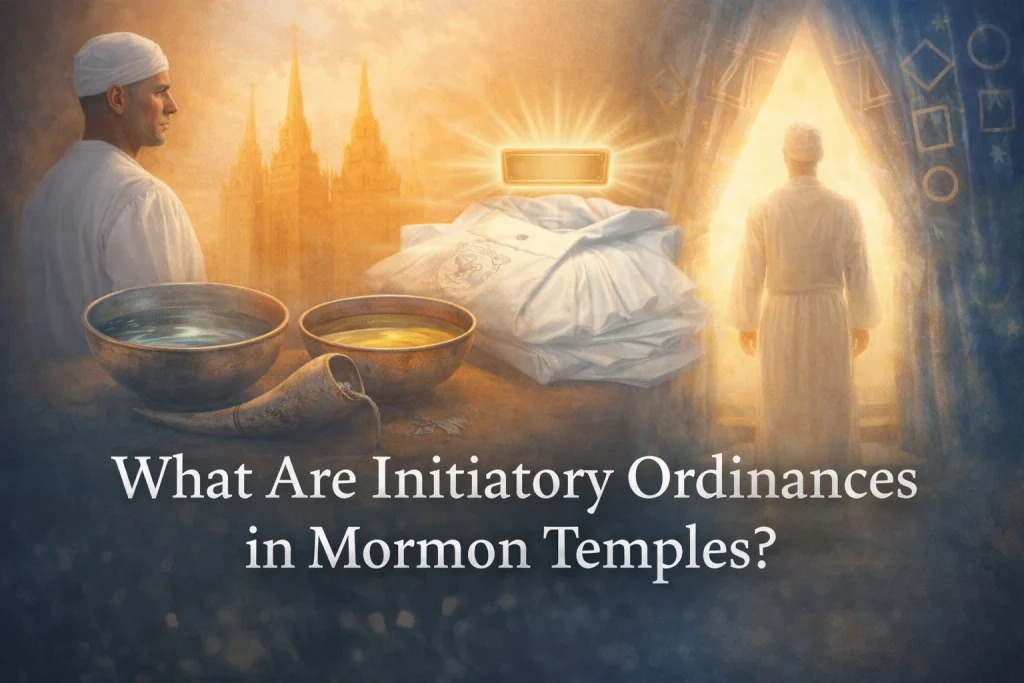
    Initiatory ordinances in Mormon temples come from ancient religious patterns that predate Christianity and reach back to the earliest biblical accounts. These rites involve washing, anointing, sacred clothing, and the giving of a new name. Latter-day Saints believe these practices were originally part of temple worship given to Adam and Eve and later preserved in Israelite priesthood rituals. Over time, many of these temple patterns were lost or altered. The Church of Jesus Christ of Latter-day Saints teaches that initiatory ordinances were restored through modern revelation, reconnecting contemporary worship with ancient covenant traditions centered on preparation to enter the presence of God.
    Doctrine Explained

    Latter-day Saints believe God has used temples and ritual worship consistently throughout human history. Initiatory ordinances are understood as part of that long pattern.

    In temple settings, initiatory ordinances historically marked transitions. They prepared individuals to move from one sacred state to another. In scripture, this transition is often described as approaching holy space or assuming priestly responsibility.

    Rather than seeing initiatory ordinances as symbolic inventions, Latter-day Saints view them as restored practices that once existed in earlier dispensations. They teach preparation, sanctification, and covenant identity using physical actions that reflect spiritual realities.

    The modern form of initiatory ordinances is believed to preserve essential elements while adapting to contemporary circumstances, consistent with how God has always revealed worship practices according to time and place.

    Scriptural and Official Sources

    The earliest scriptural foundation appears in the creation narrative. After the Fall, God clothed Adam and Eve before they entered the fallen world. Latter-day Saints interpret this act as covenantal and instructional rather than merely practical. This account is found in Genesis 3:21.

    In the law of Moses, priests were washed, anointed with oil, and clothed in sacred garments before serving in the tabernacle. These rites occurred at the entrance of the tabernacle, emphasizing preparation before approaching God. This pattern is described in Exodus 29 and Exodus 40.

    Later biblical accounts connect washing and anointing with divine authority and kingship, such as the anointing of David. These acts carried promised blessings that were fulfilled over time rather than immediately.

    Modern revelation affirms continuity with these ancient practices. Doctrine and Covenants 84:33 teaches that priesthood ordinances lead to sanctification and the renewal of the body through the Spirit.

    Official Church teaching explains that initiatory ordinances are part of the temple endowment and are preparatory in nature. This is outlined in the Church’s explanation of temple worship found in What Is the Temple Endowment?.

    Why Latter-day Saints Believe This

    Latter-day Saints believe religious truth has been revealed, lost, and restored at different times throughout history. They understand history in terms of dispensations, periods when God revealed His gospel and priesthood authority in fullness.

    From this perspective, initiatory ordinances are not borrowed or invented practices. They are seen as restored temple patterns that existed from the beginning and later survived in fragmented forms across cultures. Parallels found in Jewish and early Christian worship are viewed as remnants rather than sources.

    Joseph Smith taught that temple worship restores what God revealed to earlier prophets. Latter-day Saints therefore understand initiatory ordinances as part of that restoration, reconnecting modern worship with ancient covenant paths centered on Jesus Christ.

    Clarifying Common Misunderstandings

    This belief is sometimes misunderstood as claiming that modern temple ordinances are identical in every detail to ancient rituals. Latter-day Saints do not believe outward forms remained unchanged. They believe core purposes and covenant meanings persisted even as expressions varied.

    Initiatory ordinances are also sometimes described as secret practices. Latter-day Saints understand them as sacred, meaning they are reserved for temple settings, not hidden because of fear or exclusivity.

    Historical parallels are not viewed as proof by themselves. Latter-day Saints believe authority and restoration come through revelation, with history providing supporting context rather than ultimate validation.

    Faithful Affirmation

    Latter-day Saints affirm that initiatory ordinances reflect God’s long-established pattern of preparing His children to enter His presence. They believe these ordinances were restored by divine authority and testify of Jesus Christ, through whom all covenant promises are fulfilled.

  • Why Can’t Mormons Smoke?

    Why Can’t Mormons Smoke?

    Why Can’t Mormons Smoke?

    Answer Capsule

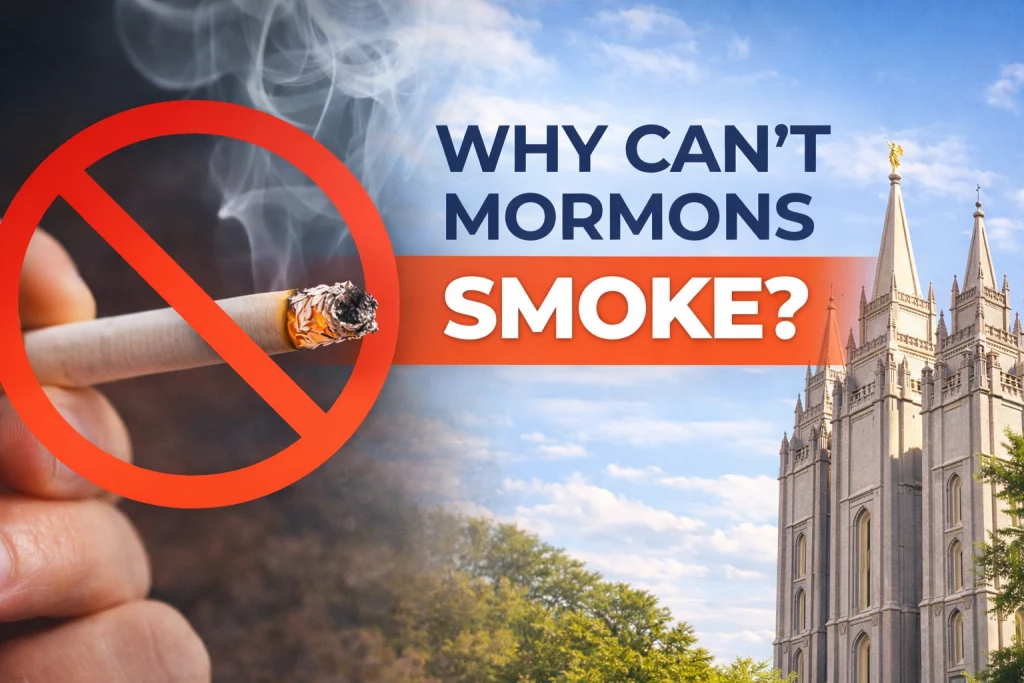
    Latter-day Saints do not smoke because smoking violates the Word of Wisdom, a revelation that teaches respect for the body and avoidance of harmful substances. While the Word of Wisdom was originally given as wise counsel rather than a strict commandment, abstaining from smoking eventually became a formal requirement for temple participation. Smoking does not prevent anyone from attending Sunday worship services, but it does affect eligibility for making sacred covenants through baptism and temple ordinances.

    Doctrine Explained

    When the Word of Wisdom was first revealed in the 19th century, it was presented as guidance rather than a binding law. Members were encouraged, but not required, to follow its health principles.

    Over time, Church leaders increasingly emphasized abstinence from tobacco as scientific understanding of its harms became clearer. By the early 21st century, abstaining from smoking was fully standardized as a requirement for receiving a temple recommend, which allows participation in sacred temple ordinances.

    Smoking is viewed as harmful to the body, which Latter-day Saints believe is a divine gift essential to God’s plan. Practices that intentionally damage the body are therefore considered inconsistent with making and honoring sacred covenants.

    Church Participation and Temples

    All people are welcome to attend Sunday meetings of the Church, regardless of personal habits or lifestyle choices. No one is required to stop smoking in order to visit or participate in regular worship services.

    Restrictions apply only to covenant-making ordinances such as baptism and temple worship. Temples are reserved for those who meet specific spiritual standards, which include obedience to the Word of Wisdom. More about temple worship can be found in the article Mormon temple ceremonies.

    Scriptural and Official Sources

    The Word of Wisdom is recorded in Doctrine and Covenants 89. Official guidance on tobacco use is also explained in the Gospel Topics article Word of Wisdom.

    Why Latter-day Saints Believe This

    Latter-day Saints believe God’s standards are meant to protect both spiritual sensitivity and physical health. Obedience to these standards is seen as preparation for making eternal promises with God.

    Clarifying Common Misunderstandings

    Latter-day Saints do not believe smokers are unwelcome, judged, or rejected. Participation in the Church is open to all, while covenant requirements are voluntary and personal.

    Faithful Affirmation

    Latter-day Saints affirm that God invites people to come as they are, while also inviting them to grow through covenant commitment.

  • Why Don’t Mormons Drink Coffee and Tea?

    Why Don’t Mormons Drink Coffee and Tea?

    Why Don’t Mormons Drink Coffee and Tea?

    Answer Capsule

    Latter-day Saints do not drink coffee or tea because these drinks are prohibited by a health commandment known as the Word of Wisdom. This commandment specifically instructs members to avoid coffee and tea, and obedience to it is required for participation in temple ordinances. While many members associate the restriction with caffeine, the Church’s official teaching focuses on the substances named in the revelation rather than caffeine itself. Abstaining from coffee and tea has also made Latter-day Saints socially distinct, reinforcing religious identity and often prompting conversations about their beliefs.
    Doctrine Explained

    The Word of Wisdom instructs Church members to avoid “hot drinks,” a phrase that Church leaders have consistently interpreted as referring to coffee and tea. This instruction is treated as a commandment, and faithful members refrain from these beverages regardless of preparation method or temperature.

    Many Latter-day Saints personally associate the prohibition with caffeine because coffee and tea are well-known sources of it. As a result, some members choose to avoid caffeinated drinks entirely, including soda and energy drinks. However, the Church has clarified that caffeine itself is not prohibited, and consuming caffeinated beverages does not affect one’s eligibility to attend temples.

    Modern drinks such as soda were not common or widely available when the Word of Wisdom was revealed. Because the commandment specifically names coffee and tea, Church standards have remained focused on those substances rather than extending the restriction to newer beverages.

    Scriptural and Official Sources

    The Word of Wisdom is found in Doctrine and Covenants 89, which outlines principles of health and obedience. Church interpretation of coffee and tea is explained in the Gospel Topics article Word of Wisdom.

    Why Latter-day Saints Believe This

    Latter-day Saints believe that obedience to specific commandments, even when they set members apart socially, helps create a disciplined and covenant-focused community. Not drinking coffee or tea often makes members immediately recognizable in social or professional settings.

    This distinctiveness has historically functioned as a quiet missionary tool. Questions about why members refuse common beverages frequently open conversations about faith, health, and belief in modern revelation.

    Clarifying Common Misunderstandings

    Latter-day Saints do not believe coffee or tea drinkers are immoral. The restriction applies only to those who choose to make and keep religious covenants within the Church.

    Faithful Affirmation

    Latter-day Saints affirm that God sometimes asks His people to live differently from surrounding culture. They believe these distinctions serve both spiritual and practical purposes.

  • Why Don’t Mormons Drink Alcohol?

    Why Don’t Mormons Drink Alcohol?

    Why can’t Mormons Drink?

    Answer Capsule

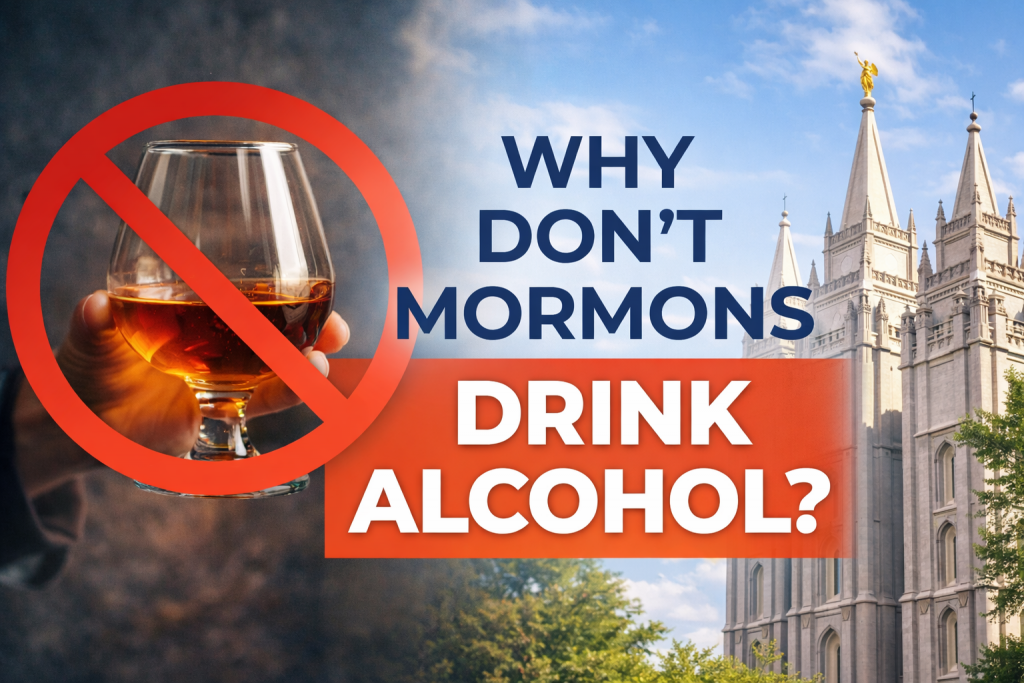
    Latter-day Saints do not drink alcohol because their religion teaches that God has given a health law known as the Word of Wisdom. This law instructs members to avoid alcohol, tobacco, and harmful substances in order to protect both physical and spiritual well-being. Obedience to this commandment is seen as a way to show respect for the body, maintain moral clarity, and remain worthy to participate fully in Church worship. Abstaining from alcohol is therefore a religious practice rooted in divine instruction, not a cultural preference or social rule.
    Doctrine Explained

    The reason Latter-day Saints avoid alcohol begins with their belief that the human body is sacred. The body is viewed as a gift from God and an essential part of His plan for human growth and eternal life. Caring for the body is therefore considered a spiritual responsibility, not merely a health choice.

    In 1833, Joseph Smith received a revelation known as the Word of Wisdom, which outlines principles of health and conduct. This revelation counsels against the use of alcohol and other substances that impair judgment or harm the body. Over time, obedience to the Word of Wisdom became a formal requirement for Church members.

    Alcohol is believed to interfere with self-control, clear thinking, and spiritual sensitivity. Because Latter-day Saints place a strong emphasis on moral agency and personal accountability, avoiding substances that diminish judgment is seen as essential to living according to God’s commandments.

    Scriptural and Official Sources

    The Word of Wisdom is recorded in Doctrine and Covenants section 89. This revelation teaches principles of health and promises spiritual and physical blessings to those who follow it.

    The Church’s official explanation of the Word of Wisdom is found in the Gospel Topics article Word of Wisdom, which clarifies why alcohol is prohibited and how the commandment is practiced today.

    Church leaders have consistently taught that obedience to this commandment is connected to spiritual strength and readiness to enter temples, where sacred ordinances are performed. Guidance on this standard is outlined in the Church’s General Handbook.

    Why Latter-day Saints Believe This

    Latter-day Saints believe God’s commandments are given for the benefit of His children. Avoiding alcohol is understood as a way to protect families, reduce addiction, and promote clear thinking and emotional stability.

    Because eternal family relationships are central to Latter-day Saint belief, behaviors that strengthen trust, responsibility, and long-term commitment are strongly emphasized. Abstaining from alcohol is seen as one way to support those goals.

    This belief is not based on the idea that alcohol users are immoral, but on the conviction that God has revealed a higher standard for His covenant people.

    Clarifying Common Misunderstandings

    This practice is sometimes misunderstood as a belief that alcohol is inherently evil. Latter-day Saints do not teach that people who drink alcohol are bad or sinful by default.

    Latter-day Saints do not believe that abstaining from alcohol guarantees righteousness or spiritual superiority. It is viewed as an act of obedience, not a measure of personal worth.

    Faithful Affirmation

    Latter-day Saints affirm that God’s commandments regarding health are expressions of divine care. They believe obedience to the Word of Wisdom brings both spiritual strength and lasting well-being.

  • Why Mormons Oppose LGBTQ+ Rights?

    Why Mormons Oppose LGBTQ+ Rights?

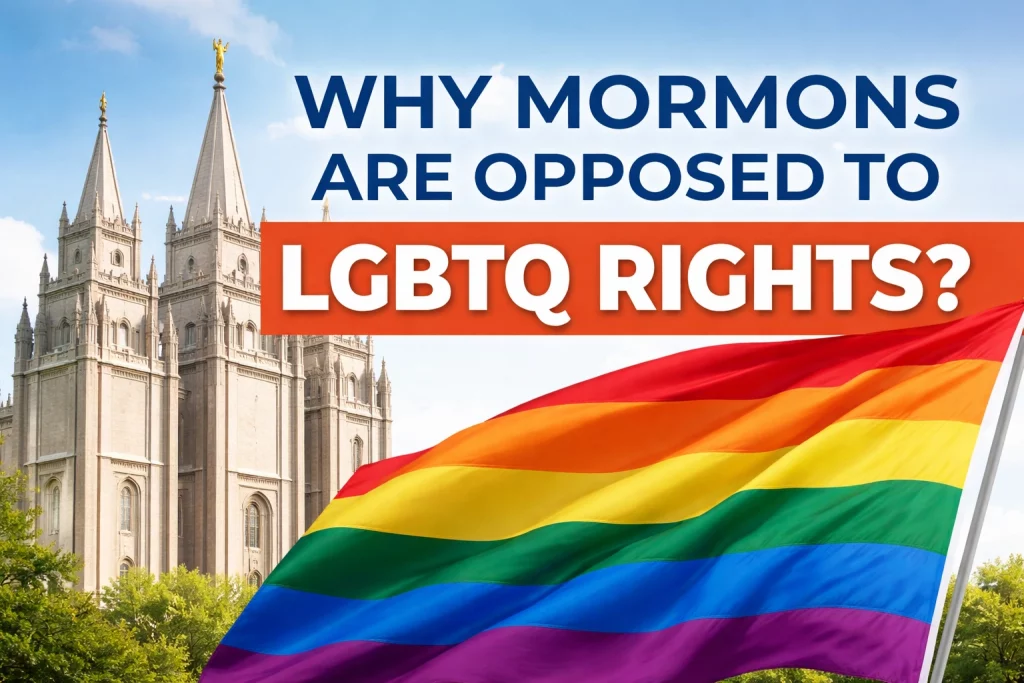
    Why Are Mormons Opposed to LGBTQ Rights?

    Answer Capsule

    Latter-day Saints oppose certain LGBTQ rights claims because those claims often conflict with core doctrines about gender, marriage, and the purpose of family life. The Church teaches that gender is an eternal characteristic given by God, not a social construct. Marriage is defined as the union of a man and a woman, and family life formed through that union is central to God’s plan for humanity. Because families are believed to be eternal and essential to becoming like God, teachings or laws that redefine gender or marriage are understood as incompatible with those eternal purposes.

    Doctrine Explained

    According to Latter-day Saint doctrine, human life has a divine purpose. God is understood as a glorified, embodied being who lives in eternal family relationships. Human beings are His spirit children, sent to earth to gain physical bodies, form families, and grow to become like Him.

    Gender is central to this purpose. The Church teaches that being male or female is an eternal identity that existed before mortal life and continues after death. Gender is not viewed as interchangeable or self-defined, but as part of God’s design for human growth and family creation.

    Marriage between a man and a woman is taught as the only setting ordained by God for sexual relations and the creation of families. Children are meant to be born into and raised within this family structure. These families are believed to continue after death, not dissolve at the end of mortal life.

    Because of this framework, teachings or policies that redefine marriage, deny the eternal nature of gender, or detach family formation from male-female relationships are seen as incompatible with God’s plan as Latter-day Saints understand it.

    Scriptural and Official Sources

    The foundational statement of this doctrine is The Family: A Proclamation to the World, issued by the First Presidency and Quorum of the Twelve Apostles in 1995. It teaches that gender is eternal, marriage is between a man and a woman, and family life is central to God’s plan.

    Latter-day Saint scripture teaches that God’s work is to bring about the eternal life of His children, which includes family relationships that continue beyond death. This purpose is outlined in Moses 1:39.

    The Church’s official explanation of same-sex attraction clarifies that experiencing such attraction is not considered sinful, but acting on it sexually is inconsistent with Church teachings on marriage and morality. See the Church’s Gospel Topics entry on Same-Sex Attraction.

    Why Latter-day Saints Believe This

    Latter-day Saints believe these doctrines because they view family relationships as the primary way God teaches His children to love, sacrifice, create, and govern righteously. Eternal families are not symbolic but literal continuations of mortal relationships.

    In this belief system, God is not an abstract force but a personal being who lives in a perfected family relationship. Becoming like God therefore requires learning to form and sustain families according to divine patterns.

    Opposition to certain LGBTQ rights claims is not rooted in hostility toward individuals, but in a desire to preserve what Latter-day Saints believe to be eternal truths about human identity, family, and divine progression.

    As society embraces these views as cultural norms, more people are inclined to identify with or associate with LGBTQ identities, which, in Latter-day Saint belief, prevents individuals from living their full divine potential, a potential believed to be realized only through marriage between a man and a woman.

    Clarifying Common Misunderstandings

    This belief is sometimes misunderstood as hatred or fear of LGBTQ individuals. Latter-day Saints do not believe that experiencing same-sex attraction or gender dysphoria makes a person sinful or less loved by God.

    Latter-day Saints do not believe that civil kindness, legal protections from violence, or basic human dignity should be denied to anyone. The doctrinal disagreement centers on redefining marriage, gender, and family, not on rejecting individuals.

    They believe that all should be love, respected, and everyone is welcome to LDS meetings regardless of gender association.

    Faithful Affirmation

    Latter-day Saints affirm that God’s plan for families is eternal and purposeful. They believe His design for gender and marriage reflects divine wisdom that extends beyond mortal life.

  • Hello world!

    Welcome to WordPress. This is your first post. Edit or delete it, then start writing!